• Get involved.
    We want your input!
    Apply for Membership and join the conversations about everything related to broadcasting.

    After we receive your registration, a moderator will review it. After your registration is approved, you will be permitted to post.
    If you use a disposable or false email address, your registration will be rejected.

    After your membership is approved, please take a minute to tell us a little bit about yourself.
    https://www.radiodiscussions.com/forums/introduce-yourself.1088/

    Thanks in advance and have fun!
    RadioDiscussions Administrators

Local stations want "streaming loophole" closed

They want YouTube TV and other streamers to be put in the same category as cable companies, meaning they'll have to negotiate with every network affiliate in every market individually for carriage rights.

 
I thought they already did. It took awhile for them to get the OK to air local PBS stations, for example.
 
Interesting idea, but the difference between cable companies and streamers is that cable companies are locally licensed by the community. They have an exclusive franchise in that community. Not so for streaming companies. So local content is only relevant in that local community. AFAIK the FCC has no jurisdiction over YouTube. This would be one of those congressional battles over who regulates the internet.
 
I thought they already did. It took awhile for them to get the OK to air local PBS stations, for example.
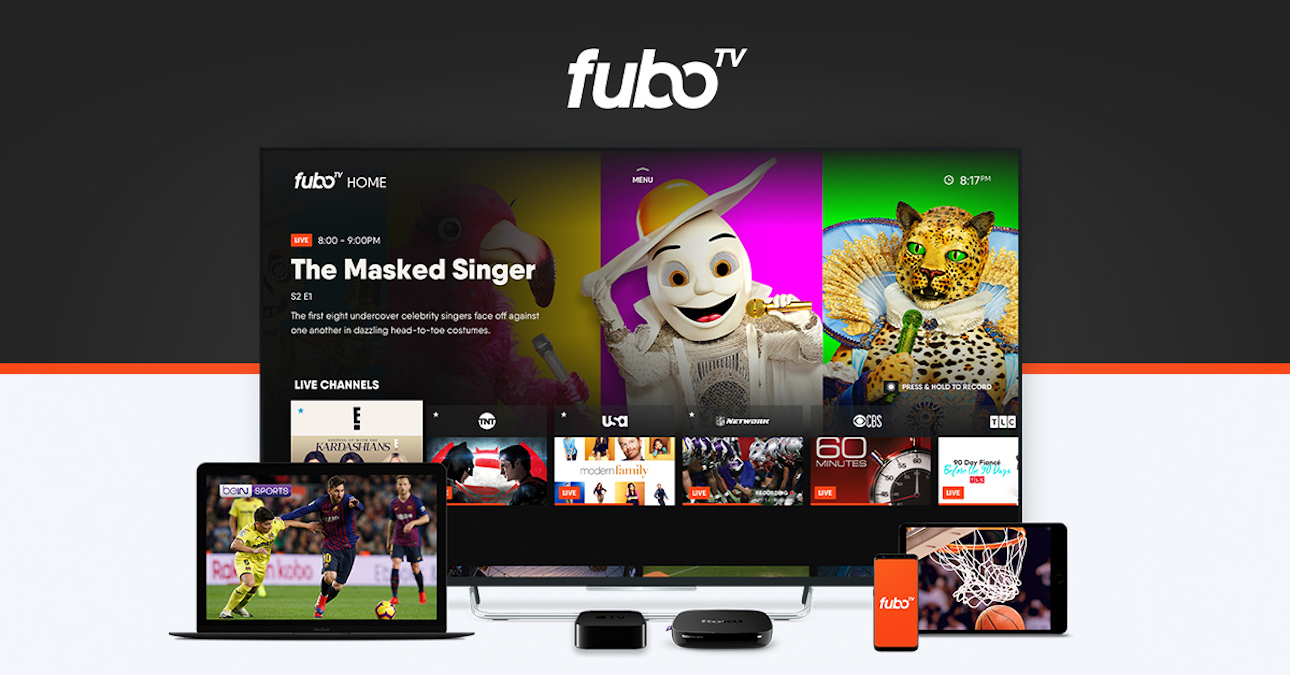
There was a recent kerfuffle about CBS signing a national deal with FuboTV earlier this year. I assume that is what ignited this, although the story CTListener provided did not include that context.

 
There was a recent kerfuffle about CBS signing a national deal with FuboTV earlier this year. I assume that is what ignited this, although the story CTListener provided did not include that context.

That reminds me of the early days of DirecTV, where the networks on the satellite had the national feed, not the local news.
 
I thought they already did. It took awhile for them to get the OK to air local PBS stations, for example.
If I recall correctly, the issue with local public television stations was that they do not license content in the same way that a commercial affiliate would, and did not possess the rights to grant blanket rebroadcast permission of the individual programs. And being that YouTube is a commercial entity, the statutory rebroadcast rules they usually depend on in 17 U.S. Code §111(a)(5) do not apply [1].

Of course, if YouTube became a Multichannel Video Programming Distributor, then the issue would be null with Must Carry copyright exemptions [2].

[1] 17 U.S. Code § 111(a)(5) - 17 U.S. Code § 111 - Limitations on exclusive rights: Secondary transmissions of broadcast programming by cable
[2] 17 U.S. Code § 111(throughout body) - 17 U.S. Code § 111 - Limitations on exclusive rights: Secondary transmissions of broadcast programming by cable
 
They want YouTube TV and other streamers to be put in the same category as cable companies, meaning they'll have to negotiate with every network affiliate in every market individually for carriage rights.

Uhh...Don't they ALREADY HAVE that option??

When I was in the hospital recently, the TV's in the patient rooms all use a closed circuit system that gets its programming via DirecTV. While there, I couldn't watch anything on KWGN 2 or KDVR 31 due to the retransmission dispute between DirecTV & Nexstar

I would imagine the same problem exists on DirecTV Stream too
 
Now Nexstar Media Group, Sinclair, E.W. Scripps, and Gray Television have announced that they want to cut out the middle man and negotiate directly to bring their locals to streaming services. They hope to get better deals than what the parent companies have agreed to.
The locals are the middle men not the other way around. The network feeds are what we want not the local stations.
 
As someone that is passionate about local news and weather, this would be an absolute disaster.
The networks would go direct if they could, they don't want to have to deal with affiliates. That's an old model. When streaming takes over will we need affiliates anymore. Sure local news but that's it. Syndication will all go streaming. How will these stations survive in a streaming world. Will people want to pay to see just locals?
 
The locals are the middle men not the other way around. The network feeds are what we want not the local stations.
500% wrong. Accurate coverage of breaking news comes from local sources (and that includes both radio and TV), not from Noo Yawk or Worshington network news.
 
500% wrong. Accurate coverage of breaking news comes from local sources (and that includes both radio and TV), not from Noo Yawk or Worshington network news.
If you are watching CBS programming you are watching national feeds. Local news is just that. CBS just wants to get their content to your home. They use affiliates as the delivery source but would CBS rather sell their programming direct? Affiliates are the middle man to the national network.
 
The networks would go direct if they could, they don't want to have to deal with affiliates. That's an old model. When streaming takes over will we need affiliates anymore. Sure local news but that's it. Syndication will all go streaming. How will these stations survive in a streaming world. Will people want to pay to see just locals?
If a hurricane was coming close to my house, absolutely! I want to know directly from a local station, not one that's 1,000 miles away, especially during an emergency.
 
If a hurricane was coming close to my house, absolutely! I want to know directly from a local station, not one that's 1,000 miles away, especially during an emergency.
But does that need to be tied to a network feed? Just have local news be local news. If CBS, NBC, ABC had cable back in 1950 they would have not needed affiliates to reach homes. It's just an old model that won't survive streaming.
 
I don't watch network news. Any of them. If there is breaking news, I go to the more accurate local source if available.

Examples: The bombing of the Boston Marathon. The Boston locals had more accurate coverage than the claptrap coming from the networks (especially the cable noise channels). If there's a tornado in Oklahoma, I watch what I can find in OKC or Tulsa. Hurricane coverage is far better on the locals in Florida than the far away networks that are getting 2nd hand info. Local beats national in all cases. I can't think of any exceptions, and that includes 9/11/2001 and 1/6/2021.
 
I don't watch network news. Any of them. If there is breaking news, I go to the more accurate local source if available.

Examples: The bombing of the Boston Marathon. The Boston locals had more accurate coverage than the claptrap coming from the networks (especially the cable noise channels). If there's a tornado in Oklahoma, I watch what I can find in OKC or Tulsa. Hurricane coverage is far better on the locals in Florida than the far away networks that are getting 2nd hand info. Local beats national in all cases. I can't think of any exceptions, and that includes 9/11/2001 and 1/6/2021.
Will we see a day when affiliates are all independent of their network feeds. Will the broadcasters decouple the locals and just become national feeds. Can CBS make more money selling direct and not relying on a local station to provide their programming.
 
I think we need to get on par with the subject at hand... what I am specifically saying is I don't want to get local news from national feeds. In fact, I oppose to it completely. I want my source of information to be as close to home as possible... if that is at all possible. I could care less who owns what (to an extent), as long as there is a source. If there are multiple outlets, even better.
 
I think we need to get on par with the subject at hand... what I am specifically saying is I don't want to get local news from national feeds. In fact, I oppose to it completely. I want my source of information to be as close to home as possible... if that is at all possible. I could care less who owns what (to an extent), as long as there is a source. If there are multiple outlets, even better.
Nobody is saying get rid of the locals. I'm saying keep them separate from the national broadcast feeds. Why should I pay a local affiliate to see national programming.
 
Will we see a day when affiliates are all independent of their network feeds. Will the broadcasters decouple the locals and just become national feeds. Can CBS make more money selling direct and not relying on a local station to provide their programming.

Most big cities have independent non-network stations. They're filled with syndicated shows, and they fight to get smaller networks such as the CW. The networks bring better quality programming than what they can get by themselves. The big networks own their biggest affiliates. So they're in both the local and network business. The stations that want to get carriage rights money are not owned by the networks, but a lot of them carry network feeds. So in practicality, this means your TV bill increases. because local stations want to negotiate higher fees from carriers.
 
Most big cities have independent non-network stations. They're filled with syndicated shows, and they fight to get smaller networks such as the CW. The big networks own their biggest affiliates. So they're in both the local and network business. The stations that want to get carriage rights money are not owned by the networks, but a lot of them carry network feeds. So in practicality, this means your TV bill increases. because local stations want to negotiate higher fees from carriers.
And when streaming takes over who will I be paying, the network or the affiliate. Right now the affiliate fees are passed though the cable provider. When I stream my content will I be paying both?
 
Status
This thread has been closed due to inactivity. You can create a new thread to discuss this topic.


Back
Top Bottom