
• Get involved.
    We want your input!
    Apply for Membership and join the conversations about everything related to broadcasting.

    After we receive your registration, a moderator will review it. After your registration is approved, you will be permitted to post.
    If you use a disposable or false email address, your registration will be rejected.

    After your membership is approved, please take a minute to tell us a little bit about yourself.
    https://www.radiodiscussions.com/forums/introduce-yourself.1088/

    Thanks in advance and have fun!
    RadioDiscussions Administrators

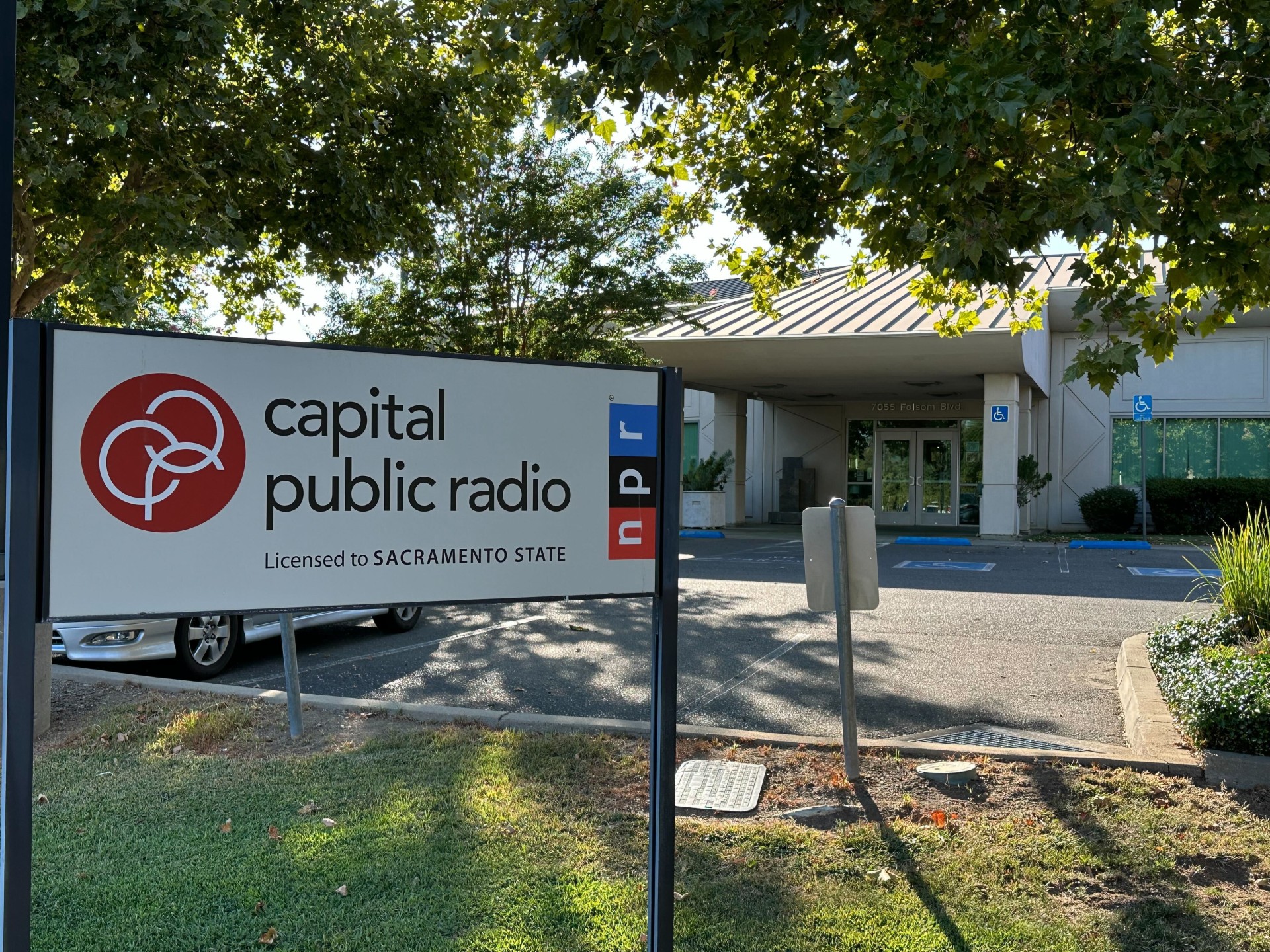
CapRadio cuts 12% staff and cancels shows


CapRadio this week announced it laid off 12% of its staff and canceled four music shows because of ongoing financial issues.

Management on Wednesday laid off nine employees based in Sacramento and three employees in Chico who worked at North State Public Radio, which CapRadio operates.

CapRadio gave three additional workers a final employment date, Interim General Manager Tom Karlo said Friday. Before the layoffs, the NPR member station had 102 positions.

The canceled Saturday music shows are “Mick Martin’s Blues Party,” “Hey, Listen!,” “K-ZAP on CapRadio” and “At the Opera,” the station announced Friday. Three of them aired on CapRadio’s news station, while one ran on the music station. Karlo called the show eliminations unfortunate, but said ending the mixed format of news and music on the same channel could help the station financially.

“It was a hard decision, but I think it will actually increase our audience and hopefully increase membership,” Karlo said. “It's not to say that the music stuff wasn’t very valuable for us. It is. But you know, our anchor store — what really makes CapRadio — is our news and public affairs and information service.”


Y2K,

Thank you for posting Kristin Lam's piece from CapRadio.org.

Those of us who survive have to carry on. In Kristin's case, that also meant reporting on the story within our walls.

One of the things I'm proudest of in being in public media is the independence of our newsrooms. Management is interviewed like any other newsmaker and sees or hears the finished copy when you do---not before.

Hers is a piece of extraordinary depth and clarity and I hope people will take the time to read it.

I also hope everyone will understand if I don't comment beyond that.

PS: I will be on a long-planned almost four-week vacation out of the country after my newscasts this coming Wednesday (9/6) afternoon. If you don't hear me on CapRadio or don't see me here until sometime after Tuesday, October 3, don't worry.
 
Last edited:
Y2K,

Thank you for posting Kristin Lam's piece from CapRadio.org.

Those of us who survive have to carry on. In Kristin's case, that also meant reporting on the story within our walls.

One of the things I'm proudest of in being in public media is the independence of our newsrooms. Management is interviewed like any other newsmaker and sees or hears the finished copy when you do---not before.

Hers is a piece of extraordinary depth and clarity and I hope people will take the time to read it.

I also hope everyone will understand if I don't comment beyond that.

PS: I will be on a long-planned almost four-week vacation out of the country after my newscasts this coming Wednesday (9/6) afternoon. If you don't hear me on CapRadio or don't see me here until sometime after Tuesday, October 3, don't worry.
The level of detail provided in Kristin's piece was good enough for me to detect some tensions between the music side and the news side of the house. It wasn't the right place to go more in-depth into that sort of thing, but I've seen this play out with other public radio stations before. Quite frankly, news brings in the pledge-drive dollars more effectively than music programming. Of course, management makes its decisions on that basis out of the need to ensure financial viability, but those with local music programs have different motivations.

The story itself reflects well on the organization.
 
Too bad they don’t have an additional station to host jazz and all other specialty music programs. That way they leave KXJZ as a news station and KXPR as a full time classical music station.
 
I also hope everyone will understand if I don't comment beyond that.
Anyone who has gone through a RIF* or a merger or sale knows what it is like.

(RIF = "Reduction in Force", a euphemism for "lay offs" that is sort of like "Human Resources" is the name we substituted for "Personnel" and which does exactly the same thing but is more PC)
 
What on earth would be un-PC about "Personnel"?
It sounds too impersonal. Just like "janitorial" is not nice but "grounds maintenance" is.
 
(RIF = "Reduction in Force", a euphemism for "lay offs" that is sort of like "Human Resources" is the name we substituted for "Personnel" and which does exactly the same thing but is more PC)
If you were in industry, it was a bit more complicated than that. Personnel was the department that handled hiring, layoffs, benefits, retirements, etc. for salaried and management employees. But Industrial Relations was the group that dealt with unionized and other hourly workers at the plants, factories and distribution centers. They handled negotiations, grievances, labor actions, etc., but only in the field, not at headquarters. When the term H.R. began getting substituted for Personnel, some companies integrated I.R. into H.R., and some kept the two functions separate.
 
If you were in industry, it was a bit more complicated than that. Personnel was the department that handled hiring, layoffs, benefits, retirements, etc. for salaried and management employees. But Industrial Relations was the group that dealt with unionized and other hourly workers at the plants, factories and distribution centers. They handled negotiations, grievances, labor actions, etc., but only in the field, not at headquarters. When the term H.R. began getting substituted for Personnel, some companies integrated I.R. into H.R., and some kept the two functions separate.
I remember when "Personnel" at Hallmark Cards turned into "Human Resources". It was a thing by then (probably around 1993). I being the way that I am, had the temerity to ask, "as compared to Animal Resources?" Word got back to the newly-christened HR. I heard they were not amused, but there was nothing they could do about it.
 
Too bad there isn't away to put another program on the same channel. Oh, wait ....
It still costs money to produce that programming. That's the part they needed to shed. Part of the problem with music shows like "Hey Listen" is not only the fact that the audience isn't very large, but also the fact that the demographic that follows instagram posts are not the ones that typically donate generously to public radio. But I could see that show resurfacing on a lower-cost operation - like KZHP-LP.

Dave B.
 
But I could see that show resurfacing on a lower-cost operation - like KZHP-LP.
Or, like so many similar shows probably are, as a Podcast-like thing or an Internet stream.

It sounds too impersonal.
Huh, really. Why does it matter?

It really seems odd and kind of pointless to argue over the semantics of things such as how impersonal "Personnel" is versus "Human Resources." Not everything needs to be so personalized!

Be that as it may, I don't really care one way or the other. It's just two different words that pretty much mean the same thing, but with slightly different connotations, and whichever one a company or individual decides to use is their decision to make. Sometimes one just sounds better than the other for a given business, depending on what it does, so it could be an aesthetic choice.

But to choose one because it sounds more "personal" than the other?

Anyway, I'm splitting hairs at this point....

c
 
Forgive my ignorance here, but why do music royalties it have to be so much higher for digital radio streams?

Because a law was passed in 1997 called the Digital Millennium Copyright Act that grants royalties to artists, labels, songwriters, and musicians. The law for broadcast radio, passed in the 1930s, only requires royalties for songwriters. As a result, most podcasts are done without popular music.
 
Ah, I see. This is why most podcasts and other low-budget productions I've heard (cheap ads, mainly) seem to use the same, cheap, generic sounding background "music."

So, for a small-ish, modestly funded station that only runs a few hundred watts and plays music, it's probably cheaper to not stream, then. Right?

By how much, I wonder?

c
 
Status
This thread has been closed due to inactivity. You can create a new thread to discuss this topic.


Back
Top Bottom