• Get involved.
    We want your input!
    Apply for Membership and join the conversations about everything related to broadcasting.

    After we receive your registration, a moderator will review it. After your registration is approved, you will be permitted to post.
    If you use a disposable or false email address, your registration will be rejected.

    After your membership is approved, please take a minute to tell us a little bit about yourself.
    https://www.radiodiscussions.com/forums/introduce-yourself.1088/

    Thanks in advance and have fun!
    RadioDiscussions Administrators

Targeted advertising – chicken or egg?

Here are two articles that dispute the conventional wisdom that people 55+ or 65+ don’t respond to advertising because their brand preferences are locked in place:

These Broadcasters Are Mining Massive 65+ Spending Power.

Older But Wiser

But could it be that the ads themselves are the cause? For years, ads have specifically targeted a younger audience, and it’s just possible that in the process they’ve turned off older potential customers. Some examples:

- Back when 4-wheel drive was relatively new in passenger cars, Subaru used the slogan, “From the wheels that slip, to the wheels that grip,” to market their USP (unique selling proposition.) Today, their ads tell us that “Love makes a Subaru!” Anyone over 55 with a brain knows that a big automotive plant makes a Subaru, not love. So, IMO, Subaru’s ads over the past several decades have not resonated with the 55+ crowd who might well respond to an ad showing some benefits.

- Progressive Insurance is actually attacking people 55+ with their, “You’re becoming your parents,” campaign. Some of the ads are amusing and do apply to some aging adults, although it’s not very “woke” to make fun of declining mental sharpness. But what older adult would sign up with Progressive based on those ads? You get what you wish for.

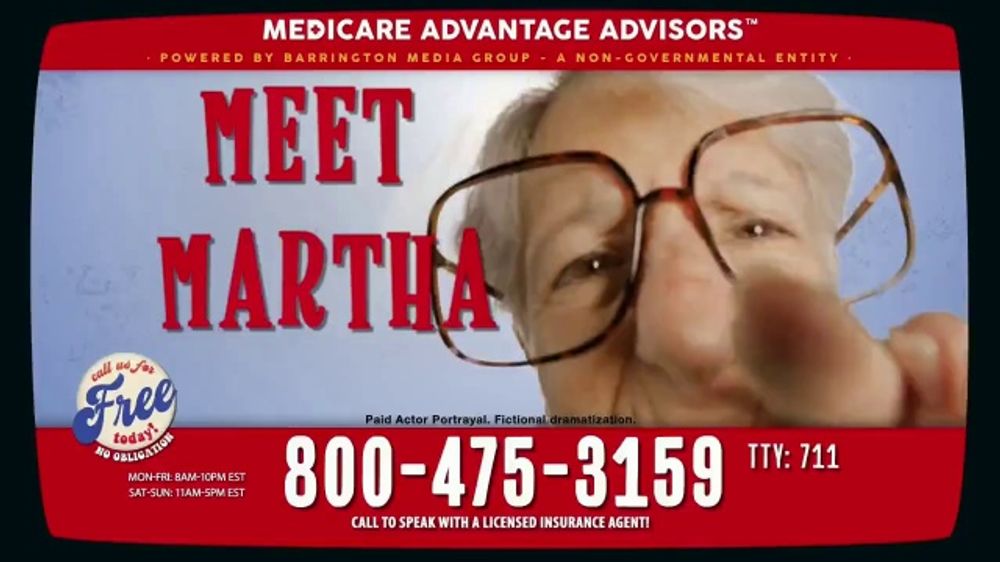
- Then there’s the Medicare Advantage TV ad featuring a stereotypical cranky old lady, “Martha.” I can almost guarantee you that the ad was conceived, written and produced by Millennials. How is this supposed to attract the target audience?

Another reason not to ignore, or turn off, an older audience is that brands often disappear. When the A&P went out of business, customers of all ages needed a new place to shop. Why target just a portion of that potential audience?

And of course as new categories of products emerge, there’s no brand loyalty to begin with so age should not be a factor in targeting ads.
 
But could it be that the ads themselves are the cause? For years, ads have specifically targeted a younger audience, and it’s just possible that in the process they’ve turned off older potential customers.

Could be. There was a view that there's a bias at ad agencies against older people because the people writing the ad campaigns are mostly in their 20s. I don't know that for sure. Not much radio companies can do about that. We just create programming that attracts an audience, and that audience is sold to advertisers. These are two different groups. There are specializations in college for advertising and for programming. The two have very different backgrounds.

It's not that radio stations don't have programming targeting people 65+. Most of the news/talk format aims at that demo, and the ads you hear on those stations are targeted for that demo as well. I read the first article you linked, and although the headline said they were "mining 65+ spending power," there were no specifics about brands or revenue figures that substantiated that headline. Just more self-promotion from John Sebastian.

The real issue I'm seeing with older demos is a very clear hostility against ANY advertising. They don't want to be sold, and have complaints about any advertising. I don't hear that from people under 50. If the audience is predisposed to dislike any advertising, it doesn't matter what they're selling.
 
You can’t run a business based in large measure on when there might be a company going out of business or some hypothetical new product—and both of those depend on those brands wanting to invest there.

The one article in particular is remarkably self serving. Taking a couple of anecdotes and the comments of someone who is invested in that niche and extrapolating it out doesn’t work. The second article is from…2002? Really?

No one over or under 55 is somehow bent out of shape at a little slogan by Subaru. There are plenty of commercials for the brand that hit the safety and reliability. A little aspirational tag line and the occasional touchy-feely brand spot mixed in among the more tactical ones is not alienating older buyers.
 
The real issue I'm seeing with older demos is a very clear hostility against ANY advertising. They don't want to be sold, and have complaints about any advertising. I don't hear that from people under 50. If the audience is predisposed to dislike any advertising, it doesn't matter what they're selling.
About five years ago I saw some TV research that backs up that conclusion. To paraphrase; seniors don't want to see car ads, furniture ads, fast food ads, beer/wine, or any conventional ads intended to reach sub-54 men and women. What does seem to resonate with that audience are ads for senior mobility, drugs, collectibles like coins, gold, dolls, etc., and healthcare-related. That research seems to match up with what we still see today in TV ads that target Boomers. Problem is, radio isn't able to take advantage of a big sector of these advertisers because radio doesn't include the visual aspect.
 
That research seems to match up with what we still see today in TV ads that target Boomers. Problem is, radio isn't able to take advantage of a big sector of these advertisers because radio doesn't include the visual aspect.

The thing I notice about all of those ads is they're at least :60s, sometimes even :120 in length. Meanwhile, there's a thread here with boomers complaining that the ads are too long, or that the legal disclaimers are distracting. Not much we can do about that.
 
The thing I notice about all of those ads is they're at least :60s, sometimes even :120 in length. Meanwhile, there's a thread here with boomers complaining that the ads are too long, or that the legal disclaimers are distracting. Not much we can do about that.
I was watching Morning Joe on MSNBC this morning and noted one of those Medicare Associates :60 spots that ran twice back to back. I happen to know the hub master control number in NJ, and asked the tech whether that back-to-back was properly scheduled, or a mistake. He responded that it was scheduled that way several times a day this month.
 
He responded that it was scheduled that way several times a day this month.

This is open enrollment. It's a short window when Medicare recipients can change their Medigap plan. Ends December 15.

So you'll see a lot of those ads for the next month.
 
This is open enrollment. It's a short window when Medicare recipients can change their Medigap plan. Ends December 15.

So you'll see a lot of those ads for the next month.
Oh I get that. It's just a recent example where the same :60 targeting the 65+ crowd is being run back to back.
Maybe that's the trick with seniors listening to radio. Run all :30's at least twice back to back. Just kidding...sort of.
 
No one over or under 55 is somehow bent out of shape at a little slogan by Subaru. There are plenty of commercials for the brand that hit the safety and reliability. A little aspirational tag line and the occasional touchy-feely brand spot mixed in among the more tactical ones is not alienating older buyers.
No one over 55 is "bent out of shape," but no one is likely to be motivated to buy a Subaru either. So what's the point?

If there are Subaru ads showing anything other than the car making it's way to a remote campsite, I've missed them. Many people spend most of their time driving to work and to the store. Why not target them?

BTW, I have a bigger beef with the advertising industry than the radio industry, but they both influence each other.
 
If there are Subaru ads showing anything other than the car making it's way to a remote campsite, I've missed them. Many people spend most of their time driving to work and to the store. Why not target them?
Subaru has been frequently and historically written up in advertising and marketing, trade, publications and books, because of the way it has developed segmented marketing. Instead of trying to appeal as a mass market vehicle, they have identified qualities that make their product appealing to specific groups such as outdoors, people, gay women, environmental aware people and So On. If you do a search on Subaru and marketing, you will find a list of about eight or 10 different specific areas where they target; at the same time they ignore the rest of the market, because they know that they were advertising will work more effectively with their approach.
BTW, I have a bigger beef with the advertising industry than the radio industry, but they both influence each other.
Radio stations have to program products that advertisers will find advantageous to use. So radio formats will target identifiable and large consumer groups that ad agencies and their clients will want to join. In essence, it boils down to researching to find out who is most likely to buy your product and then looking for add media that reach those groups efficiently.
 
Subaru has been frequently and historically written up in advertising and marketing, trade, publications and books, because of the way it has developed segmented marketing. Instead of trying to appeal as a mass market vehicle, they have identified qualities that make their product appealing to specific groups such as outdoors, people, gay women, environmental aware people and So On. If you do a search on Subaru and marketing, you will find a list of about eight or 10 different specific areas where they target; at the same time they ignore the rest of the market, because they know that they were advertising will work more effectively with their approach.
I know, using Subaru as an example of ads that seniors don't like is a poor one. Subaru is one of the best selling single brand foreign car manufacturers in the U.S. Obviously the ads are reaching their target.
 
I know, using Subaru as an example of ads that seniors don't like is a poor one. Subaru is one of the best selling single brand foreign car manufacturers in the U.S. Obviously the ads are reaching their target.
OK, if it works that's fair. But what about Progressive and "Martha?"
 
No one over 55 is "bent out of shape," but no one is likely to be motivated to buy a Subaru either. So what's the point?
If they’re not being targeted, the point is to reach those who are being targeted, which as noted above is much more specific than a broad age bucket. And they advertise where those groups tend to be found (excluding the local dealers here to talk about the brand itself). To be sure, you’ll find other audience members than their specific targets with some buys, including those over 55. (Some of them also camp, BTW)

As for Progressive, they’re clearly targeting newer homeowners looking for homeowner’s insurance, and the lead character is older himself. That all aside, if there is anything universal my circle of friends related to back when we became “grown ups” with kids, mortgages and the like was we did start to sound like our parents. And frankly, the spots are funny without being mean. It’s good natured humor and one of several recurring bits they use. Even my in-laws, obviously older than my old self, laugh at those.
 
OK, if it works that's fair. But what about Progressive and "Martha?"
Think about it: Would Progressive, Geico, or Allstate buy as many nationwide contracts as they do because it pisses off potential customers? Of course not. As Mr. Simpson says; they clearly are reaching a demographic that doesn't include impatient seniors who have probably had the same insurance provider for the past thirty years.

Who is Martha? Martha Stewart?
 
OK, if it works that's fair. But what about Progressive and "Martha?"
Progressive works and has worked for years.

"Martha" is the only ad that is so offensive to me that I actually have written to the channels I watch that run it to say that until the Medicare "election" period is over, I will change channel every time I see that spot.

The "Martha" spot demeans seniors. It's use of a faked old tube-TV style screen paints older people as out of date and stupid. The dialogue of the "old lady" makes seniors appear to be dumb and ill-informed. And so on... totally unacceptable.
 
Progressive works and has worked for years.

"Martha" is the only ad that is so offensive to me that I actually have written to the channels I watch that run it to say that until the Medicare "election" period is over, I will change channel every time I see that spot.

The "Martha" spot demeans seniors. It's use of a faked old tube-TV style screen paints older people as out of date and stupid. The dialogue of the "old lady" makes seniors appear to be dumb and ill-informed. And so on... totally unacceptable.
I must be missing the 'Martha' Medicare spots where I live. Either way, I doubt I'd be all that annoyed by it. My remote
mute button is always close at hand.
 
Who is Martha? Martha Stewart?
It's an agency that finds referrals for Medicare programs from a variety of insurance providers and simply takes caller data on location of residence and certain desired services and puts them through to an actual insurance company.
 
Progressive works and has worked for years.

"Martha" is the only ad that is so offensive to me that I actually have written to the channels I watch that run it to say that until the Medicare "election" period is over, I will change channel every time I see that spot.

The "Martha" spot demeans seniors. It's use of a faked old tube-TV style screen paints older people as out of date and stupid. The dialogue of the "old lady" makes seniors appear to be dumb and ill-informed. And so on... totally unacceptable.
I doubt that the channels care about your complaint. They just want the money. The "Martha" ad is absurd and mocks seniors. I don't know who thought that was a good idea.

Let's face it. Most people of all ages dislike the commercials. The only time when they plan to watch them is the Super Bowl. Most folks can't remember what product was being advertised even if they thought the spot was entertaining...
 
It's an agency that finds referrals for Medicare programs from a variety of insurance providers and simply takes caller data on location of residence and certain desired services and puts them through to an actual insurance company.
Ah, a brokerage. There are a lot of those on the air these days. Must be more of a West Coast targeted spot, because here in the Mid Atlantic, I don't recall seeing it. The big national Medicare brokerage spot that runs on TV here amounts to two or three bright textual graphics with a loudly-speaking female VO.
 
Status
This thread has been closed due to inactivity. You can create a new thread to discuss this topic.


Back
Top Bottom