
More like a Yugo.
You're being kind, i think.

More like a Yugo.
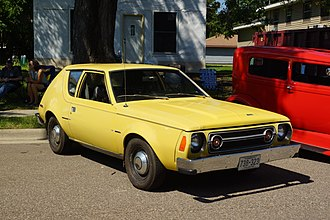
I don't know that I'd call Dan Bongino "third-string" since he seems to be able to draw attention to himself...which is what this whole game seems to be about...but the lineup generally seems like "me, too!" stuff, on a signal that isn't comparable to its supposed competitors. It's the Oldsmobile of talk radio.
You can do significantly worse than Townsquare, Kent. Just apply to Alpha.
And Oldsmobile has been out of business for years.I don't know that I'd call Dan Bongino "third-string" since he seems to be able to draw attention to himself...which is what this whole game seems to be about...but the lineup generally seems like "me, too!" stuff, on a signal that isn't comparable to its supposed competitors. It's the Oldsmobile of talk radio.
The real trick is whether he can generate any sales. Any station can sign with a syndicator and run their content and must-carry spots. The real determining factor is whether he can make money.Yeah, that's the lineup you'd expect from the 5th conservative talk station in the market.
The real trick is whether he can generate any sales. Any station can sign with a syndicator and run their content and must-carry spots. The real determining factor is whether he can make money.
Which is why I believe his niche is Spanish Conservative News/Talk. It doesn't necessarily have to be in the Spanish language. If his intention is to become a me-too Conservative New/Talk station, airing whatever crumbs that are remaining in syndication, then I expect him to fail, soon than later. He's got to find a niche, and this is the niche. Latin Americans are more Conservative than you might think.He appears to be well connected in the local GOP, so he likely can get some commitments from like-minded people.
If his intention is to become a me-too Conservative New/Talk station, airing whatever crumbs that are remaining in syndication, then I expect him to fail, soon than later.
Enjoy the reference to RC Cola. Brings back happy childhood memories. RC was cheaper than coke or Pepsi. Art Linkletter used to own the company I believe.It's 10 mV/m does not even get as far north as the city of Houston, and covers about 40% of the market population with what the ITU considers, today, to be the minimum urban area signal. At night it is far worse, covering less than 30% of the market population.
KYST is to KTRH what RC Cola is to Coke.
It's the Oldsmobile of talk radio.
As we all know, @DrAkbar has his deeply-researched thoughts on the format:More like a Yugo.
I think we're getting tired of hearing about this supposed increase in metro area noise levels. It simply is not true, and I think you know it. Turn on a radio and follow the noise. It's still basically just the dimmer light switches in the home. AM works great with 2 mV.Noise levels in metro areas have increased dramatically in the last 35 years since then. A 2.5 mV/m signal was usable back then on AM. Today, the ITU says 15 mV/m is required to overcome noise. In general, the usable urban area coverage of AM stations has been reduced by about 2/3 in those years.

Having been involved with a 50 kw AM in LA in the period of 1995 to 2012, I can tell you from actual listener locations in Arbitron (data that subscribers get right down to the ZIP Code level) we were seeing an erosion of listening, first in the 5 mv/m area and then even in the fringes of the 10 mV/m area.I think we're getting tired of hearing about this supposed increase in metro area noise levels. It simply is not true, and I think you know it. Turn on a radio and follow the noise. It's still basically just the dimmer light switches in the home. AM works great with 2 mV.
I prefer the lime green one...
Wow, sorry to hear that your home is so noisy. Mine is completely different and I have all the same stuff, except no video games. A couple of data points among hundreds of millions means nothing of course, and therefore your PPM data is impressive.Having been involved with a 50 kw AM in LA in the period of 1995 to 2012, I can tell you from actual listener locations in Arbitron (data that subscribers get right down to the ZIP Code level) we were seeing an erosion of listening, first in the 5 mv/m area and then even in the fringes of the 10 mV/m area.
Analysis of other well-rated AMs in the market in that period showed the same issue, so this was not a programming-related loss... it was that listeners in the less intense signal areas just could not listen comfortably any more.
The ITU now says that ambient noise makes 15 mv/m the required minimum AM signal.
It was pretty easy to look at highly rated AM stations like KFI, do ZIP Code analysis vs. population density in the diary era. That data showed you that there was nearly no urban fixed location listening outside the 5 mv/m contour and the bulk of at-home and at-work listening was in higher signal zones.
The PPM does not show "at work" listening... just at home and away. But if you look at the at home you find that nearly all of it, whether it is KFYI in Phoenix, KFI in LA, KPRC in Houston or countless others of the remaining decent (or even half-decent) AM signals, is inside the 10 mv/m contour.
In home noise come from wallwarts, dimmers, timers, LED bulbs, flourescent lights, portable heaters and some fan motors, computers, video games, many types of flat panel TVs and monitors, wireless AC/heater controls with LED screens and lots more. Heck, if I try to listen to AM in my home (in a smaller metro of just under 500,000) which is fully automated, there is not a single station that rises above the noise level.
I'm in a metro of around 2 million (San Antonio), 6 miles from civic center and I get literally perfect reception on stations outside the 2mv/m line. For example, KXTN 1350 at 11PM at night is perfect.
Even XEX 730 sounds fine if you can handle their very eclectic music, liberal use of the 'F' word, and the occasional atmospheric fading.
KLBJ 590 is fine during daylight hours where I'm right on the 2mV/m line.
So I really don't understand why there would be any correlation between increased noise and urban population density. That makes no sense to me. In the home, my tests reveal that only the triac-based light dimmers can broadcast noise more than a few inches. Maybe apartment dwellers can receive their neighbor's dimmers, but that hasn't changed in 50 years at least.
Seems to me like AM radio has been going down a continuous black hole for decades.
If you are referring to the term "chingadera" it has taken on, in recent decades, a non-obscene meaning of "something all screwed up". A "chingadera" is not a reference to the sex act, which the verb it is derived from definitely is. In that sense, it is a crass and street term, but not a profanity and not the same as the English "F" word.Even XEX 730 sounds fine if you can handle their very eclectic music, liberal use of the 'F' word, and the occasional atmospheric fading.
Except XEX runs English language music from various genres overnight, and all of it is unedited. Just about everything George Carlin said we couldn't broadcast, 730 does. Puts in a pretty good signal into northeast Texas most nights.If you are referring to the term "chingadera" it has taken on, in recent decades, a non-obscene meaning of "something all screwed up". A "chingadera" is not a reference to the sex act, which the verb it is derived from definitely is. In that sense, it is a crass and street term, but not a profanity and not the same as the English "F" word.

