• Get involved.
    We want your input!
    Apply for Membership and join the conversations about everything related to broadcasting.

    After we receive your registration, a moderator will review it. After your registration is approved, you will be permitted to post.
    If you use a disposable or false email address, your registration will be rejected.

    After your membership is approved, please take a minute to tell us a little bit about yourself.
    https://www.radiodiscussions.com/forums/introduce-yourself.1088/

    Thanks in advance and have fun!
    RadioDiscussions Administrators

NEW CONSERVATIVE TALK STATION

Status
Not open for further replies.
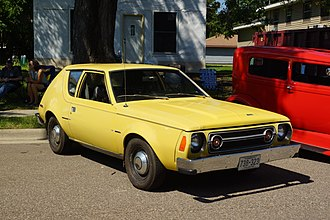
I don't know that I'd call Dan Bongino "third-string" since he seems to be able to draw attention to himself...which is what this whole game seems to be about...but the lineup generally seems like "me, too!" stuff, on a signal that isn't comparable to its supposed competitors. It's the Oldsmobile of talk radio.

Bongino also has Westwood One and Cumulus behind him. So, he's always going to have a formidable lineup of stations if he wants to keep doing his radio show. Clay and Buck, however, would seem to be a better product that has more affiliates. Bongino is a distant second. He also ran off at least a few affiliates when he said he wasn't planning on doing his radio show after his agreement with WW1 expired. He has since backtracked, but a handful of affiliates had already left.

You can do significantly worse than Townsquare, Kent. Just apply to Alpha.

I'm sure you're right. I also had the pleasure of working for Cumulus during the Dickey regime. It was a four month period of my life I wouldn't want to repeat and would just-as-soon forget. A former co-worker worked for Townsquare a few years after working with me and was let go within a couple weeks of being diagnosed with cancer. I realize Townsquare isn't the only company to have done something like that, and the person who made the decision might have been at corporate and unaware of what his situation was. That, however, has always made me a little skittish about Townsquare.
 
I don't know that I'd call Dan Bongino "third-string" since he seems to be able to draw attention to himself...which is what this whole game seems to be about...but the lineup generally seems like "me, too!" stuff, on a signal that isn't comparable to its supposed competitors. It's the Oldsmobile of talk radio.
And Oldsmobile has been out of business for years.

The lineup seems more like 4th tier.
 
Dan Bongino has been on KSEV-700 for a couple of years, but at night when the station almost disappears to make way for clear channel WLW in Cincinnati. He's probably more interested in daytime hours, if that's when KYST will air his program.
> The Line-Up - KSEV Radio
 
Yeah, that's the lineup you'd expect from the 5th conservative talk station in the market.
The real trick is whether he can generate any sales. Any station can sign with a syndicator and run their content and must-carry spots. The real determining factor is whether he can make money.

A fifth Conservative News/Talk radio station is probably stretching it, unless he can find a niche, such as Spanish Conservative News/Talk, a format focusing on third-party fringe politicians (RFK, Colonel West, Manchin), or even intercutting PSAs advising illegal aliens of the penalties for working for an employer for cash in Texas (which should really create a buzz, because this is Houston’s dirty little secret).
 
The real trick is whether he can generate any sales. Any station can sign with a syndicator and run their content and must-carry spots. The real determining factor is whether he can make money.

He appears to be well connected in the local GOP, so he likely can get some commitments from like-minded people.

He can't do much worse than he had been with the previous format.
 
For all five Houston-area talk stations, everything is syndicated except for KTRH's morning show.
A few hosts, such as Walton & Johnson, Michael Berry and Jesse Kelly are syndicated from their Houston affiliates.

Here's the "expected" line up for 920 KYST Texas City The Patriot. (5,000 watts days - 1,000 watts nights)

--Chris Plante (Westwood One - from WMAL Washington)
--Dan Bongino (Westwood One)
--Rob Carson (Newsmax)
--Todd Starnes (formerly of Fox, now self-syndicated from KWAM New Orleans)
--Wendy Bell (self-syndicated from Pittsburgh)
--Rich Valdes (Westwood One)
--Guy Benson (Fox News Talk)

====================================
Here's the line up for iHeart's 50,000 watt KTRH 740...

--Houston's Morning News (local)
--Michael Berry (syndicated from KTRH)
--Clay Travis & Buck Sexton (Premiere Networks)
--Sean Hannity (Premiere Networks)
--Mark Levin (Westwood One)
--Our American Stories with Lee Habeeb (self-syndicated)
--Coast to Coast AM with George Noory (Premiere Networks)

====================================
Here's the line up for iHeart's 5,000 watt KPRC 950...

--Walton & Johnson (syndicated from KPRC)
--Glenn Beck (Premiere Networks)
--Jesse Kelly (Premiere Networks - syndicated from KPRC)
--Coast to Coast AM with George Noory (last night's show - KTRH runs the live show)
--Walton & Johnson replay
--Armstrong & Getty (Premiere Networks - syndicated from KSTE Sacramento)

====================================
Here's the line up for Salem's KNTH 1070 (10,000 watts days - 5,000 watts nights). No local shows.

--Hugh Hewitt
--Mike Gallagher
--Charlie Kirk
--Sebastian Gorka
--Brandon Tatum
--Dennis Prager
--Eric Metaxas

=======================================
Here's the line up for 700 KSEV Tompall (15,000 watts days - 1,000 watts nights)

--Chris Salcedo (local)
--Brian Kilmeade (Fox News Talk)
--Hours of infomercials in middays
--Ben Shapiro (Westwood One)
--Joe Pags (syndicated from WOAI San Antonio)
--Dan Bongino (Westwood One - this is also on KYST?)
--Red Eye Radio (Westwood One)
 
He appears to be well connected in the local GOP, so he likely can get some commitments from like-minded people.
Which is why I believe his niche is Spanish Conservative News/Talk. It doesn't necessarily have to be in the Spanish language. If his intention is to become a me-too Conservative New/Talk station, airing whatever crumbs that are remaining in syndication, then I expect him to fail, soon than later. He's got to find a niche, and this is the niche. Latin Americans are more Conservative than you might think.
 
It's 10 mV/m does not even get as far north as the city of Houston, and covers about 40% of the market population with what the ITU considers, today, to be the minimum urban area signal. At night it is far worse, covering less than 30% of the market population.

KYST is to KTRH what RC Cola is to Coke.
Enjoy the reference to RC Cola. Brings back happy childhood memories. RC was cheaper than coke or Pepsi. Art Linkletter used to own the company I believe.
 
Noise levels in metro areas have increased dramatically in the last 35 years since then. A 2.5 mV/m signal was usable back then on AM. Today, the ITU says 15 mV/m is required to overcome noise. In general, the usable urban area coverage of AM stations has been reduced by about 2/3 in those years.
I think we're getting tired of hearing about this supposed increase in metro area noise levels. It simply is not true, and I think you know it. Turn on a radio and follow the noise. It's still basically just the dimmer light switches in the home. AM works great with 2 mV.
 
I think we're getting tired of hearing about this supposed increase in metro area noise levels. It simply is not true, and I think you know it. Turn on a radio and follow the noise. It's still basically just the dimmer light switches in the home. AM works great with 2 mV.
Having been involved with a 50 kw AM in LA in the period of 1995 to 2012, I can tell you from actual listener locations in Arbitron (data that subscribers get right down to the ZIP Code level) we were seeing an erosion of listening, first in the 5 mv/m area and then even in the fringes of the 10 mV/m area.

Analysis of other well-rated AMs in the market in that period showed the same issue, so this was not a programming-related loss... it was that listeners in the less intense signal areas just could not listen comfortably any more.

The ITU now says that ambient noise makes 15 mv/m the required minimum AM signal.

It was pretty easy to look at highly rated AM stations like KFI, do ZIP Code analysis vs. population density in the diary era. That data showed you that there was nearly no urban fixed location listening outside the 5 mv/m contour and the bulk of at-home and at-work listening was in higher signal zones.

The PPM does not show "at work" listening... just at home and away. But if you look at the at home you find that nearly all of it, whether it is KFYI in Phoenix, KFI in LA, KPRC in Houston or countless others of the remaining decent (or even half-decent) AM signals, is inside the 10 mv/m contour.

In home noise come from wallwarts, dimmers, timers, LED bulbs, flourescent lights, portable heaters and some fan motors, computers, video games, many types of flat panel TVs and monitors, wireless AC/heater controls with LED screens and lots more. Heck, if I try to listen to AM in my home (in a smaller metro of just under 500,000) which is fully automated, there is not a single station that rises above the noise level.
 
Having been involved with a 50 kw AM in LA in the period of 1995 to 2012, I can tell you from actual listener locations in Arbitron (data that subscribers get right down to the ZIP Code level) we were seeing an erosion of listening, first in the 5 mv/m area and then even in the fringes of the 10 mV/m area.

Analysis of other well-rated AMs in the market in that period showed the same issue, so this was not a programming-related loss... it was that listeners in the less intense signal areas just could not listen comfortably any more.

The ITU now says that ambient noise makes 15 mv/m the required minimum AM signal.

It was pretty easy to look at highly rated AM stations like KFI, do ZIP Code analysis vs. population density in the diary era. That data showed you that there was nearly no urban fixed location listening outside the 5 mv/m contour and the bulk of at-home and at-work listening was in higher signal zones.

The PPM does not show "at work" listening... just at home and away. But if you look at the at home you find that nearly all of it, whether it is KFYI in Phoenix, KFI in LA, KPRC in Houston or countless others of the remaining decent (or even half-decent) AM signals, is inside the 10 mv/m contour.

In home noise come from wallwarts, dimmers, timers, LED bulbs, flourescent lights, portable heaters and some fan motors, computers, video games, many types of flat panel TVs and monitors, wireless AC/heater controls with LED screens and lots more. Heck, if I try to listen to AM in my home (in a smaller metro of just under 500,000) which is fully automated, there is not a single station that rises above the noise level.
Wow, sorry to hear that your home is so noisy. Mine is completely different and I have all the same stuff, except no video games. A couple of data points among hundreds of millions means nothing of course, and therefore your PPM data is impressive.

I guess we all think we might be typical. I just walked around my kitchen holding a radio shack transistor radio and found no real issues unless I get within 6 inches of a refrigerator, coffee maker, dishwasher, etc - all of which have microcontrollers in them.

I'm in a metro of around 2 million (San Antonio), 6 miles from civic center and I get literally perfect reception on stations outside the 2mv/m line. For example, KXTN 1350 at 11PM at night is perfect. Even XEX 730 sounds fine if you can handle their very eclectic music, liberal use of the 'F' word, and the occasional atmospheric fading. KLBJ 590 is fine during daylight hours where I'm right on the 2mV/m line.

So I really don't understand why there would be any correlation between increased noise and urban population density. That makes no sense to me. In the home, my tests reveal that only the triac-based light dimmers can broadcast noise more than a few inches. Maybe apartment dwellers can receive their neighbor's dimmers, but that hasn't changed in 50 years at least.

The FM band, at least at my house, is another story. There is horrendous noise between stations coming from the Spectrum internet cable. It radiates through about half the house.
 
I'm in a metro of around 2 million (San Antonio), 6 miles from civic center and I get literally perfect reception on stations outside the 2mv/m line. For example, KXTN 1350 at 11PM at night is perfect.

Even during the daytime, KXTN only puts a useable signal over one entire county in the MSA.

Even XEX 730 sounds fine if you can handle their very eclectic music, liberal use of the 'F' word, and the occasional atmospheric fading.

Occasional atmospheric fading is enough to make the average listener tune out and stay away.

KLBJ 590 is fine during daylight hours where I'm right on the 2mV/m line.

KLBJ might be fine during daylight hours to you, but it wouldn't seem to be to much of anybody else. I can't remember KLBJ 590 ever getting enough mentions to make the San Antonio ratings.

So I really don't understand why there would be any correlation between increased noise and urban population density. That makes no sense to me. In the home, my tests reveal that only the triac-based light dimmers can broadcast noise more than a few inches. Maybe apartment dwellers can receive their neighbor's dimmers, but that hasn't changed in 50 years at least.

When I lived in an apartment out of college, I got interference on my TV picture when my upstairs neighbors ran their vacuum cleaner. On VHF TV, your audio was FM while your video was AM. Even if dimmers and another everyday products in the home don't cause significant interference with AM signals, plenty of activity in an apartment setting can. Also, don't forget that radios aren't as good as they once were. I'm not so sure that the increase in urban population density didn't happen along with the declines in product quality either. Moving into the city tends to come with increased costs of living, which means cutting expenses elsewhere. Unessential products like radios would be areas most people would cut first. At some point, you hit a compromise on price, and that compromise comes at the expense of quality. People, as a whole, tend to be willing to accept compromised quality when it comes at the expense of a service they don't use in the first place (AM radio). Plus, almost no one has bought standalone radios for the last 20 years, maybe longer. We buy products we want that happen to include radios, and what amount to free add-ons usually aren't the best products. David has undoubtedly seen more data than I have on the matter, but PPM also came out around the same time iPods and other personal listening devices became mainstream and right before smartphone did. Those products further drove down demand for radios. Seems to me like AM radio has been going down a continuous black hole for decades.
 
Even XEX 730 sounds fine if you can handle their very eclectic music, liberal use of the 'F' word, and the occasional atmospheric fading.
If you are referring to the term "chingadera" it has taken on, in recent decades, a non-obscene meaning of "something all screwed up". A "chingadera" is not a reference to the sex act, which the verb it is derived from definitely is. In that sense, it is a crass and street term, but not a profanity and not the same as the English "F" word.
 
If you are referring to the term "chingadera" it has taken on, in recent decades, a non-obscene meaning of "something all screwed up". A "chingadera" is not a reference to the sex act, which the verb it is derived from definitely is. In that sense, it is a crass and street term, but not a profanity and not the same as the English "F" word.
Except XEX runs English language music from various genres overnight, and all of it is unedited. Just about everything George Carlin said we couldn't broadcast, 730 does. Puts in a pretty good signal into northeast Texas most nights.
 
Status
Not open for further replies.


Back
Top Bottom