• Get involved.
    We want your input!
    Apply for Membership and join the conversations about everything related to broadcasting.

    After we receive your registration, a moderator will review it. After your registration is approved, you will be permitted to post.
    If you use a disposable or false email address, your registration will be rejected.

    After your membership is approved, please take a minute to tell us a little bit about yourself.
    https://www.radiodiscussions.com/forums/introduce-yourself.1088/

    Thanks in advance and have fun!
    RadioDiscussions Administrators

Musk Calls for NPR and PBS Defunding

Status
Not open for further replies.

Here is PBS Responding to the Doge issue while responding to their plans for 2026.

A draft budget presented to the PBS board Friday proposes keeping station dues level in fiscal year 2026.

The preliminary budget, presented during a PBS finance committee meeting Thursday, would generate a total of $227 million in station assessments, the same amount as FY25.

With approval from the full PBS board Friday, the proposal goes to member stations for review while PBS President Paula Kerger and NPR CEO Katherine Maher prepare to testify before the House Committee on Oversight and Government Reform’s subcommittee on Delivering on Government Efficiency.

In her report to the board Friday, Kerger confirmed that the hearing, which will be chaired by Republican Rep. Marjorie Taylor Greene of Georgia, is set for this month. Kerger did not specify the date. PBS declined to confirm the date for Current and NPR has not replied to Current’s inquiry about the timing.As Congress faces a deadline to approve a continuing resolution to fund the government this fiscal year, CPB’s forward-funded appropriation for fiscal 2027 hangs in the balance. Eliminating CPB’s funding is a recurring talking point for Republican critics in Congress, the Trump Administration and Elon Musk in his role overseeing the Department of Government Efficiency.
 
The elected and bureaucratic mafia in DC take a substantial chunk of my income, literally at gun point. They spend part of it on CPB, PBS and NPR.

Even though I hate PBS and NPR because they lie and mislead the public, they surely have a right to their opinion. And, with regard to federal funding, well the majority rules.

But, wait - suddenly the majority has changed!
Now what?
 
But, wait - suddenly the majority has changed!
Now what?

The majority just voted for a continuing resolution that funded public broadcasting until September.


Thank you.
 
The majority just voted for a continuing resolution that funded public broadcasting until September.


Thank you.
TheBigA from the top rope!
IMG_1705.jpeg
 

State of South Dakota to uphold their funding to South Dakota Public Broadcasting.


South Dakota Public Broadcasting, to the rejoicing of the state’s public media supporters, is on a path to dodge a state funding cut this year.

The South Dakota Legislature’s Joint Committee on Appropriations voted 15-0 Tuesday to reject former Gov. Kristi Noem’s proposed $3.6 million cut for fiscal year 2026, which was announced in December before Noem was sworn in as U.S. Secretary of Homeland Security. Lt. Gov. Larry Rhoden, also a Republican, succeeded Noem as governor.

South Dakota is set to receive level state funding in FY26, which starts July 1. The network received approximately $5.4 million from the state for FY25.

If Noem’s plan had been approved, SDPB would have lost 65% of state support and eliminated about 50 positions, reducing the staff from 76 to 26, according to a report by TV station KOTA. The reduction would have required other cuts to programming in a state that Rebuild Local News has deemed a news desert.
 

North Dakota deals with the issue over funding their statewide Public Media outlet.

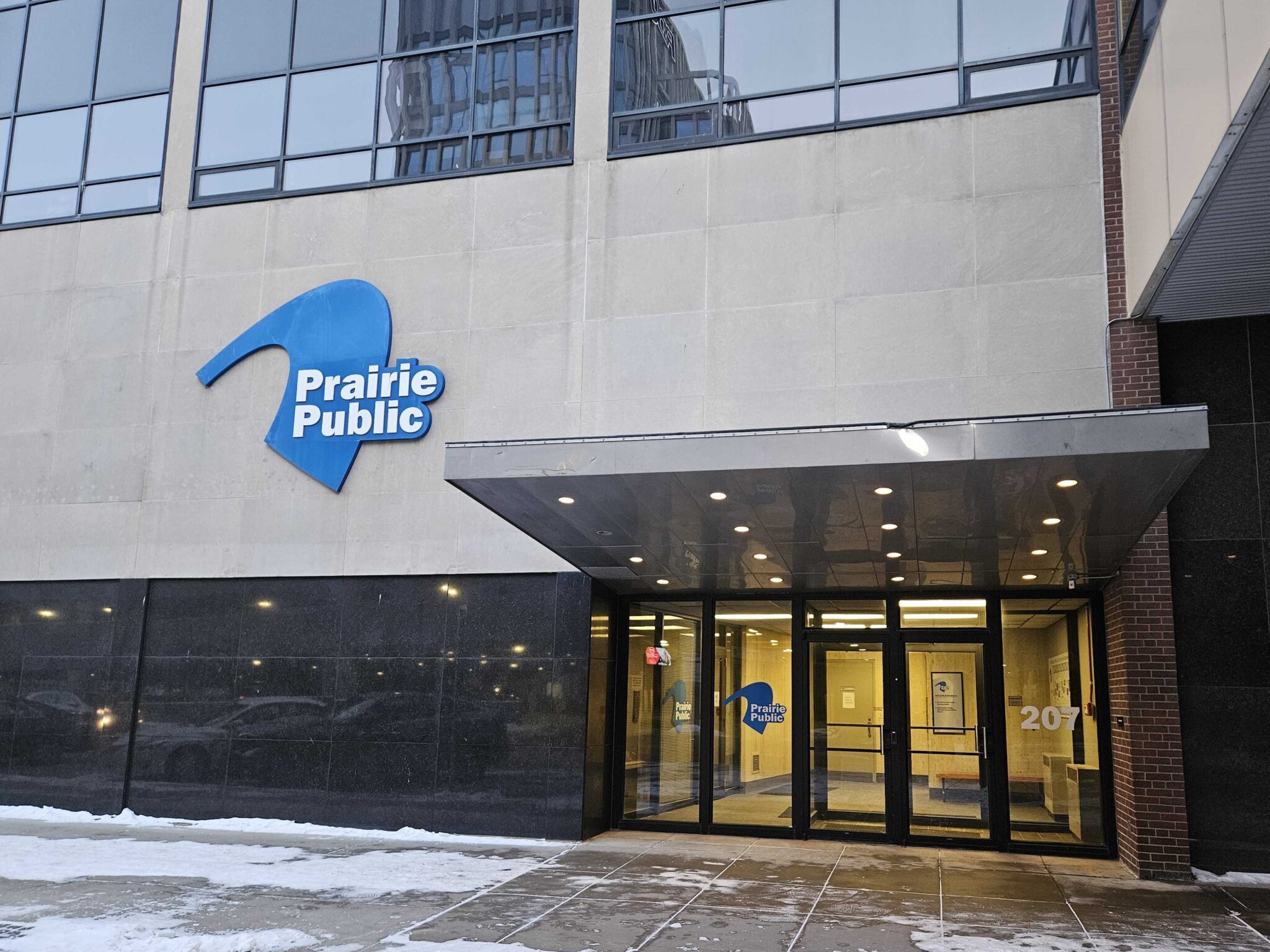
The North Dakota Senate defeated a bill that bans state or federal funding for public broadcasting but some senators who voted against the bill still called for defunding Prairie Public Broadcasting.

North Dakota typically funds Prairie Public Broadcasting through the Office of Management and Budget bill. Gov. Kelly Armstrong’s proposed budget included nearly $2.9 million for Prairie Public.

When House Bill 1255 mandating the public broadcasting funding ban passed the House of Representatives, Appropriations Committee members took Prairie Public funding out of the OMB bill.

Sen. Kristin Roers, R-Fargo, said Monday that the appropriations bill is where the funding decision should be made and warned of unintended consequences of passing the House bill.

The bill, sponsored by Rep. Jorin Johnson, R-Fargo, failed on a 41-6 vote.
 
The elected and bureaucratic mafia in DC take a substantial chunk of my income, literally at gun point. They spend part of it on CPB, PBS and NPR.

Even though I hate PBS and NPR because they lie and mislead the public, they surely have a right to their opinion. And, with regard to federal funding, well the majority rules.

But, wait - suddenly the majority has changed!
Now what?
Don't worry. Majorities change. Always have. Always will.

Public broadcasting has operated - and operated well - through lean years before. With a combination of CPB funds, enhanced (and not enhanced) underwriting, and listener donations it has gotten fat. It can continue to operate with tightened purse strings again. Personally, I liked the old Morning Edition and All Things Considered, when money was tight, a lot better than the current version.
 
Don't worry. Majorities change. Always have. Always will.

Public broadcasting has operated - and operated well - through lean years before. With a combination of CPB funds, enhanced (and not enhanced) underwriting, and listener donations it has gotten fat. It can continue to operate with tightened purse strings again. Personally, I liked the old Morning Edition and All Things Considered, when money was tight, a lot better than the current version.

we already operate as lean as you can. if cpb funding is cut, were toast and lives will be in danger during wildfire and river break up season without stations like ours
 
we already operate as lean as you can. if cpb funding is cut, were toast and lives will be in danger during wildfire and river break up season without stations like ours
Your situation is somewhat different - maybe unique - compared to WHYY, WNYC, WBUR, WAMU, KPCC, KQED, et al. Such stations reach the bulk of the public radio audience and receive the lion's share of CPB money. "The needs of the many, outweigh the needs of the one." Much as I sympathize with your situation and I hope a solution can be found, I don't think the answer is pouring cash into the coffers of stations that clearly don't need it, so a relative pittance can go to a village of 300 in the Alaska bush.
 
I don't think the answer is pouring cash into the coffers of stations that clearly don't need it, so a relative pittance can go to a village of 300 in the Alaska bush.

The problem is that those who want to defund don't think like you. To them. it's ideological. It has nothing to do with need or service. Same with VOA.

They see the money going to NPR, not stations. Either they don't understand or care.
 
We are going around in circles here. If anyone has any new ground to break, do it now. Otherwise I am closing this thread for repetitiveness.

I think we'll get a lot of new material once they have the House hearing next week on this exact subject.
 
If traditional radio wants to maintain that the medium is essential to the public for news, information, and public needs, then you can't pick and choose what you like and don't like about it. If insisting AM stays in vehicles for information needs, then public radio fills that same void. More than half of public radio listeners don't identify as Democrats. Public radio is an essential communication point for communities underserved by mainstream media. Accept it and embrace it regardless of your political leanings.
 
The problem is that those who want to defund don't think like you. To them. it's ideological. It has nothing to do with need or service. Same with VOA.

They see the money going to NPR, not stations. Either they don't understand or care.
NPR has done too good a job "branding." Too many people think NPR is public radio and public radio is NPR. (Same for PBS and public television.) A current post in the South Carolina forum shows this - even among people active on this board, who should know better. I assert that many of the people who hate public radio/NPR have never listened to it. Somebody else said it's biased, so they say it's biased. And because stations accept CPB money (much of it used to buy content from NPR), public radio has become a political issue. They'd save themselves a lot of grief if they just stopped accepting CPB money.
 
And because stations accept CPB money (much of it used to buy content from NPR), public radio has become a political issue. They'd save themselves a lot of grief if they just stopped accepting CPB money.

Actually the majority of CPB money that goes to the stations is for "unrestricted" use. So stations use it for capital equipment or things like that. The smaller percentage is for "restricted" use, and that's for programming. But it's spread among NPR, APM, PRX, and other content providers. As you say, the programming is completely at the discretion of the stations. The far right would do themselves a favor to simply do what South Carolina is doing, and refuse to buy programming from NPR. Georgia and Louisiana also have state owned NPR stations, and they could do the same thing. But instead, they want to ruin it for everyone else.

As for saving grief, I'm not sure about that. This administration simply hates the media. They don't like AP, and the AP doesn't accept federal money. They don't like the Washington Post, and they don't accept federal money. The FCC is investigating Audacy, and they don't accept federal money. So it clearly doesn't matter if they get federal money or not.
 
As for saving grief, I'm not sure about that. This administration simply hates the media. They don't like AP, and the AP doesn't accept federal money. They don't like the Washington Post, and they don't accept federal money. The FCC is investigating Audacy, and they don't accept federal money. So it clearly doesn't matter if they get federal money or not.

And all while making FOX "News" and hardline talk radio the only true places for news (their "news" being nothing but hardline talk).
 
Actually the majority of CPB money that goes to the stations is for "unrestricted" use. So stations use it for capital equipment or things like that. The smaller percentage is for "restricted" use, and that's for programming. But it's spread among NPR, APM, PRX, and other content providers. As you say, the programming is completely at the discretion of the stations. The far right would do themselves a favor to simply do what South Carolina is doing, and refuse to buy programming from NPR. Georgia and Louisiana also have state owned NPR stations, and they could do the same thing. But instead, they want to ruin it for everyone else.

As for saving grief, I'm not sure about that. This administration simply hates the media. They don't like AP, and the AP doesn't accept federal money. They don't like the Washington Post, and they don't accept federal money. The FCC is investigating Audacy, and they don't accept federal money. So it clearly doesn't matter if they get federal money or not.
It does matter. Trump and people who work for him complain about the AP. But public opinion complained about public broadcasting long before Trump and will probably complain about it long after Trump (if the continue to accept CPB money). It doesn't matter what public broadcasters do with the money. What matters is that it's tax money. It was one thing to use CPB money to get public broadcasting going 55 years ago. But now it is a going concern.

I'd love to see the techno-billionaires buy a radio station, run right-wing commentary and claim CPB money. It would be fun to see what happens then.
 
It does matter. Trump and people who work for him complain about the AP. But public opinion complained about public broadcasting long before Trump and will probably complain about it long after Trump (if the continue to accept CPB money). It doesn't matter what public broadcasters do with the money. What matters is that it's tax money. It was one thing to use CPB money to get public broadcasting going 55 years ago. But now it is a going concern.

I'd love to see the techno-billionaires buy a radio station, run right-wing commentary and claim CPB money. It would be fun to see what happens then.
Hmmmm. Is there any reason that couldn't happen? Doesn't even have to be a billionaire buying the station, just some community group with right-wing leanings. How does CPB determine which stations get the money, anyway?
 
Status
Not open for further replies.


Back
Top Bottom