• Get involved.
    We want your input!
    Apply for Membership and join the conversations about everything related to broadcasting.

    After we receive your registration, a moderator will review it. After your registration is approved, you will be permitted to post.
    If you use a disposable or false email address, your registration will be rejected.

    After your membership is approved, please take a minute to tell us a little bit about yourself.
    https://www.radiodiscussions.com/forums/introduce-yourself.1088/

    Thanks in advance and have fun!
    RadioDiscussions Administrators

KION-TV in Monterey to Shut Down all News Operations

Breaking news from (what is now) the only local news station in the Monterey Bay Area:
KION and Telemundo news departments immediately shut down

This means that NPG, which handles Telemundo, Fox and CBS for the Monterey Bay Area, will shut down all of their local news operations immediately, leaving KSBW (which handles NBC and more recently ABC) as the only local news station in the market. I think KCBA, which used to be Fox and is now the CW, is also programmed by NPG. I'm not sure whether or not they have a news operation as I no longer live in that market.
 
I would like to know how many more cuts will News Press Gazette have at their other stations given that we only heard about the Monterey part of the NPG cuts so far.
 
I would like to know how many more cuts will News Press Gazette have at their other stations given that we only heard about the Monterey part of the NPG cuts so far.
I saw a report (article) this morning that they have four markets in California. They are all relatively small (El Centro-Yuma, Palm Springs-Indio, Santa Barbara-Santa Maria-SLO) and all have local news operations. In Yuma a few years ago, they did shut down a full power station and combined it with one of their other full power stations. Each of these markets are close enough to large market operations (Phoenix/LA) that NPG could conceivably partner up with one of their stations and do the same thing....but for now, they are continuing.
 
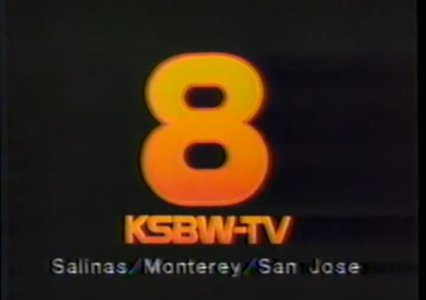
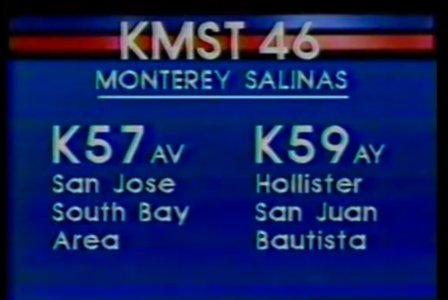
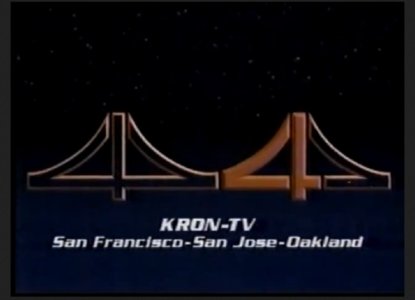
I saw some old station ids from the 1980s where the Monterey TV Stations included San Jose in their station ids in the same way San Francisco includes San Jose in the station ids. Was Santa Clara County supposed to be split into two parts like Santa Clara-N is for San Francisco and Santa Clara-S is for Monterey. But some of that is also that former ABC Affiliate for Monterey now NBC Affiliate for San Francisco KNTV used to have their OTA signals directed to San Jose and Monterey when that happened(Currently KNTV transmitter is on San Bruno Mountains) and PBS station KTEH now KQEH was included for Monterey in addition to San Jose via cable system at the time of the id.

Currently the Monterey TV market is above 100 in the DMA rankings is a clue why NPG ended up cutting their news department and they have to deal with being near the San Francisco TV market. I always wondered how much higher in the TV DMA rankings would Monterey be if Santa Clara County was included.
 

Attachments

  • Screenshot_20250921_211353_Firefox Focus~2.jpg
    Screenshot_20250921_211353_Firefox Focus~2.jpg
    38.7 KB · Views: 19
  • Screenshot_20250921_211531_Firefox Focus~2.jpg
    Screenshot_20250921_211531_Firefox Focus~2.jpg
    59.8 KB · Views: 21
  • Screenshot_20250921_212201_Firefox Focus~2.jpg
    Screenshot_20250921_212201_Firefox Focus~2.jpg
    33.9 KB · Views: 18
  • Screenshot_20250524_111827_Files by Google~2.jpg
    Screenshot_20250524_111827_Files by Google~2.jpg
    138.2 KB · Views: 18
I saw some old station ids from the 1980s where the Monterey TV Stations included San Jose in their station ids in the same way San Francisco includes San Jose in the station ids. Was Santa Clara County supposed to be split into two parts like Santa Clara-N is for San Francisco and Santa Clara-S is for Monterey. But some of that is also that former ABC Affiliate for Monterey now NBC Affiliate for San Francisco KNTV used to have their OTA signals directed to San Jose and Monterey when that happened(Currently KNTV transmitter is on San Bruno Mountains) and PBS station KTEH now KQEH was included for Monterey in addition to San Jose via cable system at the time of the id.

Currently the Monterey TV market is above 100 in the DMA rankings is a clue why NPG ended up cutting their news department and they have to deal with being near the San Francisco TV market. I always wondered how much higher in the TV DMA rankings would Monterey be if Santa Clara County was included.
It was weird. KNTV San Jose was the ABC affiliate for the Salinas-Monterey market (not just an OOM default affiliate, but the actual affiliate), and while SC county was split, so far as I am aware, neither part of SC County was ever in the Salinas-Monterey market. Pretty sure KNTV tilted their signal to the south to protect ABC affiliate KGO, and presumably, to give better coverage the Salinas and Monterey areas. So you had a situation where one of the three major network affiliates was not actually within its own market. AFAIK there is no absolutely strict requirement that a station assigned to a given market is geographically within that market, again, in-market stations, not just default infill stations where one or more networks don't have in-market affiliates.

I cannot swear my life that San Jose and its part of SC county were never in the SM market, not without poring through years' worth of Broadcasting Yearbooks, but I don't recall ever seeing it. I don't imagine that the SF market would have cottoned to the idea of losing San Jose with its large population.
 
So much for swearing my life. The 1977 BCYB does indeed show Santa Clara County East (not the part that contains San Jose proper, that's Santa Clara West) as being in the Salinas-Monterey market. It remained in the SM market for 1978, the page for 1979 was missing, it went back to SF in 1980 through 1983, and then it flipped back to SM in 1984 before reverting to SF in 1985. I didn't go past 1990.

As a practical matter, viewers in Santa Clara East probably watched stations from both markets, with SF eventually winning a preponderance of viewing.
 
Last edited:

Here is another explanation this time when Cable TV came to Monterey in the 1950's and the only channels that were available at that time was from San Francisco. This was when TV was still in its early stages and local stations were not formed yet at the time of the cable service starting in Monterey.
 
Here is another explanation this time when Cable TV came to Monterey in the 1950's and the only channels that were available at that time was from San Francisco. This was when TV was still in its early stages and local stations were not formed yet at the time of the cable service starting in Monterey.
I uploaded that video! Years ago I had found it on an old VHS-C cassette of all things. I probably recorded it back in 1993 when I was 12 years old.

MPTV was a good local company. After the 1992 Cable TV Act passed, they dropped all of the San Francisco stations. Through a letter writing campaign, I persuaded them to at least carry the primetime local news from KRON 4.
 
I saw a report (article) this morning that they have four markets in California. They are all relatively small (El Centro-Yuma, Palm Springs-Indio, Santa Barbara-Santa Maria-SLO) and all have local news operations. In Yuma a few years ago, they did shut down a full power station and combined it with one of their other full power stations. Each of these markets are close enough to large market operations (Phoenix/LA) that NPG could conceivably partner up with one of their stations and do the same thing....but for now, they are continuing.
Regarding the Central Coast market (SLO-Santa Maria-Santa Barbara) - the market sprawls. Maybe the southern parts are close enough to Los Angeles to where a Los Angeles-based operation wouild provide adequate coverage and wouldn't offend audiences, but that might not be the case in the northern part of the market, particularly Paso Robles and North San Luis Obispo county in general, and possibly including San Luis Obispo itself.

NPG's business model has been to roll up multiple network affiliates in a market and then program the same newscast on most or all of them. The move in Monterey is a little surprising...NPG actually seems to run decent news operations, if a bit on the dull side...possibly it's an experiment. They certainly haven't tried it in their home market of St. Joseph, Mo., where there's a significant incursion from Kansas City stations, and always has been...and where NPG is entirely on LPTVs (since their attempt to buy KQTV failed).
 
Some information and observations. First of all, with regard to @Mark Roberts - I actually remember around 2012 or 2013 that KION was actually producing newscasts for Channel 12 in Santa Maria. Kind of strange that NPG would shut down Monterey, but things are different nowadays. I lived in Monterey from age one in 1970 to age nineteen in 1989. I worked for KDON radio in Salinas from 1985-1989 and KWAV for the last few months of 1989 before going to college. San Jose is 60 or so miles north of the Monterey area (and only about 20-25 miles from the Santa Cruz part of the market). The Santa Cruz Mountains form part of the barrier between Monterey and the San Jose area with the area from Salinas through Hollister, Gilroy and Morgan Hill being mostly part of the Salinas Valley and into the Silicon Valley. The stronger radio stations from both markets easily reach the other market with a pretty strong signal. When I was a kid in Monterey, MPTV would bring in all of the SF stations, with KNTV serving as our ABC affiliate. This meant that San Jose pretty much had two choices for ABC, KNTV and KGO-TV. KNTV's transmitter was on Loma Prieta, in the Santa Cruz Mountains, giving them equal coverage of the Monterey and San Jose markets. The SF stations generally had to be blocked out when they were carrying the same network programs, although for a few years I remember MPTV running both KNTV and KGO freely in prime time. That may have been laziness, or it may have been because both stations were technically outside our market. We also had KTVU from Oakland and KGSC (later KICU) channel 36 from San Jose and KTEH channel 54 which was PBS. Both KICU and KTEH had translators/repeaters in the Salinas-Monterey area. Sadly, we never got KBHK/44 or KTZO/20 but we always got teased by their listings in the TV Guide - they always seemed to have the best shows.

I really have no idea why KMST (Channel 46) had a translator in San Jose - maybe it was just to grow their audience, or maybe they really did try to take the place of KPIX as a CBS station for San Jose. I remember both KMST and KSBW were supposedly offered on Gill Cable in San Jose, but I think they had to be blocked out when SF stations were running network programs at the same time.

Sometime in the later part of the 1980s, KSBW moved their transmitter to a huge tower on Mount Madonna, in the Santa Cruz Mountains. It had tons of flashing lights on it and could be seen pretty clearly from both the Monterey area and the San Jose area. This was because KSBW was intentionally trying to target San Jose (this was during the time of the KSBW screenshot indicated by @Y2kTheNewOldies . ). From my understanding, NBC (KRON) was not happy with that, and in the early 90s KSBW sold the tower and moved back to Fremont Peak near Salinas. You can still see the tower clearly when flying into San Jose from the south but there are no commercial stations on it any longer.

Around 2000, KNTV was bought by NBC and moved their tower to San Bruno Mountain to better cover the SF Bay Area fully. ABC is now handled in Monterey by KSBW 8.2
 
A few thoughts on some of the things said here:

If you look at NPG's clusters, most of them do contain multiple network affiliations. They provide the news programming to (but don't sell ad time on) all four major English-language networks in Yuma, three in Palm Springs, three on the southern Central Coast, three in Idaho Falls, three in St. Joseph, two in Bend, two in Columbia, and (until this week) two in Monterey-Salinas. The only markets where they have one Big Four affiliation are larger: Colorado Springs and El Paso. These are markets that have different economic variables (and KVIA is a #1 station), so I won't consider them in this analysis.

The configuration of some of those markets is more advantageous to NPG. Even if the "other" station is a strong local entity, like a KSBY or a KQTV, they have three networks to sell off of. And in some cases the NPG station is the historic #1, e.g. Idaho Falls or Bend, which helps. Among the exceptions: Columbia, a market with historic ties for NPG (David Bradley, the current CEO, was once one of the University of Missouri's curators), and Yuma, which has a low carrying capacity and really can only have one TV news source in the current marketplace (and two teams of ad sales to prevent a monopoly in that field).

But that logic fails in Monterey. KSBW, not KION, is the historic and continued #1, a strong local entity, and NPG does not have enough venues to sell advertising in to countervail that. It honestly is one of their weakest markets. That was never going to change. If you are trying to cut costs, this is a cost you can sadly cut.


As to the San Jose and market situation, KNTV kind of got a loophole that let it keep running for decades. The KMST translator was built in 1979. It may have been an attempt to prevent CBS from fleeing. At one point in 1980, CBS was in affiliation talks with KNTV, which primarily served to get KPIX to carry more network shows and get ABC to cave to KNTV's demands. (KNTV also got approval to build a translator in Palo Alto and to broadcast ABC programs on it, which was quite an uphill climb.)

The road was an uphill one for the Salinas/Monterey stations in San Jose, but you can't fault KSBW especially for trying to compete. Their problem ended up being the DMA lines and changes in San Jose in the 80s and 90s that strengthened its ties to big-city San Francisco. In the end, KSBW needed to restore signal to parts of its DMA that it had previously ignored while on Mount Madonna.

 
When I was a kid in Monterey, MPTV would bring in all of the SF stations, with KNTV serving as our ABC affiliate. This meant that San Jose pretty much had two choices for ABC, KNTV and KGO-TV. KNTV's transmitter was on Loma Prieta, in the Santa Cruz Mountains, giving them equal coverage of the Monterey and San Jose markets. The SF stations generally had to be blocked out when they were carrying the same network programs, although for a few years I remember MPTV running both KNTV and KGO freely in prime time. That may have been laziness, or it may have been because both stations were technically outside our market.

And this is yet one more example of the weirdness of the KNTV situation. KNTV was considered as being a station of the Salinas-Monterey market, even though it was physically situated just outside the market. Moreover, other San Jose stations, if Broadcasting Yearbook (1975) can be considered as authoritative on the subject, were considered San Francisco-market stations. KNTV is excluded from the list of SF-market stations in that same edition of the Yearbook.

Fun fact, KGO often billed itself as "San Francisco-Oakland-San Jose". For promotional purposes, a station can present itself as serving whatever cities it wishes, AFAIK such promotion does not suggest that a station is actually licensed to those additional cities. (For an extreme example, KWRB Riverton WY, now KFNE, referred to itself as "Lander-Riverton-Thermopolis-Worland", and WHCP Portsmouth OH, now WQCW, said "Portsmouth-Huntington-Charleston" on its ID slide, all this while originating its short-lived newscast from Charleston.) I don't think KGO was ever happy with the idea of KNTV being an ABC affiliate. San Jose is over 40 air miles from San Francisco, and there's no intrinsic reason that San Jose has to be in the SF market, it's just a function of the preponderance of viewing.
 
KNTV also got approval to build a translator in Palo Alto and to broadcast ABC programs on it, which was quite an uphill climb.

To this day, WCNC Charlotte has a translator, W36FB, in Biscoe NC, which is within the Greensboro-Winston-Salem market. I've never heard of WXII kicking up any dust over that.

Oddly enough, it is on UHF channel 36, the same as WCNC's PSIP channel number. Its PSIP information is comprised of the same 36.x subchannels as WCNC uses, as well as 64.2 which is WCNC's host channel for WAXN's Laff feed.
 
The configuration of some of those markets is more advantageous to NPG. Even if the "other" station is a strong local entity, like a KSBY or a KQTV, they have three networks to sell off of. And in some cases the NPG station is the historic #1, e.g. Idaho Falls or Bend, which helps. Among the exceptions: Columbia, a market with historic ties for NPG (David Bradley, the current CEO, was once one of the University of Missouri's curators), and Yuma, which has a low carrying capacity and really can only have one TV news source in the current marketplace (and two teams of ad sales to prevent a monopoly in that field).
Bradley was the chair of the board, which triggered an FCC review when NPG bought the Columbia cluster in 2012 because the university owned KOMU-TV. He had to pledge to recuse himself from matters directly involving KOMU.

This is also where Columbia-Jefferson City doesn't quite fit the template of some other NPG markets. The cluster - one full-power (KMIZ) plus two LPTVs - was assembled by the previous owner, an investment firm. KMIZ is the ABC affiliate; KOMU is the NBC affiliate; Sinclair-owned KRCG is the CBS affiliate. There's also a full-power Christian outfit that isn't much of a factor in the market. Unless Sinclair decides to sell, which seems unlikely, that configuration will probably hold up for a long time. The university might sell KOMU at some point in the very distant future but, for now, it's a linchpin of the "Missouri Method" of journalism education...especially given that "convergence journalism" is now the mantra, resulting in a combined radio-TV-newspaper newsroom. (I don't know if all the TV news operations have moved onto campus, but I know there were plans for doing so. Radio and newspaper are already there.)

Interesting enough, KMIZ is now the #1 local station, outpacing KOMU which had traditionally had that distinction.

But that logic fails in Monterey. KSBW, not KION, is the historic and continued #1, a strong local entity, and NPG does not have enough venues to sell advertising in to countervail that. It honestly is one of their weakest markets. That was never going to change. If you are trying to cut costs, this is a cost you can sadly cut.
Monterey-Salinas-Santa Cruz is also a curious market: Monterey - a wealthy, resort-like community with some military presences as well; Salinas - agricultural, working-class, Hispanic; Santa Cruz - a modest resort community with a laid-back vibe. What appeals on the coast may not necessarily appeal in the valley.

There's a surprising number of people who live in and around Santa Cruz and work in Silicon Valley...I know this from my time at a Mountain View tech company, but you can also figure this out by listening to KCBS traffic reports focusing on the dangerous bottleneck that is Highway 17...even so, that market feels very distinct from SF-Oakland-San Jose. I'll grant that my experience only dates to 1999; it's interesting to hear of some of the maneuvers that went on before then.
 
Monterey-Salinas-Santa Cruz is also a curious market: Monterey - a wealthy, resort-like community with some military presences as well; Salinas - agricultural, working-class, Hispanic; Santa Cruz - a modest resort community with a laid-back vibe. What appeals on the coast may not necessarily appeal in the valley.

What you describe kind of sounds like the Myrtle Beach-Florence market. The two cities are about 70 road miles apart, and it is a difficult drive, Myrtle Beach and Florence really do not have all that much in common. Myrtle Beach has grown explosively with people moving in from all over the eastern part of the US, while Florence is an older, more established town along I-95, it is "pretty far from everywhere" and has amenities far out of proportion to a city of its size, you could live a fairly complete life without ever leaving Florence. Moreover, most of the transmitters are situated out at Hamer, SC, near the iconic South of the Border tourist complex at the state line on I-95. Getting a good signal into Horry County (Myrtle Beach) from there is a challenge, and WPDE, the NBC affiliate in MB, has a similarly difficult time reaching Florence. As a practical matter, all Florence commercial stations have moved to the Myrtle Beach area (Conway and Socastee). It's really not a naturally-occurring market. Horry County was actually part of the Wilmington market up into the 1980s.
 
A few thoughts on some of the things said here:

If you look at NPG's clusters, most of them do contain multiple network affiliations. They provide the news programming to (but don't sell ad time on) all four major English-language networks in Yuma, three in Palm Springs, three on the southern Central Coast, three in Idaho Falls, three in St. Joseph, two in Bend, two in Columbia, and (until this week) two in Monterey-Salinas. The only markets where they have one Big Four affiliation are larger: Colorado Springs and El Paso. These are markets that have different economic variables (and KVIA is a #1 station), so I won't consider them in this analysis.

The configuration of some of those markets is more advantageous to NPG. Even if the "other" station is a strong local entity, like a KSBY or a KQTV, they have three networks to sell off of. And in some cases the NPG station is the historic #1, e.g. Idaho Falls or Bend, which helps. Among the exceptions: Columbia, a market with historic ties for NPG (David Bradley, the current CEO, was once one of the University of Missouri's curators), and Yuma, which has a low carrying capacity and really can only have one TV news source in the current marketplace (and two teams of ad sales to prevent a monopoly in that field).

But that logic fails in Monterey. KSBW, not KION, is the historic and continued #1, a strong local entity, and NPG does not have enough venues to sell advertising in to countervail that. It honestly is one of their weakest markets. That was never going to change. If you are trying to cut costs, this is a cost you can sadly cut.


As to the San Jose and market situation, KNTV kind of got a loophole that let it keep running for decades. The KMST translator was built in 1979. It may have been an attempt to prevent CBS from fleeing. At one point in 1980, CBS was in affiliation talks with KNTV, which primarily served to get KPIX to carry more network shows and get ABC to cave to KNTV's demands. (KNTV also got approval to build a translator in Palo Alto and to broadcast ABC programs on it, which was quite an uphill climb.)

The road was an uphill one for the Salinas/Monterey stations in San Jose, but you can't fault KSBW especially for trying to compete. Their problem ended up being the DMA lines and changes in San Jose in the 80s and 90s that strengthened its ties to big-city San Francisco. In the end, KSBW needed to restore signal to parts of its DMA that it had previously ignored while on Mount Madonna.
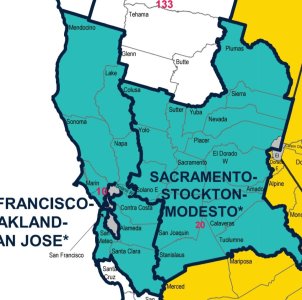
Thanks for that part given that when I looked at the 2019-present TV DMA maps there was no signs that Santa Clara County was supposed to have a split market like another part of the San Francisco TV market does but there are signs that it was considered and done at one point. I remember KGO-TV was also the default ABC affiliate for Monterey in the early 2000's right when KNTV was using the WB affiliation in the interim while KNTV (Then Grante/Now NBC O&O) was in the transition phase of the then proposed sale and waiting for FCC approval of KNTV to NBC with NBC affiliation for San Francisco.

Yes today ABC moved to KSBW's subchannel feed on 8.2 as of 2025.

 
Last edited:
Thanks for that part given that when I looked at the 2019-present TV DMA maps there was no signs that Santa Clara County was supposed to have a split market like another part of the San Francisco TV market does but there are signs that it was considered and done at one point.

I have to think that split counties come and go depending upon need in any one year to do it. On what I suppose is the same map as you cite, there are only a handful, a few in California (including Riverside Central which comprises the Palm Springs market, sounds like a high school or something :)) and others scattered throughout the country (Utica, Mankato, a few others). Back in the 1960s, Arbitron split Guilford County NC (Greensboro) into "Guilford Outer" and "Guilford Inner", the latter making up much if not all of Greensboro proper. It didn't make any difference as to the core market, but OOM stations would sometimes have different percentage tranches of viewership inside and outside the "donut hole".
 
It's interesting that you bring up Palm Springs. One of my old radio buddies and his family live in Yucca Valley. There lies a trio of cities starting with Yucca Valley, then Joshua Tree, and about 15 miles further is Twentynine Palms and the military base before highway 62 fades into nothingness on its way to Arizona. The closest shopping, fun and civilization center is about 35-40 minutes down the hill where Palm Springs and the other Desert Cities of the Coachella Valley are. Yet, the radio/TV stations from down there don't clearly get in to the three cities. They have a handful of radio stations (and some translators of CV stations) of their own, yet for TV purposes, This valley is considered part of the Los Angeles market and all of the LA stations broadcast from translators there and are on cable there. Palm Springs stations are not represented at all. That bothers my buddy, since they are about 30 road miles from Palm Springs and about 120 road miles from LA. He wishes he had at least one "local" station for news and such. To him, "local" includes the Coachella Valley because it's at least close enough and a lot of the economic trips that can't be made in Yucca Valley, Joshua Tree and 29 Palms (they have one giant Super Walmart and several big retaurant chains, but not all of them and no Target or other big box stores) means that residents must travel to the Coachella Valley (or Apple Valley/Victorville, which I think is considerably farther). There is one radio station licensed to Yucca Valley, 106.9 KDGL, that straddles a mountain between the two valleys and serves both of them, although it focuses more on Palm Springs. I'm surpised there are not more stations up there to serve both areas.


Back
Top Bottom