A few thoughts on some of the things said here:
If you look at NPG's clusters, most of them do contain multiple network affiliations. They provide the news programming to (but don't sell ad time on) all four major English-language networks in Yuma, three in Palm Springs, three on the southern Central Coast, three in Idaho Falls, three in St. Joseph, two in Bend, two in Columbia, and (until this week) two in Monterey-Salinas. The only markets where they have one Big Four affiliation are larger: Colorado Springs and El Paso. These are markets that have different economic variables (and KVIA is a #1 station), so I won't consider them in this analysis.
The configuration of some of those markets is more advantageous to NPG. Even if the "other" station is a strong local entity, like a KSBY or a KQTV, they have three networks to sell off of. And in some cases the NPG station is the historic #1, e.g. Idaho Falls or Bend, which helps. Among the exceptions: Columbia, a market with historic ties for NPG (David Bradley, the current CEO, was once one of the University of Missouri's curators), and Yuma, which has a low carrying capacity and really can only have one TV news source in the current marketplace (and two teams of ad sales to prevent a monopoly in that field).
But that logic fails in Monterey. KSBW, not KION, is the historic and continued #1, a strong local entity, and NPG does not have enough venues to sell advertising in to countervail that. It honestly is one of their weakest markets. That was never going to change. If you are trying to cut costs, this is a cost you can sadly cut.
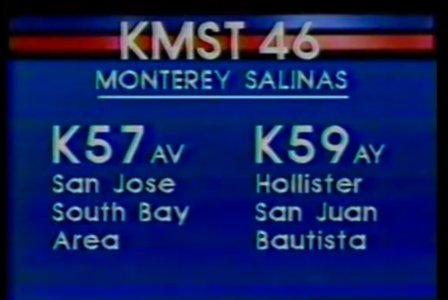
As to the San Jose and market situation, KNTV kind of got a loophole that let it keep running for decades. The KMST translator was built in 1979. It may have been an attempt to prevent CBS from fleeing. At one point in 1980, CBS was in affiliation talks with KNTV, which primarily served to get KPIX to carry more network shows and get ABC to cave to KNTV's demands. (KNTV also got approval to build a translator in Palo Alto and to broadcast ABC programs on it, which was quite an uphill climb.)
The road was an uphill one for the Salinas/Monterey stations in San Jose, but you can't fault KSBW especially for trying to compete. Their problem ended up being the DMA lines and changes in San Jose in the 80s and 90s that strengthened its ties to big-city San Francisco. In the end, KSBW needed to restore signal to parts of its DMA that it had previously ignored while on Mount Madonna.



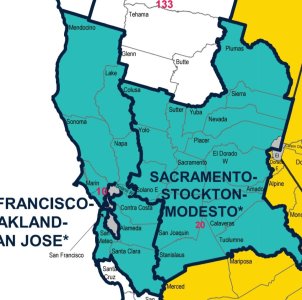


 ) and others scattered throughout the country (Utica, Mankato, a few others). Back in the 1960s, Arbitron split Guilford County NC (Greensboro) into "Guilford Outer" and "Guilford Inner", the latter making up much if not all of Greensboro proper. It didn't make any difference as to the core market, but OOM stations would sometimes have different percentage tranches of viewership inside and outside the "donut hole".