• Get involved.
    We want your input!
    Apply for Membership and join the conversations about everything related to broadcasting.

    After we receive your registration, a moderator will review it. After your registration is approved, you will be permitted to post.
    If you use a disposable or false email address, your registration will be rejected.

    After your membership is approved, please take a minute to tell us a little bit about yourself.
    https://www.radiodiscussions.com/forums/introduce-yourself.1088/

    Thanks in advance and have fun!
    RadioDiscussions Administrators

The BBC needs money!

Thanks for explaining how it all works. Can people refuse the inspections? Also, are there enough inspectors to be able to cover the entirety of the UK? Do businesses like restaurants/pubs have to have a TV license also, or is it just part of their business license?
The inspectors do exist and do knock on doors, but I've never encountered one. You can just refuse to let them in, although if they see you watching live TV through the window, that can count as evidence. They have targets so will tend towards visiting lower-income areas, and places like student housing where there are more people without licences, I live in a middle-class suburb.

I get about a letter a month, normally with fake threatening legal language about being taken to court or stuff like "will you be in on February 4?" - it's all scary BS designed to frighten people into paying for a licence. The letters make out that you're breaking the law just by not having a licence. From a quick Google, someone is posting examples of the letters here.

Businesses need a business TV licence. When I went to a local store a few weeks ago to buy a TV for my new house (for YouTube, gaming etc) they could only show demo content on screen because they didn't have a TV licence to show TV programming!
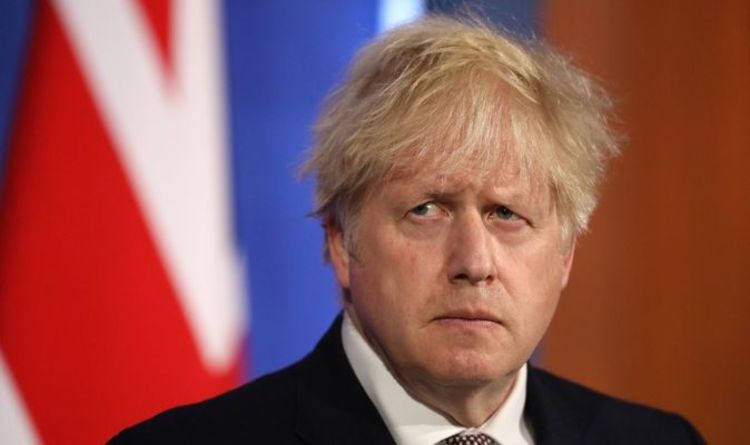
 
I was under the impression that Boris Johnson was working to do away with the license, and the BBC was adjusting it's budgets to deal with that.

Boris Johnson is long since out of power. This article is from 2021, when nothing could have been done to the licence fee anyway, as it legally has to wait for a charter renewal (always scheduled for 2027). Had the Johnson government still been in power, they may have chosen to make wholesale changes to the BBC's funding in 2027, but I can't see the Keir Starmer administration doing anything so drastic.

The Express is a poor quality tabloid, and this article seems to be a lot of right wing blowhards moaning back in 2021. As with NPR and PBS, there is a perception on the right that the BBC is a hive of left-wing propaganda, and efforts to undermine it. Unlike in the U.S., the right are not currently in power, so there is little they can do.
 
I will point out though, that public broadcasting has the option of receiving donations, underwriting, and grants. I far as I know, the BBC doesn't have that luxury.
Personally, I think an unintended consequence of having something like the BBC in radio is that it sucks all the air out of the room. We have some really good, local, independent non-commercial radio stations in the UK across different areas and platforms, but because the BBC collects a compulsory fee for broadcasting, we've never had the culture of public contributions to non-commercial broadcasting that the U.S. has, so these stations tend to run on fumes and they struggle to keep themselves going. I can pick up BCB 106.6 where I live, and they have some really interesting local programming, but their transmitter is audibly dropping to pieces and they are continually struggling for funds.

There's understandably a sense among listeners that "I already pay £175 a year for broadcasting, so why should I start giving £5 a month to community radio?". There isn't a culture of philanthropy in broadcasting. A while ago around the time of the last charter renewal, there were proposals to top-slice a tiny amount of the BBC licence fee and allow local community broadcasters to apply for funding from that pot to pay staff or produce programming, but the BBC successfully fought them off, because god forbid anyone else does any non-comm broadcasting in the UK.
 
The licence fee money goes to the BBC, but you need a licence to watch any TV channel "live". So if you watch ITV, Channel 4, Sky Sports, Red Hot XXX or any other TV broadcast channel, you have to have a licence, even if you never watch a second of BBC. That even applies if you only ever watch foreign TV - so immigrants who have a satellite dish and only watch Polish or Pakistani TV, or people who stream American TV, should all have a licence.

One of the problems is that the law was designed in the days when the only way to watch live TV was on a TV. It was never designed for modern media. Strictly speaking, you should have a licence if you watch any live stream on YouTube or Twitch, for instance, but was that ever the intention of the law? Is Twitch "TV" in the sense that it was meant when this was dreamed up? Who knows. You don't need a licence if you watch on-demand dramas on Amazon Prime Video, but the moment you stream a second of one of the live Premier League games they show, you do.

And does it count if you're watching live video on a smartphone in your house? What about on the beach, or on the train? Buildings, rather than people, are licensed - your house is what has the licence, not you. So again, it's a super murky area because the people who wrote the law couldn't dream of an era when you could watch live streaming video on the train to work.

The whole thing is a mess, and needs re-looking at, because it's just not suitable for today's media environment. I don't have the answer! I also don't currently have a licence - when I moved and went to move my licence, I looked at how much I was using the services for which a licence is required and realised it wasn't nearly enough to justify the cost. I now get endless letters from TV Licensing threatening me with an inspection. (I don't watch live British TV without a licence, although I do occasionally watch YouTube live streams, so strictly speaking I'm an outlaw.)
Great insight! I figured this was really antiquated due to changes in the way linear TV is on the decline versus streaming. Which is why (and unfairly) they are looking to squeeze money from subscribers of streamers like Netflix to pay to keep the whale (BBC) afloat. The bringing back of the radio licence is sure to push OTA radio listening further into decline.

These proposals are asking alot of additional support from citizens who might be finding it harder these days to make ends meet. Do you think Brits will just take it, and pay up, or could a revolt of some sorts be brewing?
 
Boris Johnson is long since out of power.

I'm aware of that. But I recall him targeting the BBC license when he was in power, and getting something passed that would be like "Brexit for the Beeb." Some kind of change once the charter came up for renewal.


A while ago around the time of the last charter renewal, there were proposals to top-slice a tiny amount of the BBC licence fee and allow local community broadcasters to apply for funding from that pot to pay staff or produce programming,

That's why the US had CPB. The tax money went to them, and they did grants to local non-com stations regardless of whether or not they carried NPR or PBS. But the administration thought it was like the BBC, and the stations are managed by NPR & PBS. That's not true. The stations got 92% of the money, and now that it's gone, they've had to scramble to replace it.
 
I can pick up BCB 106.6 where I live, and they have some really interesting local programming, but their transmitter is audibly dropping to pieces and they are continually struggling for funds.

Some community radio seems to do better than others. I know Big City radio Birmingham was doing well enough, they got permission to rebrand as BRMB when the original BRMB which was one of the first commercial radio stations in the country rebranded to one of those full lifeless quasi network stations. Now it's part of the Hits radio network. In any case Big City always had great coverage, we'll beyond it's official area and they sounded good. Very good. Still does as the new BRMB.
 
Some community radio seems to do better than others. I know Big City radio Birmingham was doing well enough, they got permission to rebrand as BRMB when the original BRMB which was one of the first commercial radio stations in the country rebranded to one of those full lifeless quasi network stations. Now it's part of the Hits radio network. In any case Big City always had great coverage, we'll beyond it's official area and they sounded good. Very good. Still does as the new BRMB.
Big City Radio was doing awful - repeatedly hit with sanctions for not providing community programming:


Now it's rebranded to BRMB, it's doing even worse, with two sanctions in 2025 alone:


Taking the name of a great, but now defunct, regional station and broadcasting rubbish over it doesn't improve the programming! Most stations go for decades without attracting the attention of a fairly lax Ofcom, so to get hit with breaches and sanctions so frequently they must be doing something fairly poorly.
 
Big City Radio was doing awful - repeatedly hit with sanctions for not providing community programming:

...... Most stations go for decades without attracting the attention of a fairly lax Ofcom, so to get hit with breaches and sanctions so frequently they must be doing something fairly poorly.
Yikes. Not good. They're trying to be something they're not. They're a community radio station not a full service commercial station
 
Big City Radio was doing awful - repeatedly hit with sanctions for not providing community programming:


Now it's rebranded to BRMB, it's doing even worse, with two sanctions in 2025 alone:


Taking the name of a great, but now defunct, regional station and broadcasting rubbish over it doesn't improve the programming! Most stations go for decades without attracting the attention of a fairly lax Ofcom, so to get hit with breaches and sanctions so frequently they must be doing something fairly poorly.
How many breaches does it take for Ofcom to pull a station's licence, regardless of what type of station has had breaches?
 
I am only aware of one station that has had its licence pulled, Iman FM:

Mercy 106.7 was another

 
Mercy 106.7 was another

I wrote that article.

Mersey 106.7 was a different issue entirely. Its predecessor station, KCR, had been off the air for long periods because it ran out of money - at one point it was locked out of its building for not making rent and was playing filler production music over the air for months. Mersey 106.7 came along and briefly took over, but by that point the licence had been providing no content for so long that Ofcom decided it was no longer valid, and pulled it. It's effectively the same as a licence being cancelled for being silent, rather than for content reasons.

The 106.7 slot in Liverpool was then reused and is now occupied by an unrelated community radio station.
 
I’m keeping an eye on future funding for BBC World Service Radio. It appears they want a focus on online distribution and podcasts with local FM rebroadcasts where practical. I suspect they would like to get out of what is left of their shortwave output, but there are probably a few very specific languages and target areas they might keep a while longer on that legacy medium.
Bad news for the BBC World Service. Out of funding in 7 weeks.

 
This quote from the just posted story jumped out at me “
The BBC’s research found that its trust level was largely unchanged from four years ago at 78%. However, trust in Russia Today and China Global Television Network had jumped from 59% to 71% and from 62% to 70% respectively.”

How is trust in China or Russian broadcast media increasing? Is this international backlash to Trump?
 
Bad news for the BBC World Service. Out of funding in 7 weeks.
It will be “rescued” before then, but anyone’s guess to what extent.

The A-26 BBCWS shortwave schedules will be released around March 15, and effective on March 29. Curious if there will be more reductions in transmission hours. From previous rumblings out of the BBC it would appear they would like to get out of the shortwave business, though there are likely some very specific target areas and languages that might survive.
How is trust in China or Russian broadcast media increasing? Is this international backlash to Trump?
You answered your own question. Russia and China are very good at telling listeners (and their governments) exactly what they want to hear.

Remember that levels of trust don’t necessarily have anything to do with the credibility and integrity of the sources of information.
 
However, trust in Russia Today and China Global Television Network had jumped from 59% to 71% and from 62% to 70% respectively.”
Where can you even watch RT nowadays? After the war a lot of places removed the option to watch it. Pretty sure Tubi, Pluto TV and the like used to have it available and no longer do and I believe the app is no longer available. At least outside of Russia
 
Where can you even watch RT nowadays? After the war a lot of places removed the option to watch it. Pretty sure Tubi, Pluto TV and the like used to have it available and no longer do and I believe the app is no longer available. At least outside of Russia
You can still watch the various RT livestreams directly on their website.
 
You can still watch the various RT livestreams directly on their website.
The RT website was banned in the UK for a period, all internet providers were ordered to block it, but I looked recently and the ban seemed to have quietly expired as I was able to access it. The TV channel was taken off air at the same time and never returned.

I presume you can still receive it if you have a satellite dish and receiver and tune to the specific frequency, but it was previously on a channel number on major British TV platforms. The Chinese CGTN is still available on British TV - China is not considered to be an 'enemy' in the UK in the same way as Russia.


Back
Top Bottom