
Maybe Joe can find a unkempt gray wig from the properties closet and do three minute Andy Rooney-style endpieces. That would probably be the best use of his talents while not completely destroying the journalism parts.Maybe 60 Minutes brings back Point-Counter Point but only airs the Point without the Counter Point.

-
Get involved.
We want your input!
Apply for Membership and join the conversations about everything related to broadcasting.
After we receive your registration, a moderator will review it. After your registration is approved, you will be permitted to post.
If you use a disposable or false email address, your registration will be rejected.
After your membership is approved, please take a minute to tell us a little bit about yourself.
https://www.radiodiscussions.com/forums/introduce-yourself.1088/
Thanks in advance and have fun!
RadioDiscussions Administrators
You are using an out of date browser. It may not display this or other websites correctly.
You should upgrade or use an alternative browser.
You should upgrade or use an alternative browser.
"Newsroom culture clash" at CBS News
- Thread starter Mark Roberts
- Start date
I could see Rogan providing ending commentary on 60 Minutes the way Andy Rooney did for so many years. I have a harder time envisioning him as doing in depth investigative reporting.My take is that 60 Minutes doesn't need Joe Rogan. I say give him the 11:30PM slot.
I didn't see your comment before posting my similar one, but yes, any role at 60 Minutes would have to be much like this.Maybe Joe can find a unkempt gray wig from the properties closet and do three minute Andy Rooney-style endpieces. That would probably be the best use of his talents while not completely destroying the journalism parts.
I could see Rogan providing ending commentary on 60 Minutes the way Andy Rooney did for so many years. I have a harder time envisioning him as doing in depth investigative reporting.
He isn't a commentator like a talk show host. He does interviews. That's what late night show hosts do. That's why I say he'd be good for that slot.
But he doesn't need the exposure or the money. So I don't expect him to do it. He reaches more people on his podcast.
He offers a great deal of commentary on his podcast. I think he'd be well suited to an Andy Rooney type role on 60 Minutes. I agree he couls also handle interviews on the show.He isn't a commentator like a talk show host. He does interviews. That's what late night show hosts do. That's why I say he'd be good for that slot.
But he doesn't need the exposure or the money. So I don't expect him to do it. He reaches more people on his podcast.

Oh god noHe offers a great deal of commentary on his podcast. I think he'd be well suited to an Andy Rooney type role on 60 Minutes. I agree he couls also handle interviews on the show.

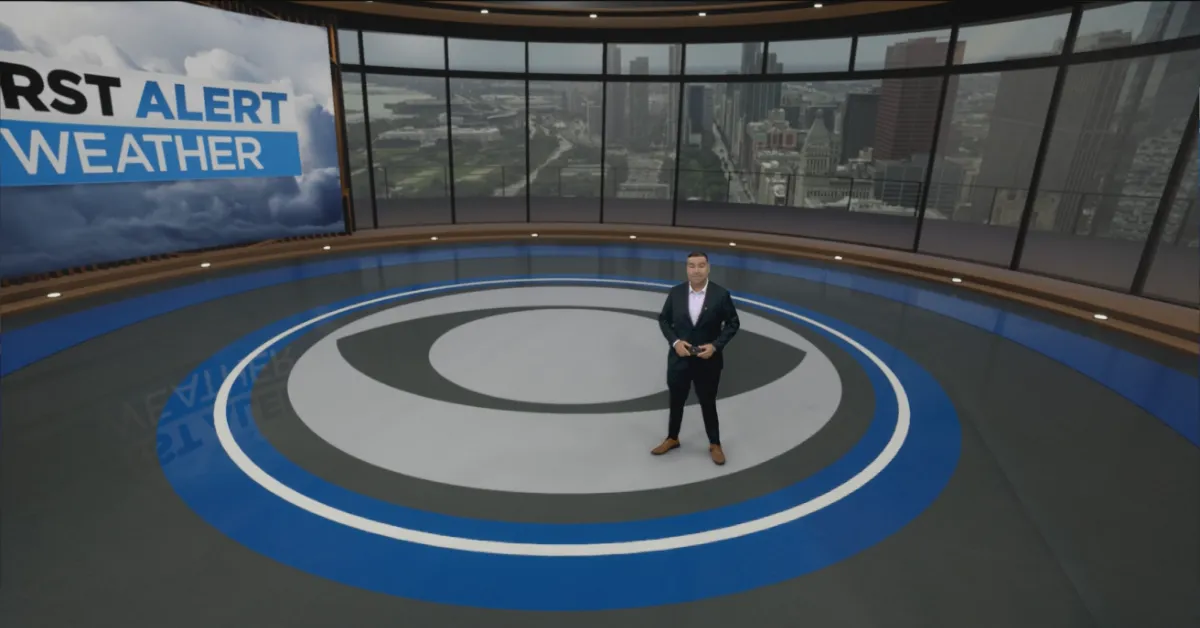
CBS News streaming channel stages walkout amid contract negotiations
WGA East members at CBS News 24/7 staged a two-coast walkout after failing to reach a new contract with Paramount.
 thedesk.net

CBS News 24/7's WGAE Members Hold 24-Hour Walkout
The union is staging a walkout after its contract expired last week.
 deadline.com
Here is more this time a strike hits CBS News over a dispute with Writers Guild. This writers dispute extends to the CBS O&O’s like KPIX San Francisco in this update.
Writers Guild of America East members at the streaming service CBS News 24/7 are holding a 24-hour walkout on Tuesday after no agreement was reached following the expiration of their contract last week.
The walkouts are taking place at the CBS News Broadcast Center in Manhattan and KPIX-TV CBS News Bay Area in San Francisco. The contract for the 60-member bargaining unit expired at the end of the day on March 9.
The union’s bargaining committee said in a statement, “CBS News 24/7 journalists are walking off the job on both coasts today because management refuses to agree to a new contract with essential work protections and fair wages. Despite multiple days of good faith negotiations and a strike pledge signed by 95% of our members to emphasize the seriousness of our demands, management continues to offer us worse terms than in our last contracts. We chose this field to cover the news, but we believe this work stoppage is necessary to achieve a fair contract. We eagerly await an acceptable contract offer from Paramount—which just shelled out tens of billions of dollars to acquire Warner Bros. Discovery

Essential pull-quote:
Full story: ‘CBS Evening News’ Viewership Drops Below 4 Million After Tony Dokoupil’s Colorful Start
Suddenly, “CBS Evening News” is back where executives at the news division behind the show hoped never to return.
Viewership for the program has once again dropped below 4 million, a critical demarcation point that previously spurred alarm at the Paramount Skydance news division. CBS News recently scrapped a version of “CBS Evening News” anchored by Maurice DuBois and John Dickerson after the program shed audience and fell below 4 million viewers on many weeknights.
Full story: ‘CBS Evening News’ Viewership Drops Below 4 Million After Tony Dokoupil’s Colorful Start
You can't fool the people. You can't lie to them. You can't force them to watch something they don't like. You can't change their beliefs.
There are simply way too many choices today. Once they make up their minds about CBS News, it's on to "next."
The next generation isn't looking for new things from linear broadcast TV news.
There are simply way too many choices today. Once they make up their minds about CBS News, it's on to "next."
The next generation isn't looking for new things from linear broadcast TV news.

Maybe the next brilliant idea from the house of Weiss and Ellison will be a cooking segment on the CBS Evening News.Essential pull-quote:
Full story: ‘CBS Evening News’ Viewership Drops Below 4 Million After Tony Dokoupil’s Colorful Start

Neither Joe's audience nor the CBS audience wants that. Unless you give the station a full "Fox News" rebrand and go 100%, nobody wants a hybrid station like that.My take is that 60 Minutes doesn't need Joe Rogan. I say give him the 11:30PM slot.
Movie reviews, too. Maybe deliver the news from a comfy couch. With a window backdrop. So many possibilities.Maybe the next brilliant idea from the house of Weiss and Ellison will be a cooking segment on the CBS Evening News.
Don't overlook Bari being a sometimes co-host.Movie reviews, too. Maybe deliver the news from a comfy couch. With a window backdrop. So many possibilities.
I would absolutely look over that- as in make it a point to look elsewhere.Don't overlook Bari being a sometimes co-host.
You can't fool the people. You can't lie to them. You can't force them to watch something they don't like. You can't change their beliefs.
There are simply way too many choices today. Once they make up their minds about CBS News, it's on to "next."
The next generation isn't looking for new things from linear broadcast TV news.
And I'm afraid that some in that next generation (perhaps more than many would like to admit) don't want to see or hear actual news at all, regardless of the source of the product. While some may argue that it is their choice, my response is, and must be, that if enough people do not want to know truthful information about the world around them and their/our place in it, then you can kiss democracy goodbye. This is because the democratic process is absolutely dependent upon citizens knowing what the actual issues and choices on those issues really are in order to make informed decisions when they enter the voting booth.

lolMaybe the next brilliant idea from the house of Weiss and Ellison will be a cooking segment on the CBS Evening News.
Not to mention being informed on what their current elected officials, or those who aspire to take their places, are doing/want to do in the peoples' name.And I'm afraid that some in that next generation (perhaps more than many would like to admit) don't want to see or hear actual news at all, regardless of the source of the product. While some may argue that it is their choice, my response is, and must be, that if enough people do not want to know truthful information about the world around them and their/our place in it, then you can kiss democracy goodbye. This is because the democratic process is absolutely dependent upon citizens knowing what the actual issues and choices on those issues really are in order to make informed decisions when they enter the voting booth.
Look, even going back to my childhood in the '50s and '60s, some kids showed no interest in keeping up with current events. But there was a big difference. We got gobsmacked by the assassination of our president. Even little kids knew that something bad and tragic had happened. Then there was the Vietnam War, back when the draft was still a thing, and many kids had brothers, or cousins, or the older siblings of friends, who got drafted and sent to the cities and/or jungles of Southeast Asia. It wasn't much of a leap of logic to realize that the same fate could be in your future too. Therefore, the habit of paying attention to the news became ingrained, even if only out of self-interest or self-preservation. (Oh and by the way, that Kennedy assassination was, sadly, not a one-and-done, and we grew up with that knowledge too.)
Once it became a non-draft, all volunteer military, it became a bit too easy to treat current events as "out of sight, out of mind", made even easier by the softening of broadcast station news and public affairs requirements. Back in those days, every station ran newscasts, and many had their own news departments. (Many of which were more than respectable, not just rip-and-read-going-through-the-motions shams.)

You make a point that broadcasters have long debated among themselves: the need to include news in regular programming.And I'm afraid that some in that next generation (perhaps more than many would like to admit) don't want to see or hear actual news at all, regardless of the source of the product. While some may argue that it is their choice, my response is, and must be, that if enough people do not want to know truthful information about the world around them and their/our place in it, then you can kiss democracy goodbye. This is because the democratic process is absolutely dependent upon citizens knowing what the actual issues and choices on those issues really are in order to make informed decisions when they enter the voting booth.
For those of us who started working in broadcasting in the 50's, we remember several subsequent decades where our license depended on a significant percentage of news and "public affairs". Generally, in that era, if your every-there-year license renewal did not show 6% of that for an FM and 8% for an AM, you were going to get a lengthy and expensive review by the Broadcast Bureau. Some stations that were not in compliance even got short-term renewals or added reporting / remedial actions.
Many of us thought that the burden the FCC put on us was excessive. When the growth of FM generally tripled the number of viable stations in every market or rural zone, some thought that having everyone broadcasting so many hours of news and public affairs was a bit too much,
So, we buried long newscasts in the overnight hours. We put the "Public Affairs, Educational and Other" stuff really early on Sunday morning or late on Sunday night. For many formats, we had the belief that interrupting the flow of music was not what listeners wanted. Research verified this.
But the FCC required hours and hours a week of that content. AM and FM had no real-time competition.
But then we got streaming, satellite radio, iPhones and all the rest of new technology. That allowed Sirius and XM to have a hundred music channels with no news or public affairs. Web streaming allowed new media "stations" to skip news and such... as well as not being controlled as to content and song lyrics by any entity.
Going to your point about an informed electorate, we have to realize that most people don't want information, "truthful" or otherwise, when they listen to an audio provider. They want their favorite songs.
In another country, I built my first ten or so stations with no news service at all. We played music 24/7 on every one of them. At that point, I made a significant investment in an all talk station with news, commentary, sports and drama segments. As there were only 3 or 4 other stations trying to do that in my "home market" this was a logical step. The station was very expensive to run, but it worked.
My feeling, since then (and that was around 1970) was that people knew where to go for news and commentary. But when they wanted music, they did not want news mixed with it. Of course, in some cases I saw that there was an interest in news during the breakfast show, but not the rest of the day. And where the FCC supervised our efforts, we spent more time figuring out how to hide the news and public affairs shows than actually doing them!
So my point is that you can't, today, force information on listeners. There are too many audio providers that don't provide news, commentary and opinion in any form. And listeners who don't want to keep up´with the news don't have to listen, ever.
A day or two ago, one of the TV news providers did some street interviews. A significant number of those interviewed did not know that there was a war going on between "us and them" anywhere in the world, and even one of the people who was vaguely aware could not identify where the war was taking place.

K.M. Richards
Program Director, The Eighties Channel™
Neither Joe's audience nor the CBS audience wants that. Unless you give the station a full "Fox News" rebrand and go 100%, nobody wants a hybrid station like that.
Could we perhaps stop inadvertently equating "network" with the affiliate "stations"? It makes the discussion much more difficult to follow when terms are misapplied.
K.M. Richards
Program Director, The Eighties Channel™
But ... but ... but, I thought Bari Weiss was brought in to make sure that didn't happen again?!? 😜