
• Get involved.
    We want your input!
    Apply for Membership and join the conversations about everything related to broadcasting.

    After we receive your registration, a moderator will review it. After your registration is approved, you will be permitted to post.
    If you use a disposable or false email address, your registration will be rejected.

    After your membership is approved, please take a minute to tell us a little bit about yourself.
    https://www.radiodiscussions.com/forums/introduce-yourself.1088/

    Thanks in advance and have fun!
    RadioDiscussions Administrators

99.9 ANNOUNCING A FLIP

I am not certain the HD2 or 3 signal can be considered the originator.

I think the FCC rules say "feed"....which is a method of getting it from here to there.

Let me try again to clarify:

A translator that's licensed to rebroadcast an FM station may legally (under current FCC policy) rebroadcast any portion of that FM station's programming. It can be the main analog/HD1, or an HD subchannel. This is not codified anywhere in Part 73 or 74; it's policy based on what Audio Division staff have allowed.

The FCC licensing process looks at what the originating station is and how its signal does (or doesn't) encompass the translator's signal. If the translator's signal is entirely within the 60 dBu contour of the originating station, it's a "fill-in" and the "feed" can be anything the licensee wants to use - direct OTA pickup, microwave, internet, telco line, whatever. All translators of AM stations are considered "fill-in" translators and can be fed by any method.

As noted above, there are separate and much more strict rules for non-fill-in translators that extend the reach of a primary station. For commercial stations, those must be fed off the air. In theory, I suppose you could use an HD subchannel's programming if you were able to pick up the HD at the translator site, but I know of no such case in actual practice right now. And as noted, the other restrictions on non-fill-in translators include a separation of ownership and much lower power levels.

As for AMs? No AM station has been allowed to shut down and originate programming on its linked FM translator. Several AMs have waited out the four years after the 250-mile window, then moved the AM programming to a sister FM's HD subchannel to feed the translator and then shut down the AM. In those cases, the new parent station for the translator is considered to be the FM station. It's still not originating programming itself.
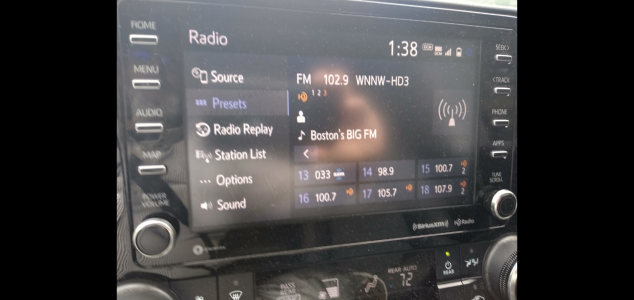
 
Sure seems odd that we seem to have a "stand-a-lone" FM translator that I thought was established to support an AM station license...that doesn't. Sure there's some goofy things that the FCC didn't take in to account with how they issued FM translator authorizations for AM stations, like the two being used {on FM 97.1 & FM 101.5) for Exeter NH's WXEX AM 1540. Maybe I've been not paying close attention to what the FCC's been up to the past several years.

When it comes to FM translators for licensed FM stations...I was quite surprised a few years ago that the FCC missed closing what I believed was a loop-hole in their rules/regs which resulted in Manchester NH's WZID...to not re-broadcast the originating FM station's programming, which I was of the understanding the original intent by the Commission was for an FM translator to "fill-in" signal deficiencies within the originating FM stations' city grade signal contour...rather than rebroadcast an HD-2 audio source, in turn creating an entirely "different" over the air broadcasting entity. Oh...and then there's a good many Low-Power FM stations being programmed quasi-commercial where their "sponsorship" messages sure come across sounding like ads.

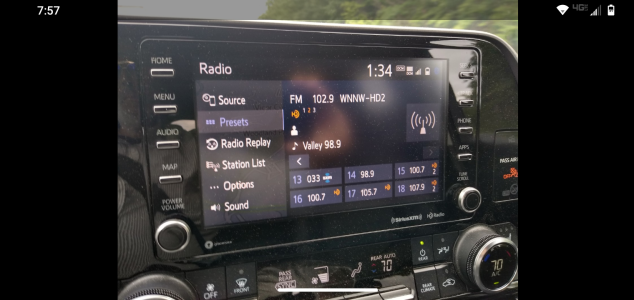
Oh well...back to "Valley 98.9" FM translator being broadcast from a good sized hill in Windham, it sure comes across to me that not only are they bending the intent of the rules/regs in how they've created a "stand-a-lone FM 'station'", I seriously question how their signal...if it's radiating within licensed power...can so easily be heard on Rt. 125 in the Epping NH area, even traveling north towards Lee, Barrington & Rochester, which interferes a bit with an adjacent channel Class A FM station out of Somersworth, NH at FM 98.7. Maybe the FCC isn't paying attention and/or just doesn't care all that much about "over-the-air" radio broadcasting these days.

Come to think of it...sorry if need be...for posting this comment on the Boston forum. I'll move it over to the New Hampshire site.

whats wrong with WXEX having 2 translators? completely legal given the fcc's rules on x miles or within x countour of the am

Looks liek 98.9 has got some nice height and its a bit directional.... so it being heard in epping isnt incredibly far fetched.

Once again, i didnt see Mr Fybush's reply till after i posted mine. i swear.

As for a translator relaying abn HD2.. yes, a loop hole.. but the fcc cant read between the lines, they have to really read the intended operations intent with their law.. and its relaying WZID FM, but the fcc didnt say it had to relay only the main analog.... and theres nothing asking them what slice of the WZID spectrum

Technology marches on
 
Let me try again to clarify:

A translator that's licensed to rebroadcast an FM station may legally (under current FCC policy) rebroadcast any portion of that FM station's programming. It can be the main analog/HD1, or an HD subchannel. This is not codified anywhere in Part 73 or 74; it's policy based on what Audio Division staff have allowed.

The FCC licensing process looks at what the originating station is and how its signal does (or doesn't) encompass the translator's signal. If the translator's signal is entirely within the 60 dBu contour of the originating station, it's a "fill-in" and the "feed" can be anything the licensee wants to use - direct OTA pickup, microwave, internet, telco line, whatever. All translators of AM stations are considered "fill-in" translators and can be fed by any method.

As noted above, there are separate and much more strict rules for non-fill-in translators that extend the reach of a primary station. For commercial stations, those must be fed off the air. In theory, I suppose you could use an HD subchannel's programming if you were able to pick up the HD at the translator site, but I know of no such case in actual practice right now. And as noted, the other restrictions on non-fill-in translators include a separation of ownership and much lower power levels.

As for AMs? No AM station has been allowed to shut down and originate programming on its linked FM translator. Several AMs have waited out the four years after the 250-mile window, then moved the AM programming to a sister FM's HD subchannel to feed the translator and then shut down the AM. In those cases, the new parent station for the translator is considered to be the FM station. It's still not originating programming itself.
Great explanation. I was admittedly confused on some of this, never having been involved with a translator myself.

Anyone want to borrow a couple of tanks and visit a few Houston translators?
 
There's this huge elephant in the room; let's call it "FM translator". Most of us are either near-sighted or damned near sightless, and we're trying to discern what this "thing" with a tail, a trunk, and a tusk is. IOW, we all have samples of data with no overall frame of reference.

It seems AS IF the FCC pushed out these rules in a rush, leaving them open to a variety of interpretations, what with all the different classes, types, feeds, sources, power levels, etc. As a result, these ad libitum implementations are prevalent, not only here in the Merrimack Valley, but also in places like Houston.

To me, these translators are a huge disappointment. Apparently I live in an area where the (analog) signal from 98.9 and/or the HD-x from 102.9 are weak and subject to dropouts. Oh, and then there's the overlapping Bloomberg signals from the TWO 106.1 analog feeds - both totally useless. I get better reception from 1330 AM.
 
It seems AS IF the FCC pushed out these rules in a rush, leaving them open to a variety of interpretations, what with all the different classes, types, feeds, sources, power levels, etc.

The laws today are written by lawyers, not engineers. Very different things.
 
The FM translator service has been in a constant state of change for a little over 50 years now, starting from its origin as a 10-watt service intended to import distant signals into areas that had little or no FM service.

All of the twists and turns it's taken over the last few decades aren't because of "lawyers" or "government." They're because clever broadcasters and their clever consultants have looked carefully at the rules and found ways to modify them to create new opportunities.

Every time the written rules have changed, it's because of a rulemaking process. I've participated in many of them and have had comments and suggestions adopted and cited by FCC staff.

The best way to think of the FM translator service now is as one half of two different low-power services. The one actually called LPFM can (and must) originate its own programming but also must be noncommercial and is very restricted in power and ownership limits. The one called "translators" can't officially originate programming, can be either commercial or noncommercial, and has higher power and fewer ownership limits.

Those of us who work in this part of the business know the rules pretty well. I'd venture to say the translator service has saved a lot of small broadcasters who would be flailing if they were AM only. I'd also contend that it's created a good deal of new and useful service in a lot of places. (And it's helping me put a kid through college, too, so yes, I'm biased.)
 
Status
This thread has been closed due to inactivity. You can create a new thread to discuss this topic.


Back
Top Bottom