And they won’t. When this recession hits, the sports contract bubble will burst.The leagues will need to make up the same amount they were promised as that money goes into player contracts.

-
Get involved.
We want your input!
Apply for Membership and join the conversations about everything related to broadcasting.
After we receive your registration, a moderator will review it. After your registration is approved, you will be permitted to post.
If you use a disposable or false email address, your registration will be rejected.
After your membership is approved, please take a minute to tell us a little bit about yourself.
https://www.radiodiscussions.com/forums/introduce-yourself.1088/
Thanks in advance and have fun!
RadioDiscussions Administrators
You are using an out of date browser. It may not display this or other websites correctly.
You should upgrade or use an alternative browser.
You should upgrade or use an alternative browser.
Bally RSN owner Sinclair looking at bankruptcy
- Thread starter Ccook55
- Start date

People want sports, the money will be there.And they won’t. When this recession hits, the sports contract bubble will burst.


Bally Sports Bankruptcy: Judge Tells Diamond To Pay Half of What It Owes to MLB Clubs, Pending Restructure
Sinclair’s regional sports networks division failed to make TV rights payments to five Major League Baseball teams
 www.nexttv.com
Here is more on the Bally's bankrupcy case.
Diamond Sports filed an Objection yesterday for the May 31 hearing asking the court to deny the teams/MLB motion pretty much arguing that A) it's too soon in the bankruptcy for them to assume or reject any agreements (most likely to postpone the broadcast rights being terminated) and B) that they are entitled to the streaming rights for the games because of their broadcast rights agreements, but MLB won't give them the streaming rights. So Diamond Sports feels they are paying over market value in fees to the teams and want the court to lower the fees they have to pay to broadcast games or give them the streaming rights to the games. https://cases.ra.kroll.com/DSG/Home-DownloadPDF?id1=MjQxMjU4NQ==&id2=-1
Two words: Fat. Chance.Diamond Sports filed an Objection yesterday for the May 31 hearing asking the court to deny the teams/MLB motion pretty much arguing that A) it's too soon in the bankruptcy for them to assume or reject any agreements (most likely to postpone the broadcast rights being terminated) and B) that they are entitled to the streaming rights for the games because of their broadcast rights agreements, but MLB won't give them the streaming rights. So Diamond Sports feels they are paying over market value in fees to the teams and want the court to lower the fees they have to pay to broadcast games or give them the streaming rights to the games. https://cases.ra.kroll.com/DSG/Home-DownloadPDF?id1=MjQxMjU4NQ==&id2=-1
They've already threatened to sue the Suns over this, even though their rights expired when the Suns beat the Clippers to win Round 1 on Tuesday. They'll get nothing, and like it. They're lucky the Diamondbacks haven't pulled their games yet.
The Diamondbacks legally can't pull their games from Bally Sports because Diamond Sports filed for Chapter 11 Bankruptcy Protection, so it has to go through the bankruptcy court. The 4 teams and MLB filed an emergency motion asking the court to A) order Diamond Sports to pay the teams what they are owed and B) order Diamond Sports to assume or reject (terminate) their broadcast rights agreements. The teams/MLB Motion and Diamond Sports Objection that I mentioned above will be heard at the May 31 hearing.Two words: Fat. Chance.
They've already threatened to sue the Suns over this, even though their rights expired when the Suns beat the Clippers to win Round 1 on Tuesday. They'll get nothing, and like it. They're lucky the Diamondbacks haven't pulled their games yet.
Last edited:
The SVP/GM of Bally Sports West, SoCal, San Diego, and Arizona has put in her resignation effective May 26 for "personal reasons." Diamond Sports has appointed 2 executives to run these RSNs on an interim basis. Diamond Sports RSN exec resigns from position
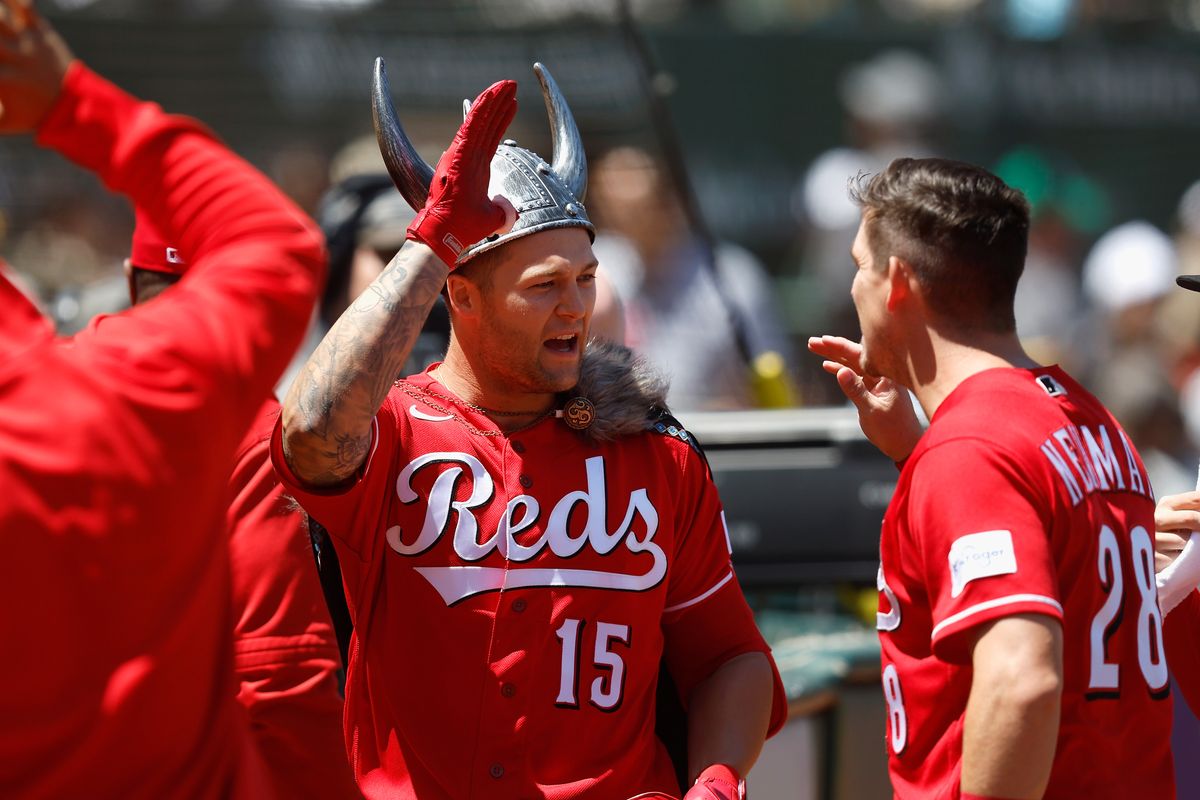
Looks like the Cincinnati Reds, who's Bally Sports RSN is not part of Diamond Sports bankruptcy, will be the next team to drop Bally Sports if they are not paid by when their grace period ends on Friday.
 www.nexttv.com
Reds Ready To Go It Alone Sans Bally Sports Starting Saturday
If Sinclair’s Diamond Sports Group doesn’t pay MLB team by Friday, club is set to broadcast its own games starting Saturday vs. the White Sox on a new channel
www.nexttv.com
So far, a lot of gloom-and-doom, saber rattling, hand wringing, but no actual switching off of Bally coverage by any MLB team. Are we in for delay after delay until the macho corporate stare-down ends with more of a whimper than a roar, or is the RSN apocalypse really upon us at last?
The only reason none of MLB teams have pulled their games from Bally Sports yet is because they legally can't. The 4 teams that Diamond Sports missed payments to so far are all fighting in bankruptcy court to terminate their broadcast agreements with a hearing date scheduled for May 31. It's a different case with the Cincinnati Reds because they own part of their Bally Sports RSN, so it was excluded from Diamond Sports bankruptcy. So Cincinnati Reds to terminate their broadcast agreement, they don't have to go through the bankruptcy court like all the other teams.So far, a lot of gloom-and-doom, saber rattling, hand wringing, but no actual switching off of Bally coverage by any MLB team. Are we in for delay after delay until the macho corporate stare-down ends with more of a whimper than a roar, or is the RSN apocalypse really upon us at last?
Diamond Sports has made its' payment to the Cincinnati Reds so their games do not get dropped from Bally Sports. Cincinnati Reds games to remain on Bally Sports Ohio
Score one for "whimper." (See my previous post.)Diamond Sports has made its' payment to the Cincinnati Reds so their games do not get dropped from Bally Sports. Cincinnati Reds games to remain on Bally Sports Ohio
If the company goes bankrupt what happens to the network even with the rights paid.Diamond Sports has made its' payment to the Cincinnati Reds so their games do not get dropped from Bally Sports. Cincinnati Reds games to remain on Bally Sports Ohio
It's not that kind of bankruptcy. They filed for Chapter 11 Bankruptcy Protection and Reorganization. A part of their reorganization plan is a debt for equity swap to get rid of their $8 Billion debt instead giving their creditors equity in the company.If the company goes bankrupt what happens to the network even with the rights paid.
On that subject, a group Diamond Sports creditors joined their Objection to the MLB and Teams motion with the conclusion saying: "Ad Hoc First Lien Group respectfully requests that this Court enter an order determining the reasonable value for the use of the telecast rights, denying the remainder of the Motions to Compel, and providing for such other and further relief as this Court deems just and appropriate under the circumstances."
The Diamondbacks filed a reply to Diamond Sports Objection tonight. I thought this was one of the most important part of their reply.
Also, this part they ask the court to lift the stay.The entire Objection is based on a flawed premise: the Debtors misread the TRA to
entitle them to direct to consumer (“DTC”) rights. But the TRA does not include DTC rights. The
plain language of the TRA is clear: the only rights that the Debtors receive under the TRA are
linear rights. The Diamondbacks neither own nor control the DTC rights, which precludes their
ability to give those rights to the Debtors. The DTC rights belong exclusively to MLB. The
Objection wholly hangs its hat on a provision in the TRA which expressly provides a scenario that
starts with the word “if”— meaning a hypothetical, and not a definitive part of the rights included in the TRA transaction. The TRA provides that if MLB, which owns and controls such rights, decides to and approves of giving the DTC rights to the Diamondbacks, then at such time, the Diamondbacks will transfer those rights to the Debtors. TRA 3 § 3(c).
6. If the transfer of the DTC rights occurs, then the Debtors must pay fair value (outside of the TRA) pursuant to the MLB Documents for those rights.4 This is precisely how the Court can absolutely confirm that the DTC rights were not contemplated in the bundle of rights included in the TRA or as a factor in the underlying value of the TRA entered into in with
the Diamondbacks.
7. The Debtors have even acknowledged that the Diamondbacks do not in fact have
the DTC rights to grant to the Debtors. Objection at 2. Even though they admit that the Diamondbacks do not own, control, nor have the right to give the Debtors the DTC rights, the
Debtors state that it is reasonable for them to not pay the Diamondbacks for the rights they received under the TRA because the Debtors do not have, and the Diamondbacks cannot grant them additional rights. Id. That is nonsensical. The Debtors fully admit that the Diamondbacks have nothing more to give. The Diamondbacks have not breached or otherwise failed to abide by the TRA. Instead, the Diamondbacks continue to fully perform under the TRA, and the Debtors seek to punish them for something out of the Diamondbacks’ control – for a springing condition and hypothetical situation that has not occurred. That is neither fair nor reasonable. The issue is the value of the rights granted under the TRA. It is not the value of other additional rights that the Debtors hope MLB may provide to the Debtors. The TRA fairly values the rights the parties bargained for. If the Debtors don’t believe they receive adequate value under the TRA, or are unable to efficiently monetize those rights, their remedy is to reject the contract. It is not to demand more or pay less than the TRA requires.
8. The TRA was negotiated at arms-length, whereby both parties fully knew the terms
of the TRA and what was contemplated thereunder. The Debtors, as successors to the TRA, also knew the rights and obligations that they were receiving when they stepped into the shoes of the prior rights holder and assumed the TRA. Even if they did not, that would simply be the consequence of a failure to exercise the requisite due diligence, which is entirely within a party’sown control. Even so, many parties enter bad contracts but are not relieved of them simply because they changed their mind later, are unhappy with the terms, or want to pay less money. In a Chapter 11, a debtor’s way out in such a situation is to reject the contract. Code § 365.
DIAMONDBACKS ARE A CRITICAL VENDOR
19. The Objection completely ignores and thus fails to rebut the Diamondbacks’
assertion that they are a critical vendor that provides essential services to the Debtors. Because the Debtors have failed to even respond to these assertions, the Diamondbacks request that the Court find that they are critical vendors for the purpose of prepetition (and postpetition) payment obligations. Although there may be no authority to order payment to critical vendors, the determination that the Diamondbacks are a critical vendor provides the Debtors with the authority and permission to make certain payments in connection with the critical vendor status. Moreover, the Court can terminate the automatic stay to permit the Diamondbacks to provide the required notice to the Debtors. Then the Debtors can consider whether the Diamondbacks are in fact critical to their business, or they can choose to see the TRA terminated.
Last edited:
So over night the Guardians, Rangers, and MLB (jointly with the Twins) each filed a reply to Diamond Sports Objection. They mostly say the same thing as the Diamondbacks reply. A few things that were different in the replies is the Guardians say they have a have backend rights for Diamond in their contract (like the Phoenix Suns have), but Diamond didn't take it into consideration in how they value the contract in their arguments. The Rangers tried to terminate their contract with Diamond for non-payment, but Diamond said the Rangers contract had not been validly terminated in response and then filed for Bankruptcy a day later. The Twins contract with Diamond expires at the end of this season.
I thought this was the most important part of the MLB reply:
I thought this was the most important part of the MLB reply:
43. First, the Debtors are in breach of the Clubs’ Telecast Rights Agreements—
they are refusing to perform their obligations despite the Clubs upholding their end of the bargain.
Second, the Debtors’ nonperformance is causing significant damage to MLB and the Clubs. The
games that the Clubs license to the Debtors cannot be replayed and the rights to broadcast them cannot be relicensed because the Debtors are the exclusive licensee under the agreements. The Clubs have no ability to monetize the rights to games already played. If the Debtors reject the
Telecast Rights Agreements or if the Telecast Rights Agreements expire and are no longer subject to assumption, the Clubs will be left with a general unsecured claim that would likely receive no recovery. The harm is even more acute for the Twins, whose Telecast Rights Agreement is expiring in a few months. Upon that expiration, the Twins will lose the opportunity to recover the full value
of their Telecast Rights Fees. Third, since the MLB clubs are the Debtors’ anchor tenant during the summer months (and in the case of the Guardians, the sole tenant for the entire year), these Telecast Rights Agreements are the lifeblood of the Debtors’ business and critical to the Debtors’ reorganization plans. The determination with respect to the treatment of these agreements must be made now so the Debtors’ Chapter 11 Cases can proceed. In Re Hawker Beechcraft Inc., 483 B.R.
424, 429 (Bankr. S.D.N.Y. 2012) (“The [agreement] may be the single most important agreement relating to the [debtors’] single most important product, and their decision whether they need the rights and licenses granted under the [agreement] should have been among their first and most pressing orders of business.”) (emphasis added). Fourth, regardless of whether it is accurate to describe these cases as being in their early stages, the Debtors have been well aware of their financial situation and preparing for a potential chapter 11 filing for over two years.30 The Debtors cannot hide behind the Bankruptcy Code and leave MLB, the Clubs and the millions of fans uncertain about the treatment of the Telecast Rights Agreements and the continued broadcast of the games.
Accordingly, contrary to the Debtors’ objections (Debtors Obj. ¶ 48), all of these factors weigh in
favor of compelling the Debtors to assume or reject the Telecast Rights Agreements now.
44. The Debtors object to the request to compel assumption or rejection, claiming there is an active dispute regarding the Telecast Rights Agreements. (Debtors Obj. ¶ 52.) This is a smokescreen. As reflected in the parties’ consistent course of dealing prior to the Debtors’ new made-for-litigation position, [redacted]
45. The Debtors are abusing the bankruptcy process to exert inappropriate leverage over MLB and the Clubs. Despite their assertions to the contrary, the Debtors appear to have already made a decision on these Telecast Rights Agreements—they have come into Court
and claimed that the Telecast Rights Agreements are overpriced, and submitted expert testimony
purportedly supporting that position. MLB and the Clubs strongly disagree and have signaled their willingness to re-acquire immediately the Telecast Rights. The Debtors prefer, however, to delay a decision on the Telecast Rights Agreements and exploit the resulting uncertainty to exert even greater leverage in a broader negotiation with MLB and the Clubs. [redacted]
The Court should not permit the Debtors to use nonpayment and delay tactics as a cudgel against contractual counterparties.

From one of the filings quoted above:
It is quite obvious that the rights fees being paid by Diamond Sports are overpriced. They may have been sensible when the agreements were made, but they are no longer sensible. The key point is the significant decline of the cable bundle.
the Debtors ... have come into Court and claimed that the Telecast Rights Agreements are overpriced, and submitted expert testimony
purportedly supporting that position. MLB and the Clubs strongly disagree and have signaled their willingness to re-acquire immediately the Telecast Rights.
It is quite obvious that the rights fees being paid by Diamond Sports are overpriced. They may have been sensible when the agreements were made, but they are no longer sensible. The key point is the significant decline of the cable bundle.
It is quite obvious that the rights fees being paid by Diamond Sports are overpriced. They may have been sensible when the agreements were made, but they are no longer sensible. The key point is the significant decline of the cable bundle.
I agree. Many of the agreements were done by Fox, and they were able to spread those costs out over the various co-owned platforms. Not the situation that exists now. If the teams want the rights back, they should let them go. Then the teams can discover how difficult the advertising market is now.
I can’t imagine it being any different than what franchise’s sales staffs already go throughI agree. Many of the agreements were done by Fox, and they were able to spread those costs out over the various co-owned platforms. Not the situation that exists now. If the teams want the rights back, they should let them go. Then the teams can discover how difficult the advertising market is now.
I can’t imagine it being any different than what franchise’s sales staffs already go through
It can be a different kind of presentation to a client when you represent the team vs a TV station.
- Status
- This thread has been closed due to inactivity. You can create a new thread to discuss this topic.