• Get involved.
    We want your input!
    Apply for Membership and join the conversations about everything related to broadcasting.

    After we receive your registration, a moderator will review it. After your registration is approved, you will be permitted to post.
    If you use a disposable or false email address, your registration will be rejected.

    After your membership is approved, please take a minute to tell us a little bit about yourself.
    https://www.radiodiscussions.com/forums/introduce-yourself.1088/

    Thanks in advance and have fun!
    RadioDiscussions Administrators

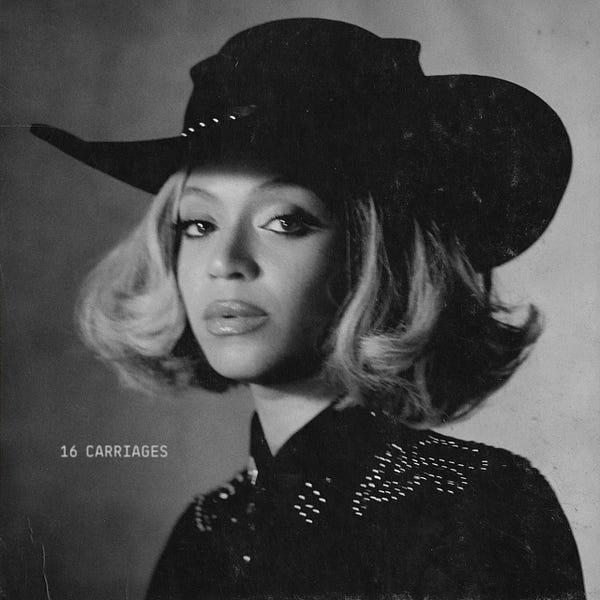
Beyonce Country Project

#41 in country means that few stations are playing it and those that are are not putting it in power.

In this case, a lot of stations are playing it, but not very often. A few stations have it in medium.

Specifically 116 stations out of the 157 station panel with a total number of spins just under 1000. About 8 per week/station.

I think stations are waiting on the research. As I said, it's mainly a big city song, not in rural areas.
 
Theater of My Mind said:
Country music was founded on rhythm-and-blues, a musical style that originated within African-American communities in the 1940s.

What would, eventually, be called "Country Music" was called "Mountain Music" or "Rural Music" in the 1920s. Vernon Dalhart had, what is considered to be, the first big Country hit with "The Prisoners Song" in the mid 1920s on Victor Records.
 
I think stations are waiting on the research. As I said, it's mainly a big city song, not in rural areas.
But a station can not research accurately a song until the average listener has heard it around 8 times. Of course, those 8 don't have to be on "your" station... they can include streaming plays, TV shows and radio. But it is not until you get around 8 plays per person that research can show validity... or not... of a song.
 
But it is not until you get around 8 plays per person that research can show validity... or not... of a song.

My take is that this is not a decision that will be based on the song. Everybody knows who Beyonce is, and everybody has an opinion. Country radio still gets hammered by listeners about Jelly Roll, and how he's not country, and he's ruining the format. Those people likely have a similar opinion about Beyonce, and it doesn't matter what the song sounds like. Because their opinion about Jelly Roll wasn't made based on listening to his music. If it was, their opinion would be different. That's just my take.

Looking at this conversely, Dolly Parton just made a rock album. Her rock album features guest appearances by a number of big rock stars. It should get some attention at rock radio, or at least classic rock radio, since most of the songs are covers. But as far as I know it didn't get airplay.
 
My take is that this is not a decision that will be based on the song. Everybody knows who Beyonce is, and everybody has an opinion. Country radio still gets hammered by listeners about Jelly Roll, and how he's not country, and he's ruining the format. Those people likely have a similar opinion about Beyonce, and it doesn't matter what the song sounds like. Because their opinion about Jelly Roll wasn't made based on listening to his music. If it was, their opinion would be different. That's just my take.

Looking at this conversely, Dolly Parton just made a rock album. Her rock album features guest appearances by a number of big rock stars. It should get some attention at rock radio, or at least classic rock radio, since most of the songs are covers. But as far as I know it didn't get airplay.
And that brings up the subject of the number of releases that play on an artist's fans, not on airplay.

Example: I am not a gospel fan, but for many years was a real an Jackson follower. I bought one of his gospel albums just because of him and the fact that he did some fairly "commercial" songs of praise. I liked the album, but never bought any of his subsequent releases in that genre...or anyone else's, either.
 
Looking at this conversely, Dolly Parton just made a rock album. Her rock album features guest appearances by a number of big rock stars. It should get some attention at rock radio, or at least classic rock radio, since most of the songs are covers. But as far as I know it didn't get airplay.

Classic Rock radio rarely to never plays new music, even from their core artists. If the Rolling Stones new album can't even get played on Rock or Classic Rock radio, how would Dolly Parton doing a Rolling Stones cover get added?

New releases from old classic rockers usually end up at Triple-A, or very classic-leaning Active Rock stations like KLOS with one safe current per hour, if anywhere. But Dolly Parton was never going to be a safe artist at traditional rock formats.
 
Classic Rock radio rarely to never plays new music, even from their core artists. If the Rolling Stones new album can't even get played on Rock or Classic Rock radio, how would Dolly Parton doing a Rolling Stones cover get added?

Actually the Rolling Stones new album, The Beatles new song, and Billy Joel's new song were all played on iHeart classic rock stations.

 
But for how long? Are any still getting airplay? And was iHeart compensated by the labels for its role in hyping those recordings?

All I'm saying is they made these three exceptions. And they may make more.

Meanwhile there's this expectation that country radio should play a song by an artist who has no heritage in the format, and is in fact releasing the same song to 8 competing formats. If this decision was strictly about the music, I'd say we play Beyonce if you play Dolly. But that's not how these things work.
 
Sean Ross has weighed in on the Beyonce country project:


The question I wonder about is will this song actually bring people together, or just solidify them in their respective silos?
 
The annual Country Radio Seminar is going on right now in Nashville. Country radio programmers from around the country are there discussing issues related to country radio. The Beyonce country project came up today:


There is another session tomorrow specifically addressing diversity in country music. Her song will likely be the main topic.
 
There is another session tomorrow specifically addressing diversity in country music. Her song will likely be the main topic.
Honestly, at the end of the day, is this discussion going to be the start of material changes?

Could this drive people away from terrestrial radio?
 
Honestly, at the end of the day, is this discussion going to be the start of material changes?

Could this drive people away from terrestrial radio?
The big problem with the song at country radio, IMO, is not the race of the artist but the sound of the song. It's gimmicky pop country at a time when mainstream country is drifting toward neotraditional and "emo country" styles. Shania Twain put out a single called "Giddy Up" last year that was pure dance-floor fluff and it went nowhere. Beyonce has millions more fans and a social-justice push behind "Texas Hold 'Em," so it's already done better than Shania did. But the adds are slowing and the "bullet" and audience for the song are declining, according to MediaBase. It still has yet to break on any of the three country stations I listen to here in Vermont (as TheBigA would expect). I'm wondering how many spins it's getting outside of overnight'/weekends on the big-market stations that are playing it.
 
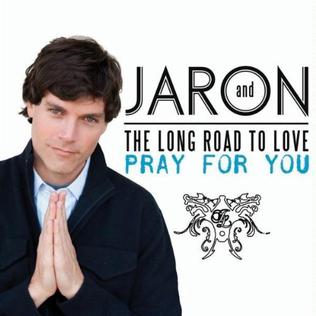
His comment in the song reminded me of how Jaron Lowenstein deliberately avoided using his last name when he tried to break into Country music. Jaron's one Country hit, "Pray for You", mentioned going to church... even though he's an Orthodox Jew.

However, exaggerated as some of their accents may be, all of the top names in country music today are from places where the accents are twangy. Morgan Wallen is from eastern Tennessee, as is Kane Brown. Luke Combs is from North Carolina. Lainey Wilson is from Louisiana. Luke Bryan is from Georgia. Chris Stapleton and Carly Pearce are both Kentuckians. There are no Jo Dee Messinas (suburban Boston) or Eddie Rabbitts (New Jersey) among current hitmakers, and the closest you can get to L.A. is Jon Pardi, who is from Dixon, which is a world away from Los Angeles culturally.
 
There are no Jo Dee Messinas (suburban Boston) or Eddie Rabbitts (New Jersey) among current hitmakers,

Keep in mind that in his day, Eddie Rabbitt was a crossover artist. Several of his songs topped the Hot 100 as well as the AC chart. He wasn't revered by country singers the way another crossover star Ronnie Milsap has been. Eddie's claim to country fame was writing Kentucky Rain for Elvis Presley (a song that featured Milsap on piano).


Back
Top Bottom