• Get involved.
    We want your input!
    Apply for Membership and join the conversations about everything related to broadcasting.

    After we receive your registration, a moderator will review it. After your registration is approved, you will be permitted to post.
    If you use a disposable or false email address, your registration will be rejected.

    After your membership is approved, please take a minute to tell us a little bit about yourself.
    https://www.radiodiscussions.com/forums/introduce-yourself.1088/

    Thanks in advance and have fun!
    RadioDiscussions Administrators

Car Makes & Models with No AM Band.

The emergency need for AM radio in the event of power outages or emergencies assumes that no one owns an FM radio which will operate on batteries.

Guess what? I don't own a battery operated radio. How do I know? A bunch of us were going to the beach. No wifi on the beach. None of us (ten people) had a portable radio. We ended up streaming from the phone.
 
AM radio is ever likely to be one of the first things to go in a severe weather situation. What's going to go down first in an hurricane - the little FM stick on a tall building, every cell tower in the region or the complicated array of 200' guyed towers?
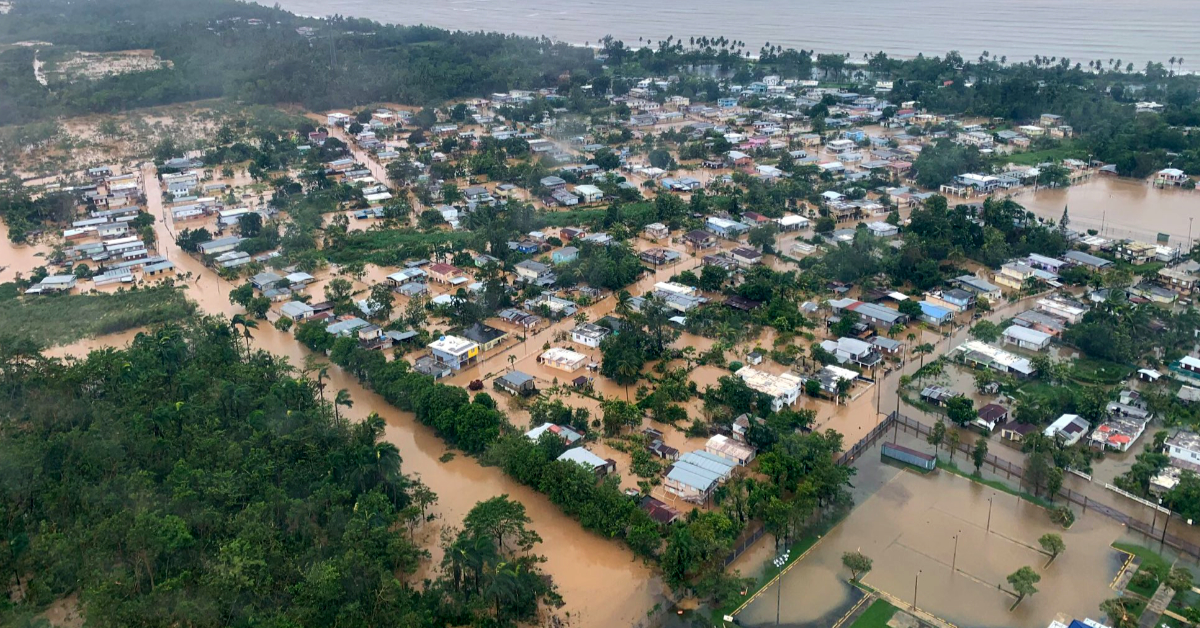
In the worst hurricane in American history, out of about 130 stations in Puerto Rico, just one: WKAQ AM was left on the air.
Now, you could beam in emergency information on a distant AM station from outside the impacted area, but who's going to be listening? The priority in those situations has to be to keep the cell networks running - those are what people actually use.
In that same hurricane, virtually 100% of cellular service was down. Some took months to recover.
 
In the worst hurricane in American history, out of about 130 stations in Puerto Rico, just one: WKAQ AM was left on the air.

In that same hurricane, virtually 100% of cellular service was down. Some took months to recover.
For a variety of reasons, as I'm sure you're aware, Mainland vs. Puerto Rico is often not an apples-to-apples comparison.
 
For a variety of reasons, as I'm sure you're aware, Mainland vs. Puerto Rico is often not an apples-to-apples comparison.
In the case of a hurricane, I see very little difference. FM towers on hills and mountains got hit by the highest winds due to elevation. Cellular towers, either on building tops or towers in open, unobstructed locations, were next to go. High voltage power lines that crossed hill and open land were also vulnerable. Power plants that were in the path of the storm suffered damage.

The main difference is that islands are not on a larger power grid that can provide power if a local area is compromised.

If Hurricane Andrew had hit with the eye about 30 to 40 miles farther north, it would have taken out all the tall towers of FM and TV, just as it did with the few such structures in South Sade. Andrew was prior to today's cellular networks, but it would have taken out nearly every rooftop antenna and all the power distribution networks to Dade Country.

And, unlike Puerto Rico, Miami (and all of Florida and the mainland Gulf Coast), is horribly flat and even more vulnerable due to flooding.
 
In the worst hurricane in American history, out of about 130 stations in Puerto Rico, just one: WKAQ AM was left on the air.

In that same hurricane, virtually 100% of cellular service was down. Some took months to recover.

It didn't help that the previous president got into a feud with local government and prevented them from getting federal aid:


There was a smaller hurricane last year that also knocked out cell phone service, and the FCC went in to create partnerships:

 
Here's an article with a follow-up to Sen. Markey's letter to car makers. Sounds like their mind is made up:

Many of these vehicles are sold in or originate from Europe. The AM band over there has turned off a number of signals, and there is also the perception in the US that no one listens to the AM band (but many do when there is quality content that draws in listeners). These lawmakers and others in the article indicate AM radio is for emergencies as many AM stations are the primarily entry points for EBS. One thing I was wondering, why don't they include the weather band in cars so weather plus other emergencies could be relayed. A family member's 1998 Mercedes C230 had this feature.
 
You ended up streaming from the same phone you "could" get emergency information from. That verifies that AM radio is not as necessary as many who can't let go claim it to be.

And FEMA has a whole policy for that. I think the issue has to do with disasters where cell service is unavailable. My point is that it's been twenty years since the electronics industry came up with new devices that included AM/FM radios.
 
Many of these vehicles are sold in or originate from Europe. The AM band over there has turned off a number of signals,
Not "a number". In some countries, all AM is gone. In others, it is nearly gone and remaining AM facilities are being progressively eliminated.
and there is also the perception in the US that no one listens to the AM band (but many do when there is quality content that draws in listeners).
AM listening in the most "AM friendly" markets is down to about 10%, with some markets down to low single digits and the average seeming to be around 5% of all listening.
These lawmakers and others in the article indicate AM radio is for emergencies as many AM stations are the primarily entry points for EBS. One thing I was wondering, why don't they include the weather band in cars so weather plus other emergencies could be relayed. A family member's 1998 Mercedes C230 had this feature.
For emergency purposes, the issue is "how many stations of any kind are hardened against all hazards prevalent in the area?" If the transmission facilities behind the system are vulnerable, having radios capable of receiving them is of little value.
 
It didn't help that the previous president got into a feud with local government and prevented them from getting federal aid:
The local government, which mis-managed amid a flood of corruption, was in disagreement with just about everyone. They wanted to steer aid through "friends" who were engaged in supposed rebuilding efforts.

Puerto Rican politics is based on a single subject: the status of Puerto Rico. One party is pro-statehood, the other is pro-Commonwealth. And there are a couple of percent that are in favor of Independence, but that party (PIP) does not even meet the required minimum vote to sustain its status.
There was a smaller hurricane last year that also knocked out cell phone service, and the FCC went in to create partnerships:
The FCC intervention involved allowing cross-service roaming which has never been done anywhere before. It also involved what was essentially a bypassing of the Jones Act's requirement that all maritime transit to Puerto Rico utilize U.S. flag carriers.

This was pure politics.
 
The FCC intervention involved allowing cross-service roaming which has never been done anywhere before. It also involved what was essentially a bypassing of the Jones Act's requirement that all maritime transit to Puerto Rico utilize U.S. flag carriers.
About twelve years ago, I was contracted to integrate some new radio gear at the (now destroyed) Arecibo Radio Observatory. Granted, Arecibo was in an radio 'quiet zone' including cellular signals, so I stayed a couple nights in La Esperanza before traveling to the radio observatory. There were few working cell signals anywhere in this area, so I relied on sat phone to get calls in or out.
Even in downtown San Juan, cell coverage wasn't great, even when driving by several cell sites. Many of the cell monopole sites were overgrown with vegetation, while others were on sketchy structures atop buildings. In general, it was obvious the cellular infrastructure in Puerto Rico was installed and maintained on the cheap.

 
One thing I was wondering, why don't they include the weather band in cars so weather plus other emergencies could be relayed.
How about this? The automobile manufacturers manufacturer automobiles. For those looking for more than reliable transportation, let's leave a hole in the dashboard and a book of options to be installed per the purchaser's desires. If you want AM FM Weather CB and Ham radio, buy it, pay for it and enjoy it.
Let's not force the manufacturer to add cost the car for a product (AM radio) that 12 people can receive clearly. With current interference, only the best low dial signals for the high powered stations can be heard clearly more than a stones throw from the transmitter. The emergency need for AM radios is nonsense as in a real emergency news will come from other sources. If things are so bad that no other sources can get through, we will have all died earlier in the bright flash and mushroom cloud. When the hurricane comes, when the bombs drop, and the plague takes hold, no one will be running out to their driveway for emergency news and information from the AM radio in mom's old Dodge.
 
About twelve years ago, I was contracted to integrate some new radio gear at the (now destroyed) Arecibo Radio Observatory. Granted, Arecibo was in an radio 'quiet zone' including cellular signals, so I stayed a couple nights in La Esperanza before traveling to the radio observatory. There were few working cell signals anywhere in this area, so I relied on sat phone to get calls in or out.
Even in downtown San Juan, cell coverage wasn't great, even when driving by several cell sites. Many of the cell monopole sites were overgrown with vegetation, while others were on sketchy structures atop buildings. In general, it was obvious the cellular infrastructure in Puerto Rico was installed and maintained on the cheap.
That's certainly not my experience using cellular all over the Island.

In fact, cellular in Puerto Rico reached much higher penetration much faster than the mainland because the government operated phone companies could delay 8 to 15 months in providing a new domestic or business number if any were even available. The biggest issue is system overload, due to the much higher than mainland population density.

One item worthy of mention is that vegetation on the Island and anywhere in the tropics grows amazingly fast. I've seen the endemic "mata de agua", which is both a vine and ground cover, go three to four meters up a tower in about a month.
 
For emergency purposes, the issue is "how many stations of any kind are hardened against all hazards prevalent in the area?"

The even bigger issue we have all seen from recent events is, "How many stations of any kind even have someone in the building when the emergency happens?"

Except for an exceedingly few AM operations with newsrooms remaining in the country, nearly all of them are running syndication on autopilot most of the time, and there's no one even there to break in with an announcement. Even if someone could, there would be no reporters to relay information of any value.

In the event an EAS alert is issued (also highly questionable, it seems), it's going to be heard on every platform -- AM, FM, TV, Weather Radio and especially cell phones.
 
The hypocrisy is hearing “make the government save us” from the same outlets that air non-stop “keep the darn gubment outta our freedums” - I mean, maybe not when it comes to reproductive choice, sure. Or letting people who aren’t straight get married. So basically keep the gubment away except when it benefits us and not those other people.

Of course it’s legal; it’s still laughably hypocritical.
Yes!! Thank you! I couldn't have said it better. I'm surprised that some people on this board simply don't get it.

BTW, the EBS argument is a red herring.
 
  • Like
Reactions: drt
In the event an EAS alert is issued (also highly questionable, it seems), it's going to be heard on every platform -- AM, FM, TV, Weather Radio and especially cell phones.

The goal for any emergency notification is to be on every platform. That was part of the partnership radio has with the government. They must provide that access for EAS and anything else local emergency officials require. Having a local DJ on the station at the time of an emergency is not required.
BTW, the EBS argument is a red herring.
If so, then the requirement should be dropped from the FCC rules. Radio shouldn't be required and mandated to do something by the government if the people don't want it. Remove the requirement, and radio stations can operate like everyone else.
 
The even bigger issue we have all seen from recent events is, "How many stations of any kind even have someone in the building when the emergency happens?"
But nearly no station can cover breaking news immediately. That is why EBS and then EAS were created in order to have every station broadcast alerts and critical information.

Nobody has to be at a station for the current system to "take over".
 
Not sure where to post this, but there was a missing child alert last night that took over when I was watching a recording, but this was new. They allowed us to see and hear what was on the cable channel as if it was an ordinary weather bulletin. I'm sure that makes viewers happier.
 
Status
This thread has been closed due to inactivity. You can create a new thread to discuss this topic.


Back
Top Bottom