
• Get involved.
    We want your input!
    Apply for Membership and join the conversations about everything related to broadcasting.

    After we receive your registration, a moderator will review it. After your registration is approved, you will be permitted to post.
    If you use a disposable or false email address, your registration will be rejected.

    After your membership is approved, please take a minute to tell us a little bit about yourself.
    https://www.radiodiscussions.com/forums/introduce-yourself.1088/

    Thanks in advance and have fun!
    RadioDiscussions Administrators

College Radio & The Future

Here's an opinion piece from David Hill asking if College Radio could save the future of broadcast radio:
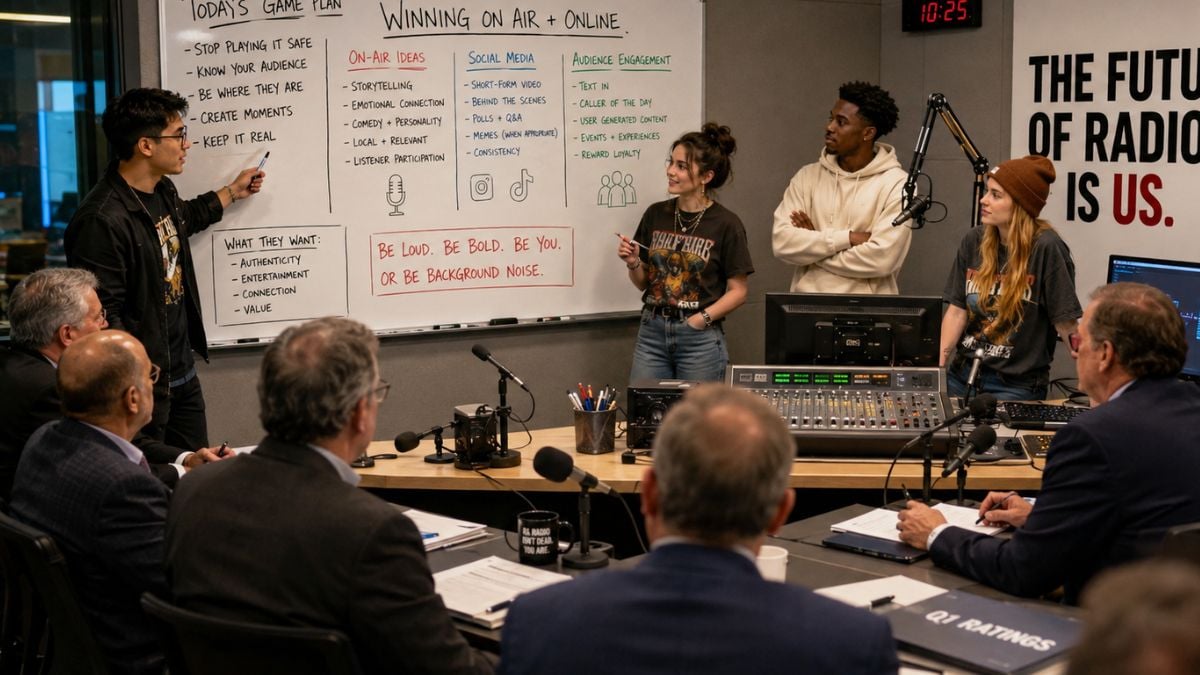

If it is, then it's not very bright, given the number of colleges that are selling their radio stations. Hill doesn't address that at all. He was energized by the students. I get that. They have fresh eyes and aren't attached to the past. That's a good thing, because the future won't be like the past. But what I remember from my college radio days is that it's mainly a club, a student activity, not a job. Things are very different when you try to take the college radio experience into the real world.

When I left college radio, it was less about the music, and more about analytics and sales. That can be a bit tough to take. It may be why so few college radio students continue after they graduate.
 
But what I remember from my college radio days is that it's mainly a club, a student activity, not a job.
That is the case at many college radio stations, but not all. Ones that have broadcast and other media production courses and programs do help students move in the direction of jobs and careers. These are the ones that are, precisely, not just clubs. I've seen students not only get jobs at broadcast facilities, but Music Directors who have gotten careers going in the music industry. Also, learning about music help some to get jobs at the Rock and Roll Hall of Fame, and there are large companies and educational institutions who have media departments that pick up on new talent. The key is to have the station have form and content and, as best as possible, provide, and be, a Pre-Professional learning experience.
 
That is the case at many college radio stations, but not all. Ones that have broadcast and other media production courses and programs do help students move in the direction of jobs and careers.

Mine didn't. Mine had an FM station, but no practical communications department. I had to go to another college to learn the business.
 
That is the case at many college radio stations, but not all. Ones that have broadcast and other media production courses and programs do help students move in the direction of jobs and careers. These are the ones that are, precisely, not just clubs.
These programs are going away gradually. My school ended theirs more than 20 years ago. The ones that remain have largely moved over to producing TV reporters, and video production more broadly.

There simply aren't enough entry-level jobs in radio for dedicated programs to be financially sustainable.
The number of full-time on-air roles in my market is probably around 15. If you assume 10% of them retire, move to a bigger market, or otherwise leave the industry each year, that's only 1.5 roles for the local college to fill. You can't run a college program on 1.5 graduates per year.
 
These programs are going away gradually. My school ended theirs more than 20 years ago. The ones that remain have largely moved over to producing TV reporters, and video production more broadly.

There simply aren't enough entry-level jobs in radio for dedicated programs to be financially sustainable.
The number of full-time on-air roles in my market is probably around 15. If you assume 10% of them retire, move to a bigger market, or otherwise leave the industry each year, that's only 1.5 roles for the local college to fill. You can't run a college program on 1.5 graduates per year.
Thanks for sharing. One of my points is that, today, the focus needs to be on more than just broadcasting. We're media heavy today, which includes broadcasting, but so much more. College radio stations can be a part of that, but mainly by being part of a curriculum and part of a Communication's Department.
 
One of my points is that, today, the focus needs to be on more than just broadcasting. We're media heavy today, which includes broadcasting, but so much more. College radio stations can be a part of that, but mainly by being part of a curriculum and part of a Communication's Department.

It depends on the college. These was a huge explosion of college radio in the 70s, combined with growth in academic programs around broadcasting. That has changed in the last 20 years. Instead colleges are selling their radio stations or turning them into public radio stations. The colleges are having trouble finding enough students to operate the station. So they end up being filled by non-students.

You saw that yourself in Cleveland. Cleveland State University don't offer any academic courses in broadcasting or production. So they made a deal with the local public broadcaster to operate their FM station. Other colleges are selling their FM stations to religious broadcasters.
 
It depends on the college. These was a huge explosion of college radio in the 70s, combined with growth in academic programs around broadcasting. That has changed in the last 20 years. Instead colleges are selling their radio stations or turning them into public radio stations. The colleges are having trouble finding enough students to operate the station. So they end up being filled by non-students.

You saw that yourself in Cleveland. Cleveland State University don't offer any academic courses in broadcasting or production. So they made a deal with the local public broadcaster to operate their FM station. Other colleges are selling their FM stations to religious broadcasters.
The best point you made here is how Cleveland State doesn't offer academic courses in broadcasting or production. So, it's less of a surprise that they would do what they did. There are schools that have successful communications programs that offer broadcasting and more.
 
There are schools that have successful communications programs that offer broadcasting and more.

Yes I know. One of my former colleges is one. But they don't offer a "radio" curriculum. They offer an "audio arts" curriculum that involves podcast creation and social media. They used to teach script writing and announcing. Those courses aren't offered anymore. Production courses are mainly about video production. Some colleges teach voicetracking and Selector. AI is becoming an area of interest.

The one big area for them is sports broadcasting. That seems to be an area of concentration at some colleges. I went to an alumni event a few months ago, and the college grads still involved in broadcasting are either doing sports or news.
 
Yes. Sports is a growth area, as is news. Voice tracking is useful. A purely "radio" curriculum may no longer be offered, but Communications and Media Production is and that includes radio. As I have noted, the "radio" curriculum has ballooned and grown into much more.
 
As I have noted, the "radio" curriculum has ballooned and grown into much more.

Where? How? A lot of it that I see is either in technology or marketing.

With radio stations transitioning from broadcasting to streaming, the interest becomes more about video editing an digital content creation.

But that makes the traditional FM station more obsolete.
 
Where? How? A lot of it that I see is either in technology or marketing.

With radio stations transitioning from broadcasting to streaming, the interest becomes more about video editing an digital content creation.

But that makes the traditional FM station more obsolete.
It's about adding streaming. IHeart is big on streaming, but I don't see them leaving broadcasting. Use of radio is strong.


Back
Top Bottom