• Get involved.
    We want your input!
    Apply for Membership and join the conversations about everything related to broadcasting.

    After we receive your registration, a moderator will review it. After your registration is approved, you will be permitted to post.
    If you use a disposable or false email address, your registration will be rejected.

    After your membership is approved, please take a minute to tell us a little bit about yourself.
    https://www.radiodiscussions.com/forums/introduce-yourself.1088/

    Thanks in advance and have fun!
    RadioDiscussions Administrators

FCC & Radio Ownership Limits

What I understand is that average to weak local shows can't compete with Bobby Bones, Seacrest and Charlemagne. Those "big" shows have access to artists and contacts for content that the station in Wichita or Cleveland does not.

That access problem is getting worse. You often talk about how advertisers want a one-stop for buying. That also applies to publicists and record labels who arrange guest interviews for radio stations. The record labels are looking at the research. They see the PUM figures dropping, and they don't see the value of having their artists doing interviews with local radio stations. The interviews become tedious for the artists, and don't generate the viral social media action they get from Charlemagne. If a radio station can't demonstrate how an interview multiplied impressions, they probably won't get those big name interviews anymore.

That satisfies Jacob's concerns but does him out of all but, maybe, one job.

People have to remember what Jacobs does. The more people in local radio, the more potential clients. He knows where his bread is buttered. All of the independent consultants are doing everything they can to hold the line on staffing.
 
What I understand is that average to weak local shows can't compete with Bobby Bones, Seacrest and Charlemagne. Those "big" shows have access to artists and contacts for content that the station in Wichita or Cleveland does not.

In the later 50's, TV learned that local stations could not compete with the late night show with Steve Allen and then Johnny. Initially, radio did not do this do to connection costs.

And most people (and one-to-many radio is all about "most people" and not "some people" or individual people) don't want people talking over the songs after 9 AM or 10 AM any more. As Joe Friday would say, "just the hits, ma'am".

In the 80's, 90's, and earlier 00's I did a "morning show 24/7" station in what was market #11 and got 13 to 14 shares with the next two stations together having less. Today, that does not work in a TikTok world.

We have a changed world. Listeners spend less time with OTA radio, and about a quarter of them don't really use radio at all (the data says 90% cume radio, but a significant part of that number are rare and occasional listeners).

Jacobs is right when you can offer the right talent in the right daypart. But he makes money telling people only he can fix it.

Again, this points to what I have said for years: the only model that can work in the future is national stations with amazingly talented hosts 24/7 simulcast on signals in every market across the country. That satisfies Jacob's concerns but does him out of all but, maybe, one job.
I'm not sure I buy that a morning show format 24/7 doesn't work today. Which market was it tried in? I think it could have worked in Seattle, with several high-profile morning shows on the air. Having them all on one station would have been extremely expensive, but I think it could have done well. Based on your argument, 98.9 in Seattle should still be rocking. Not only is it not, but it was yanked off the air mid-song when it went away. Meanwhile, the established rocker has a mostly talk morning show and a mostly talk afternoon show.
 
I'm not sure I buy that a morning show format 24/7 doesn't work today.

There's no ad money in most dayparts anymore. That's the driving force here. People have already made their choices. They're not coming back. They're in love with their personal digital devices. There are no programming changes local broadcasters can make that will cause people to stop using phones and instead go back to transistor radios.
 
I'm not sure I buy that a morning show format 24/7 doesn't work today.
Well it quit working in market 11 about 15 years ago. And in PPM markets, where long listening spans to heavy talk content music station shows is disfavored outside of mornings,I doubt it would work anywhere now.

This is about full fledged morning shows with dialog, humor, interviews, phones and the other elements, not “between the sounds” music based personality shows.
 
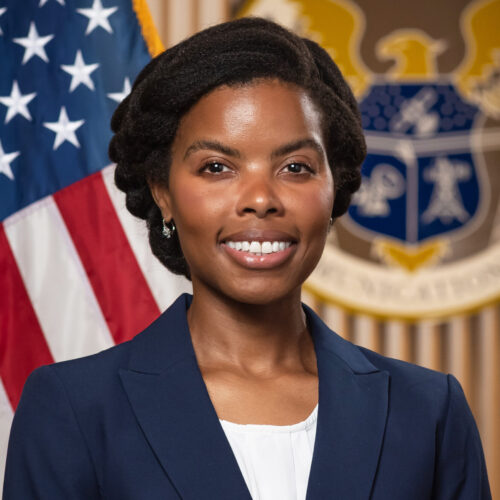
FCC commissioner Olivia Trusty spoke in favor of ownership rules deregulation:


What she's saying is it will help radio companies compete for advertising money. That's correct, because advertisers want to reach the most people. Currently, radio companies are limited by FCC rules. If those rules were loosened, radio companies could better compete with the internet, which has no regulations.
 
I'm sorry but I've never bought the idea that relaxing or removing radio and TV ownership rules will save the broadcasting industry.
But, as is evident, keeping the status quo will not preserve it.
All it will do is keep new entrants from entering those media and encourage those new entrants to go to streaming instead, which, though I personally love it, I in no way consider to be the new Holy Grail for media.
"New entrants" are going to be from the younger generations, who would not think of going into radio today.
And that Appeals court decision is a continuing reminder that we are moving away from both the Sherman and Clayton Antitrust Acts and there will be a high price to pay for that departure.
With tens of thousands of internet streams and "stations" as well as podcasts, satellite and spotify-like services, someone could own ALL the radio station in the U.S. and still not have a monopoly on audio services. The error of many like you is considering that OTA radio is somehow different from all the other audio services.
 
There's no ad money in most dayparts anymore. That's the driving force here. People have already made their choices. They're not coming back. They're in love with their personal digital devices. There are no programming changes local broadcasters can make that will cause people to stop using phones and instead go back to transistor radios.
Those that do buy radio and pay attention to reach as well as frequency at least buy 6 AM to 7 PM M-F. Quite a few buy Saturday as well.

Sunday has always been a tough sell... I think it goes back to the 50's and the pre-shopping-center era when stores closed on Sunday.

In one top 15 market where I managed stations the agencies used to request Sundays as a bonus. To thwart that, I made Sunday a "music with no interruptions" day and did not sell anything that day. It did not hurt sales, as agencies understood they could not have what we did not offer (95% of our sales came from agencies).
 
As yes, the time-honored argument that reducing the number of competitors will increase competition. Classic monopoly math.
Over the Air radio's great problem is : too many competitors. None of them are on AM or FM.
 
Sure, and cars compete with buses and trains too. That doesn't mean the number of car companies should be reduced by the government to a number you can count on one hand.
Not the same thing. "All of the above" (AM, FM, streams, podcasts, satellite radio) are audio providers.

Cars, trucks and busses and trains are all transportation providers.

There is a reason we don't have Hudson, Nash, Dodge, DeSoto, Oldsmobile and other car brands... not that they were much worse than others... just that the field was crowded.

If any car maker had been told that they were limited in how many cars they could make in a year, we'd have even less brands.
 
Not the same thing. "All of the above" (AM, FM, streams, podcasts, satellite radio) are audio providers.

Cars, trucks and busses and trains are all transportation providers.

There is a reason we don't have Hudson, Nash, Dodge, DeSoto, Oldsmobile and other car brands... not that they were much worse than others... just that the field was crowded.

If any car maker had been told that they were limited in how many cars they could make in a year, we'd have even less brands.
Aren't they still making Dodges or are you thinking of Pontiac?
 
I'm thinking it's a nitpick.
He’s right. But I guess I still made my point. I have not bought an American car for about 48 years, and kind of confuse the brands. Should have said “Crosleys”.
 
As yes, the time-honored argument that reducing the number of competitors will increase competition. Classic monopoly math.

You didn't read what she said. The competition is for ad revenue. Radio is losing, and therefore has less money to hire local staff.

Remember: The government hates monopolies, especially media monopolies. This administration is attacking the big media companies.

Also loosening ownership limits doesn't mean competition will disappear. Public radio stations aren't in the advertising business, so they will stay local. Radio is not one thing.

Plus congress will have a say in any FCC rules:

 
Last edited:
I really don't understand the argument about revenue being split. Is the problem broadcasters are trying to solve local or national revenue? If national, why hasn't one of the following happened?
1. The scenario I laid out earlier in this thread.
2. Many of the larger companies selling off a lot of their stations and pulling an EMF, only focusing on one or two national formats getting nationwide coverage. Love them or hate them, EMF has built out K-Love to be a pretty comprehensive network. There are only a few places in this country not in range of a K-Love over the air signal. Why has no commercial broadcaster tried that strategy?
If the issue is local revenue, radio still seems to be king here. With ad targeting, I would think it would be relatively easy for a local business to buy ads that get pushed to listeners within a specific geographic area on services like Spotify or others. Maybe it's happening more with music, but I'm not hearing it with podcasts. I get the occasional local spot on a podcast, but the vast majority of ads I get on podcasts are national ads that tell listeners to go to a website or use a promo code that is tied to a specific show.


Back
Top Bottom