• Get involved.
    We want your input!
    Apply for Membership and join the conversations about everything related to broadcasting.

    After we receive your registration, a moderator will review it. After your registration is approved, you will be permitted to post.
    If you use a disposable or false email address, your registration will be rejected.

    After your membership is approved, please take a minute to tell us a little bit about yourself.
    https://www.radiodiscussions.com/forums/introduce-yourself.1088/

    Thanks in advance and have fun!
    RadioDiscussions Administrators

FCC To Eliminate TV Caps

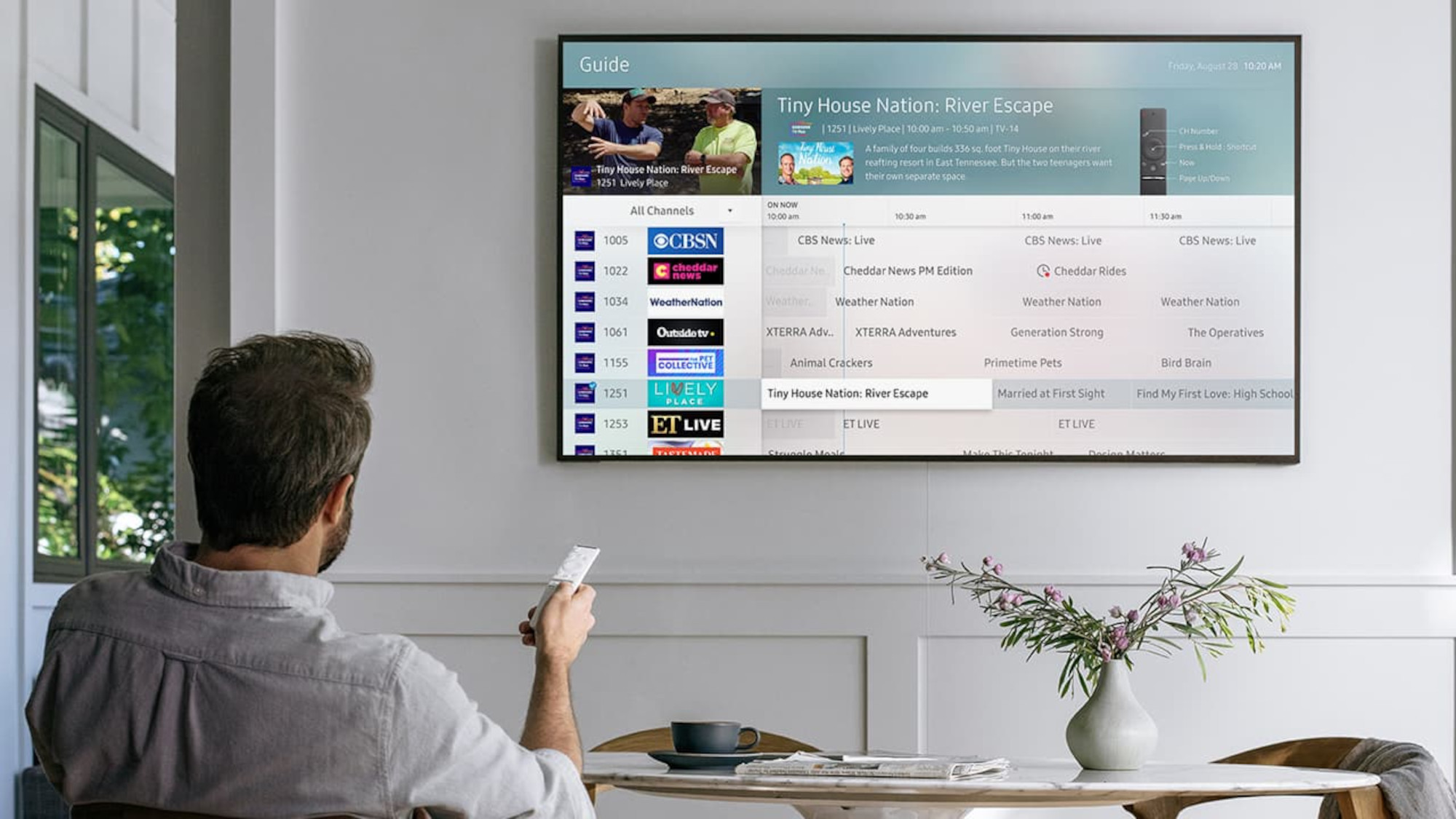
If/when ownership caps lifts are approved wouldn’t we have an extension of networks that mainly air on subchannels and FAST such as MeTV, Ion Media, in most parts of the country?

However we seen talks about implementing ATSC 3.0 to newer TV’s that’s part of the discussion over lifting caps. How that plays out is yet to be seen here.
 
The industry has changed. Those ownership caps were to prevent companies making editorial policy for too many stations and thus regions of the country. That solution has been usurped by the multitude of editorial policies available now online. It's past time to modernize. And for the record, I work in public media so it won't change my life any. If Nexstar has the assets to purchase the Allen Media stations, those stations will likely be better for it.
The big difference that seems to be lost is that on-line editorial expressions are, like news papers, not using the PUBLIC air waves. That was the reason for the Fairness Doctrine and for limiting the number of stations a single entity could own. Stations were required to operate in the public interest, convenance and necessity. Like news papers, on line entities have no such requirement.
 
That's correct, but it doesn't factor that half the country now hates traditional media ("modern shows = woke, modern news = biased"), and that the other half sees the linear medium itself merely as someone else's streaming player that doesn't let them pick their shows. Allowing further consolidation of OTA TV will only cause more centralization, content homogenization, and cost-cutting. That, in turn, will cement people's growing hatred and apathy toward it, accelerating its death.

I think we need more local and regional owners, not less. And we need them emphasizing live and local content: events, sports, news. Everything else, OTT can do so much better that only small minorities will stay with linear for them.
We have debated it in other threads especially the CPB threads but here the ATSC 3.0 issue is at play that’s getting the FCC to think about changing the ownership caps.
 
Nexstar will find a way to buy the Allen Media stations, but I think the FCC will keep restrictions so that they can’t own four stations in a place like Honolulu, so there will be trading involved.
Nexstar long ago figured out how to have four stations in a market. It's called the LMA of Mission Broadcasting. They have effectively controlled 4 stations in the Little Rock market for years now. And they put the resources into the market to make it successful. One example is severe weather coverage. That is very important in this part of the country (during spring in particular). When tornado warnings go off, the meteorologists are live and wall to wall until the warnings in the DMA have passed. At times I have seen this coverage last over 6 hours without a single commercial break.

In fairness the other broadcasters in the market do this as well. To me, that type of thing is true public service. There's something to be said for companies to be looking to find ways to keep broadcast TV viable and profitable. There are still many people who rely on it.

As far as ATSC 3.0 goes, Nexstar, Sinclair (and others) are looking at it as an additional revenue stream and why shouldn't they? After all, it's basically just a one way big data pipe that happens to use broadcast spectrum. The potential is there for many things, including additional public service.

People need to stop hating companies just for being successful. The days of mom and pop ownership of TV stations aren't coming back. And they weren't all that great to begin with. And once again, I don't work in commercial TV. I just happen to be a capitalist who wants to see anyone who is willing to work succeed and this industry continue.
 
Nexstar long ago figured out how to have four stations in a market. It's called the LMA of Mission Broadcasting. They have effectively controlled 4 stations in the Little Rock market for years now. And they put the resources into the market to make it successful. One example is severe weather coverage. That is very important in this part of the country (during spring in particular). When tornado warnings go off, the meteorologists are live and wall to wall until the warnings in the DMA have passed. At times I have seen this coverage last over 6 hours without a single commercial break.

[ ... ]

People need to stop hating companies just for being successful. The days of mom and pop ownership of TV stations aren't coming back. And they weren't all that great to begin with. And once again, I don't work in commercial TV. I just happen to be a capitalist who wants to see anyone who is willing to work succeed and this industry continue.

Nexstar only exists to acquire companies, that is literally what they were founded upon. At least Gray, Sinclair and Tegna have roots that go back to oldline media, and while Sinclair is heavily political and polemic from the top down, they own Dialectric and have some sense of strategy.

You can't say that about Nexstar. All Perry Sook cares about is what station he buys next and getting maximum retransmission revenue from cable companies. He's part of the reason why the industry is dying before out eyes.
 
Seems to me NBC did exactly that in some markets. It really doesn't matter since the future is streaming.
I still don’t buy a 100 percent the future is indeed streaming. How many eyeballs are these streaming newscasts or shows getting? Isn’t Peacock still a money loser for NBC? How’s Paramount Plus doing? I’m convinced in 5 years networks will see more losses with streaming companies as prices continue to climb and people grow more irritated by the price of all services. And yes, I’ve seen the articles on how many Americans are using streaming…right now.
 
How come? The Broadcast TV model is hurting with the rise of other media. Being able to take on more outlets and not be subject to ownership caps is a key way the impacts of this can be mitigated.
I strongly suspect that while more local TV stations will be clustered under the same ownership, they’ll then just continue to do things in the same way which will extend the overall decline. Is there any evidence that programming will actually improve?

One thing is for sure: There are going to be a huge number of layoffs as news departments are consolidated and eliminated. I would not encourage anyone to pursue a career in broadcast television these days. Dying industry.
 
I suspect the revision may introduce new capital into certain station owners. VCers who will now regard it as a worthy investment with the caps gone.
The only winners when unfettered deregulation occurs will be all the owners who will bail and take advantage of the buyer taking on all the debt and liabilities. The buyers (well, the only surviving entity being Nexstar Media Group) will wind up saddled with massive debt and declining assets whilst shedding personnel, eliminating programming, shuttering stations and catering to a smaller, graying viewership base.

Venture capitalists are nothing but bad news, as are hedge fund/private equity vultures like Eddie Lampert who will only buy stuff just to strip it all for parts and sell off the scrap. You get them in the picture and watch as the medium dies outright just like how they killed off Kmart and Toys R Us.
 
I strongly suspect that while more local TV stations will be clustered under the same ownership, they’ll then just continue to do things in the same way which will extend the overall decline. Is there any evidence that programming will actually improve?

One thing is for sure: There are going to be a huge number of layoffs as news departments are consolidated and eliminated. I would not encourage anyone to pursue a career in broadcast television these days. Dying industry.
I don't see how this is any different than the stations dying from lack of scale. With the change, they may have a fighting chance.
 
The only winners when unfettered deregulation occurs will be all the owners who will bail and take advantage of the buyer taking on all the debt and liabilities. The buyers (well, the only surviving entity being Nexstar Media Group) will wind up saddled with massive debt and declining assets whilst shedding personnel, eliminating programming, shuttering stations and catering to a smaller, graying viewership base.

Venture capitalists are nothing but bad news, as are hedge fund/private equity vultures like Eddie Lampert who will only buy stuff just to strip it all for parts and sell off the scrap. You get them in the picture and watch as the medium dies outright just like how they killed off Kmart and Toys R Us.
It’s worth noting Kmart had already gone bankrupt when Lampert bought in, as one example. The chain was always going to sputter into oblivion thanks to decisions made long before he arrived. That’s neither defense nor condemnation, just pointing out there’s often layers to a story that set a demise in motion.
 
It’s worth noting Kmart had already gone bankrupt when Lampert bought in, as one example. The chain was always going to sputter into oblivion thanks to decisions made long before he arrived. That’s neither defense nor condemnation, just pointing out there’s often layers to a story that set a demise in motion.
After Mr Cunningham retired several President and buyers had lots of Kresge 5 & 10 experience but a couple had never managed a KMart. The company didn't invest in distribution infrastructure which resulted in higher costs and prices.

Lampert was smart. He bought KMart debt at a tremendous discount while they were in Bankruptcy. He realized the value of Kmart's 99 year store leases. Mainly the 3000 and 4000 numbered stores. After he took over he started closing stores and selling those leases. Within 3 years he had his money back and still had almost half of the store with their leases remaining. Then he attacked Sears.

Very similar to what is happening to AM stations with large directional fields. The land is worth more than what is on it.
 
Agree he was smart. There was no value in the stores other than the land. Decades earlier they missed any chance they had to remain viable. Target attacked them from one end, Walmart from the other, and they languished to become an afterthought. Similarly, he didn’t attack Sears. It was dead in the water. It had failed to adapt. And likewise, the land was all that remained of meaningful value (apart from a brand name or two that could be sold).

AM is certainly on a comparable though not directly parallel path.
 

Here is more from Chairman Carr on rules that the FCC proposes that should be cut.

Federal Communications Commission (FCC) Chairman Brendan Carr says the agency has identified 40 rules and regulations for elimination as part of his broader reform initiative.

The 40 rules will be voted on during the FCC’s open meeting later this month. The specific rules have not been identified, but they span more than 17 pages and over 7,600 words, Carr said in a statement this week.


“It’s hard to believe we still have regulations for telegraph, rabbit-ear broadcast receivers, and phone booths on our books,” Carr said. “Starting this month, that will change.”

The rules are part of the initial phases of regulatory reform under Carr’s “Delete, Delete, Delete” initiative announced earlier this year. Other rules and regulations are expected to be identified for modification or elimination in the coming months.


Back
Top Bottom