
-
Get involved.
We want your input!
Apply for Membership and join the conversations about everything related to broadcasting.
After we receive your registration, a moderator will review it. After your registration is approved, you will be permitted to post.
If you use a disposable or false email address, your registration will be rejected.
After your membership is approved, please take a minute to tell us a little bit about yourself.
https://www.radiodiscussions.com/forums/introduce-yourself.1088/
Thanks in advance and have fun!
RadioDiscussions Administrators
You are using an out of date browser. It may not display this or other websites correctly.
You should upgrade or use an alternative browser.
You should upgrade or use an alternative browser.
Ford Reconsiders, Now Keeping AM Radio
- Thread starter davideduardo
- Start date
That song was written for Kent cigarettes in the mid '60s. Coniff released a version of it without the lung cancer, but the reason for the song's existence was clear. Apparently it was catchy but not memorable, because I haven't heard of Kent cigarettes for decades.I only saw it once or twice, but there was a commercial that played an exerpt of Ray Conniff's "Happiness Is" on the TV a few weeks ago.
Probably one of the better commercials I've heard in YEARS!
c
I see. As a lifelong nonsmoker, I appreciate that Ray Conniff released the "cleaned up" version (evidently, an entire album by the same name was also assembled around the single).
It is very catchy, but you're right, @KeithE4 , it apparently isn't memorable in the slightest, and has been all but forgotten.
Except for the TV commercial... Someone somewhere apparently came across the song for some reason, liked it and decided to use it in that ad I saw.
c
It is very catchy, but you're right, @KeithE4 , it apparently isn't memorable in the slightest, and has been all but forgotten.
Except for the TV commercial... Someone somewhere apparently came across the song for some reason, liked it and decided to use it in that ad I saw.
c
Another case for keeping analog terrestrial radio: Why cell phone service is down in Maui — and when it could be restored | CNN Business
Note, in particular, this line:
I mean, there's no mention of AM stations specifically, but I'm sure there's at least a few of them.
Nevertheless, this is, in my opinion, another good example of what can go wrong when people become too reliant on cell networks.
I've noticed that radio, for all its inefficiencies and limitations, tends to be a bit more robust, particularly in localized situations like these. Even if local towers get damaged or destroyed, one can usually still receive distant analog signals with relative ease compared to digital signals (cell or otherwise), which tend to have a shorter usable range due to cliff effect, etc.
c
Note, in particular, this line:
Local radio stations are still on the air and providing lifeline information to residents and visitors.
I mean, there's no mention of AM stations specifically, but I'm sure there's at least a few of them.
Nevertheless, this is, in my opinion, another good example of what can go wrong when people become too reliant on cell networks.
I've noticed that radio, for all its inefficiencies and limitations, tends to be a bit more robust, particularly in localized situations like these. Even if local towers get damaged or destroyed, one can usually still receive distant analog signals with relative ease compared to digital signals (cell or otherwise), which tend to have a shorter usable range due to cliff effect, etc.
c

There's a thread on this subject in the Radio in Hawaii forum that quotes Hawaiian State Sen. Angus McKelvey stating that without cell phone service, the local government has no way of messaging residents to let them know where resources are available.
This conflicts with the report above that local radio stations are still on the air and providing lifeline information to residents and visitors. It would be great to know what stations those are, and where they are getting that lifeline information if it's not coming from the local government.
This conflicts with the report above that local radio stations are still on the air and providing lifeline information to residents and visitors. It would be great to know what stations those are, and where they are getting that lifeline information if it's not coming from the local government.

As a smoker in my misspent youth I remember Kent being the most tasteless of the ciggies marketed to adults. And, IIRC, that was the brand that was heavy on their filter advertising.That song was written for Kent cigarettes in the mid '60s. Coniff released a version of it without the lung cancer, but the reason for the song's existence was clear. Apparently it was catchy but not memorable, because I haven't heard of Kent cigarettes for decades.

That song was written for Kent cigarettes in the mid '60s. Coniff released a version of it without the lung cancer, but the reason for the song's existence was clear.
I can't imagine how the reason could be clear when that's pure fiction.
Conniff recorded his version in 1965. It was released as a single that summer and peaked at #27 on the Billboard Easy Listening chart. In December, Billboard reported that the song had been performed on TV on the Mike Douglas, Jimmy Dean, King Family, Danny Kaye and Lawrence Welk variety shows, as well as The Hollywood Palace. A Conniff album of the same name was released in March, and likely recorded months before.
The Kent ads came after, spurred by the now-familiar tune. A few seconds on Google turned up an original transcription disk for the radio spots, that someone hand-dated March 4, 1966:
The writers (Paul Parnes and Paul Evans) worked with the ad agency to incorporate the brand into the song. Conniff may or may not have had anything to do with the commercial---there are certainly jingle singers who could approximate the Conniff sound.
Apparently it was catchy but not memorable, because I haven't heard of Kent cigarettes for decades.
Kent was among the top ten cigarette brands in America until 1979. How much staying power do you expect a jingle to have?
Last edited:
For me, it's had nearly 60 years of staying power! As soon as I saw the still frame from the YouTube post, "To a goalie, it's a save, save, save" popped into my head, along with "To a sheriff, it's which way they went" and others the 11-year-old me saw and hears all too often back in '66. Although my mother smoked Pall Mall and my sister went on to smoke Lark (Are those brands still around?), I've never smoked. But the Kent and Winston ("tastes good like a cigarette should") ads still play in my mind. They did their job very well.I can't imagine how the reason could be clear when that's pure fiction.
Conniff recorded his version in 1965. It was released as a single that summer and peaked at #27 on the Billboard Easy Listening chart. In December, Billboard reported that the song had been performed on TV on the Mike Douglas, Jimmy Dean, King Family, Danny Kaye and Lawrence Welk variety shows, as well as The Hollywood Palace. A Conniff album of the same name was released in March, and likely recorded months before.
The Kent ads came after, spurred by the now-familiar tune. A few seconds on Google turned up an original transcription disk for the radio spots, that someone hand-dated March 4, 1966:
The writers (Paul Parnes and Paul Evans) worked with the ad agency to incorporate the brand into the song. Conniff may or may not have had anything to do with the commercial---there are certainly jingle singers who could approximate the Conniff sound.
Kent was among the top ten cigarette brands in America until 1979. How much staying power do you expect a jingle to have?

There's only 26 AM stations licensed in the whole state. The 14 of those are licensed to Honolulu, and are going to have fair to poor signals on Oahu.I mean, there's no mention of AM stations specifically, but I'm sure there's at least a few of them.
It looks like there are 6 AM stations on Oahu, of which 5 are locally run. So here's your callsigns to check: KNUI (music), KMVI (sports), KAOI (news/talk, all syndie), KEWE (easy listening?), KUAU (local religion)
For me, it's had nearly 60 years of staying power! As soon as I saw the still frame from the YouTube post, "To a goalie, it's a save, save, save" popped into my head, along with "To a sheriff, it's which way they went" and others the 11-year-old me saw and hears all too often back in '66. Although my mother smoked Pall Mall and my sister went on to smoke Lark (Are those brands still around?), I've never smoked. But the Kent and Winston ("tastes good like a cigarette should") ads still play in my mind. They did their job very well.
I lost my dad to a heart attack in 1965, when I was 8. He was 47 and had been smoking three packs a day since he was 15.
I'm 20 years older than he ever was at least in part because I never have smoked.
That said, cigarette ads were some of the best in the business---especially after 1965, when they had to hook you big before that Surgeon General's warning.
And yes, the interwebs say Pall Mall and Kent are still around. Only about 11% of Americans smoke, so the brand awareness for those of us who don't is pretty low.
The most recent data I can find on sales and market share is this:
1. Marlboro (40%)
2. Newport (14%)
3. Camel Filters (8%)
4. Pall Mall (7%)
After that, there's a three way tie between Maverick (?), Winston and Kool, at 2% each.
I also recall a satirical song we used to sing at elementary school recess: "Winston tastes bad like the one I just had. No flavor, no taste, just a (clap clap) 30 cent waste!" I have no idea where that originated. Mad Magazine? Allan Sherman?I lost my dad to a heart attack in 1965, when I was 8. He was 47 and had been smoking three packs a day since he was 15.
I'm 20 years older than he ever was at least in part because I never have smoked.
That said, cigarette ads were some of the best in the business---especially after 1965, when they had to hook you big before that Surgeon General's warning.
And yes, the interwebs say Pall Mall and Kent are still around. Only about 11% of Americans smoke, so the brand awareness for those of us who don't is pretty low.
The most recent data I can find on sales and market share is this:
1. Marlboro (40%)
2. Newport (14%)
3. Camel Filters (8%)
4. Pall Mall (7%)
After that, there's a three way tie between Maverick (?), Winston and Kool, at 2% each.
My mother was a pack-a-day smoker into her 40s but managed to quit on her own shortly after my brother (10 years younger than me) was born. She lived to 92 and lucked out, never developing lung cancer. My sister, though, had a stroke in her late 20s that was attributable at least in part to smoking, as she had malformed blood vessels in her brain. She survived with partial paralysis and is still around at 65.
I anticipate Kelly A. joining this geezer-fest soon with his trademark "Oh lord."
I gather Lark -- which boasted of its charcoal filter -- is no longer around?
It looks like there are 6 AM stations on Oahu, of which 5 are locally run. So here's your callsigns to check: KNUI (music), KMVI (sports), KAOI (news/talk, all syndie), KEWE (easy listening?), KUAU (local religion)
Checked around 7 p.m. ET, 1 p.m. Hawaii time, Thu Aug 10:
KNUI 550 Feeds 106.1 FM translator with Country format. Website has link to Maui fire relief resources (Red Cross, etc.). Listen Live link is dead.
KMVI 900 Feeds 102.5 FM translator with ESPN format. Website has no emergency info. Listen Live link is canned ESPN programming.
KAOI 1110 feeds 96.7 & 98.7 FM translators with all syndicated talk format. Website has no emergency info, Listen Live link is canned rightwing talk programming.
KEWE 1240 feeds 97.9 FM translator with traditional Hawaiian music format. Website has no emergency info, Listen Live link the station's music programming, sounds like auto-pilot.
KUAU 1570 is a religious talk format owned by the local First Assembly King's Cathedral. The radio station seems to have no web presence or streaming link. The King's Cathedral website has a link to a YouTube video on how to pray for Maui, along with a couple other links to fire resources. There is a banner requesting donations of clothing and essentials for fire victims to be brought to their church.
My sister, though, had a stroke in her late 20s that was attributable at least in part to smoking, as she had malformed blood vessels in her brain. She survived with partial paralysis and is still around at 65.
I'm sorry. Lost my mother-in-law three years ago. Vascular dementia followed by respiratory and circulatory disease---all linked to decades of smoking.
I gather Lark -- which boasted of its charcoal filter -- is no longer around?
According to the 'net, Lark is still around, too.
Again, those of us who don't smoke really don't know. They're not advertised extensively, cigarette machines in the waiting areas of restaurants are pretty much gone, and there are so few public places where smoking is allowed we don't even see packs of them as someone pulls one out to light up.
KMVI 900 Feeds 102.5 FM translator with ESPN format. Website has no emergency info. Listen Live link is canned ESPN programming.
Did you see this?
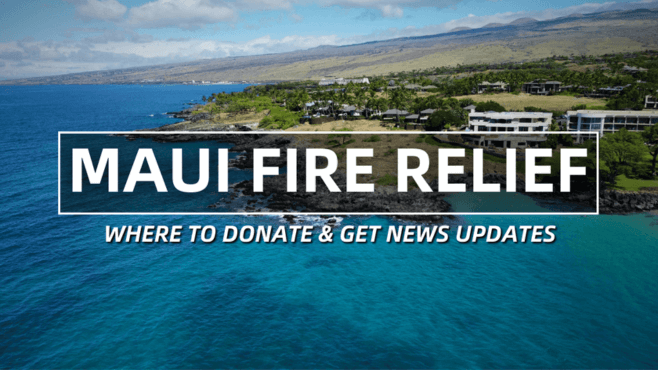
MAUI FIRE RELIEF & INFO
How to Help Donate to Hawaii Red Cross. To specifically donate towards the Maui fires, in the ‘I Want to Support’ dropdown, please select Disaster Relief or Your Local Red Cross. News Reports/Updates: REAL-TIME UPDATES FROM MAUI NOW Shelter Resources: Hawaii Red Cross Website...
 espnmaui.com
Did you see this?
Huh, I think I saw it and then did not see it when I went back via a different link. But it looks like Pacific Radio Group has the same banner posted on all its station websites.
Huh, I think I saw it and then did not see it when I went back via a different link. But it looks like Pacific Radio Group has the same banner posted on all its station websites.
Keep in mind that if a radio station is in an area that has been evacuated, the station has to evacuate too. There is no radio exemption.

There are plenty of stations that can originate from the transmitter site in an emergency. Some even have remote access directly to the transmitter and can program from a variety of locations.Keep in mind that if a radio station is in an area that has been evacuated, the station has to evacuate too. There is no radio exemption.
Transmitters for AM are nearly always outside the city of license, and FMs usually are on "high ground" such as hills if there are such things in the area.
Do any cars even have NOAA weather radio accessible via their sound systems?Thus why AM needs to be kept. I'm glad the doofuses at Ford realized that after all.
I know and understand why AM needs to go because it doesn't sound that good, I get it. However, when it comes to public safety/civil defense/emergency scenarios, AM is the one true resort where you'll get that information that no other radio band or outlet can provide. Yes, there's NOAA Weather Radio as well but not every radio has that built-in.
That's why AM is the one true resort for this reason and why it should be kept.
I doubt it, but if one has a battery powered NOAA weather radio (such as the Sangean PR-D4W) and aux cable, they can probably connect it to their car's sound system. The average person probably couldn't care less about that, however, and will probably be doing whatever they can to stay safe, which, worst case, might even necessitate leaving there car to be destroyed if the flames are coming and their suck in gridlocked traffic (this has happened more times than I can count here in California over the past 8 years, and tragically, people have been found dead in burnt out cars because they were stuck in traffic and the flames overtook them before they could escape).Do any cars even have NOAA weather radio accessible via their sound systems?
Sorry to get so morbid and graphic, but that's just the reality of these kinds of situations. No one's gonna care about radios or phones when they're running for their lives!
Cars, radios and phones can be replaced. Lives cannot.
c

At the risk of repeating myself about the radio as a last hope issue - perhaps the USA Gov could require that cell phones with FM (not AM) radios automatically switch over to the FM radio if no cell signal is detected after repeated tries in some short period of time.
The cell phone screen could explain that no cell signal was detected and it was switching over to its built in FM radio because there may be emergency information being broadcast on local FM radio stations (possibly multiple pages of instructions stored in the cell phone about how to receive FM radio - some cell phones users may not know much of anything about FM radio reception).
If the lack of a cell signal is just a temporary local problem an not an area wide emergency, no harm done by requiring auto switching to FM radio just in case.
Kirk Bayne
The cell phone screen could explain that no cell signal was detected and it was switching over to its built in FM radio because there may be emergency information being broadcast on local FM radio stations (possibly multiple pages of instructions stored in the cell phone about how to receive FM radio - some cell phones users may not know much of anything about FM radio reception).
If the lack of a cell signal is just a temporary local problem an not an area wide emergency, no harm done by requiring auto switching to FM radio just in case.
Kirk Bayne
- Status
- This thread has been closed due to inactivity. You can create a new thread to discuss this topic.