I can vaguely remember WNYW "Radio New York Worldwide" with CBS News, which was WRUL and was sold to one Harold Camping.The Delano, California and Brentwood, Long Island facilities were originally CBS properties. NBC had Dixon, California and Bound Brook, New Jersey. Schenectady was General Electric, which also had KGEI in San Francisco. Can’t remember if the old WRUL Scituate, Massachusetts site was ever used by VOA…?
By the mid 1960s the Greenville facilities had replaced all the east coast transmission sites except for Bethany, Ohio.

-
Get involved.
We want your input!
Apply for Membership and join the conversations about everything related to broadcasting.
After we receive your registration, a moderator will review it. After your registration is approved, you will be permitted to post.
If you use a disposable or false email address, your registration will be rejected.
After your membership is approved, please take a minute to tell us a little bit about yourself.
https://www.radiodiscussions.com/forums/introduce-yourself.1088/
Thanks in advance and have fun!
RadioDiscussions Administrators
You are using an out of date browser. It may not display this or other websites correctly.
You should upgrade or use an alternative browser.
You should upgrade or use an alternative browser.
Kari Lake previews her plans for Voice of America in the next Administration.
- Thread starter Bill Betten
- Start date
James O. Weldon wrote a paper published by IEEE Transactions on Broadcasting, Vol 34, #2, June, 1988, The Early History of U. S. International Broadcasting From the Start of World War II.
In it he discusses briefly the broadcast operations of shortwave transmitters at Brentwood (CBS), Mason (Crosley), Schenectady (GE), Boundbrook (NBC), Westinghouse locations at Boston and Pittsburg, and Worldwide Broadcasting at Scituate as well as Dixon and Delano.
Very interesting summary of the history of shortwave broadcasting prior to WWII and after WWII.
Weldon also mentions improvements to modulator systems, to increase transmitter efficiencies, either by pulse-step modulation or pulse-width modulation systems.
In it he discusses briefly the broadcast operations of shortwave transmitters at Brentwood (CBS), Mason (Crosley), Schenectady (GE), Boundbrook (NBC), Westinghouse locations at Boston and Pittsburg, and Worldwide Broadcasting at Scituate as well as Dixon and Delano.
Very interesting summary of the history of shortwave broadcasting prior to WWII and after WWII.
Weldon also mentions improvements to modulator systems, to increase transmitter efficiencies, either by pulse-step modulation or pulse-width modulation systems.

Interestingly the call letters KNBC was originally designated for a shortwave station in Dixon, California before those call letters went to the AM station in San Francisco and currently used as TV call letters for Los Angeles. Yes the Dixon facility was later owned by the VOA. It is one of the earliest examples where the networks O&O bore the call letters of its affiliate.
In 1943, both NBC and CBS agreed to build new shortwave plants in California for the O.W.I. The facilities would be built by the networks under contract to the O.W.I., financed by a government loan, and leased to the O.W.I., who would provide all program services. CBS chose a location at Delano and put stations KCBA, KCBF and KCBR on the air in November, 1944. NBC selected a 160 acre site on what is now called Radio Station Road in Dixon.
NBC engineer Carl Deitsch supervised the design and construction of the million dollar project. Deitsch was NBC’s shortwave broadcast expert, having done the same job previously for its shortwave stations in Bound Brook, New Jersey. He was assisted by others from the crack NBC engineering team, including key men from the NBC broadcast stations KPO and KGO in San Francisco. Construction began in 1943 with the installation of two 50 kW Federal Telegraph Co. transmitters. Rhombic antennas targeted Japan, Australia and the Philippines. Broadcasting commenced on December 27, 1944, with the call signs KNBA and KNBC. The next year, two more RCA transmitters were added, using the call signs KNBI and KNBX.
The original Federal transmitters were radio telegraph (CW) systems, and were fed by separate Federal modulators. One modulator fed two transmitters, which was possible because they shared common programs. Federal later built a 200 kW transmitter for Dixon
Voice of America journalists move for restraining order against Trump administration
Journalists at Voice of America have filed a legal request for a restraining order that will prevent Trump administration officials from furthering layoffs and a reduction in activities.
 thedesk.net
Apparently some of the federal funding owed to Radio Free Europe will be released to the organization:

 www.insideradio.com
Radio Free Europe: USAGM To Release Portion Of Contested Grant Money.
At least some of the grant money at the center of a legal action involving Radio Free Europe/Radio Liberty and the U.S. Agency for Global Media (USAGM) will be disbursed
Apparently some of the federal funding owed to Radio Free Europe will be released to the organization:
Radio Free Europe: USAGM To Release Portion Of Contested Grant Money.
At least some of the grant money at the center of a legal action involving Radio Free Europe/Radio Liberty and the U.S. Agency for Global Media (USAGM) will be disbursed
That would also suggest that some of the transmitting stations would come back up on-line.
That might also mean transmitters in Greenville could be scheduled to run RFE/RL programming.
There might also be a need for NCC personnel at the Cohen Building.
I don't think so. RFE/RL was predominately online and local FM in recent years.That would also suggest that some of the transmitting stations would come back up on-line.
Inadequate for serious coverage of the target areas. Greenville was never used for RFE/RL.That might also mean transmitters in Greenville could be scheduled to run RFE/RL programming.
I think the USAGM shortwave output will likely remain dead regardless of what future action is taken. The SW audience is mostly gone.

Sort of like silver dollars: some are still around, but they are ancient.The SW audience is mostly gone.

I don't think so. RFE/RL was predominately online and local FM in recent years.
Inadequate for serious coverage of the target areas. Greenville was never used for RFE/RL.
I think the USAGM shortwave output will likely remain dead regardless of what future action is taken. The SW audience is mostly gone.
FE/RL used UAE and KWT as i recall. They mightve used one of the SE Asian sites too.. Udon Thani or Tinang.
I remember when logging RL here in Alaska, it was in Tajik and Uzbek... and remember looking up the TX site info and recall they were shooting from the south going north across "central asia" said Eibi
Martí Radio/TV (OCB Miami) is producing programs again but only on the Internet. No word yet whether Marathon 1180 AM or Greenville shortwave soon will return to the air .
It's likely the VOA employees control the transmitters, and they're still on furlough.
USAGM faces another lawsuit from VOA journalists over job cuts
The Director of VOA, a senior-level journalist and two contractors have filed a third lawsuit against USAGM over disruptive activity and job cuts.
thedesk.net
Another lawsuit is directed at the VOA and Trump administration for the same reasons here.
It's likely the VOA employees control the transmitters, and they're still on furlough.
Greenville and Marathon officially were handed over to OCB years ago. That's the bizarre part - it's OCB even though some VoA content comes out of that site.
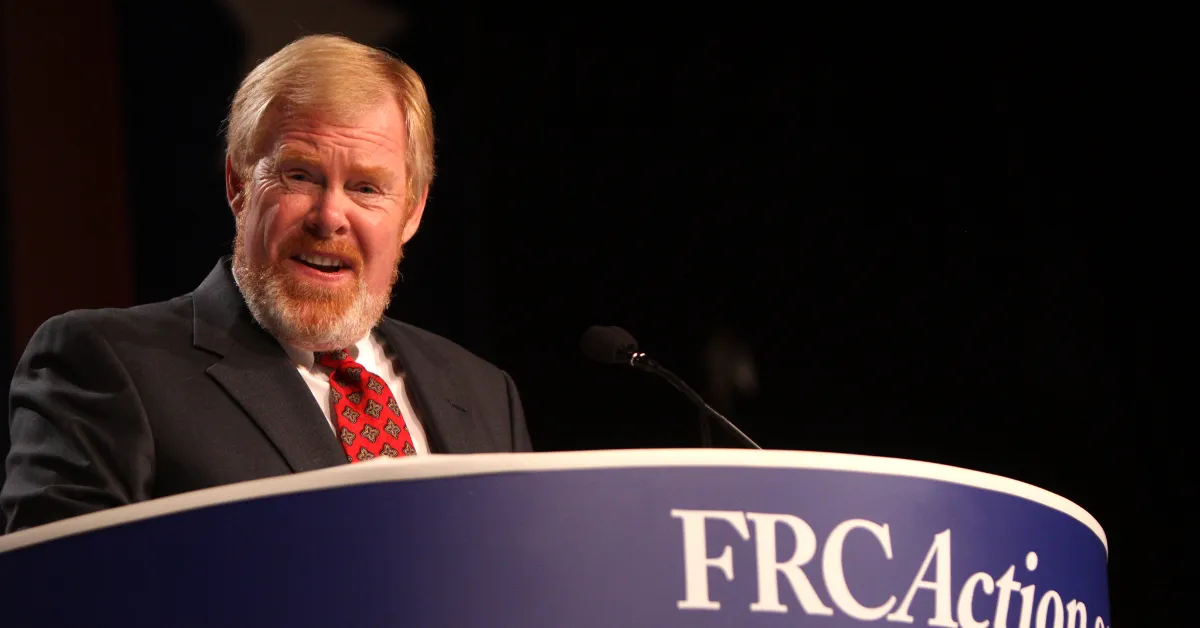
Trump withdraws Bozell's nomination to lead Voice of America parent organization
Leo Bozell will instead be nominated to serve as Ambassador to South Africa, according to Congressional notifications made on Tuesday.
thedesk.net
Here is more happening at the VOA in relation to the fallout and Bozell is out of the running as candidate for the USAGM Role as CEO.
So , if no one has a shortwave radio set in Cuba to listen to Radio Martí, how come ICRT runs two domestic services (Radio Progreso, Radio Rebelde) on the 60 meter band? (They occasionally crop up on other bands too, e.g. 90 meters, 49 meters.) The outputs of these services are fairly low so it's not for an "international audience".
Like much in Cuba, tradition is part of the national identity. Neither of the two SW services is consistently on the air (check the SW listener groups and clubs) and I think that they have an attitude of "as long as the transmitter works, we keep it on".So , if no one has a shortwave radio set in Cuba to listen to Radio Martí, how come ICRT runs two domestic services (Radio Progreso, Radio Rebelde) on the 60 meter band? (They occasionally crop up on other bands too, e.g. 90 meters, 49 meters.) The outputs of these services are fairly low so it's not for an "international audience".
It makes no sense to run those services, though, as the national nets are all one 20 to 30 AM and as many FM facilities all across the country. But remember, a number of the highest ranking Cuban leaders are in their 70's or older and tradition dies hard.
Like much in Cuba, tradition is part of the national identity. Neither of the two SW services is consistently on the air (check the SW listener groups and clubs) and I think that they have an attitude of "as long as the transmitter works, we keep it on".
It makes no sense to run those services, though, as the national nets are all one 20 to 30 AM and as many FM facilities all across the country. But remember, a number of the highest ranking Cuban leaders are in their 70's or older and tradition dies hard.
RHC on 6000 2-3 nights ago sounded like absolute garbage.. i mean, liek bad, even for Cuba...... they werent on the next night that i could tell
The Radio Marti 1180 transmitter has been reported back on the air as of late Wednesday, March 26.Martí Radio/TV (OCB Miami) is producing programs again but only on the Internet. No word yet whether Marathon 1180 AM or Greenville shortwave soon will return to the air .
No sign of any of the RM shortwave frequencies at a check a few minutes ago, so Greenville still off. I also didn’t hear any residual jamming on those frequencies, so the Cubans have likely shut them off for now.
RHC is likely down to its last breaths. The A-25 transmission schedule is minimal; most of its usual output is gone.RHC on 6000 2-3 nights ago sounded like absolute garbage.. i mean, liek bad, even for Cuba...... they werent on the next night that i could tell
Meanwhile of note: Mexico’s last shortwave station, XEPPM Radio Educación on 6185, has been missing for over two weeks. The station did have a couple of multi-week outages in 2023, but came back after transmitter parts were secured. No word on whether this latest outage is due to another transmitter failure, or whether the Mexican Ministry of Culture has finally decided to pull the plug.