
I read an article from a few years ago from an online newspaper archive I have access to that WLEX tends to do better in the metro area ratings-wise, while WKYT does better in the outlying counties (probably because of WKYT being the legacy UK sports station beginning in the 1970s). Don't know if that's still the case in terms of metro versus outlying counties.Yes, as you correctly note, the Lexington market extends far beyond the range at which it could be received OTA (unless you were on a mountaintop), moreover, even if the distances aren't extreme, you have all of those valleys that block out signals. To be fair, though, other markets might be blocked out as well, though they didn't suffer from the handicap of being UHF back in a time when that made a huge difference. Very often, OTA reception came down to what side of the mountain you were on, and whether you fell in a reception sweet spot or not.
Taking a look at the 1975 Broadcasting Yearbook, the following counties, now in the Lexington DMA, were in these markets:
Tri-Cities - Perry
Knoxville - Jackson, Clay, Laurel, Knox, Wayne, Russell, Whitley (Leslie County was also in that DMA, it's now Tri-Cities)
Charleston-Huntington - Knott, Magoffin, Morgan, Wolfe, Rowan (also Letcher County, now Tri-Cities as well)
Cincinnati - Fleming
There was at least one year (I'd have to page through several years of BCYB and TVFB to find it, that will be a research project for another time) when Robertson and Harlan counties were in the Lexington market, and IIRC, so was Leslie County. Leslie County has bounced back and forth between Knoxville, Tri-Cities, and Lexington, but as of now, it's this odd exclave of the Tri-Cities market. Long story short, the Lexington stations aggressively pursued viewers, got on cable (though not translators, that would have helped immensely), secured their loyalty, and in the 1980s, one of them, WKYT, took advantage of a situation and snapped up WKYH, which was struggling (to put it mildly). Lexington is one of the great urban success stories of the 1970s and beyond, it just keeps growing and growing, robust economies with many drivers (education being among them), easy access via the interstates and the Mountain Parkway, and from a pleasant little town known for horses, became (after a fashion) the largest city in eastern Kentucky, while being just on the edge of it. People wanted to get their TV from there.

-
Get involved.
We want your input!
Apply for Membership and join the conversations about everything related to broadcasting.
After we receive your registration, a moderator will review it. After your registration is approved, you will be permitted to post.
If you use a disposable or false email address, your registration will be rejected.
After your membership is approved, please take a minute to tell us a little bit about yourself.
https://www.radiodiscussions.com/forums/introduce-yourself.1088/
Thanks in advance and have fun!
RadioDiscussions Administrators
You are using an out of date browser. It may not display this or other websites correctly.
You should upgrade or use an alternative browser.
You should upgrade or use an alternative browser.
Lexington, KY (December 7, 1981)
- Thread starter Bluenoser
- Start date
By looking at your map, the Lexington DMA is the largest in the state . WKYT claims an 80 county coverage.Yes, Fox is very aggressive in having their affiliates not cannibalize each other across DMA lines.
Yes, I agree about DMAs being ridiculously large when stations can’t even be received OTA. Look at the Lexington market for example. NO WAY can a Lexington signal penetrate those deep south and southeast Kentucky counties.
We used to have a farm in Marion county, which is on the fringe of the Louisville DMA. RabbitEars.com shows that the Lexington stations actually provide a better signal into Marion County than the Louisville stations, but the county is designated as a Louisville DMA county — probably because of the legacy of the Louisville VHFs, dating back to when they signed on in 1948 and 1950. Also, the early years of the Lexington UHFs were hampered by lower power signals, lousy UHF tuners in sets, etc. Plus, the plethora of pre-1964 VHF-only sets.
(Our farm in Marion County sat in a valley, with the hills blocking the Lexington stations, but we had a clearer shot to the west/Louisville. This resulted in WAVE and WHAS being adequate via a Channel Master Crossfire, but WLKY and WDRB via a Hooverman antenna were viewable but rough. This was pretty much the standard antenna package for Marion County for the Louisville stations in the 1970s.)
View attachment 8590
Another ridiculously large DMA, that I'm familiar with ( due to having family there) is Springfield Mo.
It extends halfway back to Poplar Bluff in the east, Northern Arkansas to the south, Lake of the Ozarks to the north. To the west, it buts up against the Joplin market.
I have family that lives in Osage Beach, and they are 75 miles from Springfield. No OTA reception whatsoever. Their cable provider there in addition to Springfield, also carries OOM Columbia and Jefferson City that's 20 miles closer!
I have some friends that just recently bought a farm on US 68 near the Boyle/Marion county line, but in Marion county.
They have Direct TV so they get the Louisville locals. But since they moved from Nicholasville they still wanted Lexington channels. WKYT in particular.
Their house is on a ridge, so I took one of those curved reflector GE antennas that I bought at Walmart. I installed it with the provided J pole on the peak of the house, and aimed it for the best signal strength.
WKYT, WDKY and WUPX, were consistent at 90% while WLEX and WTVQ were around 70%, with occasional pixelation. It did lock on WLJC for PSIP info but not strong enough for a picture.
No preamps, one TV, short cable run.
The bad thing is that #6 copper wire and ground rod I used cost more than the antenna! But they're happy with the results.
I'm sure in the analog days, getting a decent signal in that area was a challenge.
Just up the road in neighboring Washington county, the antennas I see there for Lexington and Louisville reception are more compact. I'll get some pics the next time I'm down that way .
If FOX is in fact looking out for and protecting, it's in market affiliates, that's actually a good thing. Not too many businesses do that today.
However, how do you explain WXIX being carried in Georgetown Paris, and Mt. Sterling?
SV status?
I recently stopped in a convenience store at I-75 and US 460 in Georgetown. The TV on the wall was playing one of those trash talk shows and the WXIX watermark was in the right corner of the screen.
BTW, you can see the downtown Lexington skyline from that exit.
I stopped in McDs in Mt Sterling for coffee one morning. WXIX was playing on the dining room TV.
All these systems also carry WDKY.
There was an extensive discussion on getting WYMT on satellite. Even with the FCC getting involved. Gray, which owns both WYMT and WKYT even said they were fine with having both. Nothing like owning your competition...
It's the dish providers that said it's not technically feasible.
Both dish providers receive locals OTA then uplink them to their hub, rather than utilizing fiber.
(Both dish providers used to publish the OTA uplink address on their website. I don't think they list them anymore.)
Direct TVs receiving station is located about 100 ft up on the WLEX tower on Russell Cave Rd
Dish Networks is ground level on Forbes Rd at Lisle Rd near what was the old Bluegrass Stockyards.
( I'll take pics this week and post them)
So, maybe the dish providers "can't" get a useable WYMT signal to those sites.
When WYMT switches to UHF 20, they are going to lose some of their OTA viewers as VHF does better in mountainous terrain. They have a very loyal following there, as stated before.
I don't know why they still carry WXIX in those towns. Neither Bourbon, Scott, nor Montgomery counties have WXIX on their SV list, but then again, that list is very strange, some of its data is very outdated. If Fox and WDKY wanted to push it, they could probably force WXIX off cable in those counties, but for some reason, apparently they don't. WXIX was wildly popular in pre-Fox days when it was the only independent carried in a vast area east of I-75 and north of I-64, and was even carried on cable in Huntington and Charleston WV. They had a very impressive movie catalog as well as an assortment of popular syndicated shows. Then Fox came along (at first they had only a bare-bones prime-time schedule, indeed, to this day, they only run until 10 pm, and WVAH fired up in the C-H market in the early 1980s (and later got the channel 11 drop-in allocation).
As to WYMT, it could easily serve as the nucleus of a separate market (though single-station at least where major network affiliates are concerned, either infill from Lexington or network subchannels would be needed), but nobody wants that, it would shrink the Lexington market, eat away even further at the C-H, Knoxville, and Tri-Cities markets, and would be very small itself, a case of an ebbing tide lowering all boats. Dish (and maybe DirecTV as well, I'm not sure) has found a way to carry WYMT and deliver it to selected counties, but only within the Lexington market. I'm not clear on why this same spotbeam can't serve neighboring counties, but so far as I'm aware, the argument is that it's not technically feasible. It's also worth noting that WYMT claims several counties in neighboring West Virginia, Virginia, and Tennessee as being in its coverage area, and these counties appear on their weather maps.
Totally agree with the inconsistency regarding Fox's "enforcement" and some of its signal-overlapping affiliates (in this case, WXIX) -- maybe it's because Frankfort/Franklin County was so strongly fought over by the Louisville and Lexington markets over the years for that county to be in either designated DMA?
Very interesting to hear that DirecTv and Dish still receive locals via OTA -- I assumed it would've been via fiber by now.
Yes, that's probably it, Franklin County could conceivably revert back to the Louisville DMA if both Lexington and Louisville stations were equally accessible, whereas there's no realistic possibility that the Lexington DMA could lose Scott, Bourbon, or Montgomery counties to Cincinnati. But every viewer watching Fox on WXIX is one less viewer watching WDKY. I wonder if they sim-sub WDKY on those systems.
I now live in Colorado, and another goofy DMA is Denver — NO WAY any Denver signals penetrate the far western reaches of that DMA, and stations’ owned translators are on the eastern side of the state. However, municipal translators probably account for some of the western-most counties. But still ….By looking at your map, the Lexington DMA is the largest in the state . WKYT claims an 80 county coverage.
Another ridiculously large DMA, that I'm familiar with ( due to having family there) is Springfield Mo.
It extends halfway back to Poplar Bluff in the east, Northern Arkansas to the south, Lake of the Ozarks to the north. To the west, it buts up against the Joplin market.
I have family that lives in Osage Beach, and they are 75 miles from Springfield. No OTA reception whatsoever. Their cable provider there in addition to Springfield, also carries OOM Columbia and Jefferson City that's 20 miles closer!
I have some friends that just recently bought a farm on US 68 near the Boyle/Marion county line, but in Marion county.
They have Direct TV so they get the Louisville locals. But since they moved from Nicholasville they still wanted Lexington channels. WKYT in particular.
Their house is on a ridge, so I took one of those curved reflector GE antennas that I bought at Walmart. I installed it with the provided J pole on the peak of the house, and aimed it for the best signal strength.
WKYT, WDKY and WUPX, were consistent at 90% while WLEX and WTVQ were around 70%, with occasional pixelation. It did lock on WLJC for PSIP info but not strong enough for a picture.
No preamps, one TV, short cable run.
The bad thing is that #6 copper wire and ground rod I used cost more than the antenna! But they're happy with the results.
I'm sure in the analog days, getting a decent signal in that area was a challenge.
Just up the road in neighboring Washington county, the antennas I see there for Lexington and Louisville reception are more compact. I'll get some pics the next time I'm down that way .
80 counties? I'm counting less than 40.By looking at your map, the Lexington DMA is the largest in the state . WKYT claims an 80 county coverage.
Another ridiculously large DMA, that I'm familiar with ( due to having family there) is Springfield Mo.
It extends halfway back to Poplar Bluff in the east, Northern Arkansas to the south, Lake of the Ozarks to the north. To the west, it buts up against the Joplin market.
I have family that lives in Osage Beach, and they are 75 miles from Springfield. No OTA reception whatsoever. Their cable provider there in addition to Springfield, also carries OOM Columbia and Jefferson City that's 20 miles closer!
I have some friends that just recently bought a farm on US 68 near the Boyle/Marion county line, but in Marion county.
They have Direct TV so they get the Louisville locals. But since they moved from Nicholasville they still wanted Lexington channels. WKYT in particular.
Their house is on a ridge, so I took one of those curved reflector GE antennas that I bought at Walmart. I installed it with the provided J pole on the peak of the house, and aimed it for the best signal strength.
WKYT, WDKY and WUPX, were consistent at 90% while WLEX and WTVQ were around 70%, with occasional pixelation. It did lock on WLJC for PSIP info but not strong enough for a picture.
No preamps, one TV, short cable run.
The bad thing is that #6 copper wire and ground rod I used cost more than the antenna! But they're happy with the results.
I'm sure in the analog days, getting a decent signal in that area was a challenge.
Just up the road in neighboring Washington county, the antennas I see there for Lexington and Louisville reception are more compact. I'll get some pics the next time I'm down that way .
I have one of those curved reflector GE antennas, and for what it is, it does a good job. I wouldn't put it on a par with the Antennas Direct 91XG, but it's a decent performer, again, for what it is. It's probably going to have more of an issue with high-VHF (WLJC being on OTA 7).
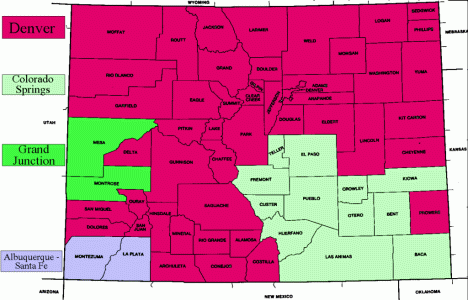
I now live in Colorado, and another goofy DMA is Denver — NO WAY any Denver signals penetrate the far western reaches of that DMA, and stations’ owned translators are on the eastern side of the state. However, municipal translators probably account for some of the western-most counties. But still ….
View attachment 8592
The Denver DMA is driven largely by satellite, and to a lesser extent, cable carriage. It also extends into neighboring states (Nebraska and Wyoming), often in a patchwork-like pattern. At one point they even claimed a county in Nevada, obviously delivered via satellite.
I read an article from a few years ago from an online newspaper archive I have access to that WLEX tends to do better in the metro area ratings-wise, while WKYT does better in the outlying counties (probably because of WKYT being the legacy UK sports station beginning in the 1970s). Don't know if that's still the case in terms of metro versus outlying counties.
Don't know. WKYT benefits from being able to share news resources with WYMT and WSAZ, and is more eastern Kentucky-oriented than the other stations. It is even carried on cable in Ashland, though sim-subbed with WOWK. The far northeastern counties of Kentucky would have no interest in WYMT, its naturally occurring coverage area ends probably 20 or so miles south of I-64, roughly Sandy Hook and Louisa.
Scott and Bourbon both have WXIX as well as WCPO and WKRC on cable, again a legacy thing, maybe?I don't know why they still carry WXIX in those towns. Neither Bourbon, Scott, nor Montgomery counties have WXIX on their SV list, but then again, that list is very strange, some of its data is very outdated. If Fox and WDKY wanted to push it, they could probably force WXIX off cable in those counties, but for some reason, apparently they don't. WXIX was wildly popular in pre-Fox days when it was the only independent carried in a vast area east of I-75 and north of I-64, and was even carried on cable in Huntington and Charleston WV. They had a very impressive movie catalog as well as an assortment of popular syndicated shows. Then Fox came along (at first they had only a bare-bones prime-time schedule, indeed, to this day, they only run until 10 pm, and WVAH fired up in the C-H market in the early 1980s (and later got the channel 11 drop-in allocation).
As to WYMT, it could easily serve as the nucleus of a separate market (though single-station at least where major network affiliates are concerned, either infill from Lexington or network subchannels would be needed), but nobody wants that, it would shrink the Lexington market, eat away even further at the C-H, Knoxville, and Tri-Cities markets, and would be very small itself, a case of an ebbing tide lowering all boats. Dish (and maybe DirecTV as well, I'm not sure) has found a way to carry WYMT and deliver it to selected counties, but only within the Lexington market. I'm not clear on why this same spotbeam can't serve neighboring counties, but so far as I'm aware, the argument is that it's not technically feasible. It's also worth noting that WYMT claims several counties in neighboring West Virginia, Virginia, and Tennessee as being in its coverage area, and these counties appear on their weather maps.
Yes WXIX was very popular in the pre-FOX days. It always ticked me off that WLEX blocked it here in Lexington proper. So I would watch it when I visited my cousins in Frankfort in the 70s..
I was eating lunch at a Skyline Chili in Georgetown one day, and the WKRC afternoon news was on there.
As for WYMT ** Could** they carry all 4 networks on their subchannels and create a mini market?
I know that they would have to downconvert the subs to 720 rather than have them at 1080.
A market within a market? Or would the other Lexington stations have a say so?
Bowling Green carved out it's own small market with all 5 networks on 2 signals. Who would've thought?
Wonder what the Nashville stations thought of this? Bowling Green is only 39 miles from Nashville and the Nashville OTA stations are easy pickings there. I know people there that receive Nashville on indoor antennas.
Scott and Bourbon both have WXIX as well as WCPO and WKRC on cable, again a legacy thing, maybe?
Yes WXIX was very popular in the pre-FOX days. It always ticked me off that WLEX blocked it here in Lexington proper. So I would watch it when I visited my cousins in Frankfort in the 70s..
I was eating lunch at a Skyline Chili in Georgetown one day, and the WKRC afternoon news was on there.
As for WYMT ** Could** they carry all 4 networks on their subchannels and create a mini market?
I know that they would have to downconvert the subs to 720 rather than have them at 1080.
A market within a market? Or would the other Lexington stations have a say so?
Bowling Green carved out it's own small market with all 5 networks on 2 signals. Who would've thought?
Wonder what the Nashville stations thought of this? Bowling Green is only 39 miles from Nashville and the Nashville OTA stations are easy pickings there. I know people there that receive Nashville on indoor antennas.
Scott and Bourbon counties both have Cincinnati 5/9/12 (but not WXIX) as significantly viewed stations per the 2016 update. So they're probably safe. OTA reception would be entirely possible in those counties.
Theoretically, WYMT could pull an Alpena or a Harrisonburg, and carry all four networks, but I don't think Gray would ever pursue such a thing. As I noted, a Hazard market would take big bites out of four other markets. At this point, the networks themselves would probably step in and refuse affiliation. The only way it would be remotely feasible, would be for WLEX, WTVQ, and WDKY to consent to being subchannels of WYMT, and I've never heard of such an arrangement. (The closest thing is probably WHSV's NBC affiliate, which appears to be at least a partial retransmission of sister Gray station WVIR, at least where news is concerned. WYMT could conceivably simulcast WSAZ on a subchannel, but that would be very much a square peg in a round hole, and from out-of-state on top of that. And Harrisonburg has always been a free-standing market, whereas a Hazard market would mean chopping off a lot of the Lexington market that was hard-won over decades, and returning the Lexington market pretty much to its 1975 boundaries, aside from Franklin, Fleming, and Anderson counties, and possibly others.) They've got cable and satellite carriage throughout much of eastern Kentucky, and they're probably happy with the status quo.
Last edited:
There would be an exception to an affiliate carrying another affiliate signal:Scott and Bourbon counties both have Cincinnati 5/9/12 (but not WXIX) as significantly viewed stations per the 2016 update. So they're probably safe. OTA reception would be entirely possible in those counties.
Theoretically, WYMT could pull an Alpena or a Harrisonburg, and carry all four networks, but I don't think Gray would ever pursue such a thing. As I noted, a Hazard market would take big bites out of four other markets. At this point, the networks themselves would probably step in and refuse affiliation. The only way it would be remotely feasible, would be for WLEX, WTVQ, and WDKY to consent to being subchannels of WYMT, and I've never heard of such an arrangement. (The closest thing is probably WHSV's NBC affiliate, which appears to be at least a partial retransmission of sister Gray station WVIR, at least where news is concerned. WYMT could conceivably simulcast WSAZ on a subchannel, but that would be very much a square peg in a round hole, and from out-of-state on top of that. And Harrisonburg has always been a free-standing market, whereas a Hazard market would mean chopping off a lot of the Lexington market that was hard-won over decades, and returning the Lexington market pretty much to its 1975 boundaries, aside from Franklin, Fleming, and Anderson counties, and possibly others.) They've got cable and satellite carriage throughout much of eastern Kentucky, and they're probably happy with the status quo.
I know in Louisville, Cincinnati and Springfield Mo. ( and many other locations) one station in those markets became an "ASTC 3.0 Lighthouse".
In those markets, the main channels of ALL the locals in that market are carried by the one 3.0 signal.
However, I doubt very seriously that Gray would do that to WYMT.
Now keep in mind that ASTC 3.0 is still in the experimental stages. TVs and converter boxes to receive 3.0 are scarce and the ones you can find right now are expensive.
So, What happened to the subchannels from the now 3.0 station?
They get divided up amongst the other 1.0 stations.
For example, WSTR in Cincinnati became the 3.0 Lighthouse.
If you tune any of its subchannels, say you key in 64.3, it will map to the correct channel, but may be hosted ( is that a word?) by WCPO. Or tune to 64.1, and it's being hosted by WXIX. In Louisville key in 58.1 for WBKI, and it's hosted by WAVE, And so on....
Is 3.0 the future of OTA TV? Too soon to tell. Maybe, as you can have more virtual channels on one transmitter. That would help if there's another repack, but it is also paving the way for a subscription based model, but who knows I may not live long enough to see that to fruition...
In my view, ATSC 3.0 is taking WAY TOO LONG — I think the world is already passing it by, and given the headlong/blind rush into streaming (except for us OTA-metal heads), I don’t see generations behind us going to the trouble of adopting it.There would be an exception to an affiliate carrying another affiliate signal:
I know in Louisville, Cincinnati and Springfield Mo. ( and many other locations) one station in those markets became an "ASTC 3.0 Lighthouse".
In those markets, the main channels of ALL the locals in that market are carried by the one 3.0 signal.
However, I doubt very seriously that Gray would do that to WYMT.
Now keep in mind that ASTC 3.0 is still in the experimental stages. TVs and converter boxes to receive 3.0 are scarce and the ones you can find right now are expensive.
So, What happened to the subchannels from the now 3.0 station?
They get divided up amongst the other 1.0 stations.
For example, WSTR in Cincinnati became the 3.0 Lighthouse.
If you tune any of its subchannels, say you key in 64.3, it will map to the correct channel, but may be hosted ( is that a word?) by WCPO. Or tune to 64.1, and it's being hosted by WXIX. In Louisville key in 58.1 for WBKI, and it's hosted by WAVE, And so on....
Is 3.0 the future of OTA TV? Too soon to tell. Maybe, as you can have more virtual channels on one transmitter. That would help if there's another repack, but it is also paving the way for a subscription based model, but who knows I may not live long enough to see that to fruition...
Strikes me as the AM Stereo and HD Radio of its day —
Last edited:
There would be an exception to an affiliate carrying another affiliate signal:
I know in Louisville, Cincinnati and Springfield Mo. ( and many other locations) one station in those markets became an "ASTC 3.0 Lighthouse".
In those markets, the main channels of ALL the locals in that market are carried by the one 3.0 signal.
However, I doubt very seriously that Gray would do that to WYMT.
Now keep in mind that ASTC 3.0 is still in the experimental stages. TVs and converter boxes to receive 3.0 are scarce and the ones you can find right now are expensive.
So, What happened to the subchannels from the now 3.0 station?
They get divided up amongst the other 1.0 stations.
For example, WSTR in Cincinnati became the 3.0 Lighthouse.
If you tune any of its subchannels, say you key in 64.3, it will map to the correct channel, but may be hosted ( is that a word?) by WCPO. Or tune to 64.1, and it's being hosted by WXIX. In Louisville key in 58.1 for WBKI, and it's hosted by WAVE, And so on....
Is 3.0 the future of OTA TV? Too soon to tell. Maybe, as you can have more virtual channels on one transmitter. That would help if there's another repack, but it is also paving the way for a subscription based model, but who knows I may not live long enough to see that to fruition...
Not another repack... please, not another repack...
Making WYMT the ATSC 3.0 lighthouse for the Lexington market wouldn't work. It can't deliver a signal to Lexington (aside from viewers who might be in just the right sweet spot), and viewers in the mountains without ATSC 3.0 receivers (which would be practically everybody) would be deprived of possibly the only full-service commercial station they can receive OTA.
ATSC 3.0 is far from being viable. I don't see it taking off unless the FCC would mandate a changeover for everyone, with the whole scenario of making subsidized converter boxes available, and at a certain point, pulling the plug on ATSC 1.0 altogether. IOW, 2009 all over again. That worked much better than I expected, but they were delivering a whole new product with improved picture quality and a panoply of subchannels, and the market was flooded with inexpensive options that pushed existing analog TVs out entirely (just ask Goodwill, they've finally had to refuse donations of analog sets). But ATSC 3.0 doesn't provide enough of an advantage to make it appealing to viewers. I predict that eventually, it will be discontinued, and the lighthouses will revert back to normal ATSC 1.0 operation. As with AM stereo and HD radio, a great idea in concept, but something that will never really catch on. The only option I see is to establish new stations from scratch, and let those be permanent lighthouses for the ATSC 1.0 stations (and who would pay for those?), but the way they've whittled back and repacked everything into 30 viable channels, there's just not enough broadcasting spectrum left.
Just thinking outside the box, another option might be for Scripps and Inyo to convert all of their Ion stations to 3.0, let them be the lighthouses for each market --- they have stations all over the place --- and retain one subchannel for the main Ion network programming, but if you do that and viewers don't adopt 3.0, you've basically destroyed the entire company. Again, just thinking outside the box. What you would have then would be a lot of roadkill, that Scripps/Inyo would have either to rebuild from scratch, or sell off at sacrifice prices to other entities, and broadcast stations in this age of streaming OTT content aren't exactly the most attractive investment in the world. The ones that already exist are, in many cases, sucking air merely to remain as viable viewing options.
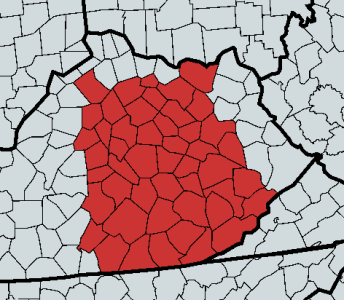
Okay, here's what I've gotten done so far, with data from Broadcasting Yearbook, 1975 through 1983. There were changes after that, but I stopped here, not least because I wanted to find the year that Franklin County finally flipped to the Lexington market. It is sorted by alphabetical order as to where the counties finally ended up by then. A steady trickle of counties into the Lexington market is readily apparent.
One interesting thing I found, Perry County actually flipped back to the Bristol (Tri-Cities) market for a couple of years.
I hope to complete the table in coming days. I only selected the counties that fell into a certain band to the east and west of Lexington, and generally didn't bother with the counties to the north and northeast. Those counties' markets are pretty set in stone, though an exception would be Lewis County, which actually flipped to Cincinnati for a couple of years. I seem to recall Robertson County flipping to Lexington one year, but obviously it was after 1983.
I hope I got all of this accurate, but that's a lot of data. This is the area on which I focused:
Happy reading
(continued, I'm having to cut this up into pieces, as I discovered when I tried to post)
One interesting thing I found, Perry County actually flipped back to the Bristol (Tri-Cities) market for a couple of years.
I hope to complete the table in coming days. I only selected the counties that fell into a certain band to the east and west of Lexington, and generally didn't bother with the counties to the north and northeast. Those counties' markets are pretty set in stone, though an exception would be Lewis County, which actually flipped to Cincinnati for a couple of years. I seem to recall Robertson County flipping to Lexington one year, but obviously it was after 1983.
I hope I got all of this accurate, but that's a lot of data. This is the area on which I focused:
Happy reading
(continued, I'm having to cut this up into pieces, as I discovered when I tried to post)
Last edited:
| 1975 | 1976 | 1977 | 1978 | 1979 | 1980 | 1981 | 1982 | 1983 |
County | BCYB | BCYB | BCYB | BCYB | BCYB | BCYB | BCYB | BCYB | BCYB |
Letcher | Huntington | Bristol | Bristol | Bristol | Bristol | Bristol | Bristol | Bristol | Bristol |
Owen | Cincinnati | Cincinnati | Cincinnati | Cincinnati | Cincinnati | Cincinnati | Cincinnati | Cincinnati | Cincinnati |
Robertson | Cincinnati | Cincinnati | Cincinnati | Cincinnati | Cincinnati | Cincinnati | Cincinnati | Cincinnati | Cincinnati |
Knott | Huntington | Bristol | Bristol | Huntington | Huntington | Huntington | Huntington | Huntington | Huntington |
Lewis | Huntington | Huntington | Huntington | Huntington | Huntington | Huntington | Cincinnati | Cincinnati | Huntington |
Magoffin | Huntington | Huntington | Huntington | Huntington | Huntington | Huntington | Huntington | Huntington | Huntington |
Morgan | Huntington | Huntington | Huntington | Huntington | Huntington | Huntington | Huntington | Huntington | Huntington |
Bell | Knoxville | Knoxville | Knoxville | Knoxville | Knoxville | Knoxville | Knoxville | Knoxville | Knoxville |
Harlan | Knoxville | Knoxville | Knoxville | Knoxville | Knoxville | Knoxville | Knoxville | Knoxville | Knoxville |
Knox | Knoxville | Knoxville | Knoxville | Knoxville | Knoxville | Knoxville | Knoxville | Knoxville | Knoxville |
Laurel | Knoxville | Knoxville | Knoxville | Knoxville | Knoxville | Knoxville | Knoxville | Lexington | Knoxville |
Leslie | Knoxville | Knoxville | Knoxville | Knoxville | Knoxville | Knoxville | Bristol | Knoxville | Knoxville |
McCreary | Knoxville | Knoxville | Knoxville | Knoxville | Knoxville | Knoxville | Knoxville | Knoxville | Knoxville |
Wayne | Knoxville | Knoxville | Knoxville | Knoxville | Knoxville | Knoxville | Knoxville | Knoxville | Knoxville |
Whitley | Knoxville | Knoxville | Knoxville | Knoxville | Knoxville | Knoxville | Knoxville | Knoxville | Knoxville |
| 1975 | 1976 | 1977 | 1978 | 1979 | 1980 | 1981 | 1982 | 1983 |
County | BCYB | BCYB | BCYB | BCYB | BCYB | BCYB | BCYB | BCYB | BCYB |
Anderson | Louisville | Louisville | Louisville | Lexington | Lexington | Lexington | Lexington | Lexington | Lexington |
Bath | Lexington | Lexington | Lexington | Lexington | Lexington | Lexington | Lexington | Lexington | Lexington |
Bourbon | Lexington | Lexington | Lexington | Lexington | Lexington | Lexington | Lexington | Lexington | Lexington |
Boyle | Lexington | Lexington | Lexington | Lexington | Lexington | Lexington | Lexington | Lexington | Lexington |
Breathitt | Lexington | Lexington | Lexington | Lexington | Lexington | Lexington | Huntington | Huntington | Lexington |
Casey | Louisville | Lexington | Louisville | Louisville | Lexington | Lexington | Lexington | Lexington | Lexington |
Clark | Lexington | Lexington | Lexington | Lexington | Lexington | Lexington | Lexington | Lexington | Lexington |
Clay | Knoxville | Lexington | Knoxville | Knoxville | Lexington | Lexington | Lexington | Lexington | Lexington |
Estill | Lexington | Lexington | Lexington | Lexington | Lexington | Lexington | Lexington | Lexington | Lexington |
Fayette | Lexington | Lexington | Lexington | Lexington | Lexington | Lexington | Lexington | Lexington | Lexington |
Fleming | Cincinnati | Lexington | Lexington | Lexington | Cincinnati | Lexington | Lexington | Lexington | Lexington |
Franklin | Louisville | Louisville | Louisville | Louisville | Louisville | Louisville | Louisville | Louisville | Lexington |
Harrison | Cincinnati | Cincinnati | Cincinnati | Cincinnati | Cincinnati | Cincinnati | Cincinnati | Lexington | Lexington |
Jackson | Knoxville | Knoxville | Knoxville | Lexington | Lexington | Lexington | Lexington | Lexington | Lexington |
Jessamine | Lexington | Lexington | Lexington | Lexington | Lexington | Lexington | Lexington | Lexington | Lexington |
| 1975 | 1976 | 1977 | 1978 | 1979 | 1980 | 1981 | 1982 | 1983 |
County | BCYB | BCYB | BCYB | BCYB | BCYB | BCYB | BCYB | BCYB | BCYB |
Lee | Lexington | Lexington | Lexington | Lexington | Lexington | Lexington | Lexington | Lexington | Lexington |
Lincoln | Lexington | Lexington | Lexington | Lexington | Lexington | Lexington | Lexington | Lexington | Lexington |
Madison | Lexington | Lexington | Lexington | Lexington | Lexington | Lexington | Lexington | Lexington | Lexington |
Menifee | Lexington | Lexington | Lexington | Lexington | Lexington | Lexington | Lexington | Lexington | Lexington |
Mercer | Lexington | Lexington | Lexington | Lexington | Lexington | Lexington | Lexington | Lexington | Lexington |
Montgomery | Lexington | Lexington | Lexington | Lexington | Lexington | Lexington | Lexington | Lexington | Lexington |
Nicholas | Cincinnati | Lexington | Lexington | Lexington | Lexington | Lexington | Lexington | Lexington | Lexington |
Owsley | Lexington | Lexington | Lexington | Lexington | Lexington | Lexington | Lexington | Lexington | Lexington |
Perry | Bristol | Lexington | Lexington | Lexington | Bristol | Bristol | Lexington | Lexington | Lexington |
Powell | Lexington | Lexington | Lexington | Lexington | Lexington | Lexington | Lexington | Lexington | Lexington |
Pulaski | Lexington | Knoxville | Lexington | Lexington | Lexington | Lexington | Lexington | Lexington | Lexington |
Rockcastle | Lexington | Lexington | Lexington | Lexington | Lexington | Lexington | Lexington | Lexington | Lexington |
Rowan | Huntington | Lexington | Lexington | Lexington | Lexington | Lexington | Lexington | Lexington | Lexington |
Russell | Knoxville | Knoxville | Knoxville | Knoxville | Knoxville | Lexington | Lexington | Lexington | Lexington |
Scott | Lexington | Lexington | Lexington | Lexington | Lexington | Lexington | Lexington | Lexington | Lexington |
Wolfe | Huntington | Huntington | Lexington | Lexington | Lexington | Lexington | Lexington | Lexington | Lexington |
Woodford | Lexington | Lexington | Lexington | Lexington | Lexington | Lexington | Lexington | Lexington | Lexington |

Satellite is not allowed to carry a different DMA’s station unless the market in question has NO network licensed to the DMA. As example my market (Mankato, MN) we get ABC from Minneapolis (KSTP) as Mankato only has CBS, NBC and FOX. The key point is Satellite rules are way different than cable. Satellite is just stations assigned to the DMA. Before Gray launched NBC a few years ago satellite subs got KARE Minneapolis. When KMNF-LD NBC launched satellite had to remove KARE and add KMNF-LD in its place. (There are like 4 examples of Directv where you can get two markets but they are very few and one took a legal take…the 2 southern counties of Vermont)Dish (and maybe DirecTV as well, I'm not sure) has found a way to carry WYMT and deliver it to selected counties, but only within the Lexington market. I'm not clear on why this same spotbeam can't serve neighboring counties, but so far as I'm aware, the argument is that it's not technically feasible
As to the first part it probably goes by zip code within the DMA as to who gets WYMT.
Directv does NOT carry WYMT
Last edited:
Satellite is not allowed to carry a different DMA’s station unless the market in question has NO network licensed to the DMA. As example my market (Mankato, MN) we get ABC from Minneapolis (KSTP) as Mankato only has CBS, NBC and FOX. The key point is Satellite rules are way different than cable. Satellite is just stations assigned to the DMA. Before Gray launched NBC a few years ago satellite subs got KARE Minneapolis. When KMNF-LD NBC launched satellite had to remove KARE and add KMNF-LD in its place. (There are like 3 examples where you can get two markets but they are very few)
As to the first part it probably goes by zip code within the DMA as to who gets WYMT.
Directv does NOT carry WYMT
Then I would say anyone in eastern Kentucky (the Lexington portion, that is), who wants to get WYMT via satellite, goes with Dish, and if they have DirecTV, drop it if they can.
And it's not just Kentucky. Here's a story from WYMT on how they got booted off the Wise VA cable, but can still continue to have their H&I channel carried, which has at least some of WYMT's newscasts. I'd wondered why WYMT simulcasted some of its newscasts on WYMT-57.2, now we know.
People in Wise Co. could lose WYMT coverage
Again, a network not wanting one of its affiliates to lose viewers to an OOM station.
Last edited:
Unrelated to the Lexington market, but related to FOX carriage, Charter Spectrum in Clare, MI carries both WFQX and WSMH for FOX. Clare is split between Clare County (Traverse City/Cadillac DMA) and Isabella County (Flint/Saginaw/Bay City DMA). Clare County used to be in the Flint/Saginaw DMA but switched to Traverse City/Cadillac around 1990 give or take a few years (having TC/C's very strong CBS affiliate being based in Cadillac with a tower site in neighboring Osceola County definitely helped).
Also in Clare County, Harrison replaces WSMH with WGTU (TC/C's ABC affiliate, which is missing from Clare - WGTU was a very weak ABC affiliate and was missing on cable in Big Rapids, Ludington, and Reed City (all in the Traverse City/Cadillac DMA) until 2014; all three had [and still have AFAIK] WZZM from Grand Rapids)
Also in Clare County, Harrison replaces WSMH with WGTU (TC/C's ABC affiliate, which is missing from Clare - WGTU was a very weak ABC affiliate and was missing on cable in Big Rapids, Ludington, and Reed City (all in the Traverse City/Cadillac DMA) until 2014; all three had [and still have AFAIK] WZZM from Grand Rapids)