Being reported on DX forums that Radio Luxembourg will shut down their powerful 234 kHz longwave transmitter on December 31. Excuse given is increased energy cost, but I would think the general demise of long and medium wave broadcasting is the real decision maker. RTL had already reduced longwave output from 24 to 19 hours daily earlier this year.

-
Get involved.
We want your input!
Apply for Membership and join the conversations about everything related to broadcasting.
After we receive your registration, a moderator will review it. After your registration is approved, you will be permitted to post.
If you use a disposable or false email address, your registration will be rejected.
After your membership is approved, please take a minute to tell us a little bit about yourself.
https://www.radiodiscussions.com/forums/introduce-yourself.1088/
Thanks in advance and have fun!
RadioDiscussions Administrators
You are using an out of date browser. It may not display this or other websites correctly.
You should upgrade or use an alternative browser.
You should upgrade or use an alternative browser.
Luxembourg shutting down longwave 234 kHz
- Thread starter Mediafrog+
- Start date
I would think that the reason was both energy costs and parts for the transmitter now being made of Unobtanium.Being reported on DX forums that Radio Luxembourg will shut down their powerful 234 kHz longwave transmitter on December 31. Excuse given is increased energy cost, but I would think the general demise of long and medium wave broadcasting is the real decision maker. RTL had already reduced longwave output from 24 to 19 hours daily earlier this year.

All Europe was filled with 100 kw to 1000 kw stations. A few are still there.Fewer and fewer stations on the LW band.
Is there a reason why relatively small European countries have such high powered LW and MW stations? The US and Canada are capped at 50kw with much larger land masses. Mexico has high powered stations on the MW band, but nothing on LW?
Luxembourg, also in Medium Wave served Germany, the Netherlands and Belgium daytime and England at night on 1439 and the LW served SE England daytime as well. Until the pirates came on, Luxembourg was the only British commercial station.
Mexico never had any real high power stations, capping out with just 2 at 250 kw, a couple at 150 and a handful of 100 kw operations.
As Keith said, LW was never used permanently in our hemisphere.
The US decided early on that it did not want high power. A bunch of powerful congressmen got the FCC to back down from the idea of higher power, even eliminating 500 kw operation at WLW. They did not want such potentially powerful voices in the hands of potential opponents, preferring to make radio local like newspapers.
It doesn't matter anymore, but in the earliest days of radio, LW could have opened up rural areas to daytime radio reception.AFAIK, there has never been LW broadcasting anywhere in the Western Hemisphere.
Thank you for the info. In the early 90s I was a student in London and was amazed at how much music there was on MW over a decade after it was over in the US. My favorite station was a CHR called Atlantic 252 on LW - at that frequency it was 24 hours. Radio Luxembourg (at that point on 1440) had ceased to exist but was still playing Hot-AC, but with German announcers.All Europe was filled with 100 kw to 1000 kw stations. A few are still there.
Luxembourg, also in Medium Wave served Germany, the Netherlands and Belgium daytime and England at night on 1439 and the LW served SE England daytime as well. Until the pirates came on, Luxembourg was the only British commercial station.
Mexico never had any real high power stations, capping out with just 2 at 250 kw, a couple at 150 and a handful of 100 kw operations.
As Keith said, LW was never used permanently in our hemisphere.
The US decided early on that it did not want high power. A bunch of powerful congressmen got the FCC to back down from the idea of higher power, even eliminating 500 kw operation at WLW. They did not want such potentially powerful voices in the hands of potential opponents, preferring to make radio local like newspapers.
That's still quite a few high powered MW stations in Mexico compared the the rest of North America.
I know that you meant the Americas.AFAIK, there has never been LW broadcasting anywhere in the Western Hemisphere.
Technically, there are currently four longwave stations in the Western Hemisphere. They are located in Iceland, Ireland, Morocco, and the United Kingdom.
The Irish 252 transmitter has seen a couple of efforts at commercial broadcasting: Atlantic 252, and briefly, TeamTalk 252. Both wound up failing for entirely predictable reasons. The station is now run by RTE, Ireland‘s public broadcaster. RTE has made noises in recent years about shutting it down, but has to mollify a small number of Irish expats in the UK who claim to still listen to the station. I suspect that when the BBC shuts down 198 kHz in the next two or three years that RTE will do the same to 252.My favorite station was a CHR called Atlantic 252 on LW - at that frequency it was 24 hours.
Almost all the 100 kw Mexico City stations have cut back to around 60 kw. 690, 730, 760, 860, 900, 940 and 1110 all have done that. Monterrey on 1050 is down to below 50kw, XERF is apparently running 15 kw. 540 is also at much below its former 150 kw.That's still quite a few high powered MW stations in Mexico compared the the rest of North America.
Brazil had a scad of 100 kw stations on MW, and one in Brasilia at even higher power, 250 or 500 kw. Argentina has 5 or 6 100 kw stations, and Chile had several but AM is dying there. Colombia has several, 570 and 810 in Bogotá being the ones I am positive of. And of course, Trans World Radio now with 400 kw and previously with 500 kw on 800 AM in Bonaire. Venezuela had a couple of 100 kw stations,, 950 in Caracas and 650 to the west of the Capital.
The biggie was Radio Millón on 625 in Costa Rica, 1,000,000 watts. It only operated briefly. The gear was sold to Venezuela where it never got on with full power. Turks & Caicos had 100 kw for a while, too.
And then there is Radio Martí 1180 with 100 kw. Several Cuban stations are still in the 100 kw range, but the 300 kw Russian transmitter that was on 1180 and then 1160 is gone as are a batch of 120 kw Russian rigs. The Russians installed a whole series in the 30, 60 and 120 kw power steps.
I used to hear Radio Capodistria in NE Italy on MW 1079 KHz back in 1972-1974. This is an Italian language commercial station run by Radio TV Slovenia from Koper (then Yugoslavia). Its on 1170 now and less powerful but still covers the Northern Adriatic area....there were no other commercial stations around in that region then.
(FM was 87-100 MHz but US Armed Forces stations were allowed between 100-108)....
Radio Luxembourg was audible at night on 233 KHz in French and 1439 KHz in German and English.
(FM was 87-100 MHz but US Armed Forces stations were allowed between 100-108)....
Radio Luxembourg was audible at night on 233 KHz in French and 1439 KHz in German and English.
Last edited:
I wouldn't say Atlantic "failed". It was pretty successful in its era, the late 80s and early 90s, in a period where British local commercial radio was still hamstrung by old-fashioned broadcasting styles and onerous format requirements (classical music shows, long news breaks, even drama in some cases), and where BBC Radio 1 was stuck in the early 80s. It was a tight American-style CHR in a country which didn't have it. The excellent pop music of the era helped it, as did its policy of giving away money all the time. It did best in Northern England, Scotland and Wales - it struggled in the high population areas of London and the South East of England because of the distance from the Irish transmitter and the fact that LW has always been poor in cities (even the BBC has a relay on 720 kHz for its LW programming within London).The Irish 252 transmitter has seen a couple of efforts at commercial broadcasting: Atlantic 252, and briefly, TeamTalk 252. Both wound up failing for entirely predictable reasons. The station is now run by RTE, Ireland‘s public broadcaster. RTE has made noises in recent years about shutting it down, but has to mollify a small number of Irish expats in the UK who claim to still listen to the station. I suspect that when the BBC shuts down 198 kHz in the next two or three years that RTE will do the same to 252.
At peak, "Long Wave Radio Atlantic 252" reached about six million people, no mean feat for music on AM, and it kicked off the careers of a lot of people who are still successful in radio today. It started to decline as British radio modernized and improved its programming - more pop/rock music on FM local stations, a streamlined BBC Radio 1 (which also moved from AM to FM around this time). The death knell came in the early 2000s when it went for a frankly insane Rhythmic CHR/EDM format under the "Non-Stop Rhythm and Dance" strapline. It was the last roll of the dice for a struggling business, and it didn't last more than a couple of years.
No disagreement from me that TeamTalk 252 was a mega flop, though. A sports station with no major sports play-by-play rights (in the UK, that means "soccer", and their only play-by-play coverage was British basketball) and a general lack of programming focus, it lasted all of three months. My main recollection of it is that it was incredibly boring and consisted mostly of men talking about not very much, often veering off sport and onto political rambling.
There is heaps of archive audio from Atlantic 252 here: UK Airchecks from Atlantic 252 | AircheckDownloads.com
Last edited:
Cuba tried for years to jam Radio Marti to more or less success. The orignial jamming scheme was to use the typical Soviet plan of "one big facility." This worked well only in Havana. In other parts people would null out the jamming by rotating their radios. The transmitter hardly ever made full power and there are pictures of the facility showing well pumps being used for the water cooling that are sitting on a pile (literally) of concrete blocks and wooden crates, patched garden hoses used to route the water...just a mess.And then there is Radio Martí 1180 with 100 kw. Several Cuban stations are still in the 100 kw range, but the 300 kw Russian transmitter that was on 1180 and then 1160 is gone as are a batch of 120 kw Russian rigs. The Russians installed a whole series in the 30, 60 and 120 kw power steps.
Later the Chinese government came in and explained that jamming would be much more effective with a bunch of lower power stations on 1180 kHz spread through out the country. That worked.
However, Radio Marti has a very good signal in Haiti and most of the Caribbean. It has been used from time to time to broadcast to that nation especially after the 2010 earthquake.
Last edited:
Coastal Haiti, maybe. But the interior of Haiti is a no-go, and it has little signal in the Dominican Republic, and no signal at all in Puerto Rico. And less than nothing in the Leeward and Windward islands from the USVI down to Trinidad and Tobago. In the ABC's, the Cuban transmitters mix with it and make it impossible. In Colombia the 10 kw stations in Ibagué and Armenia block itHowever, Radio Marti has a very good signal in Haiti and most of the Caribbean. It has been used from time to time to broadcast to that nation especially after the 2010 earthquake.

The Last Radio Station
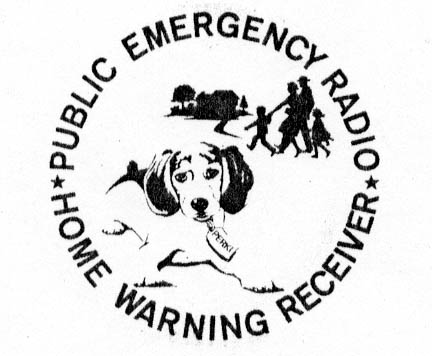 WGU-20 logo
Back in the cold war days, the federal government took emergency warning quite seriously. So much so that they spent about $2 million in 1972 to build a LF (low frequency) radio station WGU-20, in Maryland designed to integrate into the public warning system. This was known as the “Last radio station” because it was designed to operate after nuclear armageddon. Using the first all solid state AM transmitter designed by Westinghouse, the station transmitted on 179 kHz (power 50 KW) with a loop that stated:
“Good evening. This is WGU-20, a defense civil-preparedness agency station, serving the east central states with emergency information. Eastern Standard Time seventeen hours, twenty minutes, twenty seconds.”
The greeting would change to “Good Morning…” or “Good afternoon…” as appropriate.
One small problem arose from this system, no one had long wave receivers. The government attempted to persuade manufacturers to market, and the public to purchase radios that would only receive periodic tests or that they were likely going to die in the next 15 minutes. It was a tough sell from the start.
Military planners decided that they might integrate the DIDS (Decision Information Distribution System) information gained from surface to air radar that would give the approximate impact areas of incoming ballistic missiles. The idea was, the public would then know which areas to “avoid.” It may have appealed to the military mind, but most others didn’t quite see the value in it, especially since reaction times would have been 10 minutes or less.
Plans were to build several of these radio stations throughout the US operating on Low Frequency, which would have replaced the EBS over the air daisy chain system that remains in effect today with the current EAS. Unfortunately, the public never bought into the concept and around 1990 or so, WGU-20 was turned off for good. The nearest thing was have to it today is NOAA weather (or all hazards) radio.
EBS and EAS have never had to work in a time of emergency and if the circumstances are dire enough for someone to attempt to activate EAS, it is very likely the system would fail.
XERF used to put a listenable daytime signal into San Antonio. No wonder it’s so faint now.Almost all the 100 kw Mexico City stations have cut back to around 60 kw. 690, 730, 760, 860, 900, 940 and 1110 all have done that. Monterrey on 1050 is down to below 50kw, XERF is apparently running 15 kw. 540 is also at much below its former 150 kw.
I agree about Atlantic 252. It wasn't a failure just as much as WABC, WLS, KFRC, etc weren't failures. They all had their time in the sun. As for LW in London Atlantic 252 was certainly strong enough to listen to, especially for a radio geek. Radio 4 on LW seemed very strong to me. Radio 1, at the time, was on both MW and FM in London, presumably a transition period.I wouldn't say Atlantic "failed". It was pretty successful in its era, the late 80s and early 90s, in a period where British local commercial radio was still hamstrung by old-fashioned broadcasting styles and onerous format requirements (classical music shows, long news breaks, even drama in some cases), and where BBC Radio 1 was stuck in the early 80s. It was a tight American-style CHR in a country which didn't have it. The excellent pop music of the era helped it, as did its policy of giving away money all the time. It did best in Northern England, Scotland and Wales - it struggled in the high population areas of London and the South East of England because of the distance from the Irish transmitter and the fact that LW has always been poor in cities (even the BBC has a relay on 720 kHz for its LW programming within London).
At peak, "Long Wave Radio Atlantic 252" reached about six million people, no mean feat for music on AM, and it kicked off the careers of a lot of people who are still successful in radio today. It started to decline as British radio modernized and improved its programming - more pop/rock music on FM local stations, a streamlined BBC Radio 1 (which also moved from AM to FM around this time). The death knell came in the early 2000s when it went for a frankly insane Rhythmic CHR/EDM format under the "Non-Stop Rhythm and Dance" strapline. It was the last roll of the dice for a struggling business, and it didn't last more than a couple of years.
No disagreement from me that TeamTalk 252 was a mega flop, though. A sports station with no major sports play-by-play rights (in the UK, that means "soccer", and their only play-by-play coverage was British basketball) and a general lack of programming focus, it lasted all of three months. My main recollection of it is that it was incredibly boring and consisted mostly of men talking about not very much, often veering off sport and onto political rambling.
There is heaps of archive audio from Atlantic 252 here: UK Airchecks from Atlantic 252 | AircheckDownloads.com
Thank you for that information.Almost all the 100 kw Mexico City stations have cut back to around 60 kw. 690, 730, 760, 860, 900, 940 and 1110 all have done that. Monterrey on 1050 is down to below 50kw, XERF is apparently running 15 kw. 540 is also at much below its former 150 kw.
Brazil had a scad of 100 kw stations on MW, and one in Brasilia at even higher power, 250 or 500 kw. Argentina has 5 or 6 100 kw stations, and Chile had several but AM is dying there. Colombia has several, 570 and 810 in Bogotá being the ones I am positive of. And of course, Trans World Radio now with 400 kw and previously with 500 kw on 800 AM in Bonaire. Venezuela had a couple of 100 kw stations,, 950 in Caracas and 650 to the west of the Capital.
The biggie was Radio Millón on 625 in Costa Rica, 1,000,000 watts. It only operated briefly. The gear was sold to Venezuela where it never got on with full power. Turks & Caicos had 100 kw for a while, too.
And then there is Radio Martí 1180 with 100 kw. Several Cuban stations are still in the 100 kw range, but the 300 kw Russian transmitter that was on 1180 and then 1160 is gone as are a batch of 120 kw Russian rigs. The Russians installed a whole series in the 30, 60 and 120 kw power steps.
Looking at the juxtaposition of Marathon and the breadth of Cuba, the ABCs would be on the far eastern edge of the Radio Marti 1180 directional beam. The DR, PR, and the Lesser Antilles would be well outside the signal coverage. However I have read reports of the 1180 signal blasting into Central America, which is directly beyond Cuba.Coastal Haiti, maybe. But the interior of Haiti is a no-go, and it has little signal in the Dominican Republic, and no signal at all in Puerto Rico. And less than nothing in the Leeward and Windward islands from the USVI down to Trinidad and Tobago. In the ABC's, the Cuban transmitters mix with it and make it impossible. In Colombia the 10 kw stations in Ibagué and Armenia block it
The Radio Marti shortwave frequencies are heard well away from the Cuban target area.
Not really. The Martí beam is aimed right at the middle of Cuba, so its strongest point at the southern edge of the Caribbean is between Santa Marta and Riohacha, Colombia. That puts the Netherlands Antilles right in the middle of the lobe.Looking at the juxtaposition of Marathon and the breadth of Cuba, the ABCs would be on the far eastern edge of the Radio Marti 1180 directional beam.
Venezuela has lost about 75% of its AM stations during the bus driver's regime, so there is nothing on 1180 in that nation. But the distance from Key West to even coastal Venezuela is over 1,100 miles and that is just too far for consistent propagation in the tropics.
Guatemala has a 10 kw Radio Maranatha on 1180 right in the center of the nation. Honduras has an 1180 in Belén and another in Tegucigalpa. Nicaragua supposedly has a Catholic station on 1180, and Panama has two 10 kw stations, one in Panamá City and another in central Panamá. Costa Rica has a 10 kw station on 1180 in Heredia, outside San José.The DR, PR, and the Lesser Antilles would be well outside the signal coverage. However I have read reports of the 1180 signal blasting into Central America, which is directly beyond Cuba.
So, except occasional reception right on the coast, every Central American nation has something on 1180 except for Belize. And, for example, Marathon is over 900 miles from coastal Nicaragua... greater than the distance from Boston to Chicago.
Last edited:
I don't think increased energy cost is an "excuse" but a reality in Europe, where the price of electricity has gone up 4-5x (at least) since 2019.Being reported on DX forums that Radio Luxembourg will shut down their powerful 234 kHz longwave transmitter on December 31. Excuse given is increased energy cost, but I would think the general demise of long and medium wave broadcasting is the real decision maker. RTL had already reduced longwave output from 24 to 19 hours daily earlier this year.
The energy price crisis has acted to accelerate a pre-existing trend away from LW and MW radio, much like the pandemic sped up existing moves towards telecommuting and remote working. Electricity isn't the whole reason, and the switch-off would have happened in the next few years, but it's a big reason why it's happening now.
The only area of Europe where MW radio is increasing in use is the war zone between Russia and Ukraine, and surrounding countries. Russia has reactivated a couple of dormant MW signals and Ukraine is broadcasting its own content on MW.
- Status
- This thread has been closed due to inactivity. You can create a new thread to discuss this topic.