• Get involved.
    We want your input!
    Apply for Membership and join the conversations about everything related to broadcasting.

    After we receive your registration, a moderator will review it. After your registration is approved, you will be permitted to post.
    If you use a disposable or false email address, your registration will be rejected.

    After your membership is approved, please take a minute to tell us a little bit about yourself.
    https://www.radiodiscussions.com/forums/introduce-yourself.1088/

    Thanks in advance and have fun!
    RadioDiscussions Administrators

Media Companies Are Ready to Sell. Does Anyone Want to Buy?

Status
Not open for further replies.
The theatrical model has been multi revenue stream since the 1950's, starting with TV. Then came cable, pay tv, video cassettes, VOD, DVD's and now streaming. There were "windows" for each distribution modality. Then COVID hit, and basically destroyed the window system.
Up until about halfway through the previous decade, sales of physical media gave Hollywood a sort of "cushion" of extra revenue, and as we know, even classic movies were sold via VHS and DVD, and some of them were re-released to DVD with extra content. Some of these re-releases with directors' cuts, extra content, were big sellers. And they weren't cheap. If a movie didn't match expected ROI in the box office, that revenue from DVD sales provided extra revenue to offset the loss a bit, and if a movie made a lot of money in the box office, DVD sales added to it.

But physical visual media sales are minimal to non-existent anymore, so that revenue chain is gone. Streaming obviously brings in a certain amount of revenue, especially as it's becoming the only game in town, but if someone is paying only so much a month for a subscription, and they get to stream tons of movies in the process, I can't see where the revenues per play come anywhere near matching the old box-office / DVD sales & rentals / TV network movie licensing model, revenue-wise. I know the last time I visited my old college buddy, he rented a movie on Netflix or Amazon, and it cost maybe $3-$5 for us to watch it.

In 2005, a DVD of a similar movie would have cost at least $12 (more like $20 today, when accounting for inflation) -- and if it was a new movie, it would have cost even more than that. Obviously, with the new business model for movies and "TV", a certain amount of creativity is needed to keep the services afloat.
 
So, if Paramount+ and Peacock were to go away as a standalone service, what about being able to add a subscription tier for them on outlets like The Roku Channel, etc. as they already do? Why would they just be exclusive to Amazon? It seems to me it would be better to add services like that as add-ons on FAST channels for wider distribution. Amazon exclusively is stupid. Not everyone subscribes to Prime, or watches Prime Video, and I’ve never found much of their streaming offerings that are free (with Prime) very enticing. It’s always felt like a trap to get you to buy movies and shows to stream from Prime.

I have Prime, but just for the free shipping which I’ll probably let expire this year. I deleted the video app. It’s just not very good. Depending on a subscription service to distribute an additional tier is a recipe for disaster.
 
Up until about halfway through the previous decade, sales of physical media gave Hollywood a sort of "cushion" of extra revenue, and as we know, even classic movies were sold via VHS and DVD, and some of them were re-released to DVD with extra content. Some of these re-releases with directors' cuts, extra content, were big sellers. And they weren't cheap. If a movie didn't match expected ROI in the box office, that revenue from DVD sales provided extra revenue to offset the loss a bit, and if a movie made a lot of money in the box office, DVD sales added to it.

But physical visual media sales are minimal to non-existent anymore, so that revenue chain is gone. Streaming obviously brings in a certain amount of revenue, especially as it's becoming the only game in town, but if someone is paying only so much a month for a subscription, and they get to stream tons of movies in the process, I can't see where the revenues per play come anywhere near matching the old box-office / DVD sales & rentals / TV network movie licensing model, revenue-wise. I know the last time I visited my old college buddy, he rented a movie on Netflix or Amazon, and it cost maybe $3-$5 for us to watch it.

In 2005, a DVD of a similar movie would have cost at least $12 (more like $20 today, when accounting for inflation) -- and if it was a new movie, it would have cost even more than that. Obviously, with the new business model for movies and "TV", a certain amount of creativity is needed to keep the services afloat.
Physical DVDs and VHS tape cassettes weren't all gravy for the studios and distributors. All over this country, public libraries have racks of DVDs (and tapes before that) which borrowers could check out and view in the privacy of their own homes. No (or very low) cost to the patrons.

I have a copy of Jordan Peele's Get Out sitting on the BluRay player in my family room, which I intend to watch tonight and return to the library by Thursday. My only cost is the gas to get over to the library branch to return it. All over the country there are still people borrowing disks in the same transactions as books to read.
 
Physical DVDs and VHS tape cassettes weren't all gravy for the studios and distributors. All over this country, public libraries have racks of DVDs (and tapes before that) which borrowers could check out and view in the privacy of their own homes. No (or very low) cost to the patrons.

I have a copy of Jordan Peele's Get Out sitting on the BluRay player in my family room, which I intend to watch tonight and return to the library by Thursday. My only cost is the gas to get over to the library branch to return it. All over the country there are still people borrowing disks in the same transactions as books to read.
What I've read about the situation says otherwise. I've seen videos on YT covering the issues the big moviemakers face -- including interviews with movie producers like Matt Damon. They say that the loss of physical media sales has been an issue. They can't do anything about it, obviously, anymore than the recording industry can put the streaming music genie back into the bottle. But it's still a lost revenue stream. So -- just as the music industry has had to do -- they work at getting the most that they can from the present business model.

Libraries have stocked fiction and non-fiction books for decades, with no pushback whatsoever from book publishers. I am well acquainted with the publishing community. Library rentals have never been considered to be a threat to revenues. Partially, it's because they purchase the books. It's the same situation with music -- libraries also have stocked LPs, and CDs after that. If you look at RIAA stats, libraries aren't even mentioned as affecting the revenues. They probably write it off the same way they do used DVD, CD, and the way the book publishers write off used book sales -- something they just have to deal with.
 
What I've read about the situation says otherwise. I've seen videos on YT covering the issues the big moviemakers face -- including interviews with movie producers like Matt Damon. They say that the loss of physical media sales has been an issue. They can't do anything about it, obviously, anymore than the recording industry can put the streaming music genie back into the bottle. But it's still a lost revenue stream. So -- just as the music industry has had to do -- they work at getting the most that they can from the present business model.

Libraries have stocked fiction and non-fiction books for decades, with no pushback whatsoever from book publishers. I am well acquainted with the publishing community. Library rentals have never been considered to be a threat to revenues. Partially, it's because they purchase the books. It's the same situation with music -- libraries also have stocked LPs, and CDs after that. If you look at RIAA stats, libraries aren't even mentioned as affecting the revenues. They probably write it off the same way they do used DVD, CD, and the way the book publishers write off used book sales -- something they just have to deal with.
I don't have much problem with what you wrote. I just wanted to insert the point that it wasn't a perfect system for the studios then, and public libraries (and similar lending facilities) haven't gone away now. They have never eaten the big guys' lunch, but like mice, they're always there to nibble around the edges.
 
So, if Paramount+ and Peacock were to go away as a standalone service, what about being able to add a subscription tier for them on outlets like The Roku Channel, etc. as they already do? Why would they just be exclusive to Amazon? It seems to me it would be better to add services like that as add-ons on FAST channels for wider distribution.

They could do that.

Amazon exclusively is stupid. Not everyone subscribes to Prime, or watches Prime Video,

Darn near everyone. Amazon Prime gets you in front of 167.2 million subscribers to the service---a shade under 65% of all U.S. adults over 18, and more than the total number of households in the country.
 
I don't have much problem with what you wrote. I just wanted to insert the point that it wasn't a perfect system for the studios then, and public libraries (and similar lending facilities) haven't gone away now. They have never eaten the big guys' lunch, but like mice, they're always there to nibble around the edges.

Yeah, but there was still an initial purchase of the physical media by the library. It'd be like you buying a DVD and then loaning it to a neighbor. There's no restriction on that.
 
If you started renting it out, though---there'd be trouble.
Actually, no. That was litigated and settled more than 30 years ago. It's called the "first sales doctrine" As long as you bought it legally, you are free to do with it what you want. Thus, the Blockbusters and other video stores were born and legal. You could not buy a tape or disc and copy it, but you could rent out your original tape or disk. Then the Studios developed plans where the stores got "wholesale rental" pricing based on the number of units bought, and there were also revenue sharing deals. It was complex, but the large players eventually eliminated the "Mom & Pops"
 
Darn near everyone. Amazon Prime gets you in front of 167.2 million subscribers to the service---a shade under 65% of all U.S. adults over 18, and more than the total number of households in the country.
And it is important to note that there is a significant percentage of households where there is no paid service. Thisd can be due to low income or not enough content in the language the household speaks.
 
Currently when libraries “buy” e-books publishers sometimes put limits on the number of times an e/book can be lended out to patrons. This has caused some controversy in library circles. Not sure if libraries are “lending” digital versions of music or video where similar limits could also be imposed when the library “buys” (or more appropriately “rents”) digital music or video products
 
Darn near everyone. Amazon Prime gets you in front of 167.2 million subscribers to the service---a shade under 65% of all U.S. adults over 18, and more than the total number of households in the country.
But Prime is bought for many reasons, including free and expedited delivery. It would be interesting to know what percent of Prime customers do not utilize the streaming platform.
 
But Prime is bought for many reasons, including free and expedited delivery. It would be interesting to know what percent of Prime customers do not utilize the streaming platform.
Other than the now-concluded NFL Thursday Night games, I've never used it. I get far more free shipping than my annual dues cover.
 
So, if Paramount+ and Peacock were to go away as a standalone service, what about being able to add a subscription tier for them on outlets like The Roku Channel, etc. as they already do?

They're doing that now on Amazon Fire. They seem to have a strategic relationship with that device to encourage subscriptions. They list Roku among their devices (as you say). Also AppleTV.

Having said that, I don't expect either of them to "go away." They've each built new business that they can now use to negotiate better strategic partnerships with Netflix and other larger streamers. They just have to create more realistic budgets based on their existing metrics.
 
But Prime is bought for many reasons, including free and expedited delivery. It would be interesting to know what percent of Prime customers do not utilize the streaming platform.
A survey eight years ago, well before streaming was what it is now, showed only 20% of Prime subscribers didn’t use the video service. That’s almost certainly shrunk since.

The fact that it’s not an add-on means that the 167.2 million Prime subscribers in the U.S. have access to the platform.

For context, Netflix has 77 million U.S. subscribers. Hulu has 48.5 million.
 
The fact that it’s not an add-on means that the 167.2 million Prime subscribers in the U.S. have access to the platform

"The bundle" works. Perhaps the other streamers need to come up with other things (besides content) to bundle with streaming. More shows are like more channels. That's what killed cable. They kept giving us more channels, and we only wanted the ones we watched.
 
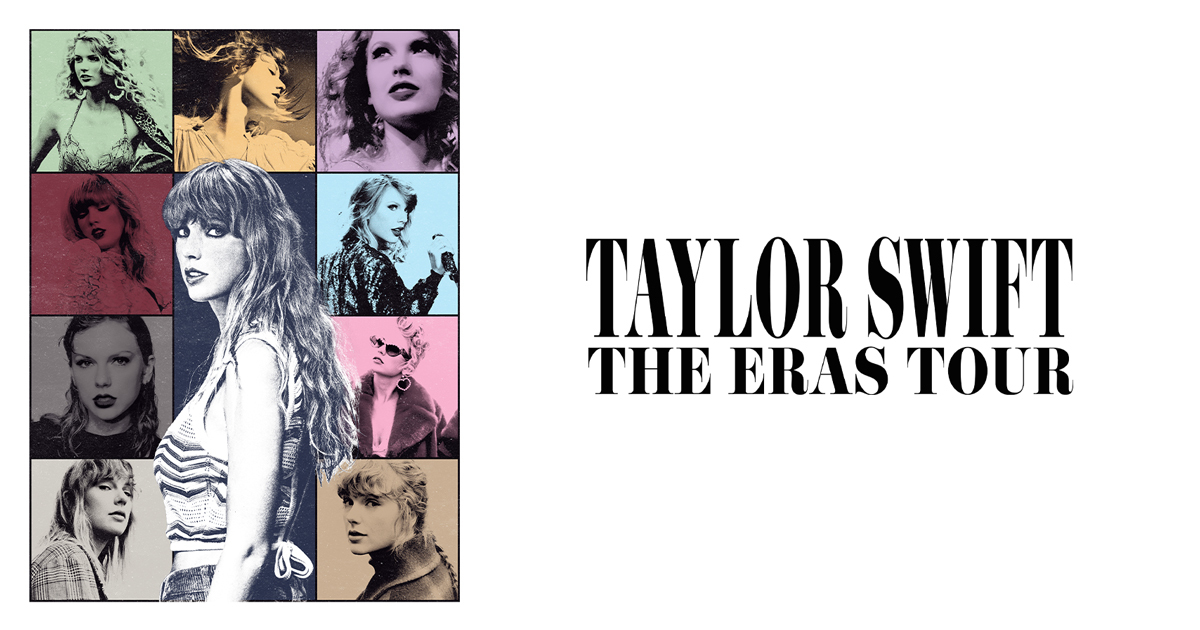
Will Taylor Swift's tour movie be available via streaming next? I've heard all the major players are trying to get first shot, but she hasn't shown her hand yet.
Taylor released her Eras Tour movie for the US, Canada, UK, Ireland, Australia, New Zealand, Mexico, Brazil, Germany, Austria and Switzerland to stream on Prime Video, Vudu Fandango, etc. last month:
Though it isn’t released for every country yet, is that what you meant?
 
Though it isn’t released for every country yet, is that what you meant?
I meant streaming, particularly in the U.S. Just as with popular movies originally in theaters, I wouldn't wait until all countries are released theatrically before offering streaming in the States. Now that she's caught the wave, you ride that wave from the theatrical peak to subscription streaming before the buzz potentially diminishes. There are a lot of Swifties out there who would want to watch the concert movie over and over, including personal watch parties. That may not be the case a year from now.
 
Status
Not open for further replies.


Back
Top Bottom