• Get involved.
    We want your input!
    Apply for Membership and join the conversations about everything related to broadcasting.

    After we receive your registration, a moderator will review it. After your registration is approved, you will be permitted to post.
    If you use a disposable or false email address, your registration will be rejected.

    After your membership is approved, please take a minute to tell us a little bit about yourself.
    https://www.radiodiscussions.com/forums/introduce-yourself.1088/

    Thanks in advance and have fun!
    RadioDiscussions Administrators

New TV station logo thread...

That started happening almost immediately, beginning in the mid 1950s. One glaring example is Indianapolis, where Indy had three commercial allocations (6, 8, 13), and Bloomington had one (10, later 4). WTTV Bloomington's coverage was only in the immediate Bloomington area, which had a metro population of around 50K (1950 census) and was definitely not wealthy in that era. They had to move their operations to Indy to keep network service (and that didn't even work out), and change the COL to Bloomington/Indianapolis in order to survive. Even then, they had to buy another unviable small-city station to cover the north end of the market (WWKI --> WTTK Kokomo). WTTV has not had a presence in Bloomington since they shut down their small studio there in the 1970s.

There were other small-town stations that had to move to the Big City or combine into one big market, to keep going. Enid OK --> OKC, Mesa AZ --> Phoenix, Henderson KY --> Evansville, Neenah WI --> Green Bay (UHF to VHF for that one), Harrisburg/Lancaster/York PA from three markets to one, others that I can't think of right now.
I have to wonder if the FCC didn't properly comprehend how network affiliation would work, and thought perhaps all of these stations in small towns would cherry-pick from all networks, in addition to providing local content. In the case of some stations, that is precisely what happened, and some of those stations have their own mini-markets today (Zanesville, Parkersburg, Harrisonburg, and others too numerous to mention), even though with the advent of digital subchannels, they have been able to carry several networks full-time.

And some such stations, while network affiliates, were heavy with local content to begin with, such as WOAY Oak Hill WV. Their morning lineup was almost entirely local origination.
 
I have to think the Petersburg thing is an anachronism, from back when the FCC sought to make allocations in as many cities as possible, as a matter of equity in sharing a scarce resource (spectrum) in hopes of promoting localism in broadcasting. I tend to doubt that the original plan was to have stations to coalesce into markets anchored by the largest or more important city in the region, with the smaller cities and towns more or less ceding their allocations to that city (for all practical purposes).
When I was in college in 1979 I watched WFMY (CBS, Greensboro) but the college was in High Point where WGHP (ABC) was located. I changed the channel at 6 after WGHP had announced a High Point story was coming up and someone objected because he wanted to hear the story. The student lounge had 2 TVs and I realized he was right when I watched WFMY's news.
 
When I was in college in 1979 I watched WFMY (CBS, Greensboro) but the college was in High Point where WGHP (ABC) was located. I changed the channel at 6 after WGHP had announced a High Point story was coming up and someone objected because he wanted to hear the story. The student lounge had 2 TVs and I realized he was right when I watched WFMY's news.

I'm not sure to what extent the Triad stations localize their coverage towards the cities of license. I do know that WXII has their transmitter in Stokes County, and their deepest fringe signal nicks the West Virginia border, so their service area is a bit further to the west than the others. Greenville-Spartanburg-Asheville is very localized, with WLOS covering western North Carolina, WYFF skewing towards Greenville, and I'm not sure to what extent WSPA concentrates upon Spartanburg to the exclusion of other areas, honestly, I've never watched their news all that much. WHNS is a little bit of everything to everyone.
 
I'm not sure to what extent the Triad stations localize their coverage towards the cities of license. I do know that WXII has their transmitter in Stokes County, and their deepest fringe signal nicks the West Virginia border, so their service area is a bit further to the west than the others. Greenville-Spartanburg-Asheville is very localized, with WLOS covering western North Carolina, WYFF skewing towards Greenville, and I'm not sure to what extent WSPA concentrates upon Spartanburg to the exclusion of other areas, honestly, I've never watched their news all that much. WHNS is a little bit of everything to everyone.

From what I saw when I was in Greenville recently, WSPA does appear to be "the Spartanburg station", they provide token coverage to Greenville, but there's no mistaking where their emphasis lies. As spread-out as that market is, that's probably the best approach for all three majors (WHNS is a little bit of "everything to everyone", and it's not immediately apparent where they originate).
 
From what I saw when I was in Greenville recently, WSPA does appear to be "the Spartanburg station", they provide token coverage to Greenville, but there's no mistaking where their emphasis lies. As spread-out as that market is, that's probably the best approach for all three majors (WHNS is a little bit of "everything to everyone", and it's not immediately apparent where they originate).
If driving down 85 though, it becomes way more apparent!
 
The city of license is actually Huntington, and the transmitter is located on Barkers Ridge in rural Cabell County (near the location of the fictional "creepypasta" Ichor Falls), but for all practical purposes, WOWK packed up and moved their operations to Charleston years ago. Their former state-of-the-art broadcast studio on Fifth Avenue (near WSAZ) now hosts several other businesses as well as a WOWK auxiliary facility.

Huntington is now left with WSAZ/WQCW as its only television station. Even WPBY moved to Charleston (now WVPB).
 
Last edited:
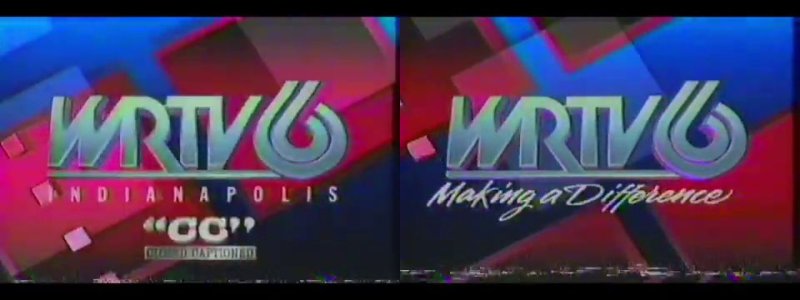
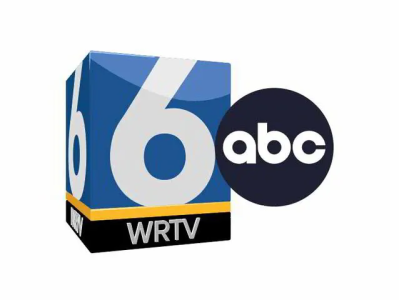
Here's the new WRTV logo, even though the station's website is still separate from WISH, complete with news updates from Scripps.

1775329216888.png
 
There were other small-town stations that had to move to the Big City or combine into one big market, to keep going. Enid OK --> OKC, Mesa AZ --> Phoenix, Henderson KY --> Evansville, Neenah WI --> Green Bay (UHF to VHF for that one), Harrisburg/Lancaster/York PA from three markets to one, others that I can't think of right now.

And sometimes it was the other way around. In West Virginia, the original plan was for Parkersburg and Clarksburg to be one market, but with the terrain being what it is up there, WTAP from Parkersburg was impossible to receive in Clarksburg on UHF channel 15, and Clarksburg stations probably posed a challenge in Parkersburg as well. So they became separate markets and remain so to this day, Clarksburg with full major-network coverage between three stations (WBOY carries NBC with ABC on a subchannel), and Parkersburg lacking only ABC.
 
Here's the new WRTV logo, even though the station's website is still separate from WISH, complete with news updates from Scripps.

View attachment 11745

Somewhat the same basic concept as WISH, minus the CW network logo:

1775353286979.png
Partnering with WRTV is probably kind of a step up for WISH, as at the end of the day, the CW is not a major network. Sports are the most noteworthy thing they have to offer.


Back
Top Bottom