
-
Get involved.
We want your input!
Apply for Membership and join the conversations about everything related to broadcasting.
After we receive your registration, a moderator will review it. After your registration is approved, you will be permitted to post.
If you use a disposable or false email address, your registration will be rejected.
After your membership is approved, please take a minute to tell us a little bit about yourself.
https://www.radiodiscussions.com/forums/introduce-yourself.1088/
Thanks in advance and have fun!
RadioDiscussions Administrators
You are using an out of date browser. It may not display this or other websites correctly.
You should upgrade or use an alternative browser.
You should upgrade or use an alternative browser.
Non-comm. changes
- Thread starter Yabadabado1
- Start date
VintageMac
Banned
I suppose it was where you lived in the 1960's but most of Cleveland was in decent shape and still is judging by some of the properly values. Every large city has sections which needed help then and still do. Large banks were part of the redlining problem in Cleveland so I'm not sure they helped the regular citizen. Savings and loan associations as they were called then would have been more helpful. But not to get off topic, I focused my comment on the school district since they owned the WBOE license not the city. Apparently, the city didn't care and neither did the district. I recall George Voinovich being mayor then who was fairly successful in his time as mayor. I wonder if he was involved at all. As for revenues, Cleveland has not had major shortfalls for a long time as former Mayor Jackson was careful with funds and budgets from general reports. The school district has lost money due to numerous tax abatements given to sports teams as well as losing money from the state due to charter schools, some of which are worse than the public schools, as well as vouchers.And, as the city government in Cleveland decayed starting in the mid-60's and had difficult financial issues due to the abandonment of many whole areas of the city, it was not just the school leadership that was "poor".
Fortunately, a combination of factors such as the evolution of local banking into Key Bank, the continued growth of Case-Western Reserve and the Severance Center area, the Clinic, the RockHall, the Euclid Avenue theater district and other efforts all helped rebuild the city's finances and reputation.
Still, the city of Cleveland is revenue-short and has a need surplus as that is where a huge percentage of the lowest income people live.
VintageMac
Banned
Research is one thing. Having worked there or for the district is another. It doesn't matter how long you research public records, that is not going to get you the whole story.Thing is, the reports per se aren’t online that I know of. It’s possible Google Books might have them but I would need exact issue numbers and published dates. Otherwise it risks accidentally slipping into a “self-research” issue (even if unintentionally!) when pages are peer-reviewed.
Ideally, for WBOE to be properly researched, I would need the following papers and sources:
I definitely know that the Plain Dealer has their records digitized, I just cannot access them unless I subscribe to GenealogyBank. I can go through the Call and Post on NewspaperArchive and see if they covered the station at all; I’d be surprised if they didn’t.
- The Plain Dealer
- The Press
- The News (pre-1960)
- The Call and Post
- Broadcasting Magazine (available via @DavidEduardo ’s repository)
- The aforementioned BOE records
- Any graduate-level papers
I really hope that, at some point, Cleveland State University allows the Press archives to be fully digitized. The archives of the rest of the legacy Scripps chain has been going online over the past decade, but that didn’t apply to the Press because they sold it all to Joseph Cole.
Point being: I get very attentive to verifying stuff. @Sammi Brie knows this all too well lol. An article on the Wings Over Jordan Choir I wrote up over the course of three months has close to 450 in-line citations. I’m rewriting an article on WSVN and it’s already nearing 350 cites and is a massive tank.
This is something that I would absolutely center the article around.

That is not how Wikipedia works. Core policies WP:V, WP:RS and especially WP:OR were set up to help enable a self-policed quality control of articles by many, many editors. I am very appreciative of the work John did, but it still needs to be verified by reliable sources.Research is one thing. Having worked there or for the district is another. It doesn't matter how long you research public records, that is not going to get you the whole story.
For full disclosure, @Sammi Brie took me under her wing a few years ago. The WCLV article is definitely a project for improvement we'd be eying.
VintageMac
Banned
Regardless of how it works, you still cannot know the full story when using only what you call "reliable sources." Who is to say that the content is truly representative of an issue? This is why Wiki articles need to be looked at very carefully and not necessarily as totally factual.That is not how Wikipedia works. Core policies WP:V, WP:RS and especially WP:OR were set up to help enable a self-policed quality control of articles by many, many editors. I am very appreciative of the work John did, but it still needs to be verified by reliable sources.
For full disclosure, @Sammi Brie took me under her wing a few years ago. The WCLV article is definitely a project for improvement we'd be eying.
If an article was 100% representative of a subject, it would be unbearably too long to read and riddled with cruft. (WP:TOOLONG) They have to be set up in a way that an average layman can read and understand and be cited with reliable sources. It has to be the case because… well… anyone can edit a page and specific “ownership” of a page by an individual, regardless if they had all the experience in the subject, is a big no-no. (WP:OWN)Regardless of how it works, you still cannot know the full story when using only what you call "reliable sources." Who is to say that the content is truly representative of an issue? This is why Wiki articles need to be looked at very carefully and not necessarily as totally factual.
I know it might come off as mean but if I can’t verify something, or the verification is not available online or in a way I can readily access, I opt not to include that detail.
Last edited:
I recall that I wrote a press release for some broadcast I was going to do and one of the local newspapers, somehow, misinterpreted it and got it wrong.That may be true. However, newspaper articles may not always be totally factual or have errors so then you need to go to a source that was there if possible and/or worked for the school district. Since there is at least one person here who is in that category, I would think that his knowledge is more reliable than some sources. Some of us who live or did live in Cleveland remember how contentious the WBOE issue was and how poor school district leadership among other issues furthered its demise.
Thank you for sharing. I am disappointed that it looks like the all of the information about WBOE (1938 - 1978, 1978-1982 appears to be gone. Information about WBOE comes from Primary Sources and from my knowledge having worked there.If an article was 100% representative of a subject, it would be unbearably too long to read and riddled with cruft. (WP:TOOLONG) They have to be set up in a way that an average layman can read and understand and be cited with reliable sources. It has to be the case because… well… anyone can edit a page and specific “ownership” of a page by an individual, regardless if they had all the experience in the subject, is a big no-no. (WP:OWN)
I know it might come off as mean but if I can’t verify something, or the verification is not available online or in a way I can readily access, I opt not to include that detail.

The property values in Cleveland are amazingly low. I looked in areas where my family members have lived in the past or live now and find I could have a house that is twice as large, with a lot eight times larger for about one eighth of what my current home in a smaller city of California is worth.I suppose it was where you lived in the 1960's but most of Cleveland was in decent shape and still is judging by some of the properly values.
That is obviously a symptom of a shrinking city, data that can be seen over the last 60 years as the metro area has gone from a top 10 market to one that is below 30th.
What I mean is that the conversion of Cleveland into a regional banking center created a good deal of investment downtown and, of course, created good well paid jobs.Every large city has sections which needed help then and still do. Large banks were part of the redlining problem in Cleveland so I'm not sure they helped the regular citizen.
But the School District is a city government agency, so it is painted with the same brush.I focused my comment on the school district since they owned the WBOE license not the city.
One of the issues in any part of the city is the fact that property values are so depressed that real estate taxes are abominably high... almost as bad as New Jersey. That discourages companies from relocating to the area as they know that employees will not make the move due to those high taxes.Apparently, the city didn't care and neither did the district. I recall George Voinovich being mayor then who was fairly successful in his time as mayor. I wonder if he was involved at all. As for revenues, Cleveland has not had major shortfalls for a long time as former Mayor Jackson was careful with funds and budgets from general reports. The school district has lost money due to numerous tax abatements given to sports teams as well as losing money from the state due to charter schools, some of which are worse than the public schools, as well as vouchers.
On the other hand, Daffodil Hill at Lake View in the Spring is one of the most amazingly beautiful things I've ever seen... it rivals the cherry blossoms in DC.
VintageMac
Banned
That is not correct. School districts are under state control and were in that time period. However, in 1997 the state gave the Cleveland mayor the power to shape the school board and other issues. But in the end, it probably wouldn't have mattered who was in charge regarding WBOE if the financial piece was not in place.But the School District is a city government agency, so it is painted with the same brush.
Tax rates in Cleveland have gone up somewhat due to school levies being passed over the years as well as increased property values. Your example would be a city like East Cleveland which has far more issues than Cleveland proper.One of the issues in any part of the city is the fact that property values are so depressed that real estate taxes are abominably high... almost as bad as New Jersey
Cleveland was at its largest around the 1950's and as suburbs started to build out even more, population loss occurred. Other factors such as busing and better housing were issues as well but this has happened in other large cities as well. Cleveland has always been a working class town with industrial roots so it's only fair to compare with similar cities. Also, many people don't like the harsher climate and winter weather so warmer areas do win out in that category. Since I lived around a third of my life in the city (in Old Brooklyn), I can say it was great and I only live in a nearby suburb due to family/health obligations. You did not mention what parts of Cleveland you were referencing in your post, but there is no doubt that certain sections, mostly East side, have not made the gains that others have. Slavic Village, Central, Hough and others have not had the growth and investment that Kamm's Corners, Old Brooklyn and Tremont have had so that is unfortunate. With new mayoral leadership, we'll see if that changes.That is obviously a symptom of a shrinking city, data that can be seen over the last 60 years as the metro area has gone from a top 10 market to one that is below 30th.
Also, thanks for providing this site for these discussions.
VintageMac
Banned
Newspapers just like the tv channels can skew things so that is not a surprise. I would imagine it's hard to get a retraction in those cases.I recall that I wrote a press release for some broadcast I was going to do and one of the local newspapers, somehow, misinterpreted it and got it wrong.
VintageMac
Banned
Here is a recent story regarding Daffodil Hill:On the other hand, Daffodil Hill at Lake View in the Spring is one of the most amazingly beautiful things I've ever seen... it rivals the cherry blossoms in DC.

Lake View Cemetery's Daffodil Hill beginning to bloom
Lake View Cemetery started providing updates to visitors eager to check out Daffodil Hill. As of Thursday, pops of yellow have emerged from the ground.
 www.news5cleveland.com


Some of mine already blossomed last week since they are on the south side of the house where it gets the most sunlight. Had to replant new bulbs on the other side last year as they all just strangely died out after 4 years.My daffodils started coming up last month, They took a beating with the recent snow and cold, but I hope they will rebound with some nicer weather.
When it comes to daffodils and metro parks...
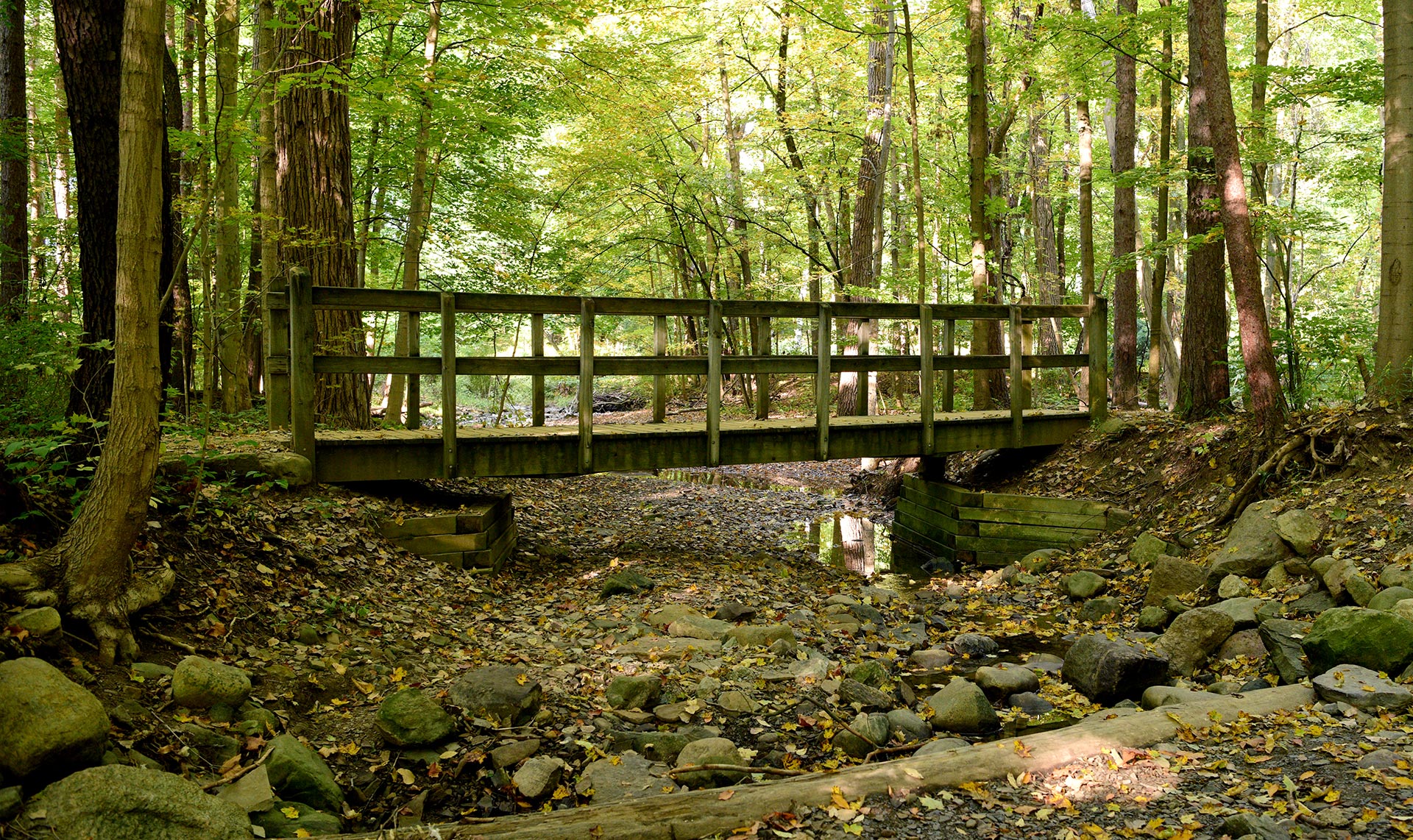
Furnace Run Metro Park - Summit Metro Parks
Named after early iron smelting furnaces along the Cuyahoga River, Furnace Run Metro Park features hiking, sledding, ice skating, fishing & more.
 www.summitmetroparks.org
VintageMac
Banned
Scene talks about some unhappy listeners with the new NPR configuration on WKSU in the Cleveland area:
https://www.clevescene.com/news/the...eland-sucks-across-much-of-cleveland-38731254
https://www.clevescene.com/news/the...eland-sucks-across-much-of-cleveland-38731254
VintageMac
Banned
I think that refers to using mini transmitters where reception is weak using the same frequency but it probably is expensive and could cause interference in some cases."We'll employ boosting technology on existing towers"
I wonder what this means. Apparently it is not a power increase.
What the story fails to mention is that, while the bulbs were donated to Lake View, the person who requested the donation and had the hillsides landscaped was my father who was the head of the cemetery when Daffodil Hill was first imagined.Here is a recent story regarding Daffodil Hill:
Lake View Cemetery's Daffodil Hill beginning to bloom
Lake View Cemetery started providing updates to visitors eager to check out Daffodil Hill. As of Thursday, pops of yellow have emerged from the ground.
Ideastream tells the Scene they have to "make a case" to the FCC to boost its 89.7 signal in weak areas. Really? The same FCC that's been handing out FM translators like penny candy to the big operators just so they can get around ownership limits and to every AM station that wants one even those whose listenership can be measured in single digits? Ideastream can't snag a couple of these babies for the areas where 89.7 is compromised by terrain and other interference? Give me a break! Have a few fund raisers and raise enough dough to buy some of those translators the national operators gobble up every chance they can. Or just listen online. Alexa would love to help you.
VintageMac
Banned
Thanks for your personal insight. You should email them and give the details for future publication. We all know how pieces of history can change unless you know the whole story.What the story fails to mention is that, while the bulbs were donated to Lake View, the person who requested the donation and had the hillsides landscaped was my father who was the head of the cemetery when Daffodil Hill was first imagined.
- Status
- This thread has been closed due to inactivity. You can create a new thread to discuss this topic.