
• Get involved.
    We want your input!
    Apply for Membership and join the conversations about everything related to broadcasting.

    After we receive your registration, a moderator will review it. After your registration is approved, you will be permitted to post.
    If you use a disposable or false email address, your registration will be rejected.

    After your membership is approved, please take a minute to tell us a little bit about yourself.
    https://www.radiodiscussions.com/forums/introduce-yourself.1088/

    Thanks in advance and have fun!
    RadioDiscussions Administrators

Saving AM Radio

IMHO the AM analog function setting should be required on all radios. Minimum costs very few if any royalties to pay During a massive power failure the noise floor should be at early 1930's levels so powers less than 100 watts should cover 20+ miles easy. Each county, township or Parish's 911 should have a 100 watt transmitter pre wired to be run by a generator at their emergency services center. It should be tuned to a local AM channel that has coverage for that area. If they can't EAS "control" that transmitter (power failure at station or bad phone lines) then use the emergency transmitter. If any AM is all digital and is seized for EAS service then it should switch back to analog automatically while in emergency service. They should have an alternative frequency to use if they can't "seize" that station and it continues regular programming.

In that type of scenario, let's say a cyber attack on the electric grid, exactly what could be said on broadcast radio that would be of any real help?

I’ve heard of emergency services personnel in other countries firing up transmitters like these during natural disasters. People tend to band together in groups during these situations, and if only one person in the group has a radio, then they can disseminate information.
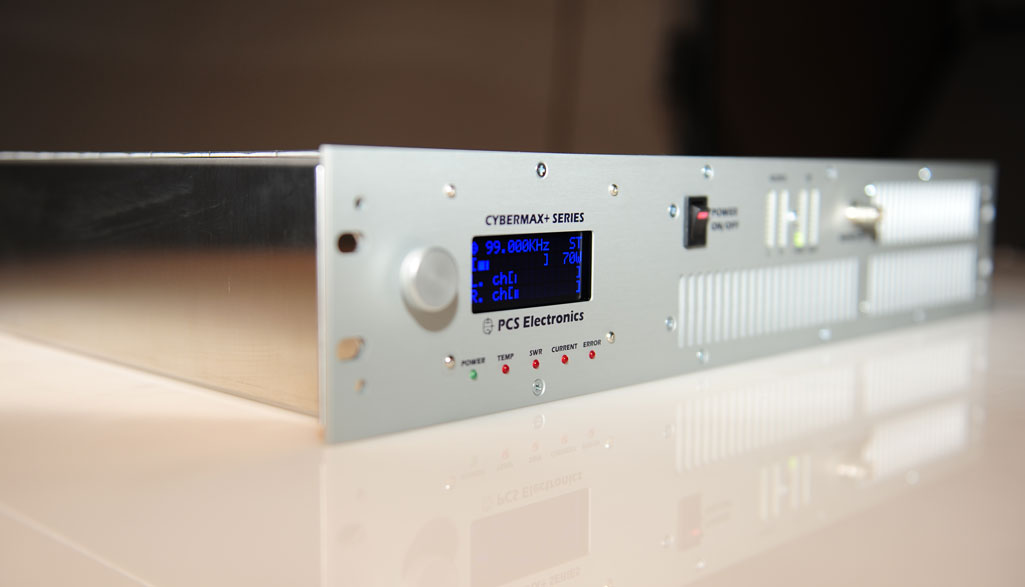

Wow so now we are down to reinstating Conelrad. I find it interesting how so many have no clue.

Maybe install a string with a tin can from each house to the local emergency service location.

AM is fine. It will survive as long as it remains useful and is not a financial strain on whoever is operating an AM station.

Since this conversation has gone down the EAS rabbit hole. I'm curious if any one who has responded to this thread actually have anything to do with maintaining an EAS unit a licensed broadcast station. To take it a step father, any one posting take care of a PEP station?
Sorry, not sorry for the superquote... FEMA NPWS does exist, wether you realize it or not. Everything on your wishlist of what an AM facilty should do in an emergency (including a cyberattack) has been addressed and planned for. There are some very smart people with broadcast experience building and maintaining these stations. List of FEMA NPWS PEP stations
If you work in emergency mamagement or broadcast in a market served by one of these PEPs, I encourage you to seek out the chief engineer of the station and become familiar with how things might work if it's use becomes necessary.
 
Last edited:

How about a 6 dB boost at 3kHz in the AM broadcast with a sharp cutoff at 4kHz (also would help to limit interference with nearby [frequency wise] AM signals)?


Kirk Bayne
NRSC addressed this. Too bad engineers are lazy and underpaid.
 
NRSC addressed this. Too bad engineers are lazy and underpaid.
I've never run across a lazy engineer in my 66 year career in radio. That is an offensive and not able to be substantiated. Many are underpaid, but so is nearly everyone in radio today .
 
Increasing bandwidth will not help as today's typical AM radios with digital tuning in both cars and portables have a fixed narrow I.F. bandpass (typically + or - 2.5 to 3 kHz. If it were allowed, a station that you think sounds awful could increase their audio response to + or - 20 kHz and you wouldn't be able to tell the difference. The fidelity problem is almost entirely due to your radio's tuner design.
All true but at the same time, meaningless. Receiver manufacturers aren't going to invest one red cent into new tuner bandwidths with an inherently flawed band like MW/AM. I already outlined all the MW band problems that make it naturally and manmade inferior. The adage 'you can't polish a turd' comes to mind.
 
Sorry, not sorry for the superquote... FEMA NPWS does exist, wether you realize it or not. Everything on your wishlist of what an AM facilty should do in an emergency (including a cyberattack) has been addressed and planned for. There are some very smart people with broadcast experience building and maintaining these stations. List of FEMA NPWS PEP stations
If you work in emergency mamagement or broadcast in a market served by one of these PEPs, I encourage you to seek out the chief engineer of the station and become familiar with how things might work if it's use becomes necessary.
But that's one of the challenges; things like EAS and how to activate are usually lost in importance when you know what hits the fan.
Municipalities and emergency services are rightfully more concerned with reaching the population through popular means like smartphones, not long-forgotten AM radio. The point is; just because in theory you can reach out 20 miles with AM broadcasts, doesn't guarantee anyone is there to hear it.
And I bet if you tallied all of your neighbors on a city block asking how many portable radios with batteries they have available, and whether they plan on using them in an emergency, you'd likely find very few, if any, have even one.
 
It seems pretty clear that most people will turn to devices other than AM radio in the case of an emergency, and in most cases those devices will be functional and give them the information they need.

But in the case of a doomsday scenario, even if AM radio became they only working means of communications, how would it help people deal with the situation -- no power, no water, no access to food, etc? If a tree falls in the forest ..................
 
Similar to what we have in the County where I live. All great ideas in theory, but as I mentioned, lack effectiveness when actually needed mainly because it's a volunteer group of a hobby. As mentioned, it's impractical to expect seniors to put forth the effort and commitment during actual manmade or natural events, but it makes for lively discussion at the Saturday morning IHop breakfast.

I suppose it all depends. Based on the traffic on the county ARES repeater during hurricane events in northeast Florida, and the blessing from the county emergency operations center, there is more than just breakfast discussions.

In a day and age of cell phones and satellite Internet, how much is using amateur radio communications at shelters actually used? Again, theory versus practical need.

Again, based on my monitoring of the ARES repeater traffic when the county's emergency shelters are in operation, it appears there is a fair reliance on the amateur radio communications support.

Could it all be moved to cell phones, but the ARES repeater is used for open radio support of the shelters. Because of the open radio circuits, monitorable by anyone with a radio, some traffic does get diverted to cell phones when some level of privacy is needed.


Our local club had a similar discussion about adding NWS broadcasts to the local repeaters. My question was; to what end? Other than nets once a week, the eight repeaters in the club hardly have any traffic in any given week. Anyone who was interested in weather, probably already has an NWS receiver, so adding it to an unused 2M repeater would be needless work and complication for what?

The NWS radio audio is not repeated on the ARES repeater. One of the ARES team is alerted to NWS bulletins and these are manually read on the air.

As for the traffic on the repeaters, again, I guess it is like real estate, location, location, location. The two 2-meter repeaters in the county are pretty busy except period the overnight hours. Yea. most of it chit-chat, but it does keep the channel busy.


And that's great. You assume responsibility for gathering your own weather information including warnings. The vast majority of the public relies on their smartphone for potentially critical information that may affect their lives. Other than those times, it's no concern.

Yep.

But typically, I'd check ADS-B for NEXRAD scans after catching a NWS alert on the ARES repeater.
 
Municipalities and emergency services are rightfully more concerned with reaching the population through popular means like smartphones, not long-forgotten AM radio. The point is; just because in theory you can reach out 20 miles with AM broadcasts, doesn't guarantee anyone is there to hear it.
And I bet if you tallied all of your neighbors on a city block asking how many portable radios with batteries they have available, and whether they plan on using them in an emergency, you'd likely find very few, if any, have even one.
Just to add to this point…as I mentioned a few pages back, carriers like T-Mobile are partnering with SpaceX to augment their terrestrial tower networks with cellular signals beamed from low-Earth orbit satellite. This infrastructure is (presumably?) resilient to natural disasters although vulnerable to solar flares.

Fortunately, I live in an area that’s not regularly impacted by natural disasters (yet). However, I have browsed threads from other regional boards here and haven’t found any incident that completely decimated the local cell network other than Maria. Also, municipalities and carriers can quickly deploy mobile cell repeaters and wifi base stations that cover several city blocks. Whether they do or not during a chaotic situation is another question but the technology exists and is not prohibitively expensive.
 
You are correct in that a significant percentage of the population is totally unprepared for anything. Part of Darwin's evolution theory has to do with the survival of the fittest. The dumb individuals tend to die early, sometimes before that can reproduce thus those genes don't get passed on making that species "smarter". I have been in emergency situations and some individuals do really stupid things and expect others to bail them out. Sometimes they can be saved sometimes they can't. Every emergency kit plan or instructions I have seen has a portable radio and extra batteries. I seen the "crank" radios but always have found extra batteries cheaper. One thing a Lucent Atlanta supervisor remind us during new hire training was when you if are an "unfamiliar" building always make sure you see another exit to go out of just in case there is an emergency.

If there were lifesaving instructions during a massive power outage how else could those instructions be related in a rural area? Not all cell sites have backup generators. I guess in a city police cars with loudspeakers could be used if the streets are passable, until they run out of gas. Most underground gas tanks require electricity to pump fuel so there is some limitations on liquid fueled vehicles.
 
I've never run across a lazy engineer in my 66 year career in radio. That is an offensive and not able to be substantiated. Many are underpaid, but so is nearly everyone in radio today .
I have. Shitty sounding AM stations are someone's fault. NRSC laid out the parameters for the frequency response and occupied bandwidth of an AM station, and this must be checked yearly. When this does not happen. It's because either the engineer isn't getting paid to do it, or the engineer is apathetic/lazy and thinks it isn't necessary. This is a qualified statement. Any solid state transmitter and audio processor made in the last 40 years is capable of meeting the specifications. If every station spent a few hours a year on audio quality/NRSC, we as an industry could eliminate one of the common complaints that listeners have. We are doing this to ourselves. There really is no excuse for bad sounding AM stations.
 
An earlier post mentioned Darwin. I recall the various nocturnal tornadoes in the South and how governments were trying to get folks to buy a Weather Radio and some entities tried giving them away. The result is most people just weren't interested and many that got one quit using it. I can only surmise an EAS activation at 3am for a missing child 300 miles away might cause you to find a different use for your AA batteries.
 
It seems pretty clear that most people will turn to devices other than AM radio in the case of an emergency, and in most cases those devices will be functional and give them the information they need.

But in the case of a doomsday scenario, even if AM radio became they only working means of communications, how would it help people deal with the situation -- no power, no water, no access to food, etc? If a tree falls in the forest ..................

Hopefully there is a place(s) that has water for drinking and food. The survivers could make it to that place if they know where to go.

If you follow what Putin attempted to do in the Ukraine one of the first targets was the power grid and so the "other devices" might not work if the power system is messed up. A couple of winters ago the Texas power grid was not reliable. My former cell carrier has about 6 hours of battery power for backup. They failed after a half day power outage. If all else fails most hot water tanks are 40 plus gallons. During an ice storm when the power was out for 4 days, I used my gas fired grill and started cooking stuff as it melted in the freezer.
 
Lazy and underpaid? That's a combination I haven't heard of before.... :sneaky:
Stingy clients will make one do the bare minimum work required. I'm not spending any more time than I have to at a site where every hour the owner is bitching about the bill I send him going up. Most contract engineers are just hired guns that go around putting out fires and enabling Bad Broadcasting Behavior. It really is sad.
 
Doomsday aside, are there an
Stingy clients will make one do the bare minimum work required. I'm not spending any more time than I have to at a site where every hour the owner is bitching about the bill I send him going up. Most contract engineers are just hired guns that go around putting out fires and enabling Bad Broadcasting Behavior. It really is sad.
Unfortunately that is not an AM issue only.
 
But that's one of the challenges; things like EAS and how to activate are usually lost in importance when you know what hits the fan.
Municipalities and emergency services are rightfully more concerned with reaching the population through popular means like smartphones, not long-forgotten AM radio. The point is; just because in theory you can reach out 20 miles with AM broadcasts, doesn't guarantee anyone is there to hear it.
And I bet if you tallied all of your neighbors on a city block asking how many portable radios with batteries they have available, and whether they plan on using them in an emergency, you'd likely find very few, if any, have even one.

It seems pretty clear that most people will turn to devices other than AM radio in the case of an emergency, and in most cases those devices will be functional and give them the information they need.

But in the case of a doomsday scenario, even if AM radio became they only working means of communications, how would it help people deal with the situation -- no power, no water, no access to food, etc? If a tree falls in the forest ..................

You are correct in that a significant percentage of the population is totally unprepared for anything. Part of Darwin's evolution theory has to do with the survival of the fittest. The dumb individuals tend to die early, sometimes before that can reproduce thus those genes don't get passed on making that species "smarter". I have been in emergency situations and some individuals do really stupid things and expect others to bail them out. Sometimes they can be saved sometimes they can't. Every emergency kit plan or instructions I have seen has a portable radio and extra batteries. I seen the "crank" radios but always have found extra batteries cheaper. One thing a Lucent Atlanta supervisor remind us during new hire training was when you if are an "unfamiliar" building always make sure you see another exit to go out of just in case there is an emergency.

If there were lifesaving instructions during a massive power outage how else could those instructions be related in a rural area? Not all cell sites have backup generators. I guess in a city police cars with loudspeakers could be used if the streets are passable, until they run out of gas. Most underground gas tanks require electricity to pump fuel so there is some limitations on liquid fueled vehicles.
Survival of the fitness🤣👍. The fact is, your survival is entirely up to the amount of preparedness of you and your family.
My family will be grilling meat and chatting up the neighbors who also prepared.
But the other half of the equation is up to us as broadcasters. Folks cannot react or adapt to an emergency without proper information. Regarding AM radios, there are alot more out there than most realize. Almost every truck ever made, and most cars have an AM tuner. Rural and suburban households are almost guaranteed to have one. The city slickers in high rise condos? Of course not.
What is more American than the pickup truck when all else fails?
 
Doomsday aside, does anyone have examples of stand alone AM's (no FM translator or simulcast class A, B or C FM) making money?

WCBS 880 billed $30 million in 2023. KTRH and KFI are also big. No translators or siulcasts.

I posted the Top 10 list of AMs earlier in this thread


Some on the list have translators or simulcasts, but others don't.
 
Doomsday aside, does anyone have examples of stand alone AM's (no FM translator or simulcast class A, B or C FM) making money?
I would guess 700WLW Cincinnati. They have a low power translator aimed at downtown where the AM can't penetrate the concrete jungle. I would doubt that their profitability depends on that pea shooter FM.
 
Sounds like that electrical interference we've been talking about over and over (and over) in this thread.
I'm not sure, but I think the old radio worked fine, so it's a matter of how good the new radio is at picking up signals.

But there is a significant amount of power line interference on my road these days. It hasn't been constant but it does happen. Lately there doesn't seem to be an interruption. I've also noticed near some power lines I get more problems when I am near a riser. That's new equipment on a lot of poles, and I walk past one of those, so I looked at the sheet that described what it was, which must have been left on the equipment that is down below even after it was shipped.


Back
Top Bottom