• Get involved.
    We want your input!
    Apply for Membership and join the conversations about everything related to broadcasting.

    After we receive your registration, a moderator will review it. After your registration is approved, you will be permitted to post.
    If you use a disposable or false email address, your registration will be rejected.

    After your membership is approved, please take a minute to tell us a little bit about yourself.
    https://www.radiodiscussions.com/forums/introduce-yourself.1088/

    Thanks in advance and have fun!
    RadioDiscussions Administrators

Saving AM Radio

Show me where that contained any radio mandates. I'll wait.

As mentioned to smoochie, this un-fact (like the "un-cola) is so prevalent that AI based sources think that it is true. If a lie is said over and over and over on the Internet, it seems to be considered "truth" by AI just because so many other sources are wrong.
 
I

I stand corrected. I thought the did pass a rule but I am mistaken. It was the marketplace that caused FM to be included in auto and other receivers. The same marketplace that should allow it to vanish from cars and other receivers
Heck, in about 1968, my employer got me a new higher-end car. We had to specify "with FM" as even at that price point and brand, FM was not a standard feature. Yet, at the end of that year, FM accounted for over 55% of all radio listening in the local market.
 
Would the AM experimental program you are speaking of, when played through the app make the AM station you are trying to support superfluos?
My thinking is that to get the Gen-Z crowd, you have to go where they are, which is on their phone. AM radio tower and transmitters would really only be a part of the picture in the car, which is where the AM in every vehicle act is focused as well. Since I don't think anyone believes that blowing up an FM for experimentation is an idea, using AM as a testing ground allows for gauging the audience reception of new programming ideas. Advertisers could use the experimentation to see if they can get better penetration doing something different as well. I think experienced broadcasters would be able to read the data generated to figure out what has a possibility, and what doesn't. This will give radio something for FM when music starts to run out of gas.

I don't think Gen-Z really listens to FM radio on a table top device either. My sister, when she helped move her daughter into her dorm this fall, reported that she saw no 'Receivers" like what we had when going to college. The actual FM listening is done on a bluetooth App n' headphones, smart speaker, or in the car. Radio stations are nowadays for them nothing more than the local address where tunes can be had. Unfortunately, I think they also have the idea that radio stations are the place where ad breaks run along with the tunes. Outside of the morning show, I think they are off to their favorite commercial-free web source for music. Radio has to start giving them something more than music after the morning show, so they'll stick with the station, and tolerate well positioned advertising.
 
The other approach is budget a music station primarily for the morning show. Don't waste money on dayparts where there are fewer listeners.
That is fine if the show in question is high-rated. However, as far as Persons Using Radio (now PUMM) is concerned, both Midday and PM Drive have higher numbers of people listening in PPM markets.
 
As I mentioned, the 2017 hurricane in Puerto Rico left only one source of information. No phones, no cellular phones, no TV, no Internet, no email. Power was 100% out, so no TV even if a station were on the air (which they were not). But AM 580, WKAQ, Puerto Rico's first radio station was also, at that time, its last and only station. It's microwave STL worked, its transmitter building constructed above flood level, was intact and and part of the studio building did not loose its roof.
Some would take their radio out to the street and neighbors would congregate and listen. Batteries were shared, along with beer and Don Q.

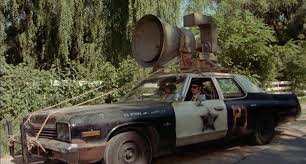
But what if the station was destroyed? Law enforcement vehicles driving through the streets with bullhorns might be the answer.

Maybe better to mandate bullhorns!
 
But what if the station was destroyed? Law enforcement vehicles driving through the streets with bullhorns might be the answer.
Several other stations got back on soon after... but there was one that did stay on out of over 30 local stations and all the TV stations.

On the mainland, there would be many out of the area AM signals listenable in the disaster zone.
Maybe better to mandate bullhorns!
Driving was impossible for many days due to rubble, nails, broken glass and "stuff" blocking roads and tearing up tires. In the rural areas, a high percentage of bridges were out, and landslides on winding mountain roads made transit impossible.

Even if all stations were off the air, getting one or more back on would be faster than the restoration of roads and bridges.
 
Never say never.

As I said, you don't know what you don't know. The royalty people want more from radio, not less. If they don't, they sue.

We have to fight like hell just to keep the status quo:

 
Do some searching and you will find it is so common an un-fact that AI picks it up as being true. This is a good example of why I waste half my life on www.worldradiohistory.com.
There are many things stated online that younger people, who didn't grow up in the 1960s, 70s and 80s, believe.

Color TV. A search may show the first color TV was introduced "in the 1930s..." or similar.
Eh... but no stations were transmitting in color because no one had color TV sets... Color broadcasting didn't become mainstream until the mid-late 60s, with many BW TVs still in existence.

Same with FM. Online may say the first FM broadcast was in the 1940s (or thereabouts).... but... the conversion from AM to FM listening began in the late 60s and ran through the following decade.

With few FM receivers, stations wouldn't broadcast.

In the early 80s, my mom had a Plymouth that only had a MONO FM and AM radio. Like air conditioning, FM was an add-on in many cars in the late 70s, like Pintos or Hornets. My high school car only had AM.

There was a Leave It To Beaver ep. in the early 60s where Wally tells his parents how his friend Eddie Haskell has an FM radio in his car. But it isn't interesting, he says, as it only plays classical music.
 
There are many things stated online that younger people, who didn't grow up in the 1960s, 70s and 80s, believe.

Color TV. A search may show the first color TV was introduced "in the 1930s..." or similar.
Eh... but no stations were transmitting in color because no one had color TV sets... Color broadcasting didn't become mainstream until the mid-late 60s, with many BW TVs still in existence.

Same with FM. Online may say the first FM broadcast was in the 1940s (or thereabouts).... but... the conversion from AM to FM listening began in the late 60s and ran through the following decade.

With few FM receivers, stations wouldn't broadcast.

In the early 80s, my mom had a Plymouth that only had a MONO FM and AM radio. Like air conditioning, FM was an add-on in many cars in the late 70s, like Pintos or Hornets. My high school car only had AM.

There was a Leave It To Beaver ep. in the early 60s where Wally tells his parents how his friend Eddie Haskell has an FM radio in his car. But it isn't interesting, he says, as it only plays classical music.
Fact check time: while it's true that FM penetration in cars didn't really begin until the early 1960s and FM stations didn't start topping any market's ratings until the 1970s, there were indeed hundreds of FM stations that hit the airwaves as early as 1939 and in large numbers into the late 1940s.

You'll find those facts "online" at David's site (including lots of interesting issues of early magazines such as FM Guide) that will help you learn more about the fascinating early history of FM radio and about its downward slide in the 50s as it was eclipsed by TV and damaged by the move "upstairs" to 88-108.

To say "stations wouldn't broadcast" is... just not at all historically accurate.
 
To say "stations wouldn't broadcast" is... just not at all historically accurate.

Some turned their licenses in. My favorite story is the Washinton Post donated WTOP-FM to Howard University in 1970. It's now WHUR, one of the highest rated stations in town. Nice donation.

 
They did at about the time they required UHF tuners with VHF on new televisions. Today with a limited marketplace for new AM radios (there are a million radios out there and lots of used ones in thrift stores) I don't see the need to force a manufacturer to make something that adds cost to the product for limited customers. That's my argument. You can find an AM radio if you need one. If you're over 40, you probably have a half dozen stored on a shelf in the basement. If there were a big market for them, they'd be on store shelves.
It's mainly car radios that will be required to have AM, and the chips in the car radios all have the capability already. It won't cost you a dime if the bill passes. When Ford changed their minds on the two vehicles they 'removed' AM capability from, all they had to do was reprogram the switch in the car radios' firmware to turn AM back on.

You hate AM radio, we get it by now. If there were a big market for FM radios, they'd be on the store shelves, too. They aren't. So ultimately everything you say about AM applies to FM as well. They both have a lifetime.

Phones are the future of broadcasting. No more moving your FM around in the house trying to get rid of the crappy reception. Move it one foot and you get nothing but hiss and distorted mono. No more picketfencing as you're driving down the highway.

Both AM and FM are headed for tough times. Everyone's using their phone for audio entertainment.

The AM bill won't cost you anything. There are hundreds of other laws that will cost you more. The AM inclusion bill isn't one of them.
 
As I mentioned, the 2017 hurricane in Puerto Rico left only one source of information. No phones, no cellular phones, no TV, no Internet, no email. Power was 100% out, so no TV even if a station were on the air (which they were not). But AM 580, WKAQ, Puerto Rico's first radio station was also, at that time, its last and only station. It's microwave STL worked, its transmitter building constructed above flood level, was intact and and part of the studio building did not loose its roof.

My point? In about the most dreadful natural disaster conceivable, 3,500,000 people had one source of information. Some had battery radios, others did not. Some could turn on their car (although essentially all roads were closed an laden with nails, broken glass and worse). Some would take their radio out to the street and neighbors would congregate and listen. Batteries were shared, along with beer and Don

Puerto Rico is small and very densely populated. It sits 1000 miles out in the Atlantic in what seems to be a hurricane highway. Its needs are much different than the mainland. No one is going to get there for sometime when the big storms hit. On the mainland it is much faster to assemble and move infrastructure into place following an event. With Puerto Rico, the low band station you mentioned could probably cover its land mass. On the mainland it is a different story. FM is line of sight. TV, I've never even considered for weather type emergencies when the lights go out. AM would have a bigger reach, but dial around and you'll see that not much effort is going on to make most local AM stations relevant. I still question the ability of most broadcasters to respond to disasters with limited staff to go live during events. Portable phone and satellite receivers can be brought in to effected areas to restore that kind of communication with a fair amount of speed after a mainland weather event. You even stated that most AM stations today are useless because of their technical facilities. Very true. In the Hudson Valley we have had a number of stations with tower issues. WRKL, New City, NY lost a tower a while back because of lack of maintenance. WGHQ Kingston, went omni directional at lower power in order not to have to maintain a three tower directional array. I question if a lot of undermaintained AM stations would lose towers in a big weather event. Except for some skywave, rural areas will probably not have much information until the national guard brings in the portable cell service. People know a storm is coming for some days in advance. They tend to have stocks of things they need and they also have a choice to leave the area Earthquakes and wild fires come with little warning so that is a different set of issues, as is the circumstances of the densely packed isolated island of Puerto Rico. In any event there will be loss. It is unavoidable, but I don't think you can honestly depend upon local radio stations and I don't think the skywave signals are going to serve rural effected areas to the degree you seem to believe they will.
 
If there were a big market for FM radios, they'd be on the store shelves, too. They aren't. So ultimately everything you say about AM applies to FM as well. They both have a lifetime.
A reflection of the industry whose troubles began a long time ago and were mostly self-inflicted.
Both AM and FM are headed for tough times. Everyone's using their phone for audio entertainment.
One of the most prescient things ever said on this board.


Back
Top Bottom