• Get involved.
    We want your input!
    Apply for Membership and join the conversations about everything related to broadcasting.

    After we receive your registration, a moderator will review it. After your registration is approved, you will be permitted to post.
    If you use a disposable or false email address, your registration will be rejected.

    After your membership is approved, please take a minute to tell us a little bit about yourself.
    https://www.radiodiscussions.com/forums/introduce-yourself.1088/

    Thanks in advance and have fun!
    RadioDiscussions Administrators

Song segues...how do they do it?

A club mixer only has to worry about each set. Not the one they will do later in the night, or tomorrow at a different venue with a different crowd.

He's doing it manually. The station uses automation.

I think you're making his point, A. The automation is a tool used by the PD to control the programming all the time, because there aren't enough hours in the day to do everything else and manually create every segue on the air.
 
I think you're making his point, A. The automation is a tool used by the PD to control the programming all the time, because there aren't enough hours in the day to do everything else and manually create every segue on the air.

We're making each other's points. The mixer guy is a stage performer. He's mixing live on a stage in front of an audience, while the PD is sitting in an office somewhere. The mixer guy may even dance a little, and use a t-shirt shooter to get his merch out to people in the arena. The PD has marketing people who do that. I'm not saying these are the same thing. They're obviously very different. Some of them even become recording artists, such as deadmau5. But it makes what's being done on broadcast radio less unique and less specialized.
 
Songs stopped being able to flow into each other when so many of them started using cold endings, and often cold opens, too. Hardly any songs made in the past 20 years have fade-out endings. Sometimes a song with a cold open vocal has a special Radio Edit made with a little instrumental part added on the beginning to give a DJ something to talk over, but the last time I heard that was about 15 years ago.
 
Songs stopped being able to flow into each other when so many of them started using cold endings, and often cold opens, too. Hardly any songs made in the past 20 years have fade-out endings.

It's a great article and points to the emphasis on live performance as the reason. That's what I hear from artists. They make records with the intent of promoting their live performances, and they can't do fades in live performance. Instead, they recreate the record in their stage show, and when they perform live, the songs end cold.

The part not covered in the article is that record labels don't make music strictly for radio airplay as they once did. At one time, it wasn't unusual for artists to take their music to radio stations and have them play the songs on the air late at night, so they could hear how the mix sounded in their cars through all the processing. They don't do that anymore. Radio is just one of many outlets for music.
 
For example, a person who knows music could create a code based on allowing or not certain types of transitions. Or one could code the "outro" and "intro" of each song, and have a rule, for example, of "no slow fade out to a slow build in". Or any other rule the PD wanted to establish, based on the kind of instrument, the tone, whether a fade or not, etc.
Are there services that sell this kind of metadata on songs so it can be imported easily into scheduling software? Or is every PD essentially on his own to do the manual labor of previewing every song in the library to note keys, tempos, fade types, and so forth?
 
He's doing it manually. The station uses automation.
Not for mix shows. And in live assist, the talent can have considerable control, but, of course, not the way a DJ with manual turntables does. You can't backspin Zetta easily, either.
 
Are there services that sell this kind of metadata on songs so it can be imported easily into scheduling software? Or is every PD essentially on his own to do the manual labor of previewing every song in the library to note keys, tempos, fade types, and so forth?
There is no such data, and no good PD would want it. We write our rules to be specific for the feel we want our station to have (unless corporate overrides it).

We have always put the intro and outro times on songs, even back to when we wrote it on the 45 or the record sleeve. When a song is added to the playlist in MusicMaster or Selector, we put in all the other data we want.

Most of the PDs I have worked with don't read music, so what we do is use terms we create to describe the feel of the song and the nature of the "in" and "out".

We spend a lot of time on coding that "feel" so that we don't, for example, have two mellow ballads in a row, no matter what; this is what we'd call an "unbreakable rule" which will not schedule even in required rotations. Other rules may be breakable, and will show on the unedited log with colors so we can decide if the set is OK, or needs editing.
 
Lets also remember why there are few song-to-song segues (if I remember what the OP was getting at) In Neilsen diary markets, top of mind and recall are still super important. Cant write down the station if you dont know what it is. You have to pound over peoples heads what station they are listening to. I know in our really small rural market, we arent rated, but I make sure we have station identification between every song. Even though our small town has listened to this station for 55 years, we want to make sure every knows who we are. Thats by design.
 
Lets also remember why there are few song-to-song segues (if I remember what the OP was getting at) In Neilsen diary markets, top of mind and recall are still super important. Cant write down the station if you dont know what it is. You have to pound over peoples heads what station they are listening to. I know in our really small rural market, we arent rated, but I make sure we have station identification between every song. Even though our small town has listened to this station for 55 years, we want to make sure every knows who we are. Thats by design.

I've worked in some small and not so small but still small places. WE never ran a piece of imaging in between every song. In fact, one station used to but dropped it after listeners complained we sounded "over programmed". What theory, as a programmer, i subscribe to in a rural/not uber competitie market.... in an automated/non hosted hour .. as the hour clock goes... toh-news or spots-imaging...two songs.. imaging... 3 songs -imaging-2 songs ..imaging... 3 songs-imaging. Insert commercials where appropriate

what ive found works is keep the slogan and station name simple, no flash wiz bang production and say it clearly.

I worked for one station in a somewhat competitive rural NW PA Market that was so popular, people often referred to us by our frequency only.. 97.5!
 
What theory, as a programmer, i subscribe to in a rural/not uber competitie market.... in an automated/non hosted hour .. as the hour clock goes... toh-news or spots-imaging...two songs.. imaging... 3 songs -imaging-2 songs ..imaging... 3 songs-imaging. Insert commercials where appropriate

I prefer imaging between every other song. With The Eighties Channel™ that results in a jingle ahead of every Power on the hot clock, which I deem ideal for listener memory assistance.

I worked for one station in a somewhat competitive rural NW PA Market that was so popular, people often referred to us by our frequency only.. 97.5!

Albuquerque is far from rural (top 100 market) but I have been told by Nielsen that over 75% of diary entries are the frequency alone. So that's not exclusively a small market phenomenon.
 
I prefer imaging between every other song. With The Eighties Channel™ that results in a jingle ahead of every Power on the hot clock, which I deem ideal for listener memory assistance.
In the diary world, or in countries where they use one of the recall methods with personal interviews, I like to have something in every song-to song segue. In a number of cases, I used "whispers" of just the name where the name was just barely audible as the segue was done. In others, I'd use a simple listener voice; one example at WQII was a huge variety of listeners saying "once-q me gusta" (I like 11-Q).

When in Puerto Rico, for several decades... 70's, 80's and 90's, I had to deal with a Top 40 competitor consulted by Mike Joseph. They hit "large" in every segue. When the segue had talk, often it was jingle in, talk, jingle out. So I tried to be clean, under-produced and quick. I don't think he ever quite figured out why I beat him over and over at the different stations I programmed there... although once at a convention he said to me, "I'm glad I only had to compete with you in one market."
Albuquerque is far from rural (top 100 market) but I have been told by Nielsen that over 75% of diary entries are the frequency alone. So that's not exclusively a small market phenomenon.
That has changed now, with stations streaming. I think an identity beyond the dial position is critical. And trying to do a "97.7 on FM, 1250 on AM and at WZZZ.com on the web" is like reading from a phone book.
 
Songs stopped being able to flow into each other when so many of them started using cold endings, and often cold opens, too. Hardly any songs made in the past 20 years have fade-out endings.
I started noticing that in country music over the past decade or so, didn't realize it was happening in pop, too.
 
That has changed now, with stations streaming. I think an identity beyond the dial position is critical. And trying to do a "97.7 on FM, 1250 on AM and at WZZZ.com on the web" is like reading from a phone book.
Don't forget the HDs and the translators! Here in Hanover-Lebanon-White River Junction, where terrain makes translators essential, the top-of-the-hour litany at several stations is more like an encyclopedia than a phone book!
 
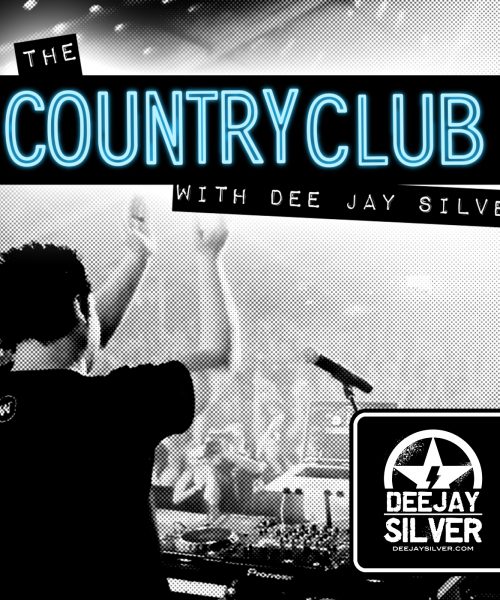
I go to a lot of concerts and most of them have DJs who fill time between acts. These guys are top notch, in the way they mix songs and entertain on stage. A lot of radio DJs could learn from watching guys like DJ Silver and others like them. They're part of major tours. They travel with their own rig. They have their own merch. And the reason I bring them up is they're all masters of the segue without the assistance of imaging or liners. They will shift tempos or keys in songs electronically to create that kind of flow. And they mix songs from different eras and genres. From a 70s song like Sweet Home Alabama to the present with Shaboozey or Lil Nas X. It can all be done in broadcast, and in some places, it does.
"A lot of radio DJs could learn from watching guys like DJ Silver..."

That's suggesting a radio DJ can even change the order of what's running, let alone pick songs outside the rotation.

And yes, I'm generalizing. But I'd wager the majority of "DJs" on major market stations have pretty much zero say in what music is played, what order it is played in, and even when they are allowed to break in and talk.

Oh, and I agree what what you're saying wholeheartedly. The issue in this case doesn't seem to be the DJs, though - the way most major market stations currently operate, DJ Silver wouldn't be able to do what he does on air - at all.
 
Oh, and I agree what what you're saying wholeheartedly. The issue in this case doesn't seem to be the DJs, though - the way most major market stations currently operate, DJ Silver wouldn't be able to do what he does on air - at all.

Actually DJ Silver has a nationally syndicated radio show.


Some local radio stations do mix shows where the mixers play lots of songs outside of the playlist. WXBK is one I'm aware of.
 
Actually DJ Silver has a nationally syndicated radio show.


Some local radio stations do mix shows where the mixers play lots of songs outside of the playlist. WXBK is one I'm aware of.
Okay, that wasn't the point I was making.

The point was that DJ Silver has freedom that allows him to do what he does when he mixes those sets together. He likely has the freedom to do things his way when he's on his syndicated show, too.

Are there local stations that still allow that? Sure. I happen to work for one. I spent 5 hours spinning 45s on air last night, taking requests. Unless it was a request, I picked every single song I played. I had complete control of the station during that time aside from commercials and news, etc. But... that's because I'm in small market radio.

A conglomerate-owned, major market station would never allow what I did last night to grace their airwaves (with maybe an exception or two). That's the reality here. If DJ Silver was brought in by WCBS FM, you think he'd be allowed to pick the playlist and order? Heck no. Not happening. He'd get to cut in over the PD's playlist and talk for a minute a few times per hour, probably about some national $1000 contest...

And I want to be clear about two things: one is that I agree with you that DJs should take nods from club jocks more. That would make radio a lot more enjoyable and entertaining. But aside from select local stations, that just isn't possible because of the current state of the industry. The other is that before you counter about my example with the 45s, I'm not an old geezer doing that to relive his youth. I'm a young guy and the show is a relatively successful one, all things considered. I work full time for a group of stations, and that's one of quite a few things I do for them.

 
While sometimes smaller town stations are more "thrown together" it seems like in larger markets there is effort for the songs to kind of "flow" without an awkward transition. Is there a way programmers make the songs "flow" in larger markets?
I think it's a real art. When it's approaching top of the hour, you might play " Color My World" five minutes or so before station ID, then after ID play "Satisfaction." But never the other way around. What's difficult to do correctly is going from a fast to a slow song. You'd probably play a slow station ID to introduce a slow song. Don't think I've ever heard an Anne Murray song at top of the hour. Or Chris Cross. Unless maybe you're on a "light FM" type station.
 
The point was that DJ Silver has freedom that allows him to do what he does when he mixes those sets together. He likely has the freedom to do things his way when he's on his syndicated show, too. Are there local stations that still allow that?

It depends on the format. As I said, WXBK does local mix shows where the hosts play what fits. If you're at an AC station? No.

But I wasn't just talking about music. Silver is a performer. That's something that some radio hosts could learn from.
 
It depends on the format. As I said, WXBK does local mix shows where the hosts play what fits. If you're at an AC station? No.

But I wasn't just talking about music. Silver is a performer. That's something that some radio hosts could learn from.
And once again, I'd agree. But a performer needs a venue. Radio by and large isn't really a venue for performers anymore. You can't be a performer unless you have some control over what is going on. That isn't the radio industry anymore. It's a sorry reality, but it is a reality. You pretty much can't be a performer cracking the mic open a couple times an hour to talk about at $1000 nationwide contest in a pre-determined music rotation.

And I'm glad WXBK does local shows where hosts have some freedom. That's one example. I don't believe it's reflective of large market radio as a whole. KQV in Pittsburgh plays beautiful music. That doesn't mean it's reflective of what the industry is doing.


Back
Top Bottom