My bread and butter would be Montana and Louisiana PBS.
The best things C-band ever offered were the backhaul feeds. Where else could you witness daily delights like
Governor Moonbeam beaming up an entire bottle of Afrin before commencing a satellite media tour?
The endless commercial-free sports backhauls for games and other events were the main draw for most of the nerdy dish owners I knew. As were the similarly endless satellite ENG feeds for ordinary and major breaking news events alike. Once-off special event backhauls were quite possibly the absolute best treats, because their participants were typically told they were on "closed circuit television feeds," a reassurance so technically vague that it tended to disarm most everyone into behaving like they normally did in private. I remember an hours long Museum of Television and Radio roundtable event meant exclusively for students simultaneously attending closed-door lecture auditoriums at a handful of major American universities. It guested Matt Groening, Mike Judge, Matt Stone, and Trey Parker. Never heard so much cursing-laden blunt honestly about the television biz in my life, mostly from the latter two.
One of my personal favorite C-band institutions were the Canadian clean feeds and front-end syndication feeds. Being able to watch every new, prime time network and off-network show (e.g. first-run ST:TNG) days in advance without commercials, bugs, split-screen credits, or voice-overs, rolled right off direct dubs of the master tapes, was tits. With those, you could even psych out your friends like Bill Murray watching Jeopardy! in Groundhog Day, if you wanted.
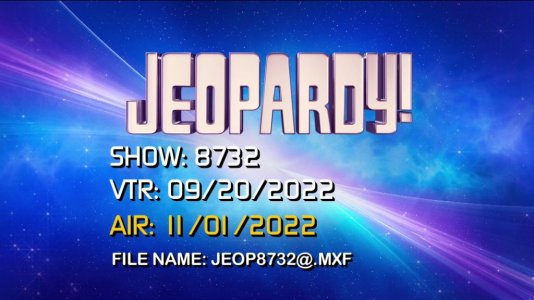
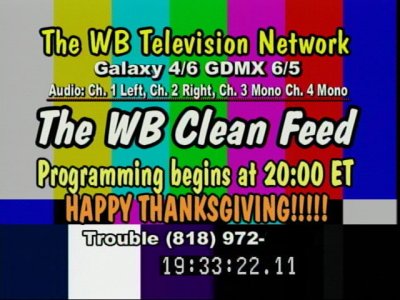
C-band was also how you could tap into everything you local cable system wouldn't or couldn't carry. Countless international news networks from countries all over the world (the era's equivalent of video shortwave) ... the domestic video newswire feeds from AP and Reuters ... tons of terrestrial AM, FM, and TV station uplinks meant for feeding translators or regional cable headends where topography made long-distance microwave links impossible (imagine listening to KLON 88.1 Long Beach from Yellowknife, Canada, or watching arctic Canadian and Alaskan independent stations serving widespread rural populations, often indigenous, with esoteric local programming and news, from your home in Los Angeles). There were also tons of fringe conspiracy theorist networks (yesterday's equivalents to today's WRMI, WBCQ, and WRMI program lineups), oddities like the Armed Forces Radio network, Muzak multiplexes, and the complete buffet of syndicated domestic radio programming from all the big and small distributors.
Compared to all that stuff, the regular cable networks that were up there, like TBS and ESPN, were the boring stuff.

Dumb question, maybe, but my dish is a 1.3 meter one, presumably used for commercial applications (such as convenience stores, banks, and so on). Is it possible that the dish is too big, or the feedhorn too far out from the center of the dish, to make it viable for FTA satellite TV channels? I'm thinking that Ku-band is Ku-band, and it shouldn't matter, but I think the question is still worth asking.
See what landtuna said. A dish can't be too big, only too small. The smaller the dish, the fewer dBs it can capture and reflect onto your feedhorn. In addition to the feedhorn distance issue he mentioned, the dish's shape must also be perfect, as being even slightly warped will ruin its ability to focus all of that signal properly onto the LNB.
Not as many wild feeds out there in 2026. Even some of the encrypted sports feeds are going to Internet distribution. Those that are still up are often using BISS or Digicypher encryption. Plenty of syndicated shows are being distributed via the Internet, too.
I guess the pre-satellite paradigm, where AT&T's vast copper network served as the distribution backbone for the broadcast industry, is gradually being returned to. Just replace all the old copper links (and AT&T) with fiber (and the internet).



