It helps to figure out if we're talking about the music or the format.Standards was new in 1989, and it has done quite well, if not financially.
The music---stuff from the Great American Songbook era---was what mainline radio stations like WNEW in New York, KMPC in Los Angeles and KSFO in San Francisco played up until the middle 1960s, when it became clear that to stay relevant in the sales demographic (then 18-49), more contemporary music needed to be mixed in.
Of course, over time, the newer music took over. Most artists who recorded standards or became popular doing so lost their recording contracts in the 1970s. Exceptions were Frank Sinatra, Tony Bennett, Andy Williams, Johnny Mathis and a handful of others. And most of them were simply recording easy-listening covers of Top 40 hits.
Between the demographic pressure and the huge drop in new output from established "adult" artists, those stations by and large went to Adult Contemporary around 1973-ish. At that time, Adult Contemporary was largely what the Top 40 stations were playing, with the hardest records left out and an oldies library based on 1950's/60's Top 40 that went back further than the Top 40 stations went.
When that happened, a lot of traditional "adult" listeners jumped to Beautiful (or elevator) Music stations, largely on FM. These people were by then in their 50s and 60s and the Buicks, Lincolns and Cadillacs they had aspired to were generally equipped with FM radios.
As the decade of the 70s wore on, many of the AM stations that had morphed into Adult Contemporary found that young adult listeners had, in large part, either stayed with Top 40, moved on to Album Rock, or other formats---and hadn't fully replaced the over-50 audience that left when the music changed.
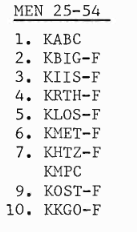
The year that Standards as a format really started was 1978. That's when Al Ham launched the original Music of Your Life and WNEW returned to its Great American Songbook roots. Others followed---KDWN in Las Vegas around 1980, KPRZ, Los Angeles in 1981, KMPC in 1982. KFRC, San Francisco switched from Top 40 to standards in 1986.
And by the mid-1990s, it was pretty much over in terms of commercial viability.
I was a weird kid. I grew up with this music and I liked it. But the audience was my parents. If they were alive, my dad would be 103 and my mom would be 98. I'm three and a half months from turning 65---way outside any profitable sales demo.
Mixing in softer AC songs is basically history repeating itself---the same thing stations did in the 1960s. And the takeover of these formats by that music is the same thing that happened in 1973.
I programmed AC stations in the 1970s. Forty years ago, I was aiming for and got 40-year olds with this music (Melissa Manchester, Barry Manilow---heck, even Steely Dan).
Those people are 80 now.
It's great music and I'll always love it. But at the moment the Beatles are becoming an endangered species on the radio, you have to know that tempus has done fugited. The only mass-appeal tolerance for this music and these artists among a salable audience is in the all-Christmas format.
Last edited: