

-
Get involved.
We want your input!
Apply for Membership and join the conversations about everything related to broadcasting.
After we receive your registration, a moderator will review it. After your registration is approved, you will be permitted to post.
If you use a disposable or false email address, your registration will be rejected.
After your membership is approved, please take a minute to tell us a little bit about yourself.
https://www.radiodiscussions.com/forums/introduce-yourself.1088/
Thanks in advance and have fun!
RadioDiscussions Administrators
You are using an out of date browser. It may not display this or other websites correctly.
You should upgrade or use an alternative browser.
You should upgrade or use an alternative browser.
The wave number 1 urban ac
- Thread starter Dj mr fresh
- Start date

Ever since February 14, 1987 when KMET flipped to The Wave I said to myself, "This will never last."
I might need to start rethinking that first impression.
I might need to start rethinking that first impression.
They're also the only LA station in that format. They've created their own lane. and their audience knows it

 www.insideradio.com

 radioinsight.com
L.A.’s ‘Wave’ Leads Urban AC’s Top 10 Stations.
More urban adult contemporary listeners in the U.S. are catching “The Wave” than any other station in the format, as Audacy’s “94.7 The Wave” KTWV Los Angeles tops Inside Radio’s
Los Angeles
Nielsen Audio PPM Monthly Ratings Los Angeles (Market #2) Population: 11,160,800 Black: 783,800 – Hispanic: 4,977,600 Average Quarter Hour Share for Persons 6+, Mon-Sun 6AM-Mid All ratings are Copyright © 2005-2024 The Nielsen Company. All rights reserved. Nielsen radio audience estimates and...
radioinsight.com
The original sound of KTWV in 1987 bears virtually no resemblance to the station today.Ever since February 14, 1987 when KMET flipped to The Wave I said to myself, "This will never last."
I might need to start rethinking that first impression.
"No resemblance" may be a bit strong. I think The Wave is unique because it still plays artists and songs from the Smooth Jazz era.The original sound of KTWV in 1987 bears virtually no resemblance to the station today.
It's amazing to look at KTWV's playlist and find The Police and Sting, Steely Dan, Spandau Ballet, Phil Collins, Adele and others you'd never hear on another Rhythmic AC station. And how about Smooth Jazz core artists who are black but have long ago been dropped by most Urban AC stations for being too old: Anita Baker, Sade, Lionel Richie, Marvin Gaye, Roberta Flack, George Benson, Luther Vandross, even Aretha and The Temptations. As time goes by, these artists get played less but they're still there.
KTWV may be considered an Urban AC or Rhythmic AC but those labels don't really describe it. It is also the closest station to a Soft AC in LA, even if it isn't always soft. I think it's notable that it has a larger cume by quite a good margin over WBLS New York.

I wouldn't classify KTWV as "Urban AC" or as I call it on RadioInsight "Adult R&B" for one major reason... It's not focusing specifically on Black audiences. KTWV has been a hybrid mass-appeal R&B station since it evolved from Smooth Jazz. It's very distinctive from KJLH in both presentation and target audience.
Also looking at the fact that it dropped all currents and recurrents last year, it should probably be Rhythmic Oldies now.
Also CUME is a really bad way to solely rank stations in terms of audience. Outside of WBLS, not a single R&B station was in the Top 50 in CUME. But three of the top six shares in PPM markets were held by stations in the format. Perhaps @Huff and I need to create an exclusive formula that takes market population, CUME and share to build a ranker.
Also looking at the fact that it dropped all currents and recurrents last year, it should probably be Rhythmic Oldies now.
Also CUME is a really bad way to solely rank stations in terms of audience. Outside of WBLS, not a single R&B station was in the Top 50 in CUME. But three of the top six shares in PPM markets were held by stations in the format. Perhaps @Huff and I need to create an exclusive formula that takes market population, CUME and share to build a ranker.
Last edited:

Even Adult R&B is a bit extreme. The original Wave as designed by Cody and Leach took into account the fact that the African American population in LA could not support a major radio station. They realized that the Hispanic, Black and immigrant population of LA could support a rhythmic format. When The Wave went on, the term "smooth jazz" was not yet in use as there was a lot of music with wind chimes and the like.I wouldn't classify KTWV as "Urban AC" or as I call it on RadioInsight "Adult R&B" for one major reason... It's not focusing specifically on Black audiences. KTWV has been a hybrid mass-appeal R&B station since it evolved from Smooth Jazz. It's very distinctive from KJLH in both presentation and target audience.
As mentioned elsewhere, the term "smooth jazz" came from one-on-one interviews later in Chicago where a woman that Owen Leach was interviewing , upon hearing a sample pod, said "Oh, that is like smooth jazz". Owen picked up on that and tested the term. So, rather than paying for the already registered "smooth jazz" positioner, they debuted in Chicago as "Smooth Jazz" instead.
"Beautiful Music" was never called "instrumental oldies" even though it played no currents. This format deserves a generic name.Also looking at the fact that it dropped all currents and recurrents last year, it should probably be Rhythmic Oldies now.
Still, the purpose of ratings is to sell advertising. Looking at what agencies pay attention to, we should focus on AQH Persons/Share/Rating which are all the same thing expressed in different forms. While agencies look primarily at ratings and generally in multi book averages, share gives radio observers a more specific number... and unlike AQH Persons, one that can be compared across different market sizes.Also CUME is a really bad way to solely rank stations in terms of audience. Outside of WBLS, not a single R&B station was in the Top 50 in CUME. But three of the top six shares in PPM markets were held by stations in the format. Perhaps @Huff and I need to create an exclusive formula that takes market population, CUME and share to build a ranker.
Also looking at the fact that it dropped all currents and recurrents last year, it should probably be Rhythmic Oldies now.
Yet interestingly enough, the station occasionally is Top 5 in 18-34
What's also interesting to watch is how they counterprogram against co-owned KRTH. They each play music from the same decades. KTWV played one of my favorites from Seal today. You'd likely never hear him on KRTH.
I think a lot of people have forgotten the New Age music component of the early days of KTWV (and other similar stations in the late 1980s) which was certainly more than just “wind chimes”. New Age was a niche genre, and a lot of listeners did not have any familiarity or understanding of it.When The Wave went on, the term "smooth jazz" was not yet in use as there was a lot of music with wind chimes and the like.
On visits to SoCal in the late 1980s I recall seeing a KTWV compilation CD at Tower Records locations. Would be interesting to find one of those as a reminder of what the station originally sounded like.

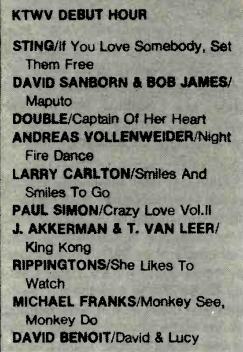
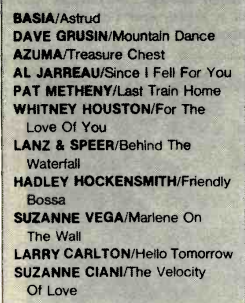
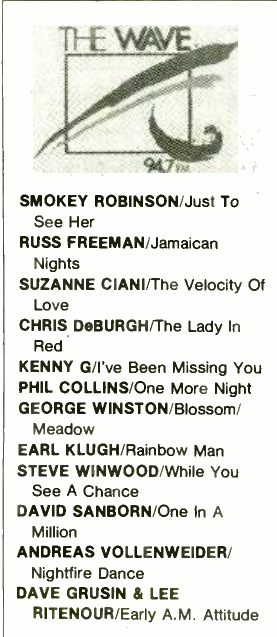
And it is rather difficult to call that "urban" in any form. There was certainly an urban flavor to the mix, but we can see that the main flavor was "Los Angeles" overall.Here are some sample hours of KTWV from its first few months, the first being its debut hour:
View attachment 12120View attachment 12121View attachment 12122

david, is that a typo or am i missing something obvious?...a woman that Owen Leach was interviewing , upon hearing a sample pod, said "Oh, that is like smooth jazz".
So, rather than paying for the already registered "smooth jazz" positioner, they debuted in Chicago as "Smooth Jazz" instead.

Next to KJLH, The Wave has been a favorite of mine ever since the mid 2010’s. While KJLH has been the Urban AC leader since forever, KTWV became a success in its own right.
I should have said "... The Wave Smooth Jazz positioner...". You are correct: my mistake!!!david, is that a typo or am i missing something obvious?
KJLH has realized that its small coverage area reaches a significant percentage of Black listeners, so aiming at that group specifically has been a good strategy. Remember, another significant rhythmic format station specifically marketed as "no color lines" because it aimed at Hispanics, Blacks and everyone else all at once.Next to KJLH, The Wave has been a favorite of mine ever since the mid 2010’s. While KJLH has been the Urban AC leader since forever, KTWV became a success in its own right.