Don’t know about NYC radio. But in San Diego when the 2 skilled anchors on KOGO radio make endless corny jokes such as “ I hate yacht rock” for weeks and laugh at their own jokes it gets cringeworthy. Most news people are fairly serious and are not talented comedians. An occasional joke is fine, but anchors and program directors ideally know their strengths and weaknesses.Would Walter Cronkite doing the news right now be a bad thing. Surely better than anything currently on CNN/MSNBC/Fox News.
I don't want to be entertained watching the news. I want the news.

-
Get involved.
We want your input!
Apply for Membership and join the conversations about everything related to broadcasting.
After we receive your registration, a moderator will review it. After your registration is approved, you will be permitted to post.
If you use a disposable or false email address, your registration will be rejected.
After your membership is approved, please take a minute to tell us a little bit about yourself.
https://www.radiodiscussions.com/forums/introduce-yourself.1088/
Thanks in advance and have fun!
RadioDiscussions Administrators
You are using an out of date browser. It may not display this or other websites correctly.
You should upgrade or use an alternative browser.
You should upgrade or use an alternative browser.
WCBS vs. WINS postscripts
- Thread starter Rollo-Smokes
- Start date

Have you considered PBS News Hour? That's exactly what they do, night in and night out.Would Walter Cronkite doing the news right now be a bad thing. Surely better than anything currently on CNN/MSNBC/Fox News.
I don't want to be entertained watching the news. I want the news.

At this point TV news is more about looks than substance. On radio looks don’t matter but the presentation should be the same. I don’t need shock jocks giving me hard news.Keep in mind that Walter was primarily a writer. Not a TV star. Before getting hired by CBS, he was at UPI, which at the time was viewed as "the first draft of history." So for him, it all begins with writing. That's also where it begins at NPR. People often complain about the NPR delivery, that it's dull or often not very polished. That's because the writing is more important than the delivery. So when people say the WINS presentation is too entertaining, then maybe they want NPR.
I can see how the “get off my lawn” types would be upset but they have a point. Either report the news as a professional or don’t.
So, hypothetically speaking...let's say Robin Quivers, Charles McCord, and Amy Goodman were WINS anchors. Knowing their styles and such, would you find issues with them?

You do not need to be Edward R. Murrow-dry to deliver the news. The NPR flagship programs have loosened up in recent years. Yesterday one of them (ME or ATC, don't remember which) had a short piece about python hunting in Florida. They were anything but somber in discussing that fun endeavor. But when it comes to real news, not some one-or-two minute filler story, they stick to the script and deliver the facts. Their delivery, their formatics, are tight and usually timed to the second. (Exceptions being live interviews where the interviewee doesn't hit the post the way a pro would know to. But really, isn't that the producer's fault for not prepping them to wrap up their current thought when they start hearing the music bed underneath them. Right?) Most radio people I've known or met had a sense of humor, but people who work at NPR or the other public radio services know they're not comedians, not Morning Zoo personalities, and so do their listeners. They don't try to be. They know we listeners tune in to start (or end) our day informed, not entertained.
I think Robin could be a decent WINS anchor. So could Charles. But for either of them, the news would come first.So, hypothetically speaking...let's say Robin Quivers, Charles McCord, and Amy Goodman were WINS anchors. Knowing their styles and such, would you find issues with them?
I doubt Amy could or would want to do that job. The brevity (or shallowness) of the stories would quickly drive her to quit.

I think in general, people know what music starting to play as they’re talking means, from watching awards shows, etc. Also the host should know how to let the guest know nicely that they’re up against it.(Exceptions being live interviews where the interviewee doesn't hit the post the way a pro would know to. But really, isn't that the producer's fault for not prepping them to wrap up their current thought when they start hearing the music bed underneath them. Right?)
Robin was a straight news reader when she started with Howard. He wanted to have more banter with her.I think Robin could be a decent WINS anchor. So could Charles. But for either of them, the news would come first.
I doubt Amy could or would want to do that job. The brevity (or shallowness) of the stories would quickly drive her to quit.
You do not need to be Edward R. Murrow-dry to deliver the news.
There's some mythology about Murrow. He had a flair for the dramatic. There's a famous bit of audio with him reporting from London during WW2, with air raid sirens in the background. He also did a Hollywood interview show called "Person To Person" that aired in prime time. So he wasn't all hard news.
Now, would their styles have been a good fit on WCBS?I think Robin could be a decent WINS anchor. So could Charles. But for either of them, the news would come first.
I doubt Amy could or would want to do that job. The brevity (or shallowness) of the stories would quickly drive her to quit.
I think I know what the answers may be...
Although I'm still cranky that WCBS is gone, I recognize the fact that WINS is [probably] better suited to cover the NY market. If it was a move to reduce their power bill......well, WCBS & WINS both pumped & pump out 50,000 watts so not much savings there. Amazingly over the last few nights I've been able to pick up WINS here in NE Ohio, usually it's just a whisper above the rest of the noise on 1010. For what it's worth, I've programmed KYW, WBBM, WINS into my radio and sometimes listen to WBZ. They are all a very far cry from the quality of WCBS. but KYW comes close.

I will say it again: why is there the idea that a huge expense for radio stations is the electric bill?Although I'm still cranky that WCBS is gone, I recognize the fact that WINS is [probably] better suited to cover the NY market. If it was a move to reduce their power bill......well, WCBS & WINS both pumped & pump out 50,000 watts so not much savings there. Amazingly over the last few nights I've been able to pick up WINS here in NE Ohio, usually it's just a whisper above the rest of the noise on 1010. For what it's worth, I've programmed KYW, WBBM, WINS into my radio and sometimes listen to WBZ. They are all a very far cry from the quality of WCBS. but KYW comes close.
Unless you have a high-power station in a very small market, the electric bill is a very tiny part of your operating expense. Using the average cost of a kilowatt hour across the country at around $.15, that means that a 50 kW a.m. station uses about $15 worth of electricity an hour. That is somewhere around $10,000 a month. We are talking about stations such as WABC or WGN or KFI that bill $10 million a year or more. Compare the electric bill with billing or with the cost of one lower paid air talent and you can see that the electricity is not a significant expense.
Well, to me, that's a huge chunk of money. I just about had a heart attack when my bill went over $100 for a couple of months. But I'm sure the way things are for some stations nowadays......any chance to save even a nickel....they'd go for it, whether your a huge conglomerate or a mom & pop station. Same rationale a station GM was probably using when he asked if I'd climb the tower to change a burned out beacon on top. Cheaper to pay me $50 then some company or steeplejack $500 or more to do it....even though I refused. I figured I'd get one step from the top and make a misstep and plummet to my death. Only hope the poo that came out of my pants hit the GM first before I did. And hope the final words he would hear would be "You bastarrrrrrrrrrdddddddd!" before I plowed into him.I will say it again: why is there the idea that a huge expense for radio stations is the electric bill?
Unless you have a high-power station in a very small market, the electric bill is a very tiny part of your operating expense. Using the average cost of a kilowatt hour across the country at around $.15, that means that a 50 kW a.m. station uses about $15 worth of electricity an hour. That is somewhere around $10,000 a month. We are talking about stations such as WABC or WGN or KFI that bill $10 million a year or more. Compare the electric bill with billing or with the cost of one lower paid air talent and you can see that the electricity is not a significant expense.
Think of all the expenses, a station has: salaries, Social Security, health, insurance participation, business insurance, liability, insurance, rent, telephone, electricity, connectivity, legal costs, salaries for traffic, accounting, air, personalities, sales, staff, office, staff, engineering, and maintenance, equipment, repairs, and maintenance, music licensing, transmitter site, and studio office space rental , sales commissions, agency, commissions, sales, rep fees, travel, and entertainment, FCC fees, business, licenses, and permits, Computers, computer, maintenance, software and software, licensing, advertising and promotion, memberships in community and industry, associations, attendance at conventions and seminars, outside consultants and auditors, and many other things involved in the operation of a radio station.Well, to me, that's a huge chunk of money. I just about had a heart attack when my bill went over $100 for a couple of months. But I'm sure the way things are for some stations nowadays......any chance to save even a nickel....they'd go for it, whether your a huge conglomerate or a mom & pop station.
Compared to all these things, the electric bill is truly a very minor expense. In fact, it is only burdensome if you have a station in a small market with a higher powered transmitter where they added coverage of higher power produces no income.
This is just speculation, but I saw a recent filing for a 50,000 watt AM station in Petoskey Michigan, which wanted to go silent. I am thinking that such a station on AM in such a small market in an area with terrible ground conductivity producing very limited coverage is likely not going to be able to bill enough to pay that electric bill. Eventually, we will see some stations like that either reduce power and just serve their local community or simply disappear if they cannot use the AM to get a translator.

Listeners. Can't live with them; can't live without them.You are absolutely right. When I had a relationship show on all talk KTNQ in the later 1990's, the program usually had to do with sexual subjects. I got lots of calls where someone would complain about what the show said "last night" and describe how awful it was. And then they would describe the show the previous night. And then the night before. And so on for multiple subjects about sex on many nights.
"If you don't like it, why do you listen?" got me nowhere. So I would just say, "I understand" until they finished their monologue and then they would be happy and hang up.
Cronkite was a bona fide war correspondent (WW2). After the war, he freelanced for KMBC in Kansas City (his mother and his wife stayed in KC during the war) before joining CBS.Keep in mind that Walter was primarily a writer. Not a TV star. Before getting hired by CBS, he was at UPI, which at the time was viewed as "the first draft of history." So for him, it all begins with writing. That's also where it begins at NPR. People often complain about the NPR delivery, that it's dull or often not very polished. That's because the writing is more important than the delivery. So when people say the WINS presentation is too entertaining, then maybe they want NPR.
Cronkite was a bona fide war correspondent (WW2).
Correct: For UPI. He was born in Missouri, met his wife in Missouri, and reported for UPI at their Kansas City bureau. Then he covered the war and got noticed by Ed Murrow. Ed offered him a job at CBS for more money. At the time, radio reporters were not seen as serious as print reporters. Walter took that offer to his boss at UPI and they gave him a raise. He didn't make the move to CBS until ten years later. I think Cronkite was the first anchor who also got the title of "managing editor" so he could retain control over the writing.
Unfortunately, I think that's never been not true, at least not until NPR really beefed up its reporting in the past three decades, once it had the resources to do so.At the time, radio reporters were not seen as serious as print reporters.
He's buried in KC too, at Mt. Moriah:
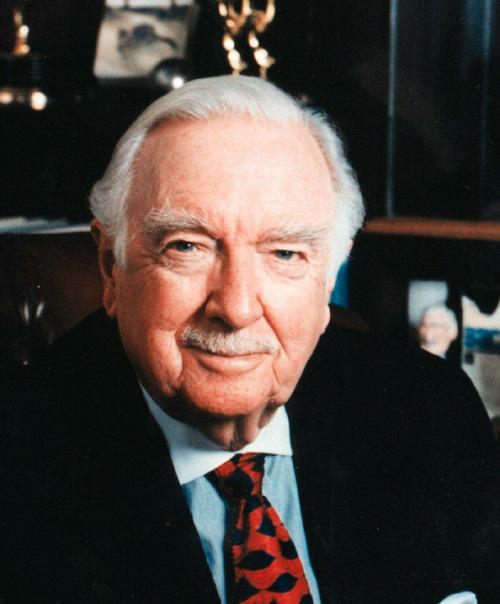
 www.findagrave.com
Walter Cronkite (1916-2009) - Find a Grave...
Television Broadcast Journalist. Born in St. Joseph, Missouri, he attended two years at the University of Texas from 1933 to 1935 before dropping out in his junior year to take a job as a full-time reporter with the Houston Press in Texas. He began his broadcasting career working at several...
www.findagrave.com
Unfortunately, I think that's never been not true, at least not until NPR really beefed up its reporting in the past three decades, once it had the resources to do so.
I think if you go back even further, you'll find that NPR always gave preference to applicants who had print experience over radio experience. They felt they could teach the radio part, but good writing can't be taught. Both WCBS and WINS have (or had) people who oversee the scripting. However at NPR, there's an editor who oversees the reporting, and another editor who oversees the writing for the show. So it's possible to have a report approved by the desk editor, and then face changes by the show editor.