I've found this discussion about WCSB to be both fascinating and frustrating — to the point that it's made me move from long-time lurking to posting here for the very first time. Because this back & forth over WCSB truly gets to the heart of our shared love of radio — a love that some of us define in strikingly different ways. For some folks here, radio is a business, one with deep and longstanding cultural connections, as well as no less interesting technical aspects, but ultimately still a business. For other folks, radio is a creative medium, one whose potential is all too often wasted, and whose most interesting programming has almost always arisen despite it being a business — or in some cases precisely because of that tension. Arguing about WCSB is really a stand-in for these two opposed ways of thinking. It's why losing WCSB feels so painful to some, while being a positive move — or utterly irrelevant — to others.
With that in mind, I'd like to get back to the facts — what's actually happened on the airwaves as well as on the ground in Cleveland — because so much of this debate's heated aspects have centered around caricatures that bare little relation to reality. And however you end up defining your passion for all things radio, we're still part of the same larger tribe. If you've ever tried to discuss transmitter sites and ERP in mixed company, you know this all too well!
First, Cleveland State University: Some of the folks posting here have imagined the school as full of privileged upper middle-class kids oblivious to the world beyond their little campus bubble and taking that attitude with them to its radio station, WCSB. There are plenty of schools with radio stations like this — and yes, they're embarrassing to hear — but Cleveland State University isn't one of them.
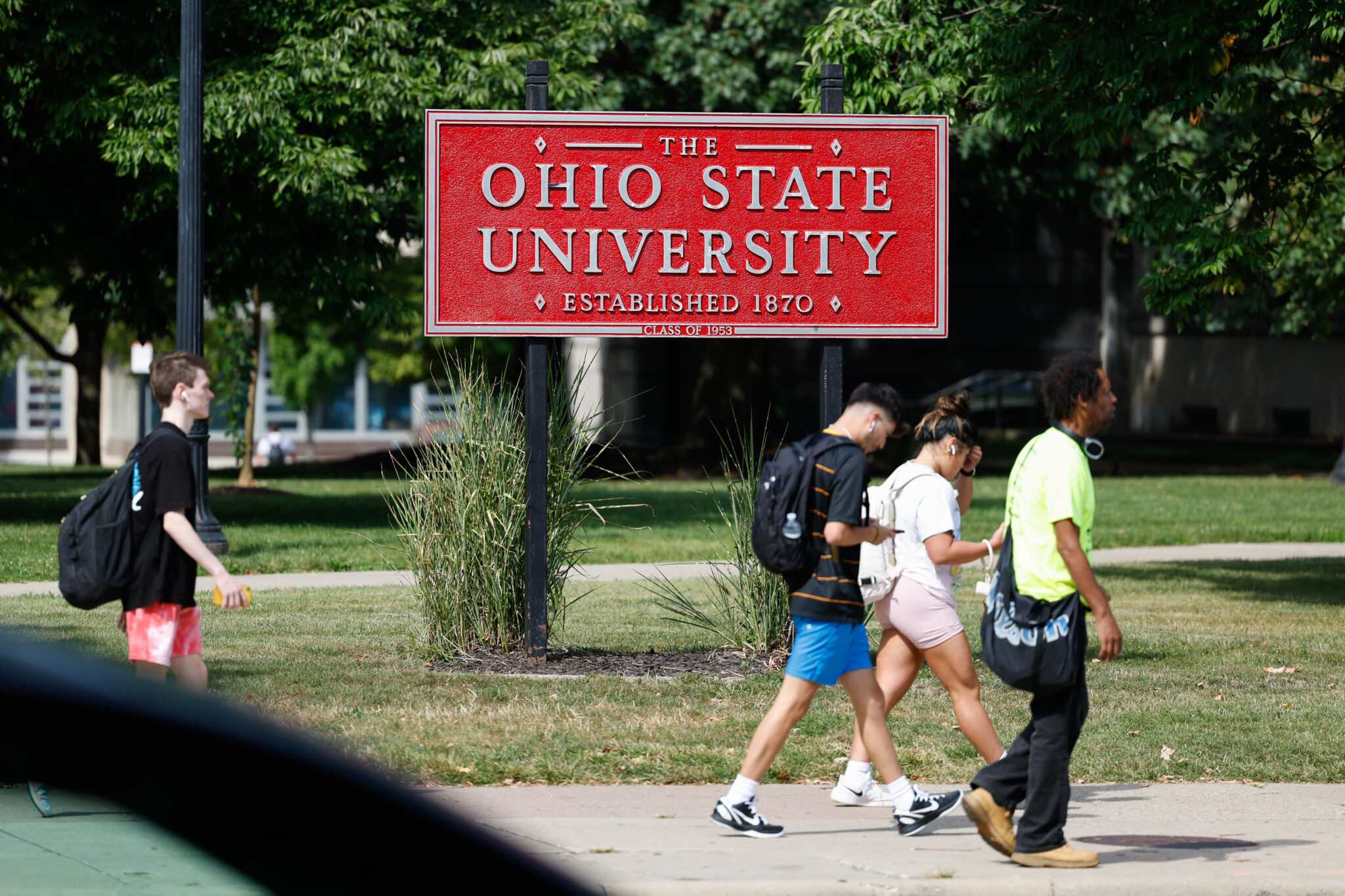
CSU is largely seen by locals as, rightly or wrongly, being one step above a community college. It's where you go if you don't have a lot of money, or don't want to leave Cleveland, and you also still want or simply need a degree. Very few attend CSU to "find themselves" or explore the liberal arts. It's common for students to take a semester off, or even a year or more off, before later returning to school. Some don't even start at CSU until long after they've graduated high school. And it's a commuter school. Plenty are working while taking classes, often in non-campus jobs. In fact, the campus itself is kind of grim — it's basically just a bunch of buildings in downtown Cleveland. Forget about ivy-covered classical structures and bucolic fields of green. This is old-school Cleveland in every sense. It also helps explain the nature of the Ideastream deal: on-air publicity at Ideastream's NPR and PBS TV stations instead of cash. CSU is in serious financial trouble and its board clearly believes the way out is to rebrand the school as a more upscale and desirable choice for wealthier families to send their kids — kids who are currently going to say, Kent State University in Kent, Ohio University in Athens, or Ohio State in Columbus.
To reiterate, the students who have been on the air at WCSB tend to be a bit older and already part of the social fabric of the city. That means DJs with a deeper musical knowledge and life experience to draw from. The station has also always seen its listening audience as the greater Cleveland area, not just students — who, again, live all over that same greater Cleveland area. As noted by airwaves_dream, keeping alumni on the air makes perfect sense in this context. It's also part of what enriches the programming and builds listening audiences. I started listening to WCSB in the early '90s, and I can tell you that the size of their citywide audience (as well as the one for WRUW, which also features a mix of student and alumni DJs) has historically always been far larger than the college radio audience in almost any other burg (besides Boston). That's also why there's been so much local pushback about the Ideastream PSOA.
We've seen these kinds of deals for the past 15 years or so now, where a school either sells or hands off the operation of their station to an NPR affiliate. But in no other city — not even in liberal San Francisco with the sale of KUSF — have we seen this kind of uproar from not only angry listeners, but widespread, continued coverage and condemnation from the local media and government officials. That speaks to the reach and impact of college radio in Cleveland. You've got reporters and city council members who regularly tune in, not just a handful of hipsters.
I understand that for some folks here who have little interest in college radio, or in any kind of non-commercial radio, the drama at WCSB produces little more than a shrug. All I would ask is that, as fybush wrote, you please remember that there are other people here at Radio Discussions who love everything about radio just as much as you do, but who don't understand why there can't also be a few places on the FM dial for stations like WCSB with DJs who cherish the idea of radio as a forum for creative experimentation and free expression, in whatever way you want to define that. We're all here together playing online in this same digital sandbox. So let's try to, ahem, not pee in it, ok?


 www.cleveland.com