• Get involved.
    We want your input!
    Apply for Membership and join the conversations about everything related to broadcasting.

    After we receive your registration, a moderator will review it. After your registration is approved, you will be permitted to post.
    If you use a disposable or false email address, your registration will be rejected.

    After your membership is approved, please take a minute to tell us a little bit about yourself.
    https://www.radiodiscussions.com/forums/introduce-yourself.1088/

    Thanks in advance and have fun!
    RadioDiscussions Administrators

When did people start moving to FM?

I guess I don't remember a line-item charge for an AM-only radio. I didn't think any came with no radio at all.
Generally by the '80s an AM/FM radio was standard, but you could order an AM-only radio as a "delete option" for a few bucks off the price.

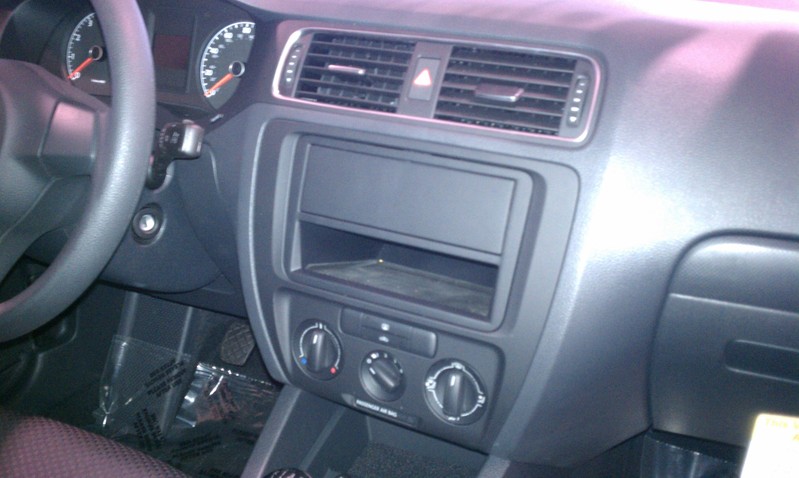
Cars coming with no radio at all made a comeback during the Great Recession, with base models of cars like the VW Jetta, Nissan Versa, and Honda Civic lacking a radio or air conditioning:

Did You Know That You Can Still Buy A New VW Without A Radio? - 1A Auto

Stripped-VW.jpg
 
Generally by the '80s an AM/FM radio was standard, but you could order an AM-only radio as a "delete option" for a few bucks off the price.

Cars coming with no radio at all made a comeback during the Great Recession, with base models of cars like the VW Jetta, Nissan Versa, and Honda Civic lacking a radio or air conditioning:

Did You Know That You Can Still Buy A New VW Without A Radio? - 1A Auto

Stripped-VW.jpg
In the 1950s and 1960s, most passenger cars shipped to dealer lots had an AM radio. On all but the most luxurious brands, they were extra-cost, as shown on the window sticker:
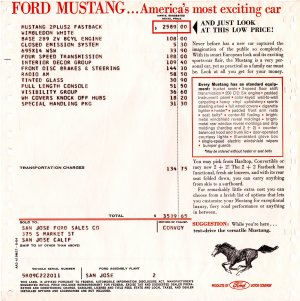
12547511744_f6670c51e2_k.jpg

If you ordered your car from the factory (much more common in those days), you could order it without a radio, which usually showed up on the sticker as "radio delete", and a blank plate would be in the space in the dashboard where the radio would be.

As for the later (1980s) example Kevtronic shows above, that was different. It was easier and more economical for import brands like VW and Honda to ship cars without radio (and in Honda's case, without air conditioning), and make those "dealer-installed options". The dealers then could sell you AM, AM/FM or AM/FM tape, usually at a pretty nice profit, and make money from the installation, too.

But, a lot of those were pretty bad radios (some dealers declined to stock the OEM radio and bought cheap Radio Shack-level junk that they then marked up as though it was premium gear---which sent most of us (myself included, when I bought my '84 Civic) to a real stereo shop to have a real Alpine or other better brand audio system installed.

Eventually, as the import brands figured they were losing out, they began shipping with their own systems already in-dash.

 
Last edited:
In the 1970s, KNX-FM in Los Angeles ended up describing itself (off-air, at least) essentially the same way. And really, it was accurate---it was album-oriented rock, but soft. "The Mellow Sound" worked as an on-air positioner.
A station in the Augusta GA market was listed as "beautiful rock".
 
Broadcasting Yearbook called WQDR "album-oriented adult contemporary". That doesn't sound like anything you described. I have to wonder where that term came from.
Sales. Fear of being labeled as a "hippie station".
 
If I remember my Mustang specs, it was a bundle—-front disc brakes and power steering.
At least they paid the $5 extra for the closed emissions system -- otherwise it would've vented the crankcase fumes and oil directly on the ground. That's the reason why old highways had a black strip of grime down the middle of each lane:

downtown-los-angeles-skyline-during-the-1450s-picture-id1281127442
 
Grew up in Bergen County New Jersey. Started listening to music on the radio in 1969, naturally 77 WABC. However when 97 WWDJ came along in 1971 it was the new love of my life.

My FM listening began April 1st 1974 when the WWDJ format changed to religious programming.
 
At least they paid the $5 extra for the closed emissions system -- otherwise it would've vented the crankcase fumes and oil directly on the ground. That's the reason why old highways had a black strip of grime down the middle of each lane:

downtown-los-angeles-skyline-during-the-1450s-picture-id1281127442
Looking at the bottom of the window sticker, it was sold to the regional office in San Jose, California. By the end of 1965, we had mandatory closed emissions systems here. But since it wasn't something that would be on cars for sale in the other 49 states, it could be shown as an added cost piece of equipment. Here's a 1964 piece from the New York Times on the announcement by California and three other states:


Also---if you look at the list of standard equipment on the Mustang window sticker (on the right), you'll see that you could order one without a heater or seat belts at that time.
 
Last edited:
Mustang was definitely a game changer. Few vehicles looked anywhere near it when it debuted in ‘64 with the ‘65 model. No wonder it was so popular. From what I understand this model was an extension of the Thunderbird brand which had dropped their 2 seat model several years earlier. The car also offered customized options. Those 60’s versions sold well but by the early 70’s the novelty began to wear off and the brand would never equal it’s early success.
 
Those 60’s versions sold well but by the early 70’s the novelty began to wear off and the brand would never equal it’s early success.
We called the 64 1/2 models "secretaries cars" because it seemed every <ahem> 'admin assistant' drove one. But they too got competition as the decade wore on kicked off by the horsepower war between The Mustang and Camero. By 1970 the "Pony Cars" as they were called included Mustang, Camero, Plymouth Barracuda and Duster, Dodge Challenger, Pontiac Trans-Am and even old AMC with the Javelin and AMX. Emissions controls in the early 70's killed the performance aspect of these cars and insurance costs made them expensive to own and they gradually faded away into the malaise of the decade.

We still saw them on the drag strips and in Trans-Am racing and some of them can still be seen on those great and glorious quarter miles.
 
We called the 64 1/2 models "secretaries cars" because it seemed every <ahem> 'admin assistant' drove one. But they too got competition as the decade wore on kicked off by the horsepower war between The Mustang and Camero. By 1970 the "Pony Cars" as they were called included Mustang, Camero, Plymouth Barracuda and Duster, Dodge Challenger, Pontiac Trans-Am and even old AMC with the Javelin and AMX. Emissions controls in the early 70's killed the performance aspect of these cars and insurance costs made them expensive to own and they gradually faded away into the malaise of the decade.

We still saw them on the drag strips and in Trans-Am racing and some of them can still be seen on those great and glorious quarter miles.
"Ponies in the Smokies" was a Mustang event that just happened in Pigeon Forge this weekend!
 
Heard on the radio just the other day, that due to the 'chip shortage', GM has been delivering vehicles missing things that usually come as standard equipment for the same price. Standard equipment like:
Rear seat HVAC controls, LED convenience lights in door jams and rear passenger areas, eliminated USB connectors, and 'infotainment systems' with smaller screens and less features.
 
Heard on the radio just the other day, that due to the 'chip shortage', GM has been delivering vehicles missing things that usually come as standard equipment for the same price. Standard equipment like:
Rear seat HVAC controls, LED convenience lights in door jams and rear passenger areas, eliminated USB connectors, and 'infotainment systems' with smaller screens and less features.
True. Ford, too. Owners will be called to bring their cars to the dealer for retrofits when the chips are available.
 
My parents bought a Ford Custom 500 in early 1965 wo/radio, in the mid-1970s, I considered putting in an under dash AM/FM(mono) radio (w/built in speaker - clever idea - not need to take the dashboard off to install a speaker) from (IIRC) Radio Shack, but I didn't.

Their 1978 Ford Fairmont had a dealer installed AM/FM stereo radio w/2 small in dash speakers.


Any info about whether car FM radios were mostly stereo, a fairly even mix of mono FM and stereo FM or mostly mono in the early days of car FM radios?


Kirk Bayne
 
My parents bought a Ford Custom 500 in early 1965 wo/radio, in the mid-1970s, I considered putting in an under dash AM/FM(mono) radio (w/built in speaker - clever idea - not need to take the dashboard off to install a speaker) from (IIRC) Radio Shack, but I didn't.

Their 1978 Ford Fairmont had a dealer installed AM/FM stereo radio w/2 small in dash speakers.


Any info about whether car FM radios were mostly stereo, a fairly even mix of mono FM and stereo FM or mostly mono in the early days of car FM radios?


Kirk Bayne
My memory is that you could get mono or stereo. Stereo cost considerably more, of course—-stereo head unit and additional speaker(s).
 
Status
This thread has been closed due to inactivity. You can create a new thread to discuss this topic.


Back
Top Bottom