• Get involved.
    We want your input!
    Apply for Membership and join the conversations about everything related to broadcasting.

    After we receive your registration, a moderator will review it. After your registration is approved, you will be permitted to post.
    If you use a disposable or false email address, your registration will be rejected.

    After your membership is approved, please take a minute to tell us a little bit about yourself.
    https://www.radiodiscussions.com/forums/introduce-yourself.1088/

    Thanks in advance and have fun!
    RadioDiscussions Administrators

Which Beautiful/Easy Listening Orchestras Were Better or Worse Than Others and Why

Re Latin American listening: an artist like for instance Percy Faith recorded Latin tunes using some Latin instruments - but rhythmically they were not patterned the way the performances would have been in their home countries. I learned this because when I was young I used to play piano with Latin bands and had to learn the proper patterns or I would throw off the rhythmic feeling. Different for Conjunto, Charanga, Cha Cha Cha, and so on. So I am thinking listeners in those countries could enjoy the tunes and the orchestrations but they would not feel they were properly done rhythmically and would find that leaving something to be desired and not in the right groove.
The Latin American songs that got done by orchestras like Frank Pourcel, Caravelli, etc. had all the necessary flavor for use on radio in Latin America. It's just like the pianist at a piano bar is going to sound different from a dance band. It does not change the feeling and spirit of the songs. In fact, many of the biggest songs, written originally as boleros or "bolero ranchero", move to instrumental versions by more modern orchestras very well.

In all my years doing Beautiful Music in Latin America, including about 60 station in 14 countries, I never heard a comment that the music was "leaving something to be desired".
 
Last edited:
After this thread's explosive growth to at least 14 pages since last week (!), I decided to go back to the beginning for a review, and realized that I neglected to responds to a few thins that I meant to.

So here goes:
And since you reminded me in the other thread that you're near/familiar with Ukiah, there's one more---this is KUKI (AM) in October of 1977:

Hehehe, is this one also scoped, or unscoped? I know scoped is pretty much the standard, but I find I like unscoped better as it gives me a good feel for the overall sound, including ads.

Gleason (Jackie, not David) was not big band. It was exactly what @Bongwater and @b-turner said...the music that typified Beautiful Music radio, recorded years before anyone made a format out of it. This one's from 1952:


This one from 1953:


And this one from 1954:

I've listened to some of these, and I have to say I like them (naturally).

Another album not mentioned is "A Taste of Brass For Lovers Only", which is also quite good:

The funky rendition of "Carmen" is particularly interesting.

c
 
Hehehe, is this one also scoped, or unscoped? I know scoped is pretty much the standard, but I find I like unscoped better as it gives me a good feel for the overall sound, including ads.

I personally prefer unscoped, but I don't have any unscoped of myself. Like most DJs, I recorded myself only for critiques or to apply for the next job. In fact, that is the tape that got me the job at KOLO in Reno. I was gone about three weeks later.
 
I see. That makes sense. A station interviewing a prospective DJ probably wouldn't want to listen though hours of music, news and ads to hear their work.

Do any unscoped airchecks of KUKI exist in the wild, I wonder?

I already discussed with you a couple years ago I think the KXBX-AM aircheck I happened to find (I think I probably made it way back in 2005 or so (I was really big into taping things off the radio from ~2001-2005 or 2006), and then I must have set it aside when it apparently broke somehow). I have yet to find any others, although I'm sure I must have made some.

c
 
I see. That makes sense. A station interviewing a prospective DJ probably wouldn't want to listen though hours of music, news and ads to hear their work.

They did not. The standard at that time was that a PD wanted to hear an hour of a jock's show and that the tape should run no more than seven minutes.

For some PDs, the standard was even tighter---five minutes or less.

Most of those tapes never existed in unscoped form. A lot of stations had what were known as skimmers---cassette decks in the studio connected to the relay that muted the studio speakers to avoid feedback. You'd drop a cassette in the deck, hit record and then the next time, the mic was activated, it would record---and stop when the mic was turned off. Here's an example of a skimmer tape---the "wowing" of the tape in between segments is the giveaway that it was from a skimmer:


Do any unscoped airchecks of KUKI exist in the wild, I wonder?

I have never heard of any. We had a skimmer in the rack at KUKI. I just cleaned up the transitions before sending it to KOLO (which most jocks did if they were using the tape to apply for a job.
 
¿Qué es esto? ¡no entiendo! :LOL:

c

Okay.

First, anytime someone posts a video or audio clip---listen to it. Just press play. That's why they posted it. It's there for context.

Short version:

KTNQ ("The New Ten-Q") was a ridiculously high-energy Top 40 radio station that began the day after Christmas, 1976.

Instead of big cash prizes, they gave away WAM---Walkin' Around Money---50 bucks, 100 bucks---to listeners when they called in to make requests. Like this:

The Real Don Steele was a legendary L.A. disc jockey who had been part of the original Top 40 crew at KHJ from 1965-1973.

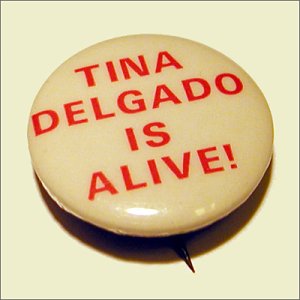
Steele started a thing before he got to L.A.---a recorded woman's voice yelling "Tina Delgado is alive, alive!"


If you're of a certain age and grew up in L.A. (which both K.M. and I are and did), that's an instantly identifiable Real Don Steele line. Hell, they made up buttons back in the day:

delgado_button.jpg

Ten-Q failed. Too teen-oriented, too late for a new Top 40 station on AM in L.A.

It went Spanish on July 31, 1979. In the 1990s, our very own @davideduardo was the Program Director of KTNQ.
 
Last edited:
Ten-Q failed. Too teen-oriented, too late for a new Top 40 station on AM in L.A.

It went Spanish on July 31, 1979. In the 1990s, our very own @davideduardo was the Program Director of KTNQ.
I always thought that those of us in deep flyover country could be a few years behind the coasts on certain things but, good Lord, what made someone in Los Angeles think that this would work in 1978? Wouldn’t teens have moved on by then to something more befitting the lower-energy times?
 
I always thought that those of us in deep flyover country could be a few years behind the coasts on certain things but, good Lord, what made someone in Los Angeles think that this would work in 1978? Wouldn’t teens have moved on by then to something more befitting the lower-energy times?

There weren't a lot of people at Storer in possession of clues in the mid-to-late '70s.

In fact, KTNQ went Spanish language after it was sold -- along with the rest of their radio stations, to a variety of owners -- when Storer decided the future was in their television stations and their cable television division. Six years later, they were taken private in a $1.6 billion leveraged buyout by Kohlberg Kravis Roberts (if you don't know who they were, look it up).

Storer Cable was sold jointly to TCI and Comcast and divided up between them in 1992. That was after the television stations were sold five years earlier, and after several mergers and other transactions, ended up part of the Fox Television Stations group.

Sad, huh?
 
I always thought that those of us in deep flyover country could be a few years behind the coasts on certain things but, good Lord, what made someone in Los Angeles think that this would work in 1978? Wouldn’t teens have moved on by then to something more befitting the lower-energy times?

What K.M. said.

Frankly, Storer got sold a bill of goods.

What they got was an early 70s San Diego sound adapted for L.A. by putting the Real Don Steele, a million dollars and God only knows how much cocaine into it.

I've always thought that might have worked in 1971, if KRLA had tapped Buzz Bennett to be PD instead of Shadoe Stevens, but only then and not for long.

1976---really, 1977 (they launched four and a half days before the end of the year) was way too late for this.
 
Last edited:
Muchas gracias a ustedes para explicarlo.

There weren't a lot of people at Storer in possession of clues in the mid-to-late '70s.

In fact, KTNQ went Spanish language after it was sold -- along with the rest of their radio stations, to a variety of owners -- when Storer decided the future was in their television stations and their cable television division. Six years later, they were taken private in a $1.6 billion leveraged buyout by Kohlberg Kravis Roberts (if you don't know who they were, look it up).

Storer Cable was sold jointly to TCI and Comcast and divided up between them in 1992. That was after the television stations were sold five years earlier, and after several mergers and other transactions, ended up part of the Fox Television Stations group.

Sad, huh?
For cable, not necessarily. There were all sorts of deals and combinations and break-ups of cable companies in that era. For the TV stations, it was probably a matter of private equity looking for an exit. Private equity always looks for an exit.

KKR was quite prominent in the 1980's. I had nothing to do with the "Roberts" in KKR.
What K.M. said.

Frankly, Storer got sold a bill of goods.

What they got was an early 70s San Diego sound adapted for L.A. by putting the Real Don Steele, a million dollars and God only knows how much cocaine into it.

I've always thought that might have worked in 1971, if KRLA had tapped Buzz Bennett to be PD instead of Shadoe Stevens, but only then and not for long.

1976---really, 1977 (they launched four and a half days before the end of the year) was way too late for this.
When Bartell (speaking of San Diego) put KSLQ on the air in St. Louis in September 1972, they had a lot of screamers. That was gone by 1976. By 1978 it was considered a "progressive" Top 40 station. I actually saw this phrase in either R&R or Billboard in a profile of the St. Louis market. For one thing, they started playing album sides. Doubleday saw an opening when it revived KWK in 1978 but pivoted to album rock and added an FM outlet by 1980. The change in format came either in spite of its low-key, laconic style of presentation, or because of it. An FM outlet had been part of the plans all along.

Radio changed much faster in the 1970s than it does now.

The Cult of the Deejay was much diminished by the mid-1970s but some people still don't realize it.
 
When Bartell (speaking of San Diego) put KSLQ on the air in St. Louis in September 1972, they had a lot of screamers. That was gone by 1976. By 1978 it was considered a "progressive" Top 40 station. I actually saw this phrase in either R&R or Billboard in a profile of the St. Louis market. For one thing, they started playing album sides. Doubleday saw an opening when it revived KWK in 1978 but pivoted to album rock and added an FM outlet by 1980. The change in format came either in spite of its low-key, laconic style of presentation, or because of it. An FM outlet had been part of the plans all along.

John Sebastian was hired to be PD at KHJ in 1978 because, after Michael Spears crashed and burned, Sebastian was the most successful Top 40 programmer in the country (at Doubleday's KDWB, Minneapolis).

Les Garland did 90% of what John did at KHJ when he programmed KFRC at the same time---and he ended up with an eight share 12+ and a number one ranking (beating KGO).

Why'd it work for Les and not John? Because KFRC was stronger and more stable at the time than KHJ, Les didn't frame it as a re-invention of the radio station and Les was smart enough not to mess with Dr. Don Rose, while Sebastian made Charlie Tuna read liner cards.

Top 40 folks focused on the battle between KHJ and KTNQ (and KFI and KIIS-FM and KIQQ and KEZY)...but the real story was that the only demo KHJ owned by that point was teens. 18-34 Men was KMET, KLOS, KNX-FM, KWST and KRTH. 18-34 Women was KNX-FM, KRTH, KIIS-FM, then KHJ and KRLA.


Radio changed much faster in the 1970s than it does now.

The Cult of the Deejay was much diminished by the mid-1970s but some people still don't realize it.

Absolutely true.
 
Yes, KOWH was a full all-day all the same format from the moment in 1961 that it debuted as the first "Top 40 station" before the format even got that name. Storz had tried to make the 500 watt daytimer work for several years, with little success, until he hit on the format that made him one of radio's saviors in years when TV was thought to have killed it forever.
I'm sorry, I had no idea of your personal connection. I have never been a radio professional and I have the greatest respect for people who have succeeded in that field such as Mr. Storz and yourself. My study of the medium came solely through my love of and interest in Beautiful Music, so I tend to read what I learn of the history through that lens. While the Storz-style of radio never much interested me I do remember it and have come to think of it as the expansion of a popular show format much the same way that Beautiful Music radio began as a specific program format. Both of which found audiences and were later extended to full-time music formats. Of course there is more to them than just that. Became keenly aware of how each in part spelled the end of the DJ 's freedom both on independent and network stations to choose his own music. I heard many of these later on and even remember a few I heard when very young. Which was a whole other kind of radio and one which I have come to harbor much nostalgia for nonetheless. Or at least the idea of it if not the reality which I was too young to appreciate at the time.
 
John Sebastian was hired to be PD at KHJ in 1978 because, after Michael Spears crashed and burned, Sebastian was the most successful Top 40 programmer in the country (at Doubleday's KDWB, Minneapolis).

Les Garland did 90% of what John did at KHJ when he programmed KFRC at the same time---and he ended up with an eight share 12+ and a number one ranking (beating KGO).

Why'd it work for Les and not John? Because KFRC was stronger and more stable at the time than KHJ, Les didn't frame it as a re-invention of the radio station and Les was smart enough not to mess with Dr. Don Rose, while Sebastian made Charlie Tuna read liner cards.
From the airchecks I've heard, Dr. Don Rose was easier to take. His was still very much a foreground personality, but there was a silliness that lightened things up. Everything about that KTNQ aircheck made me feel like I was under attack: the rapid-fire delivery, the slash-and-burn audio processing, and Don Steele coming across like the loudest drunk in the bar. I admit that, if I had lived in the respective markets at the time, I probably wouldn't have been listening to either one of them, but I might have sampled Rose every once in a while.

I just ran across a Kansas City Times article from July 1980 about changes that former Top 40 KBEQ had been undergoing, including a sharp reduction of "disc jockey chatter". KBEQ was another "Super Q" follower, explictly modeled on St. Louis' KSLQ. The author, Steve Nicely, quoted the new program director, Randy Lane:

Generally speaking, he said, the disco and pop content of the station's music has been replaced by a very mass-appeal type of album rock music described as the top cuts of the top rock albums.

The move was motivated by the aging of the radio audience locally and nationwide, he said. The age group advertisers want most is the 25-to-34-year-old group, followed by 18-to-24-year-olds. The high schoolers of the past are growing up and high school classes are smaller now.

This probably gives you as good an idea as any for what was going on at the time. In this instance, the funny thing is that KBEQ went to CHR a year later, still, with less chatter and clutter than in the 1970s.
 
Re Latin American listening: an artist like for instance Percy Faith recorded Latin tunes using some Latin instruments - but rhythmically they were not patterned the way the performances would have been in their home countries. I learned this because when I was young I used to play piano with Latin bands and had to learn the proper patterns or I would throw off the rhythmic feeling. Different for Conjunto, Charanga, Cha Cha Cha, and so on. So I am thinking listeners in those countries could enjoy the tunes and the orchestrations but they would not feel they were properly done rhythmically and would find that leaving something to be desired and not in the right groove.

Shulke was most demanding in the large markets where he required live announcers. In the smaller ones, he was less adamant, just "requiring" but not inspectign.

And, remember, there were precursors such as WDBN in the Cleveland / Akron market that in 1958-1959 had a fairly well assembled precursor to the very later more famous stations like KABL and, then, the syndicated formats.

I used the concept of what was "easy listening" before Shulke and Bonneville for my Teleonda 95 in Quito. When I decided to syndicated such a format, updated my own model. The core values to me were...
  • Suitable instrumental versions of Latin American standards done in contemporary styling. This meant stylized versions of genres like the tango, ranchera, vals peruano, cuecas, etc.
  • A portion of instrumental versions of non-Latin American "modern era" songs that had wide age appeal and had been hits in Latin America, such as covers of some American Top 40 songs as well as covers of many of the big French and Italian pop hits of the 60's and later.
  • Instrumental versions of Latin American pop (what would be considered Top 40 in American terms) songs that had been universal hits across the region.
  • Vocals that were either contemporary "Light Pop" that also might have been exposed on Top 40 stations in Latin America or versions of traditional songs done by contemporary singers or choral groups.

WDBN used the harp before KABL.

In the very big markets, as I said. I doubt he paid much attention to stations in markets outside the top 20 to 25 and let his staff do that.

Remember, few stations ran "overnight" in the late 60's. There were some frequencies that were totally vacant in all North America after midnight in the late 50's and early 60's. So the few that were on all night might get considerable regional listening.

The other syndicators were executing a format, not a single person's approach. Some, like KalaMusic, RPM and Peters, tried to have fewer covers of standards and more contemporary sounds and vocalists.

This is just as Bill Drake and Rick Sklar both "did Top 40" in the 60's, but each had a different "sound" to their product. They were on the same highway, but in different lanes and at different speeds.

While I had no way of checking many of the stations that did instrumental based formats that far back, the use of the harp sound was based on the interval signals of short wave stations dating back to the 60's. At some point, that became a "stinger" for "good music" stations. But it was not a McLendon original. McLendon like taking proven ideas, such as Todd Storz' Top 40 and adding his own showmanship to them. Heck, he even took credit for "inventing" all-news when he had just simply copied what was created by Goar Mestre in Cuba about 12 years prior!

Again, those were the Beautiful Music / Good Music equivalent of jingles. And they were based on shortwave interval signals dating back several more decades.

You have lost me with the"short wave signals" you mention. I don't understand the application. I suspect McLendon got the harp idea from Al Collins who used lots of harp music, no doubt from recordings, when he did his Collins On A Cloud Beautiful Music broadcasts.

True, Schulke was more interested in the large market stations and when he lost most of them he exited the field. But according to Phil Stout he was much more demanding across the board and inspecting earlier on before he got married and they moved operations to Plainfield (1976). When he saw his format would grow no larger he looked for a buyer so he could realize as much income as possible while he was still at the top so to speak.


Back
Top Bottom