How do they get away with this one?
They're both Class C on 92.3, and in markets that are almost adjacent to each other. (I'm assuming both stations still target the same markets that they did a few years ago.)
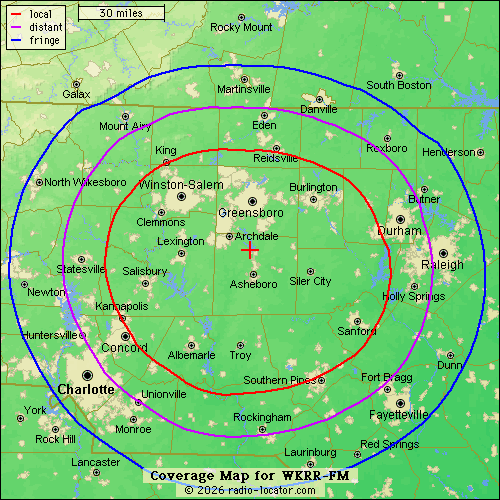
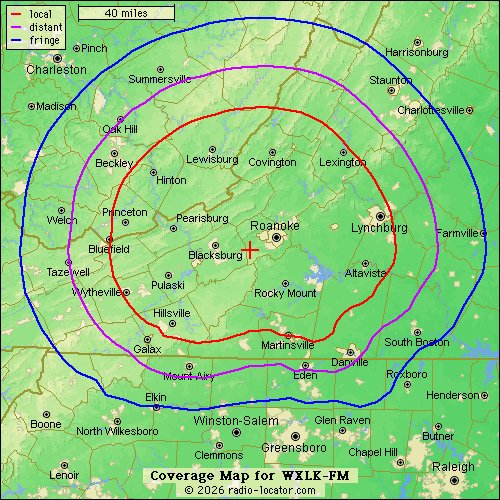
If I'm figuring this correctly, the overlap of the predicted 60 dBu contours of the two stations includes about 13 counties. The overlap even includes downtown Winston-Salem, so WKRR has to battle it out with WXLK in one of the major cities in its own market.
How does this comply with the short-spacing rules? I don't see how it can.
(I'm pretty sure WXLK's tower is on Poor Mountain, while WKRR's is a few miles south of Greensboro.)
This is even worse than the 92.9 stations in Lexington and Dayton jamming each other out in Cincinnati.
They're both Class C on 92.3, and in markets that are almost adjacent to each other. (I'm assuming both stations still target the same markets that they did a few years ago.)
If I'm figuring this correctly, the overlap of the predicted 60 dBu contours of the two stations includes about 13 counties. The overlap even includes downtown Winston-Salem, so WKRR has to battle it out with WXLK in one of the major cities in its own market.
How does this comply with the short-spacing rules? I don't see how it can.
(I'm pretty sure WXLK's tower is on Poor Mountain, while WKRR's is a few miles south of Greensboro.)
This is even worse than the 92.9 stations in Lexington and Dayton jamming each other out in Cincinnati.