• Get involved.
    We want your input!
    Apply for Membership and join the conversations about everything related to broadcasting.

    After we receive your registration, a moderator will review it. After your registration is approved, you will be permitted to post.
    If you use a disposable or false email address, your registration will be rejected.

    After your membership is approved, please take a minute to tell us a little bit about yourself.
    https://www.radiodiscussions.com/forums/introduce-yourself.1088/

    Thanks in advance and have fun!
    RadioDiscussions Administrators

Biased terminology on KTRH

Status
Not open for further replies.
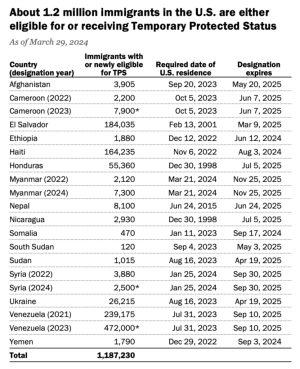
I think we've beaten this horse to death. The thread is no longer about broadcasting and is now almost exclusively about immigration.
It's about how broadcasters cover the subject, which a majority of registered voters consider significant to the upcoming elections.
Usually I wouldn't mind such a thread. But since this is a discussion based on opinion rather than facts, there are no right answers. The only thing this will cause is endless arguments.
1712557418721.png
Time to lock this thread.
We are still discussing whether the KTRH staffer was offensive or factual, and that depends on ones political alignment.
 
We are still discussing whether the KTRH staffer was offensive or factual, and that depends on ones political alignment.

The bad part of this is that WE are discussing it. This is the kind of discussion that SHOULD be happening at KTRH. At one time, it was the kind of conversation that DID happen in newsrooms. I remember that happening. What do we say, and how do we say it. Because its our f-ing JOBS to have that discussion. What Mark Roberts was alluding to in his first post is that one station in Colorado actually DID have that conversation. Maybe that willingness to think and talk about the process is core to being a journalist.
 
The bad part of this is that WE are discussing it. This is the kind of discussion that SHOULD be happening at KTRH. At one time, it was the kind of conversation that DID happen in newsrooms.
That is a very good point. At Radio 10 in Buenos Aires, after the morning news and information block, we'd have a "recap meeting". Did we overdo anything? Did we miss details on any subject? What should be prepped for tomorrow based on today's show? What should be an ongoing subject in newscasts the rest of the day? And more.

This was a big meeting, as the morning show had 7 live talents and a reporter / writer staff of about 20. Also there were the news people that would cover news in the breaks in the talk shows the rest of the day. And, when I was in Bs. As., there would be me and the news director and sometimes the manager.

Terms to be used, such as a "yes/no" on people's nicknames and charged or polarizing terms were visited if anything had changed. There was always a discussion of how to describe the Peron-named party and movement which was always as charged as MAGA terminology in the US. There was no written style sheet, as there was a fear that it would circulate externally and cause misinterpretation.
I remember that happening. What do we say, and how do we say it. Because its our f-ing JOBS to have that discussion. What Mark Roberts was alluding to in his first post is that one station in Colorado actually DID have that conversation. Maybe that willingness to think and talk about the process is core to being a journalist.
I agree, but depending on the root or core values of the station or network, the terminology might be very different.

Returning to the current case:

Blue-leaning news focus: "undocumented immigrants" or even "refugees".
Red-leaning news focus: "illegals" or "illegal immigrants".

This made me think of the difference in writing, particularly by staff editorial writers, back in the day of the Herald Tribune and the New York Times. Both targeted the more educated audience segment, but one leaned right and the other was centrist with a slightly New York liberal slant.

 
I agree, but depending on the root or core values of the station or network, the terminology might be very different.

The person who wrote the story didn't consult a stylebook or even his GM or PD. He just wrote it and delivered it on the air. So it's not the values of the station or the company, but the values of the newscaster. That's when there's a problem. No consultation, no approval process, no thought, just someone's personal opinion being put on the air. That's not real journalism, that's opinion writing. Someone along the line should have asked: Is that really what happened or is there bias here?

One old example is All The President's Men. The number of people involved in the editorial process was astounding, including attorneys who are there to protect the company from lawsuits. This is what didn't happen in this case.
 
The person who wrote the story didn't consult a stylebook or even his GM or PD. He just wrote it and delivered it on the air. So it's not the values of the station or the company, but the values of the newscaster. That's when there's a problem. No consultation, no approval process, no thought, just someone's personal opinion being put on the air. That's not real journalism, that's opinion writing. Someone along the line should have asked: Is that really what happened or is there bias here?

One old example is All The President's Men. The number of people involved in the editorial process was astounding, including attorneys who are there to protect the company from lawsuits. This is what didn't happen in this case.
Do we know that such an evaluation did not occur? It's possible that the station simply decided to call such migrants by the term most used by its listeners. Perhaps they said, "don't call them wetbacks" but did say "don't use terms that make those people seem justified in coming across the border."
 
Do we know that such an evaluation did not occur? It's possible that the station simply decided to call such migrants by the term most used by its listeners. Perhaps they said, "don't call them wetbacks" but did say "don't use terms that make those people seem justified in coming across the border."

What kind of editorial staffing do they have at that time of day? How often do they use the term? Once again, not just illegals, but 'hordes of illegals.' That combination of words forms a picture.
 
One newscaster’s "raging terrorists" can be another’s "freedom fighters."
Both could be accurate depending on their point of view.

Inserting one's point of view in reporting means you're also foisting it on the public.

The question journalists should ask is how do you tell the story without changing the story?

The way it's done online is with references. If you say something is a horde, how do you document that?

I've worked with both journalists and commentators. The latter group give opinions. The former does not.
 
But the most effective transport methods are mules as well as ATVs in unpatrolled areas. We interviewed one smuggler some years back and they said "all that talk about planes and submarines is nonsense. Humans are low cost and expendable and we can send thousands of low risk packages that way and never lose a large shipment."
What a charmer!

Were it not for his background as a distribution and logistics expert in the illicit drug trade, he would be a visiting professor at say the Chicago Booth School of Business. They love to hear from him!

 
Inserting one's point of view in reporting means you're also foisting it on the public.

The question journalists should ask is how do you tell the story without changing the story?

The way it's done online is with references. If you say something is a horde, how do you document that?

I've worked with both journalists and commentators. The latter group give opinions. The former does not.
You got it!!! I hate news du Jour.

Could this be Heritage Foundation Media Stylebook for companies with a nativist audience?:
Invasion
Hordes of illegals
Invading hordes of illegals
Conquering hordes
Waste material

The slang or reportive meaning of hoard:

If you describe a crowd of people as a horde, you mean that the crowd is very large and excited and, often, rather frightening or unpleasant.

Just the facts please from u 4th and 5th estates, it would be like having an adult back in the room.

Opinions must be separate from the news. for example:
||||||||| It's a total tragedy. The wall probably is the answer. California is all walled up now and has been for many, many years, long before a certain loud mouth entered the picture, most of Arizona is, most of New Mexico, and then there is the Rio. Hey, wall up Texas. Size matters in terms of numbers. |||||||||
 
Last edited:
The bad part of this is that WE are discussing it. This is the kind of discussion that SHOULD be happening at KTRH. At one time, it was the kind of conversation that DID happen in newsrooms. I remember that happening. What do we say, and how do we say it. Because its our f-ing JOBS to have that discussion. What Mark Roberts was alluding to in his first post is that one station in Colorado actually DID have that conversation. Maybe that willingness to think and talk about the process is core to being a journalist.
How is the management structure at KTRH? Is there any local management to speak of, or is it all hubbed from other markets like WLW management in Cincinnati oversees WTAM's newsroom in Cleveland? If you don't have that direct local oversight, you lose a lot.
 
I've worked with both journalists and commentators. The latter group give opinions. The former does not.
I cancelled my New York Times subscription last month precisely because it persisted in inserting adjectives and terms that colored stories to make events and persons seem "good" or "bad".

"A joyful Bob Politico greeted a big crowd outside City Hall."
"An emotional Bob Politico excited the gathered mob outside City Hall."
 
California is all walled up now and has been for many, many years, long before a certain loud mouth entered the picture, most of Arizona is, most of New Mexico, and then there is the Rio. Hey, wall up Texas. Size matters in terms of numbers. |||||||||
There are huge stretches of border east of Tijuana and west of Mexicali that have no wall, and there are also large areas between Mexicali and San Luis Río Colorado that have no wall as well.

The same thing is true all along the Arizona border except areas near border crossing points. Same in NM, too.
 
There are huge stretches of border east of Tijuana and west of Mexicali that have no wall, and there are also large areas between Mexicali and San Luis Río Colorado that have no wall as well.

The same thing is true all along the Arizona border except areas near border crossing points. Same in NM, too.
Interesting. Not long ago I did a Google cam/satellite trip from Pacific to El Paso area, it looked different, but I have never personally gone to those areas.
 
I cancelled my New York Times subscription last month precisely because it persisted in inserting adjectives and terms that colored stories to make events and persons seem "good" or "bad".

"A joyful Bob Politico greeted a big crowd outside City Hall."
"An emotional Bob Politico excited the gathered mob outside City Hall."
The reporter's indulgence or conformity makes it so irksome to listen to or read news. I mostly prefer the Great God Two-Side.
 
Driving back through Houston this afternoon, I tried getting weather and traffic reports from KTRH. It turns out that, in my opinion, KTRH does a bad job with those service elements. Traffic reports were skimpy and did not cover much at all; the weather forecast was brief and only covered the afternoon and not what was forecast for the evening. I believe the root cause is that not enough time is allotted to those service elements when you take into consideration the market. I expected better, but probably shouldn't have, considering everything else.
 
I cancelled my New York Times subscription last month precisely because it persisted in inserting adjectives and terms that colored stories to make events and persons seem "good" or "bad".

"A joyful Bob Politico greeted a big crowd outside City Hall."
"An emotional Bob Politico excited the gathered mob outside City Hall."
Removing the line between 'news' and other programming or printed matter and opinion is a business decision. NYT lost you has a customer but probably retains more than they loose by having their saliva test of purity for all things printed or in the case of broadcast stations the programs. Once that starts it's hard to see how it can be stopped. Newspapers have been notorious for this since the founding of the republic, publisher's bias and community norms. Broadcasting post WWII not so much so until deregulation. Love those Murrow boys.
 
Fortunately, Houston Public Media's KUHF offers a reasonable alternative, and seems to be firmly grounded in the coverage of local issues.

You might find this article written yesterday by a (likely soon to be former) senior editor at NPR illuminating:

I’ve Been at NPR for 25 Years. Here’s How We Lost America’s Trust.

In a nutshell, he acknowledges and outs pervasive political bias at NPR, much of which manifests as the news they don't report - bias by omission.

Given that so much of KUHF's daily programming comes off the NPR bird, I would posit that KUHF offers an alternative, but only if you're looking for one with a pronounced liberal bias. The local KUHF programming I have followed is indistinguishable from NPR's when it comes to national politics.

So while KTRH is perhaps using politically charged language in their reporting, I don't find it all that concerning. Nobody who listens to KTRH (or any of the iHeart right-wing talk stations nationwide) expects unbiased reporting.

What happens on KUHF and other NPR member stations nationwide is much more concerning. They have a razor thin veneer of journalistic integrity, which is being permeated by liberal ideological advocacy. They attempt to project an image of unbiased, just the facts journalism, when their actual product doesn't reflect that.

NPR, and KUHF by extension, is a steady diet of news being presented through a far left filter.

To assert that they represent objective journalism in 2024 is simply disingenuous, as Uri Berliner points out in the Free Press.
 
Removing the line between 'news' and other programming or printed matter and opinion is a business decision. NYT lost you has a customer but probably retains more than they loose by having their saliva test of purity for all things printed or in the case of broadcast stations the programs. Once that starts it's hard to see how it can be stopped. Newspapers have been notorious for this since the founding of the republic, publisher's bias and community norms. Broadcasting post WWII not so much so until deregulation. Love those Murrow boys.
A newspaper is a tough critter to control.

My stepbrother was publisher of one, and he just recently passed:


Not all papers are biased, but in a world of polarization it is hard not to be accused of "taking sides". Complicating this is the fact that since the 60's and 70's, most cities in the US of any size only had one paper. Before that, people read the paper that best reflected their perspectives.
 
Last edited:
Status
Not open for further replies.


Back
Top Bottom