I am not focused on AM. I am suggesting using it as a testing ground to try something new for broadcast radio overall
How do you test whether a format will work on a band that has an audience (FM) by trying it on one that really doesn't anymore (AM)?
I was listening to radio in 1987 - a long time ago - and yeah, ya got me - it was Ed McLaughlin who put Rush on the national scene. Forgive me for a hazy memory. But ABC Talkradio had 56 stations when Rush started, I think. From a radio exec's perspective, I'll bet they thought it was not successful. WABC certainly had their misgivings, as I recall they had some kind of deal that Rush did a 'free' two hour local show before his national one, and initially, I am not sure they even carried that.
Rush did two hours replacing Owen Spann on ABC Talkradio, preceded by two hours local on WABC that WABC did carry. That was part of McLaughlin's original deal, giving Rush immediate clearance in market #1.
The point is/was somebody took risks to see if a new DAYTIME national talk could be viable. And I would wager that what Rush did/said was unlike anything previous. Smart money back in 1988 would have said no.
And again, you're ignoring the AM radio landscape in 1988. The trouble with Talkradio was that it essentially erased an affiliate's identity--it took over the station for most if not all of the day, and that Michael Jackson was entirely too urbane for the vast majority of the country (hell, he was too urbane for anything outside of L.A.'s Westside).
There was a huge market for allowing stations trying to morph out of Adult Contemporary or Full Service formats to choose their talk programs a la carte. A friend of mine worked with Ed on the Rush project and I got briefed on it months before it launched. The potential was obvious.
Three months before Rush launched, this was in R&R:
I think too many people are focusing on AM or 560 as the reason to try something like this. I am thinking bigger picture, for broadcast radio - FM radio - and the future.
Here's what you said---in this thread about 560---20 days ago:
While a lot of this programming is dated, many shows I see at the Internet Archive could be considered timeless. Science Fiction, Radio Plays of Famous Books, Radio Plays of Classic Movies are some of them. Then there are dated shows that are classics in themselves - The Jack Benny and Your Money or Your Life episode (I'm Thinking It Over). This would appeal to older audiences, but that is who is listening to AM radio anyway, so play to your audience. It might be inexpensive to try, and for stations that are left being the third or fourth sports talker in town, it might get better ratings.
The idea of old time radio is that it would be available cheap - money is something radio does not have to experiment with.
Right, and we keep explaining the costs beyond programming that are baked into broadcasting on a real honest-to-God radio station.
560 is/was a decently powered station. Antioch Radio is on a 100 watt signal - it is essentially internet radio. While I would think it is decently successful for the size it is, it is not a real test of something on a real broadcast platform. You wouldn't (at least I wouldn't) blow up an FM music station that is performing well to experiment. Entertainment 560 wouldn't be expected to be in the top 10. But would it do better than .1? More important, would experienced radio people be able to see the results and determine if investing money in this new format with modern programming would be worth it?
With the goal of doing better than an 0.1? And then what? Moving a format that (let's be generous) gets an 0.3 on AM to FM so it can get....what? Double that would be a 0.6. And it's not going to do that because it's completely out of sync with the audience that's on FM.
The only thing less viable than OTR on AM in San Francisco in 2026 is OTR on FM in San Francisco in 2026.
Unless you had let Rush try his schtick, you would have never known
You make it sound as though Rush was untested. He blew the roof off KFBK in Sacramento for
four years before Ed cooked up the syndication deal.
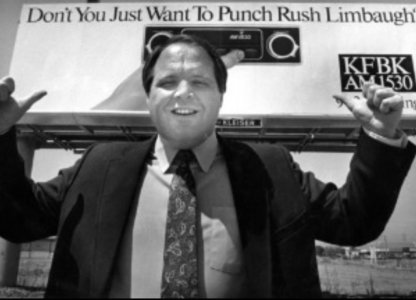
Dude was all about attention-getting and self-promotion. He was a natural.
People keep focusing on 65+ year old programs. For today's average 40 year old, I bet they have never heard them - for that audience they would be new.
Didn't we cover this with the TCM analogy?
Come to think of it, there are in some of the OTR radio catalogues I have lying around, new radio mystery type programs. For me, those would be new. Can I go buy the CD's for them? I sure could. But the ability to hear them on the radio would be easier as I am driving around.
You already can:
Classic dramas, mysteries, comedies, & more from the Golden Age of Radio like The Shadow, Dragnet, Burns & Allen, and Jack Benny

www.siriusxm.com
And the producers of those shows would probably be agreeable to the exposure broadcast could give them.
The producers of those shows would probably be dead.
I would bet there are a lot of people for who the current offerings on radio don't grab them, and even if they do like the music, the over commercial'd broadcast hours are shoving them to the internet.
So lemme see if I follow...music lovers alienated by commercials who have left FM radio for the infinite variety and choice of streaming can be lured back to AM radio by playing spoken word programming from 1932 to 1962.
I am suggesting try something new, and with the idea I have for 560, it could be tested for not too much money.
Again, shows that were on the radio between 64 and 94 years ago aren't "something new", and there are fixed costs to broadcasting that don't square with "not too much money".
An experienced radio programmer here has stated that he is in the advertising business, not the entertainment business. But if the audience goes away to the internet, isn't he losing the opportunity to advertise to them?
Not if he goes where the ears are.
Are the revenues on I-Heart and Audacy apps smaller than broadcast radio?
Presently, yes.
Isn't the big money on OTA?
The once-big and rapidly declining money.
Don't give up the ship - alter the course.
The ship is FM. The listening levels on AM are too low to be a meaningful indicator of whether a format might work if transplanted to FM.