Thanks for your clear summary of how hard it is to break even or even make money with a big city AM only radio station. When I worked in small town radio while in college in the 70s, many of my colleagues and I dreamed of owning a radio station when we got older. I’ve found it interesting that big city radio talentl of the 70s sometimes bought small radio stations in towns with under 100,000 people. Even back then, I learned that without great financing, it was tough to buy and hold a profitable radio station. I know one person, who did that with great FCC connections in the 1950s, but I think that’s pretty rare.Jumping back to 560 (this is a thread about 560 🤣), one of the things I do as a station broker is to help new entrants to get a realistic sense of what it would cost to operate a station they're looking at.
I obviously don't have any proprietary information about 560, but I can make some good guesses about what a bare-bones operation would look like.
We know rent is expensive in the Bay Area. Could you get by without a physical studio? Legally, yes. With a modern automation system, you could originate programming from anywhere and run your station from the cloud for a few hundred dollars a month. You still need at least some hardware at the transmitter end to monitor and connect to that cloud-based automation. That's a few thousand in immediate expenses. You'll also need some sort of traffic software and licenses for other business software (accounting, invoicing, etc)
Are you playing any music at all, even as bumpers? You need to pay the rights agencies, probably into the four figures a month.
You're probably looking at a few thousand a month in power bills. You can't avoid that.
You need a stream and a website and a social media presence. That's a few hundred a month for the technology - but who's actually providing content?
So now we're into staffing and that's where operating 560 really starts adding up in costs. Nobody works cheap in the Bay Area, nor should you be asking them to. At a bare minimum, you need a full time operations manager/GM, at least one sales person (but probably more!), at least a contract engineer on retainer (plus a lawyer and an accountant and HR!) and if you're going to have programming that's compelling for listeners who have plenty of other choices, you need programmers and talent. And how are people going to find you? You need someone to do promotions and marketing and social media.
Figure 8-10k a month for every FT staffer you hire. And unlike the big clusters, you're a standalone station and you can't spread those expenses across multiple stations.
Then you have FCC regulatory fees, local taxes and business fees, insurance, and, oh yeah, we haven't paid tower rent yet!
Realistically? The lowest you MIGHT be able to go here, with no physical studio and maybe 3 FT staffers, is probably an outlay of $40-50k a month, for a bare-bones operation that's not generating much original content.
Can you make that much back in ad sales, if you're commercial, or in underwriting if you're not?
Do you have the cash to pay all those bills from day one while you wait for an audience to find you so you have something to sell to advertisers?
If not, how fast do you run out of money and have to shut down again?
If you're a rich person doing this for fun, is half a million dollars worth it to you if you're not bringing in income for your first year?
And if by some dumb luck or super clever strategy you DO find something new that works, what's your plan for when iHeart or Bonneville copy your brilliant new format on one of their FMs?
I realize this makes it sound like owning a radio station is a fool's errand. It's not - but under different circumstances, it certainly can be done. You just have to do it in less competitive and less expensive markets, ideally where you can acquire an existing station that isn't starting you from scratch.
This is also why nobody would take something like 560 "as a donation." It's a pretty expensive donation!

-
Get involved.
We want your input!
Apply for Membership and join the conversations about everything related to broadcasting.
After we receive your registration, a moderator will review it. After your registration is approved, you will be permitted to post.
If you use a disposable or false email address, your registration will be rejected.
After your membership is approved, please take a minute to tell us a little bit about yourself.
https://www.radiodiscussions.com/forums/introduce-yourself.1088/
Thanks in advance and have fun!
RadioDiscussions Administrators
You are using an out of date browser. It may not display this or other websites correctly.
You should upgrade or use an alternative browser.
You should upgrade or use an alternative browser.
560
- Thread starter K108 Sacramento
- Start date
I would suppose that, at the least, back then good financing for radio was easier to come by because it was still considered to be an important and sensible investment, unlike now. Nowadays, it's considered foolish to invest in traditional AM/FM radio because the writing's been on the wall ever since the Internet became a viable streaming platform.Even back then, I learned that without great financing, it was tough to buy and hold a profitable radio station.
c

I’ve found it interesting that big city radio talentl of the 70s sometimes bought small radio stations in towns with under 100,000 people. Even back then, I learned that without great financing, it was tough to buy and hold a profitable radio station. I know one person, who did that with great FCC connections in the 1950s, but I think that’s pretty rare.
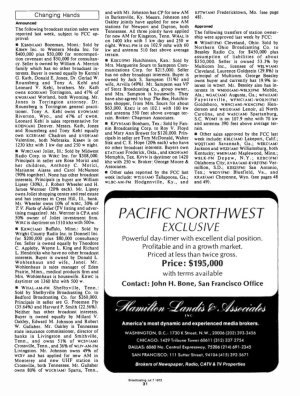
Hey, in the 70s, an AM station in a town of 100,000 people or less wasn't that expensive. Not that hard to make back the money and get in the black if you knew what you were doing:
Not to mention that I believe the BBC charges stations/networks fees to carry their programming...I can't say that I would expect either to generate enough listenership for ad sales to even pay the 560 electric bill, let alone even one staffer to supervise it.
Correct, there is a fee for carrying BBCWS. Still free for streaming on its website. I assume SiriusXM pays for its carriage.Not to mention that I believe the BBC charges stations/networks fees to carry their programming...
The BBC put its news website behind a paywall about six months ago, and is actively monetizing other output.

K.M. Richards
Program Director, The Eighties Channel™
It's nice to have a decent income that pays your bills with a good, comfortable margin for saving, investing, etc., especially nowadays.
You hit that right on the head. I have a very healthy investment account, a money market account in the five figures (liquid for emergencies, and the credit union has a better interest rate than I would get elsewhere) and a high-yield savings account with a current interest rate above 4%. I also have a FICO score in the 800s and my total credit limit across all my cards is higher than the balance in the MM account.
Money is not something I spend time worrying about. Which makes it even more fun to be doing what I love.
Hey, in the 70s, an AM station in a town of 100,000 people or less wasn't that expensive. Not that hard to make back the money and get in the black if you knew what you were doing:
Keep-in-mind that $120,000 in 1975 is a little north of $750,000 in today's dollars. It has a translator, but I doubt KFYN 1420 would fetch even $120,000 today.
Interesting to think that a 100,000 watt FM that's now essentially a Wichita station went for $215,000, though. I know AM was still king in Wichita at the time, but, even in 1975 dollars, that was a great deal.
Keep-in-mind that $120,000 in 1975 is a little north of $750,000 in today's dollars. It has a translator, but I doubt KFYN 1420 would fetch even $120,000 today.
Interesting to think that a 100,000 watt FM that's now essentially a Wichita station went for $215,000, though. I know AM was still king in Wichita at the time, but, even in 1975 dollars, that was a great deal.
No---absolutely---adjusted, it's a chunk. But there were good odds of making it back. Unless the town was depressed, the facility was substandard or the management were idiots, the banks probably saw it as a good risk.
If we're talking towns of fewer than 100,000 people, you had (in most cases) a still-vibrant local ad base, agency buys in towns of 50,000 or more (I heard them in towns of 30,000), lower real estate costs, lower salaries, lower promotion costs, an audience that still listened to local radio, and---especially in the mid-70s---the advent of nearly flawless automation systems that could put a good sound on the air and keep overhead low.
Last edited:
In addition, Cumulus saw how the 560 audience failed to make the change to the new frequency. Even with a far better signal. You can make the argument that the audience for that format is dying off, and that's very true. But the drastic drop associated with the frequency change can't be denied. Also, 1050 may be very inexpensive to operate. I know it's located on land that used to be a landfill and will likely never be developed.All of this and maybe more, I'm still curious why the programing on KNBR 1050 didn't move either to 560 or 810 and keep KFSO as it was. Tells me there may be a problem at the tower site and it's just not worth it to fix
Dave B.

It's not like the old days when a frequency change in a large market would have a large ad campaign to get the word out. Using TV ads billboards, sides of city buses, bus benches/shelters, as well as on air promotional contests involving the new frequency.In addition, Cumulus saw how the 560 audience failed to make the change to the new frequency. Even with a far better signal. You can make the argument that the audience for that format is dying off, and that's very true. But the drastic drop associated with the frequency change can't be denied. Also, 1050 may be very inexpensive to operate. I know it's located on land that used to be a landfill and will likely never be developed.
Dave B.
That kind of advertising budget is long gone. Now, they just hope to get the word out with an on air mention.
That's the real problem these days in trying to move the audience over to a new frequency....getting the word out.
It's not like the old days when a frequency change in a large market would have a large ad campaign to get the word out. Using TV ads billboards, sides of city buses, bus benches/shelters, as well as on air promotional contests involving the new frequency.
That kind of advertising budget is long gone. Now, they just hope to get the word out with an on air mention.
That's the real problem these days in trying to move the audience over to a new frequency....getting the word out.
Let's remember that, in fact, the numbers went up after the move---this is from me, a few weeks ago:
Cumulus almost pulled off the move from 560 to 810. They had a 1.8 in the last full book before the simulcast. In the first month after 560 went dark, they had a better number on 810---a 1.9.
There is no evidence to suggest that the 560 audience didn't move to 810. But the share has dropped every month since then and the trend since July is 1.5-1.3-1.2-1.1-0.8-0.7.
And now, 0.6.
I stand corrected. Sorry, Michael. For some reason I thought 560 had better numbers before the move.Let's remember that, in fact, the numbers went up after the move---this is from me, a few weeks ago:
Dave B.
I stand corrected. Sorry, Michael. For some reason I thought 560 had better numbers before the move.
Dave B.
No apologies necessary, Dave---I had to go look it up.
That's a lot better than what KNEW has been able to do since the move from Bloomberg to Talk. I have yet to see 960 even get a 0.1 since that flip.Let's remember that, in fact, the numbers went up after the move---this is from me, a few weeks ago:
And now, 0.6.
Talk radio on AM is just plain dead in the SFBA.
That's a lot better than what KNEW has been able to do since the move from Bloomberg to Talk. I have yet to see 960 even get a 0.1 since that flip.
Talk radio on AM is just plain dead in the SFBA.
You might be able to strike "talk" from that line. If you take KCBS and KNBR out of the conversation because they have FM simulcasts but single-line reporting that doesn't break out how many are on which band, the number one AM station is KSFO at 810.
With a 0.6.
KSRO in Santa Rosa has an 0.4, but they have an FM simulcast (actually, I think two FMs).
The next AM with no FM simulcast is then 1050. And it has a 0.2
No other AM even shows up.
BIN on KKSF is another no-show, although last month they did show up (0.1). For iHeart to have 2 AM's that are ratings no shows is unusual for them, as they don't seem to normally tolerate a situation like this. BIN would be the exception, as we know the purpose of it, and financial backing it receives to stay on the air.You might be able to strike "talk" from that line. If you take KCBS and KNBR out of the conversation because they have FM simulcasts but single-line reporting that doesn't break out how many are on which band, the number one AM station is KSFO at 810.
With a 0.6.
KSRO in Santa Rosa has an 0.4, but they have an FM simulcast (actually, I think two FMs).
The next AM with no FM simulcast is then 1050. And it has a 0.2
No other AM even shows up.

In either case, I don't think it's going to make a whole lot of difference with folks who believe they've received a revelation and are simply not persuadable.But as you note---those are professionals, coming in with knowledge and respect for what the facilitators and other professionals in the room have to say. They're not going to complain that people just didn't get it when their response to a situation fails.
Which is why I'd like a simulator they can use at home that tells them when the station isn't working:
When it's in freefall:
And when it's game over.

Remember that the virtual plethora of Asian language stations don't subscribe and some don't encode. However, the biggest issue is that Nielsen has no quotas or goals for any part of that group so it is hit or miss on even finding such listeners in the current methodology.No other AM even shows up.
Well, at the very least, it would be a fun learning tool for aspiring radio people to play with!In either case, I don't think it's going to make a whole lot of difference with folks who believe they've received a revelation and are simply not persuadable.
c
When I call up the KSRO website, here's the logo I see:KSRO in Santa Rosa has an 0.4, but they have an FM simulcast (actually, I think two FMs).
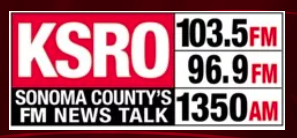
Notice the slogan: "Sonoma County's FM News Talk".
(On the right side, the frequencies are listed: "103.5 FM, 96.9 FM, 1350 AM". That plus the slogan plus big "KSRO" call letters comprise the entire logo.)
Yes, "FM News Talk". If that doesn't tell you that the AM (which has halfway decent coverage) has taken a back seat to the FM translators, I don't know what will.
For what it's worth, KTCT is on an HD subchannel of KSAN. (So is KSFO.)The next AM with no FM simulcast is then 1050. And it has a 0.2
No other AM even shows up.
Yeah, I know, HD.