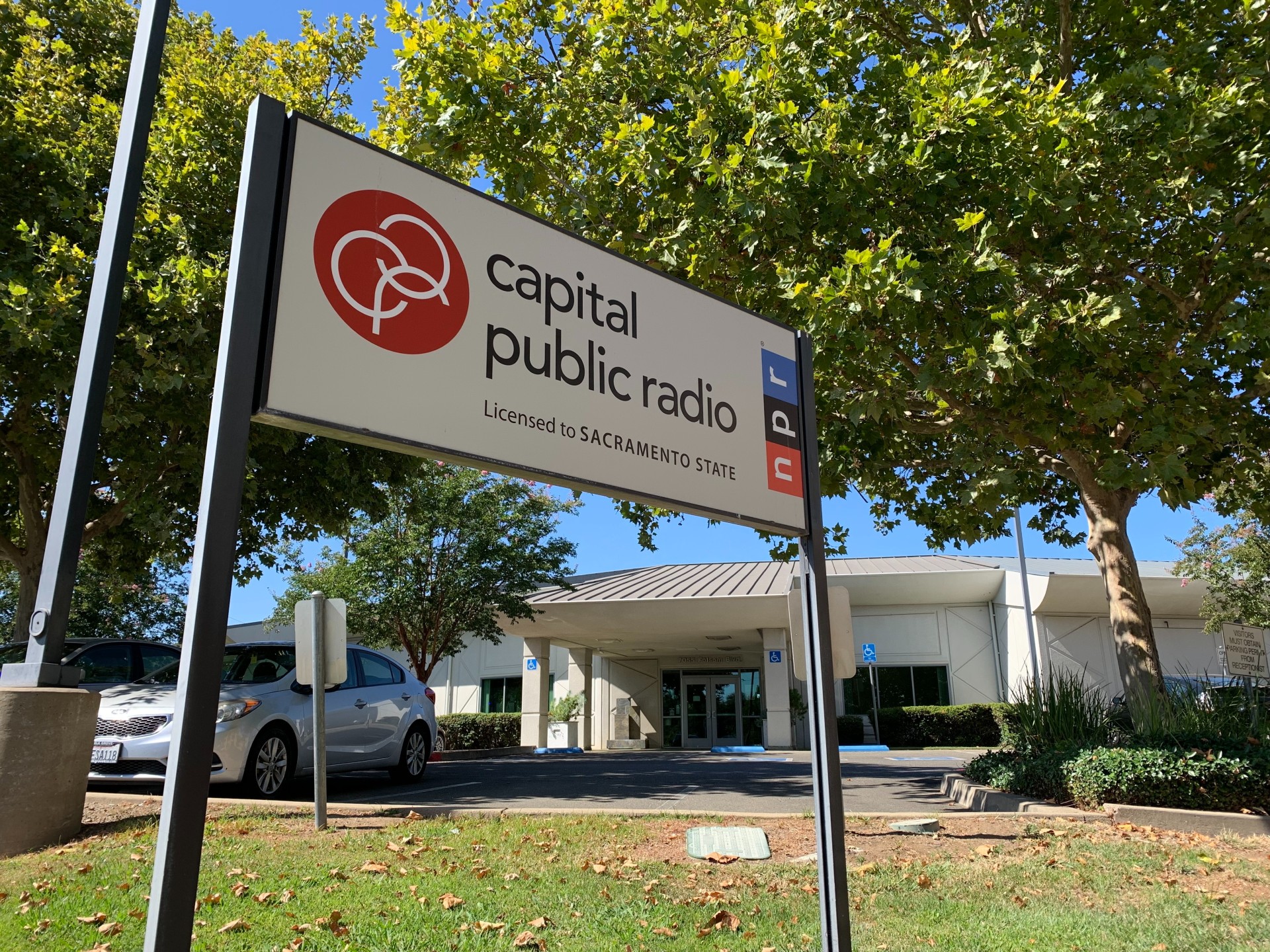
I highly doubt that an entity with a budget of 21 million dollars would go under, especially under the ownership of a state university.
Sacramento State University has announced that Capital Public Radio is expected to run out of financial resources by January 2024.

radioink.com
As I mentioned in an earlier post, that can keeps getting kicked down the road---the last estimate I heard was May, and I've been gone two and a half months, so hopefully, there's some progress.
A lot is still unknown, though---and a clear picture of the financial status of CapRadio is dependent on the forensic audit, which, according to the Sacramento Business Journal, is expected to be released this month (April).
It would be outlandish for KQED to buy CapRadio into a repeater of KQED. I cannot think of any top 30 urban area where the NPR station is a satellite of an out of Market signal.
We're barely there---Nielsen's new rankings show Sac slipping from #28 to #29.
West Palm Beach comes to mind which is one of the few top 50 markets where they rebroadcast a larger market NPR. But then again, Miami and Palm Beach is actually one “Metro Satistical Area” in two DMAs and radio market, albeit a narrow and long metro.
Bay Area media generally ignores Sacramento local traffic and news. When KQEI first started, they would have separate weather and traffic reports in drive times. I remember living in the Bay Area and hearing local friends complain they didn’t like hearing Sacramento traffic being included when they broke the separation during pledges.
If this were to happen (and again, BIG if), 'QED would probably make some gesture toward Sac in terms of traffic and weather. It's fairly easy to set something like that up. Until a few weeks before I retired, we ran separate funding credits in certain hours in Sac, Stockton and Tahoe. You can do that with traffic and weather, too.
As it is now, CapRadio doesn't do traffic at all, and weather is an ad-lib mention by hosts, not a scheduled event on the clock.
After living in both places for years, it is clear that they while Sacramento is getting more sophisticated, it’s in now way anything like the Bay Area culturally.
KQED and CapRadio are currently duplicating programming (BBC World Service and Morning Edition) from 11:00 p.m. to 9:00 a.m. and from 4:30-7:30 p.m. weekdays (minus local newscasts on both stations and traffic on KQED).
KQED has "Forum" from 9:00-11:00 a.m. while CapRadio runs "Here & Now" in that timeslot.
KQED airs "Here & Now" from 11:00 a.m.-1:00 p.m., while CapRadio runs "1A" (not carried by KQED) from 11:00-12:00 noon and its live local talk show "Insight" from noon to 1:00 p.m.
KQED splits "All Things Considered", airing an hour from 1:00-2:00 p.m., followed by "The World" (which CapRadio dropped in Januar) from 2:00-3:00, "PBS NewsHour" (not carried by CapRadio) from 3:00-4:00 and "Marketplace" from 4:00-4:30, before returning to "All Things Considered" from 4:30-6:30.
CapRadio carries the BBC Newshour from 1:00-2:00, "Marketplace" from 2:00-2:30, and then an uninterrupted four hours of "All Things Considered from 2:30-6:30.
Both KQED and CapRadio run "Marketplace" again at 6:30.
KQED airs "Fresh Air" at 7, while CapRadio replays "Insight".
CapRadio airs "Fresh Air" at 8, and BBC Newsday from 9-11, while KQED replays "Forum" from 8-10 and has a rotating schedule of one-hour shows ("On Shifting Ground", "City Arts & Lectures", "Kelly Corrigan Wonders", "Commonwealth Club", "Tech Nation") from 10-11.
The vast majority of what airs is on both stations, and for 13 hours of the broadcast day, it's virtually a simulcast.