• Get involved.
    We want your input!
    Apply for Membership and join the conversations about everything related to broadcasting.

    After we receive your registration, a moderator will review it. After your registration is approved, you will be permitted to post.
    If you use a disposable or false email address, your registration will be rejected.

    After your membership is approved, please take a minute to tell us a little bit about yourself.
    https://www.radiodiscussions.com/forums/introduce-yourself.1088/

    Thanks in advance and have fun!
    RadioDiscussions Administrators

K-EARTH 101 Worst Trend EVER!

By the way, look at the variety in that Top 10. While some of those music stations share some songs, each has its own distinct format. Let's compare that with the "good old days":

Arbitron, 1985:

1. KIIS AM/FM (CHR): 9.8
2. KABC (Talk): 6.3
3. KJOI-FM (Beautiful): 4.1
3. KBIG-FM (Beautiful): 4.1
5. KLOS-FM (AOR): 3.6
6. KMET-FM (AOR): 3.3
6. KMPC (Standards): 3.3
8. KNX (News): 3.2
8. KFWB (News): 3.2
10.KROQ-FM (Modern Rock): 3.1

One CHR, two Beautifuls , two AORs, one Standards and one Modern Rock. Not to mention two all-newsers and a talk station.

Let's go back another decade:

Arbitron, 1975:

1. KABC (talk) 6.9
2. KHJ (top 40) 5.4
3. KJOI (beautiful) 5.3
4. KBIG (beautiful) 5.1
5. KDAY (r&b) 4.6
6. KMPC (AC) 4.4
7. KFWB (news) 4.1
8. KNX (news) 3.9
9. KFI (AC) 3.8
10.KLOS (aor) 3.5

A Top 40, two Beautifuls, an R&B , two ACs and an AOR. Plus the two all-newses and a talker.

Back as far as I can go:

Pulse, 1966:

1. KHJ (top 40) 9.0
1. KMPC (mor) 9.0
1. KLAC (talk) 9.0
4. KFI (mor) 7.0
4. KPOL (beautiful) 7.0
4. KRLA (top 40) 7.0
7. KABC (talk) 4.0
7. KFAC (classical) 4.0
7. KFWB (top 40) 4.0
7. KNX (mor) 4.0
7. XETRA (news) 4.0

Three Top 40s, all playing the same songs (give or take ten), three MORs, all playing the same songs (give or take ten), a beautiful, a classical, a talk station and an all-newser.

Diversity, variety and longevity are what I see when I look at the current Top 10 stations in L.A.

A couple of things to note: There were zero FMs on the 1966 list and it contained two stations that couldn't make it out of a paper bag now. KPOL was an AM on 1540 and from what I understand, 690 is just about gone completely from LA. Come to think of it, KFAC(1330)isn't much better today.
 
A couple of things to note: There were zero FMs on the 1966 list and it contained two stations that couldn't make it out of a paper bag now. KPOL was an AM on 1540 and from what I understand, 690 is just about gone completely from LA. Come to think of it, KFAC(1330)isn't much better today.

KFI and KNX are the only two with signals that fully cover the metro day and night today. Everyone else is weak somewhere.
 
Out of curiosity, where is 710 weak? It used to have a pretty good nighttime signal.

There's a null to the north to protect KIRO in Seattle. Barely makes it to Magic Mountain. It's also iffy to the east...Pomona's about it. Inland Orange County's not great, either. Most of the night signal goes out over the Pacific. But take into account that most listeners in the demo today won't put up with any fading, interference or static at all and the coverage area shrinks dramatically.
 
K M Richards is correct - thank you. The call letter change occurred in 1991, as he states. I'm sure he is also correct about their being #12 in 1995.

I do note with interest the classifying of KFI as a "mor" (Middle of the road?) station in 1966.

This was five years after Earle C Anthony's death and the "grey lady of Vermont" (Radio columnist Don Page's characterization) was being run by a trust whose trustees were from the automotive side of Anthony's business.

Was it a true"MOR" format?. I believe the station still had a Farm Bureau with ninety minutes of programming daily plus Floyd Young's frost warnings in the evening. Lohman and Barkley had displaced "Turn Back the Clock" and other morning "magazine format" shows but I believe daytime still featured Chuck Cecil's Swinging Years and Dick Sinclair's Polka Parade. As I recall the trustees gave both Dave Garroway and Robert Q Lewis (former network TV hosts) a shot at evening drive and put Bruce Wayne into the air to do traffic. Ben Hunter, assisted by Ron McCoy and George Dvorak, hosted a unique early form of talk radio called the "nite-owl club" after midnight.

The station was heavily into sports with Walter O'Malley on the ECA Board. The station was also into such gimmicks as doing Saturday evening live band remotes from multiple southern California locations. This focus on sports and remotes reflected heavy reliance on the station's historic engineering expertise. George Mason and Headlee Blatterman were both still co-chief engineers after nearly fifty years with the station and the news department was strong. But management knew that their days were numbered - color tv was all the rage with FM starting to grow. The trustees weren't the much younger than the station's founder and their expertise was in cars, not programming. KFI's Lohman and Barkley can be credited with building Longo Toyota,

I suspect the audience even then reflected an an older demographic than KNX and KMPC, but if it was a MOR format I would have to call it a unique variety. A few years later the trust sold the station to Cox. John Wesley and Biggie Nevins were imported from Florida and the station dumped both sports and its talent. Mason and Blatterman retired as did Floyd Young. Dave Starling went on to a second career at KFAC, Ned Skaff became the voice of LAX, Ben Hunter did movies on channel 11, Ron McCoy entered the ministry with a congregation in the San Fernando Valley and George Dvorak wound up on KGRB in Covina. Chuck Cecil and Dick Sinclair syndicated their programs for decades afterwards. The Dodgers moved to KABC and the Chargers/Lakers/Trojans all found new homes.

KFI was left with its clear channel frequency and a meticulously placed transmitter site - right on the border with Orange County so as to cover San Diego County and the Inland empire as well as Los Angeles. Ventura and Santa Barbara counties. Anthony, a graduate electrical engineer, and his two co-chiefs had planned well. When the sleeping giant awoke and converted to talk radio in the eighties it again became king of the AM dial. 710 (KMPC/KSPN) and KNX may also have 50,000 watts but they don't have KFI's low frequency dial position or planned out transmitter location. As David Eduardo has noted, you need that power over-the-air to overcome building structures and interference from shielded electronics of every variety.
 
Last edited:
I enjoyed listening to Jim Healy's half-hour sports program on KMPC in the 1980s-90s. "Uhhh...yeah." "Aw, that's a bunch of bull." "Oh, blow it out!" Healy was on from 5:30 to 6 pm and I could hear his show only during the months we were on Daylight Saving Time. During fall and winter, KMPC's signal was very poor in late afternoons in the northern part of Glendale. (Those twice-a-year time changes are pointless and ridiculous but that is a topic for another discussion.)
 
KFI and KNX are the only two with signals that fully cover the metro day and night today. Everyone else is weak somewhere.

And even KNX is weak and subject to noise in the Antilope Valley part of the LA market.

Runner up is 570: day signal as good as KNX, but night signal subject to co-channel interference in outlying areas.
 
David would be the right person to explain KLAX and KBUA...and for that matter, what's happened in L.A. to create a situation where there is only one Spanish-language station in the top 10 today when there were three 10 years ago.

The changes in the Spanish language stations have much to do with programming, as the number of viable stations has not changed.

There are now 5 FM Regional Mexican stations, 4 with strong morning shows (And there is a pop station with a Regional Mexican style morning show). There are now two Adult Hits stations, one with two class A signals and the other with 2 A's and a B. There is only one AC station. There are two pop stations. All of these fragment each other, leaving no well-distanced leaders.

The other change is that 10 years ago we had the diary. While non-Hispanic whites tend to think, when filling in the diary, in quarter-hours or even lesser fragments of hours, Hispanics who listen to Spanish language radio tend to round up to hours and, sometimes, half hours. So when the PPM came, the diary entry of 3 hours became 45 minutes of PPM time... and TSL crashed.

These two factors together... lower total TSL and greater compression between stations... has made many of them have ratings that are only a few tenths of a share apart.
 
Thanks for the explanation, Michael. Art, you mentioned the name, George Dvorak. That's the second time in the last week that I've run across that particular surname. I talked to this woman who said she had researched and determined that no members of the composers family had moved to America so she was not related, at least not directly. Do we know if George was?
 
I do note with interest the classifying of KFI as a "mor" (Middle of the road?) station in 1966.


This was five years after Earle C Anthony's death and the "grey lady of Vermont" (Radio columnist Don Page's characterization) was being run by a trust whose trustees were from the automotive side of Anthony's business.


Was it a true"MOR" format?. I believe the station still had a Farm Bureau with ninety minutes of programming daily plus Floyd Young's frost warnings in the evening. Lohman and Barkley had displaced "Turn Back the Clock" and other morning "magazine format" shows but I believe daytime still featured Chuck Cecil's Swinging Years and Dick Sinclair's Polka Parade. As I recall the trustees gave both Dave Garroway and Robert Q Lewis (former network TV hosts) a shot at evening drive and put Bruce Wayne into the air to do traffic. Ben Hunter, assisted by Ron McCoy and George Dvorak, hosted a unique early form of talk radio called the "nite-owl club" after midnight.

The station was heavily into sports with Walter O'Malley on the ECA Board. The station was also into such gimmicks as doing Saturday evening live band remotes from multiple southern California locations. This focus on sports and remotes reflected heavy reliance on the station's historic engineering expertise. George Mason and Headlee Blatterman were both still co-chief engineers after nearly fifty years with the station and the news department was strong. But management knew that their days were numbered - color tv was all the rage with FM starting to grow. The trustees weren't the much younger than the station's founder and their expertise was in cars, not programming. KFI's Lohman and Barkley can be credited with building Longo Toyota,


I suspect the audience even then reflected an an older demographic than KNX and KMPC, but if it was a MOR format I would have to call it a unique variety. A few years later the trust sold the station to Cox. John Wesley and Biggie Nevins were imported from Florida and the station dumped both sports and its talent. Mason and Blatterman retired as did Floyd Young. Dave Starling went on to a second career at KFAC, Ned Skaff became the voice of LAX, Ben Hunter did movies on channel 11, Ron McCoy entered the ministry with a congregation in the San Fernando Valley and George Dvorak wound up on KGRB in Covina. Chuck Cecil and Dick Sinclair syndicated their programs for decades afterwards. The Dodgers moved to KABC and the Chargers/Lakers/Trojans all found new homes.


Art:


You're a little ahead of history in some respects and behind in others on KFI. 1966 was the year KFI abandoned block programming and went after KMPC head-to-head, which actually had a larger sports commitment (Angels, Rams, UCLA). It maintained the evening frost warnings and I believe a one-hour farm report at 5 a.m., but Chuck Cecil (The Swingin' Years) and Dick Sinclair (Polka Party) were moved to weekends, at least for a time. The Nite Owl Club was cancelled. It was still a bit stodgier than KMPC, but would probably have been a model MOR otherwise. Geoff Edwards was hired for morning drive in 1966. When he left for KMPC in 1968, Lohman and Barkley (on the beach for a few months after the format flip at KFWB) replaced him. Bruce Wayne also didn't arrive until 1968.


In 1969, L. David Moorehead tried to take the station younger and more irreverent than KMPC, shifting from MOR to the 1969 version of AC. It was a bridge too far. KFI dropped from 4th with a 7.0 in 1966 to 12th with a 2.8 in 1969. KFI knee-jerked and went back to block programming, bringing Chuck Cecil's "Swingin' Years" back to weekday evenings, hiring Garroway in 1971, Robert Q. Lewis in 1972 (neither of them lasted long) and eventually adding a Country show at night.


That lasted until the Cox sale in 1973, when KFI went back to AC, told Chuck Cecil he had to play the current playlist with one "Swingin' Years" cut per hour in weekday evenings, and gave him a three-hour "Swingin' Years" weekend slot. Over the next year, KFI dumped the nighttime country show, moved Chuck out of evenings and replaced him with an 8-Midnight talk show and experimented with various DJs (including an all two-person team approach) until 1977, when John Rook began the gradual morph to Top 40.
 
Out of curiosity, where is 710 weak? It used to have a pretty good nighttime signal.

It had a good night signal before the market outgrew it. The day power is 50 kw and non-directional, but is somewhat hampered by not being in the center of the market's population. At night, at 10 kw, most of the power goes from North Hollywood (or whatever Burbank Blvd and Whitsett is) towards Malibu and the ocean. It is poor in Sylmar, bad in the Santa Clarita area and gone in the Lancaster / Palmdale part of the LA market. Out towards Pomona it is subject to noise, and anywhere inland or far south in OC is dismal... jut too far and too little signal.

Back when the market was not so sprawled out, and when noise levels were lower, they did well. Another example, right next to them on the dial, was XETRA all the way from Tijuana. It did fine (as Michael's numbers show) until noise ate it up. Now, it's not a factor as it can't be heard save a few coastal areas.


It had a good night signal before the market outgrew it. The day power is 50 kw and non-directional, but is somewhat hampered by not being in the center of the market's population. At night, at 10 kw, most of the power goes from North Hollywood (or whatever Burbank Blvd and Whitsett is) towards Malibu and the ocean. It is poor in Sylmar, bad in the Santa Clarita area and gone in the Lancaster / Palmdale part of the LA market. Out towards Pomona it is subject to noise, and anywhere inland or far south in OC is dismal... jut too far and too little signal.

Back when the market was not so sprawled out, and when noise levels were lower, they did well. Another example, right next to them on the dial, was XETRA all the way from Tijuana. It did fine (as Michael's numbers show) until noise ate it up. Now, it's not a factor as it can't be heard save a few coastal areas.

Thank you for the further explanation, David. I am surprised to learn that Lancaster is part of the LA market. I'm also surprised that 710 isn't rock solid in the daytime. I always thought they were right up there with KFI or nearly so. There isn't much hope of the rest of the stations if the 50KWers can't even cover their markets!
 
Last edited:
Thank you for the further explanation, David. I am surprised to learn that Lancaster is part of the LA market. I'm also surprised that 710 isn't rock solid in the daytime. I always thought they were right up there with KFI or nearly so. There isn't much hope of the rest of the stations if the 50KWers can't even cover their markets!

L.A. has just become so big physically...and AM signals have been so degraded by interference from....well, just about everything.

Ever since moving to Burbank Blvd. and Coldwater Canyon Avenue, KMPC has been at a disadvantage geographically...tucked away in the San Fernando Valley. If that same signal could have been coming out of towers where KFI's stick is, it would have been a big improvement.
 
This is why when the FCC talks about "saving the AM band," the only real idea they have are FM translators. If the government that owns the spectrum can't solve the problems that AM broadcasters face, then it's obvious there is no solution. Too bad, because at one time, these stations were very successful, and a lot of people enjoyed listening. Those days will never return, and it's partly the fault of the government for allowing this to happen.
 
David. I am surprised to learn that Lancaster is part of the LA market.

The market is all of LA and Orange counties. It's not unusual for markets to include a large county that is not fully covered by most of the signals... and it is less common for only part of a county to be "in" a market.

Several splits that I can think of are the portion for Fairfield Co. CT that is part of the NYC market and the part of Contra Costa County that is part of San Francisco's MSA. And, of course, there is the bizarre splitting of Riverside and San Bernardino counties into pieces that include the Palm Springs, IE and Victorville markets; the Ontario-Rialto-Rancho Cucamonga part is not in any market". Of course, this is caused in part by the huge county size of some of the southwestern and western states, going back to when population was very sparse.
 
Art:


You're a little ahead of history in some respects and behind in others on KFI. 1966 was the year KFI abandoned block programming and went after KMPC head-to-head, which actually had a larger sports commitment (Angels, Rams, UCLA). It maintained the evening frost warnings and I believe a one-hour farm report at 5 a.m., but Chuck Cecil (The Swingin' Years) and Dick Sinclair (Polka Party) were moved to weekends, at least for a time. The Nite Owl Club was cancelled. It was still a bit stodgier than KMPC, but would probably have been a model MOR otherwise. Geoff Edwards was hired for morning drive in 1966. When he left for KMPC in 1968, Lohman and Barkley (on the beach for a few months after the format flip at KFWB) replaced him. Bruce Wayne also didn't arrive until 1968.


In 1969, L. David Moorehead tried to take the station younger and more irreverent than KMPC, shifting from MOR to the 1969 version of AC. It was a bridge too far. KFI dropped from 4th with a 7.0 in 1966 to 12th with a 2.8 in 1969. KFI knee-jerked and went back to block programming, bringing Chuck Cecil's "Swingin' Years" back to weekday evenings, hiring Garroway in 1971, Robert Q. Lewis in 1972 (neither of them lasted long) and eventually adding a Country show at night.


That lasted until the Cox sale in 1973, when KFI went back to AC, told Chuck Cecil he had to play the current playlist with one "Swingin' Years" cut per hour in weekday evenings, and gave him a three-hour "Swingin' Years" weekend slot. Over the next year, KFI dumped the nighttime country show, moved Chuck out of evenings and replaced him with an 8-Midnight talk show and experimented with various DJs (including an all two-person team approach) until 1977, when John Rook began the gradual morph to Top 40.

Hmmm - Wikipedia article on KFI has Hilly Rose doing the Nite Owl show in the seventies, which I assumed was a continuation of the Hunter/McCoy/Dvorak title, although with more esoteric subject matter. Rose more recently is known for paranormal topics and has filled in on Coast to Coast. But I do recall there being another overnight host on KFI, Al "Jazzbo" Collins, who pretended to be originating from a subterranean studio in the basement of KFI when it was on Vermont (there wasn't any such thing, as anyone familiar with the original KEHE floor plan knows - just the ground level Auditorium, Blue, Coral, Diamond and Emerald studios plus a special mike in the newsroom).

I do remember the country music program - the "Red Rowe Record Show;" while liking it for the music I felt that it belonged on KLAC or KFOX, not KFi. You are correct about KMPC being the Los Angeles sports station of the time. It had been part of Gordon McLendon's ill-fated Liberty Network in the forties and the home of the Los Angeles Angels Pacific Coast League team before the Dodgers came to town. And of course they had the Rams and UCLA.But KFI had the Trojans and Dodgers and then added the Lakers, Kings and I believe the San Diego Chargers.

i wasn't tracking KFI very closely in the sixties and seventies so I apologize for my imprecision on particular dates. I believe L David Moorhead was later the general manager at KMET who notably hired a female program director and turned the FM dial on its head in the Kluge Metromedia days. i didn't know about his KFI connection. I tend to think he must have been a tad more Los Angeles market savvy than the Wesley/Nevins duo. As for John Rook, he has told the story of his dsys at KFI here: http://johnrook.com/kfi/
 
Last edited:
At night, at 10 kw, most of the power goes from North Hollywood (or whatever Burbank Blvd and Whitsett is) towards Malibu and the ocean.

Ever since moving to Burbank Blvd. and Coldwater Canyon Avenue, KMPC has been at a disadvantage geographically...tucked away in the San Fernando Valley.

You're both off by a quarter-mile. The transmitter site is at Burbank Blvd. and Bellaire Ave. a quarter mile east of Coldwater Canyon and a quarter mile west of Whitsett.

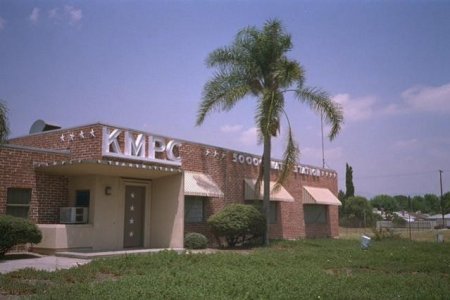
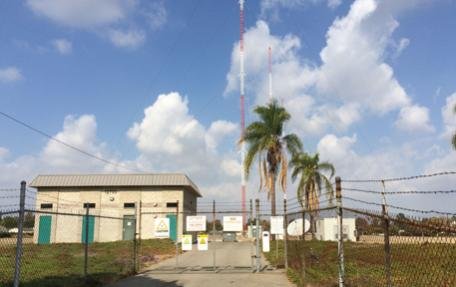
Alas, the wonderful brick building that used to house the transmitter there is no more, torn down several years ago and replaced by a nondescript metal structure:

Transmitter.jpg
Then

kmpctransmitter2.jpg
Now

(click on thumbnails to enlarge)
 
Last edited:
Hmmm - Wikipedia article on KFI has Hilly Rose doing the Nite Owl show in the seventies, which I assumed was a continuation of the Hunter/McCoy/Dvorak title, although with more esoteric subject matter.

Never trust a Wikipedia article without verifying its statements from other sources.

In the course of writing articles for the History of UHF Television website, I have found all kinds of inaccuracies on Wikipedia when I tried to verify timelines using newspaper archives, Broadcasting, etc. Since anyone can edit, there is a lot of "I don't know what happened, so this is what I think must have happened" in those articles.
 
Hmmm - Wikipedia article on KFI has Hilly Rose doing the Nite Owl show in the seventies, which I assumed was a continuation of the Hunter/McCoy/Dvorak title, although with more esoteric subject matter. Rose more recently is known for paranormal topics and has filled in on Coast to Coast. But I do recall there being another overnight host on KFI, Al "Jazzbo" Collins, who pretended to be originating from a subterranean studio in the basement of KFI when it was on Vermont (there wasn't any such thing, as anyone familiar with the original KEHE floor plan knows - just the ground level Auditorium, Blue, Coral, Diamond and Emerald studios plus a special mike in the newsroom).

I do remember the country music program - the "Red Rowe Record Show;" while liking it for the music I felt that it belonged on KLAC or KFOX, not KFi. You are correct about KMPC being the Los Angeles sports station of the time. It had been part of Gordon McLendon's ill-fated Liberty Network in the forties and the home of the Los Angeles Angels Pacific Coast League team before the Dodgers came to town. And of course they had the Rams and UCLA.But KFI had the Trojans and Dodgers and then added the Lakers, Kings and I believe the San Diego Chargers.

i wasn't tracking KFI very closely in the sixties and seventies so I apologize for my imprecision on particular dates. I believe L David Moorhead was later the general manager at KMET who notably hired a female program director and turned the FM dial on its head in the Kluge Metromedia days. i didn't know about his KFI connection. I tend to think he must have been a tad more Los Angeles market savvy than the Wesley/Nevins duo. As for John Rook, he has told the story of his dsys at KFI here: http://johnrook.com/kfi/

Al "Jazzbo" Collins brought his "Purple Grotto" with him to whatever gig he had at the time. That also included stops in New York and San Francisco.
 
Hmmm - Wikipedia article on KFI has Hilly Rose doing the Nite Owl show in the seventies, which I assumed was a continuation of the Hunter/McCoy/Dvorak title, although with more esoteric subject matter. Rose more recently is known for paranormal topics and has filled in on Coast to Coast. But I do recall there being another overnight host on KFI, Al "Jazzbo" Collins, who pretended to be originating from a subterranean studio in the basement of KFI when it was on Vermont (there wasn't any such thing, as anyone familiar with the original KEHE floor plan knows - just the ground level Auditorium, Blue, Coral, Diamond and Emerald studios plus a special mike in the newsroom).

I do remember the country music program - the "Red Rowe Record Show;" while liking it for the music I felt that it belonged on KLAC or KFOX, not KFi. You are correct about KMPC being the Los Angeles sports station of the time. It had been part of Gordon McLendon's ill-fated Liberty Network in the forties and the home of the Los Angeles Angels Pacific Coast League team before the Dodgers came to town. And of course they had the Rams and UCLA.But KFI had the Trojans and Dodgers and then added the Lakers, Kings and I believe the San Diego Chargers.

i wasn't tracking KFI very closely in the sixties and seventies so I apologize for my imprecision on particular dates. I believe L David Moorhead was later the general manager at KMET who notably hired a female program director and turned the FM dial on its head in the Kluge Metromedia days. i didn't know about his KFI connection. I tend to think he must have been a tad more Los Angeles market savvy than the Wesley/Nevins duo. As for John Rook, he has told the story of his dsys at KFI here: http://johnrook.com/kfi/

Art:

No, Hilly was hired at KFI in 1972, and picked up the "Nite Owl" title after years of disuse. In 1974, he moved to 8 p.m. to midnight and I don't believe he used the "Nite Owl" name during that show. He stayed there until early 1978, when Rook bought out his contract to complete the transition of KFI to Top 40.

The country music show I was thinking of began in 1972 and it was Bob Kingsley (who later went on to his own nationally syndicated country countdown).

In researching Red Rowe, I found a blurb in the November 2, 1968 Vox Jox in Billboard magazine, outlining a new DJ lineup at KFI. It says Pat Kelly, who'd been Program Manager since 1950, had been promoted to vice-president of operations and programming. The new lineup, effective October 18th, 1968:

6-10 a.m.: Lohman and Barkley (replacing Red McIlvane, who'd replaced Geoff Edwards just six months earlier)
10 a.m.-2 p.m.: Dave Bodington
2 p.m.-4:55 pm.: Chuck Cecil

There's no mention of what comes between Chuck and 8 p.m., but Red Rowe's "modern country music show" is listed as from 8 p.m. to 11. There's no mention of what airs between 11 p.m. and 6 a.m., either.

And stitching together references in several Billboard columns, it suggests that new GM Ed Bunker brought in L. David Moorehead as P.D. in the early fall of 1968 and that Jay Lawrence was hired to do evenings (5 p.m.-8 p.m.?), replacing Dick Sinclair's "Polka Party" . So it would seem that KFI's 1966 "modernization" backslid. It also appears Ron McCoy had been doing the Nite Owl show overnight. The December 28, 1968 Billboard says Bob Arbogast has joined KFI from KMPC.

Next is a March 15, 1969 Vox Jox column, saying that in five months, it was all over. Moorehead is already gone (to KLAC as Operations Director) and Ted Randal (former KFWB disc jockey) has been hired as a programming consultant. Randal has hired new jocks and the lineup goes:

6-9 am: Lohman and Barkley
9 am-Noon: Ron McCoy
Noon-3 pm: Dave Hull
3-6 p.m: Jay Lawrence
6-Midnight: Frank Terry
Midnight-6 am: Al "Jazzbeaux" Collins

And in the April, 1969 Vox Jox, it's noted that Marc Denis from KGB, San Diego had been hired as KFI's new Program Director.

But it didn't last long. Frank Terry was gone within a year. Ned Skaff is shown in the May 30, 1970 issue of Billboard as replacing Mark Denis in the PD chair.

By fall, 1970, the music has gone back to a very conservative MOR, Dave Hull is off to KGBS, replaced by Jack Angel from KMPC and Jay Lawrence has gone to KLAC to join L. David Moorehead. That's when they brought in Dave Garroway, who himself only lasted a year. Chuck Cecil brought "The Swingin' Years" back to evenings, and by 1972, Bob Kingsley was doing Country from 10 pm-2 am and Hilly Rose had a 2-6 am talk show.

Basically, it was all a mess until John Rook. Personally, I liked the Ted Randal/Mark Denis KFI...but I was 13.

 
Status
This thread has been closed due to inactivity. You can create a new thread to discuss this topic.


Back
Top Bottom