• Get involved.
    We want your input!
    Apply for Membership and join the conversations about everything related to broadcasting.

    After we receive your registration, a moderator will review it. After your registration is approved, you will be permitted to post.
    If you use a disposable or false email address, your registration will be rejected.

    After your membership is approved, please take a minute to tell us a little bit about yourself.
    https://www.radiodiscussions.com/forums/introduce-yourself.1088/

    Thanks in advance and have fun!
    RadioDiscussions Administrators

More on markets without affiliation switches

Orlando comes to mind. WDBO (now WKMG)/6 has been on the air since 1953. It began as a CBS primary, since WDBO was the CBS radio
affiliate going back to the late 1920s. In 1956 WESH/2 signed on as an independent, becoming an NBC affiliate in 1957. WLOF (now WFTV)/9
has been the ABC affiliate since sign-on in 1958. Channels 2, 6, and 9 have not changed affiliations since. As for Fox I'm not sure if WOFL/35
has always been with the network but it is an o&o.

Closer to home, Greenville/New Bern/Washington has been WNCT/9 (CBS since 1953 with a sprinkling of ABC shows prior to 1963), WITN/7
(NBC since 1955), and WNBE (now WCTI)/12 (ABC since 1963). Greenville/Spartanburg/Asheville has been WFBC (now WYFF)/4 (NBC since 1953),
WLOS/13 (ABC since 1954), and WSPA/7 (CBS since 1956). Fox did switch from WAXA/40 to WHNS/21 in 1989.

Roanoke/Lynchburg has WSLS/10 (NBC since 1952), WLVA (now WSET)/13 (ABC since 1953 and the oldest ABC affiliate south of Washington with
sister station WLOS second), and WDBJ/7 (CBS since 1955). Fox has two stations: WJPR/21 and WFXR/27 and has since their inception.
 
New York has to come to mind for TV Markets that never changed affiliations because that's where the main operations for the networks are located.
To nitpick, the first ABC affiliate in NYC was Dumont's WABD/5. ABC's earliest programming was produced at and aired on WABD because ABC's own WJZ-TV/7 was not on the air yet. ABC rented Dumont's facilities but used their own employees.

In LA, CBS originally aired on KTTV/11, which was jointly owned by them and the LA Times. Dumont aired on KTSL/2. They swapped when CBS sold its interest in Channel 11 and bought Channel 2 outright.
 
Tucson AZ has always been NBC on 4, ABC on 9, and CBS on 13.
Cedar Rapids/Waterloo IA has always been CBS on 2, NBC on 7, and ABC on 9.
Wausau/Rhinelander WI has been CBS on 7, ABC on 9, and NBC on 12. at least since the latter went on the air in 1966.
 
Tucson AZ has always been NBC on 4, ABC on 9, and CBS on 13.
Cedar Rapids/Waterloo IA has always been CBS on 2, NBC on 7, and ABC on 9.
Wausau/Rhinelander WI has been CBS on 7, ABC on 9, and NBC on 12. at least since the latter went on the air in 1966.
Cedar Rapids and Waterloo are separate markets, KWWL/7 is in Waterloo but has news bureaus in Iowa City, CR and Dubuque.
 
To nitpick, the first ABC affiliate in NYC was Dumont's WABD/5. ABC's earliest programming was produced at and aired on WABD because ABC's own WJZ-TV/7 was not on the air yet. ABC rented Dumont's facilities but used their own employees.

In LA, CBS originally aired on KTTV/11, which was jointly owned by them and the LA Times. Dumont aired on KTSL/2. They swapped when CBS sold its interest in Channel 11 and bought Channel 2 outright.
True I was also thinking Chicago at first too until I read that WGN-TV was initially a CBS affiliate until CBS affiliation were moved to WBKB-TV 4 but Channel 4 was reallocated to Milwaukee for WTVJ-TV and WBBM-TV 2 became CBS O&O.
 
True I was also thinking Chicago at first too until I read that WGN-TV was initially a CBS affiliate until CBS affiliation were moved to WBKB-TV 4 but Channel 4 was reallocated to Milwaukee for WTVJ-TV and WBBM-TV 2 became CBS O&O.
WGN-TV started out affiliated with both Dumont and CBS, the latter shared with WBKB/4. WBKB became the sole CBS not too much later, and it of course stayed there when CBS bought it as a result of the ABC/United Paramount Theaters merger in 1953.
 
Houston looked like another TV market that had the least network affiliation switches until I read that KPRC-TV held secondary affiliations with CBS and ABC in the early 1950's until KHOU and KTRK signed on and took over the affiliations of CBS and ABC away from KPRC.


11. In its early days, KPRC carried ABC, NBC, and CBS programming because it was the only station.

70. From 1949 until mid-1953, Channel 2 was the only television station in the Houston area.

Washington DC also have the appearance of no affiliation switches at first until we have to look at WJLA-TV history when they signed on as WMAL-TV as a CBS affiliate until WUSA-TV signed on in 1949 as WOIC-TV and took the CBS affiliation.

Also WMAL-TV/WJLA-TV has been with ABC Since their April 1948 TV Network Premiere. Yes WJLA and WPVI share one thing in common they are the longest running ABC affiliates since April 1948.
Other notable stations ABC affiliates such as *WJZ/WABC-TV signed on in August 1948, WENR/WLS-TV Spetember 1948, WXYZ-TV October 1948, KGO-TV San Francisco in 1949 and KECA/KABC-TV 1949 had later sign on dates once the construction permits were finalized.


Washington’s Channel 7 took to the airwaves on Friday October 3, 1947 as the third DC station to sign on and the first channel 7 in the United States. After a short inaugural program from the transmitter site at American University featuring some remarks from Samuel H. Kauffmann, the President of the Evening Star Broadcasting Co, the station presented the Georgetown vs Fordham football game live from Griffith Stadium on Georgia Avenue. During the construction permit phase, the station was originally assigned the call letters of WTVW, but signed on with the WMAL call letters shared by the company’s AM station and soon to be constructed WMAL-FM. Saturday’s broadcast schedule included the 5th game of the World Series, and on Sunday WMAL-TV presented the Redskins-Steelers game. The business offices and a small studio were located at the Commonwealth Building at 1625 K St NW, with the transmitter and film chains located on the campus of American University. Initially the station was a CBS affiliate, but signed with ABC as soon as they could get their TV network launched on April 19, 1948. Today the station is the longest serving ABC affiliate in the country. WMAL-TV has been credited with a number of TV firsts, the first broadcast of a president from the Oval Office, President Truman on October 5, 1947, the first live telecast of a Congressional Committee hearing on November 11. 1947, the first local station in DC to use a zoomar lens and the first station in the country to broadcast a schedule seven nights a week starting in December 1947.
 
Palm Springs' two full power stations: KMIR has always been NBC and KESQ ABC
 
Columbia SC. And just to bring in another state capital whose name begins with the same first six letters, Columbus.

Savannah and Augusta might also qualify, but then you get into secondary affiliations in the early years.
 
Dang its rarer than I thought on TV markets that never faced affiliation changes. Some of them was that in some cases like Palm Springs whenever they had affiliation changes its because they were reassigned their own TV Market. In Palm Springs TV History they had to deal with importing certain channels like KCBS Los Angeles, KTTV Fox 11 Los Angeles, KTLA Los Angeles, PBS affiliates KOCE and KCET Los Angeles in its history while KMIR and KESQ are based in Palm Springs itself.


Or in other cases one of the affiliates WABD-TV New York was a dual affiliate Primarily Dumont and ABC-TV was then in the early stages as testing tv content before they really became a network in 1948 and ABC Left for WJZ-TV/WABC-TV New York. But this was in 1946 when ABC was testing out TV when its off Dumont time. One would have expected New York or Los Angeles to have never have any network affiliations given that Networks have their main operations there until one realizes that TV was more rough and uncertain in its early years before they became what we know today.

"HERE'S MORGAN"
With Henry Morgan,
Producer: Harvey Marlowe
15 Mins.; Thurs., 8:15 p.m.
Adler Shoes
WABD-ABC, N. Y.
Henry Morgan's first video show has probably brought to light more problems that the Television Broadcasters Assn. can handle at the moment. In tele, as in radio, he's one of the most unorthodox performers extant, completely uninhibited to the point that he can cause more gray hairs to producers in a brief 15 minutes than most performers during an entire career.
Privately, performers complain of the terrific heat generated by the overhead light banks, but no one has ever done anything about it. Morgan—he stripped down to the waist, showed the viewers how the lights melted the records, and complained bitterly about the conditions under which video workers perform. TBA will probably promulgate a Hays office code to take care of guys like Morgan. Unorthodoxy of the performance was probably the most surprising thing ever to come over the screen, but lest TBA clamps down on Morgan too hard, it was all inoffensive and didn't exceed good taste, and it was funny.
His gab, strictly ad-lib, poked fun at the product in a manner which would cause immediate cancellation by a less liberal bankroller. His lampoon of Adler shoe products was funnier than anything he's done on the audio medium because of the sight values afforded by video. But withal, he gave a practical demonstration of the efficacy of Adler elevators by having a gent from the audience, accompanied by a femme, try on a pair. The guy afterward was much taller than she was.
Morgan probably didn't mean to be that good to his sponsor. Morgan has provided the first burlesque of television, a certain sign that the medium is on the way to growing up.
Jose.
 
Dang its rarer than I thought on TV markets that never faced affiliation changes. Some of them was that in some cases like Palm Springs whenever they had affiliation changes its because they were reassigned their own TV Market. In Palm Springs TV History they had to deal with importing certain channels like KCBS Los Angeles, KTTV Fox 11 Los Angeles, KTLA Los Angeles, PBS affiliates KOCE and KCET Los Angeles in its history while KMIR and KESQ are based in Palm Springs itself.

Palm Springs is its own mini-TV market (Riverside Central) wedged in between Los Angeles and the Salton Sea. Obviously LA viewership to the north and east of it is driven by MVPD carriage.
 
Las Vegas came close to being one of those TV markets that never had affiliation changes until one looks at the early days of Las Vegas TV. KSNV then KORK-TV was originally allocated on Channel 2 is a primary NBC affiliate with secondary ABC affiliations. KLAS had secondary affiliations with ABC too along with their primary affiliation with CBS. That happened until KSHO-TV/KTNV Las Vegas Signed on and took over as the primary ABC affiliate in Southern Nevada.
KVVU is a Fox affiliate since the Late 1980's.
 
Palm Springs TV market didn't form until the 1960's when KMIR and KPLM/KESQ formed. Palm Springs case its they were reassigned a TV market. Likewise Santa Barbara had a similar situation where they had to import some of their affiliates from Los Angeles like KTTV and KOCE in their history.


But in the majority of cases its the Network bought an affiliate and or TV station owners seeking better affiliation deals in their contracts that were big factors in why TV markets had affiliation changes over the years.
 
Screenshot_2026-04-11_16-54-28.png

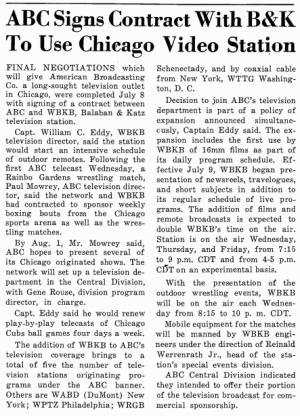
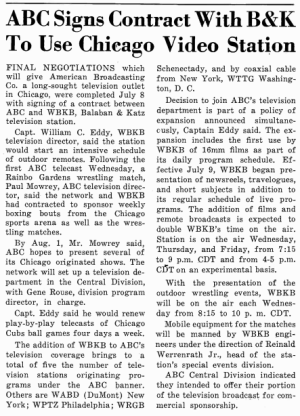
Here is one that can explain some of the reasons why even the largest TV markets had to deal with affiliation changes. In this article theres ABC in the testing stages for TV. The stations on this 1946 article were WBKB (now WBBM-TV) Chicago, WPTZ (now KYW-TV) Philadelphia, WABD New York, WRGB Albany and WTTG Washington DC. This was before the April 1948 Launch of ABC as a TV Network and 1948-1949 when ABC started forming their O&O's in TV markets.


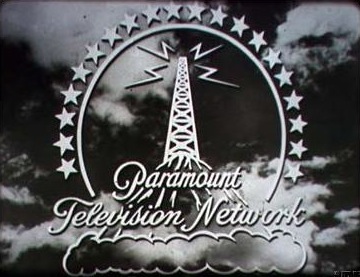
Theres another one to consider there were other networks like Dumont, Overmyer and the 1950's version of Paramount Television Network all were considered candidates of "The Fourth Network" prior to the 1986-1987 season when Rupert Murdoch took over MetroMedia TV stations to form the Fox Network as part of the big 4.

In Various parts of the country Dumont, Overmyer and Paramount (1950's edition) their former affiliates either became part of the big 3 or became independent for some time.
 

Attachments

  • Screenshot_2026-04-11_16-54-28.png
    Screenshot_2026-04-11_16-54-28.png
    246.2 KB · Views: 2
Like most cities outside NYC in 1946, WBKB/4 was Chicago's only commercial station. It aired programs from NBC and Dumont, the only active networks at the time, what few there were. They worked out a deal with CBS, shared with WGN-TV at first, when that network started up in 1948.


Back
Top Bottom