• Get involved.
    We want your input!
    Apply for Membership and join the conversations about everything related to broadcasting.

    After we receive your registration, a moderator will review it. After your registration is approved, you will be permitted to post.
    If you use a disposable or false email address, your registration will be rejected.

    After your membership is approved, please take a minute to tell us a little bit about yourself.
    https://www.radiodiscussions.com/forums/introduce-yourself.1088/

    Thanks in advance and have fun!
    RadioDiscussions Administrators

More on markets without affiliation switches

Columbia SC. And just to bring in another state capital whose name begins with the same first six letters, Columbus.

Savannah and Augusta might also qualify, but then you get into secondary affiliations in the early years.
Savannah would not qualify, as WSAV did switch to ABC (with WJCL moving to NBC) for a few years before reversing their swap.

More markets that qualify:
Traverse City/Cadillac
Grand Rapids/Kalamazoo/Battle Creek
Lansing
Alpena
 
Savannah would not qualify, as WSAV did switch to ABC (with WJCL moving to NBC) for a few years before reversing their swap.
You are right. I didn't realize that WSAV was ever ABC, I thought they were always NBC. I'm trying to think back, I wasn't in South Carolina (where I would have seen the TV Guide for this area) all that much in the early 1980s, I didn't live here yet and would only have seen it when I was here on vacation. Evidently it just flew over my head.
 
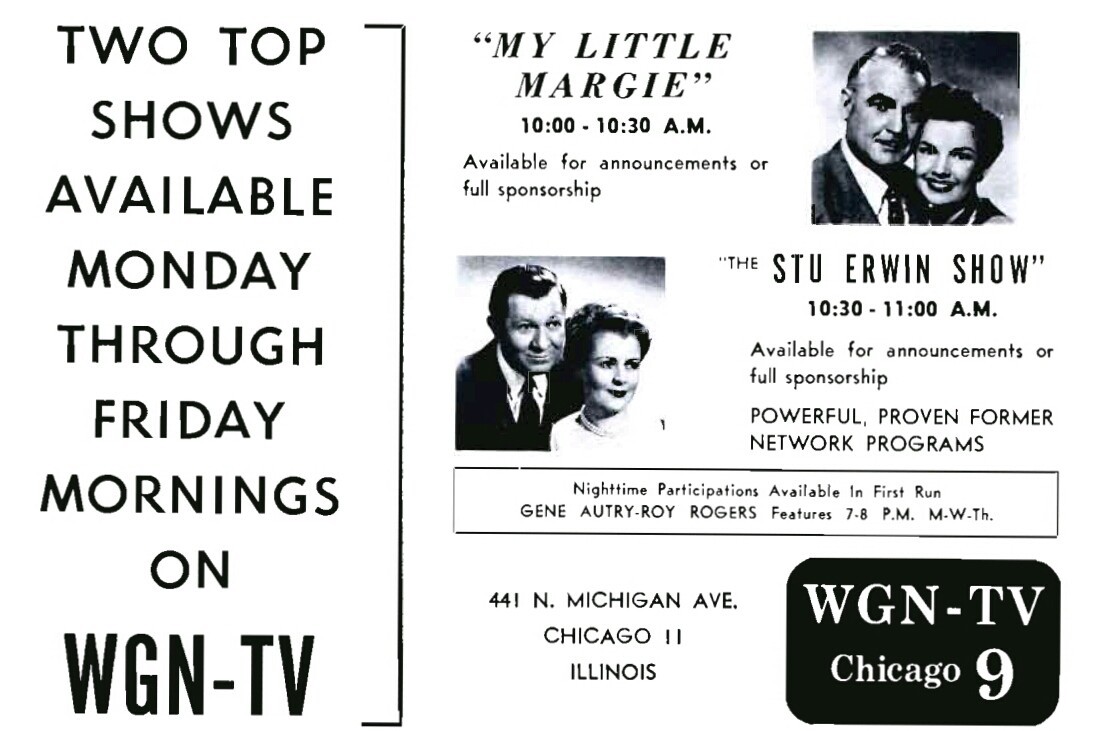
True I was also thinking Chicago at first too until I read that WGN-TV was initially a CBS affiliate until CBS affiliation were moved to WBKB-TV 4 but Channel 4 was reallocated to Milwaukee for WTVJ-TV and WBBM-TV 2 became CBS O&O.
The Chicago Tribune article says the CBS ended it's agreement with WGN in January of 1949 and WGN afterwards only carried shows from CBS on a contingency or "as needed" basis. From the schedules I sampled in old Chicago Tribune I have read, there was almost never a CBS show on WGN despite what I've seen elsewhere. WBKB was on channel 4 before WGN started up and carried the majority of CBS shows from the schedules I've seen. Perhaps I didn't read far enough.
 

Here’s another one Channel 2 Chicago was originally used as an experimental Pay TV operation by Zenith until 1953 when WBKB-TV was ordered to shut down the Channel 4 Signal. This is when WBBM-TV and CBS came to Channel 2. Yes the short spacing issue is why WTMJ-TV went to channel 4 in Milwaukee around that time.

Zenith had to shut down Channel 2 in 1953 to make way for CBS and WBBM to be on that signal.


WGN-TV has a brief mention of the station as a CBS and Dumont affiliate.


Zenith's station, W9XZV, later KS2XBS, had occupied Channel 1 before 1945, and Channel 2 afterwards. It held the commercial callsign WTZR, but never received a commercial license. Zenith had no interest in anything but pay-TV, and that's what brought the station to an end.

When the FCC told CBS to move WBBM-TV to Channel 2, Zenith screamed long and loud. But the fact remained that Zenith had no rights to Channel 2, and the FCC revoked their experimental license for that Channel. They tried (and failed) in Hartford CT on Channel 18 in the late 1950s.
 
The more I read about TV Markets that I would think would never change affiliations. I would always have to trace some of the history to the era when some cities had only 1 TV station or some TV networks not sure at the time of their sign on not sure if their proposed plans would succeed at that time.

This is similar to radio in its early years.
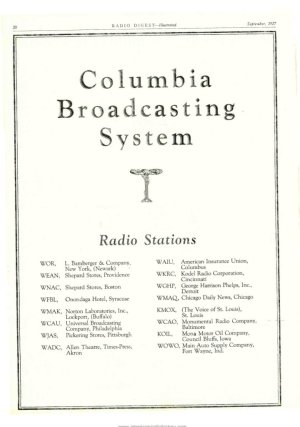
Yes this is like looking at the formation of CBS Radio a century ago and their first New York affiliate was WOR, before they bought the station that is now known as WHSQ.
Some of the other stations on the list that were the first CBS radio affiliates such as WKRC, KMOX, WOWO, WCAU(currently WPHT) still exist today. The other on this list went through either multiple ownership and call letter changes.
 

Attachments

  • 1000003308.jpg
    1000003308.jpg
    80.5 KB · Views: 7
My hometown of Columbus, Ohio, has had a fairly stable but interesting television history. WCMH-TV has long been the city’s NBC affiliate, while WSYX has carried ABC. Before becoming WSYX, the station operated as WTVN and was affiliated with both DuMont and ABC. WBNS-TV has consistently been the CBS station, and WOSU-TV has always served as the area’s PBS outlet.

WTTE has been the Fox affiliate, and when UPN launched in 1995, it carried UPN programming in late-night slots as a secondary affiliation. Meanwhile, WWHO operated under a local marketing agreement (LMA) with WCMH starting in 1994. When The WB launched, WWHO became its primary affiliate. However, after Paramount acquired the station, it became a full-time UPN affiliate, with WB programming relegated to a secondary role.

For viewers with cable, it was also possible to receive WUAB Channel 43 from Cleveland, which carried UPN programming as well.

Columbus also had several low-power and independent stations over the years. Channel 8 was a religious station that often had poor reception, frequently appearing snowy. Channel 68, based in Mansfield, came in clearly for a time but eventually disappeared. Channel 62 aired older programming and even rebroadcast WSYX Channel 6 news. In the early 2000s, the station was moved to Channel 19 as WCLL after its owner reportedly won the lottery. There were opportunities to develop it into a full WB affiliate, but those plans never materialized, and the station ultimately went off the air.

Given that Columbus is a top-30 market, it has always been somewhat puzzling why more well-capitalized ownership groups didn’t invest in building a stronger, more competitive station landscape—especially compared to nearby markets like Cleveland or Cincinnati, which have often stood out more in terms of station development and positioning.

 
My hometown of Columbus, Ohio, has had a fairly stable but interesting television history. WCMH-TV has long been the city’s NBC affiliate, while WSYX has carried ABC. Before becoming WSYX, the station operated as WTVN and was affiliated with both DuMont and ABC. WBNS-TV has consistently been the CBS station, and WOSU-TV has always served as the area’s PBS outlet.

WTTE has been the Fox affiliate, and when UPN launched in 1995, it carried UPN programming in late-night slots as a secondary affiliation. Meanwhile, WWHO operated under a local marketing agreement (LMA) with WCMH starting in 1994. When The WB launched, WWHO became its primary affiliate. However, after Paramount acquired the station, it became a full-time UPN affiliate, with WB programming relegated to a secondary role.

For viewers with cable, it was also possible to receive WUAB Channel 43 from Cleveland, which carried UPN programming as well.

Columbus also had several low-power and independent stations over the years. Channel 8 was a religious station that often had poor reception, frequently appearing snowy. Channel 68, based in Mansfield, came in clearly for a time but eventually disappeared. Channel 62 aired older programming and even rebroadcast WSYX Channel 6 news. In the early 2000s, the station was moved to Channel 19 as WCLL after its owner reportedly won the lottery. There were opportunities to develop it into a full WB affiliate, but those plans never materialized, and the station ultimately went off the air.

Given that Columbus is a top-30 market, it has always been somewhat puzzling why more well-capitalized ownership groups didn’t invest in building a stronger, more competitive station landscape—especially compared to nearby markets like Cleveland or Cincinnati, which have often stood out more in terms of station development and positioning.
Agreed, Columbus is about as stable as a market gets. Some other musings on the Columbus market, first, they were relatively late (1984) in getting a fourth, then-independent station, WTTE, and in the years before then, I want to say late 1970s and early 1980s, WOSU carried some shows on weekend nights that you wouldn't normally expect to see on public TV, such as The Twilight Zone, You Bet Your Life (the old Groucho Marx show), and one or two others that escape me right now. (I was able to get them via their Portsmouth satellite, WPBO.) Second, Dayton stations and WHIZ Zanesville can get into parts of Columbus OTA, though I don't expect they'd enjoy much viewership aside from people seeking out network shows pre-empted on Columbus stations. At one time Columbus cable (don't know which companies) had a "wild-card" channel, which plucked network programming from other markets when it didn't appear in Columbus.
 
Agreed, Columbus is about as stable as a market gets. Some other musings on the Columbus market, first, they were relatively late (1984) in getting a fourth, then-independent station, WTTE, and in the years before then, I want to say late 1970s and early 1980s, WOSU carried some shows on weekend nights that you wouldn't normally expect to see on public TV, such as The Twilight Zone, You Bet Your Life (the old Groucho Marx show), and one or two others that escape me right now. (I was able to get them via their Portsmouth satellite, WPBO.) Second, Dayton stations and WHIZ Zanesville can get into parts of Columbus OTA, though I don't expect they'd enjoy much viewership aside from people seeking out network shows pre-empted on Columbus stations. At one time Columbus cable (don't know which companies) had a "wild-card" channel, which plucked network programming from other markets when it didn't appear in Columbus.

I remember many times in Columbus when you could pick up OTA signals from surrounding markets. Stations like WHIO-TV and WKEF out of Dayton would often come in clearly. On certain days, you could even catch WTVG from Toledo and WJW from Cleveland. Occasionally, WTRF-TV would make an appearance as well.

All of this was during the analog era—long before digital broadcasting became what it is today.
 
Although... WTTE isn't Fox anymore. Sinclair moved the "Fox 28" intellectual unit to the 6.2 of WSYX a couple of years ago, with WTTE now carrying Roar and other diginets.
Yet another example of Sinclair and its sidecars taking the "fourth" station in a market and turning it into a diginet coatrack.


Here is more on why TV Markets had affiliation switches. Some of this was because there were TV stations that mainly existed as experimental license in the 1940's to early 1950's either shut down or were converted into commercial operations. I never knew San Francisco's first TV station was W6XHT (experimental) owned by Hughes Tool Company. Then again that station shut down some time before 1948 when KPIX became the first commercial license TV station in the San Francisco area.


Here’s another one Channel 2 Chicago was originally used as an experimental Pay TV operation by Zenith until 1953 when WBKB-TV was ordered to shut down the Channel 4 Signal. This is when WBBM-TV and CBS came to Channel 2. Yes the short spacing issue is why WTMJ-TV went to channel 4 in Milwaukee around that time.
Also, couldn't you argue a bigger reason why WBBM moved to 2 from 4 was because of short-spacing with WHBF-TV Rock Island (Quad Cities).

Then there was WOC-TV (now KWQC) Davenport originally at 5--simultaneously with WNBQ--before the former moved to 6 in late 1953.

And even to the end of the analog area, wasn't at least WTMJ and/or WITI Milwaukee shortspaced (or had to pull engineering tricks to avoid it) to both WHBF and KWQC?
 
Probably, but the most direct reason was the WTMJ/WKZO short spacing on Channel 3.

Another one at a similar distance was WENR Chicago and WOOD Grand Rapids on Channel 7. WOOD was moved to Channel 8.

There were lots of short-spacing issues in the pre-1952 allocations.
 
Probably, but the most direct reason was the WTMJ/WKZO short spacing on Channel 3.

Another one at a similar distance was WENR Chicago and WOOD Grand Rapids on Channel 7. WOOD was moved to Channel 8.

There were lots of short-spacing issues in the pre-1952 allocations.
Being on Lake Michigan would also cause problems, at least at certain times of the year. Signals travel farther and more readily over water.
 
Being on Lake Michigan would also cause problems, at least at certain times of the year. Signals travel farther and more readily over water.
Still is a major factor on FM. When 105.3 was dropped into Milwaukee around 2000, the 105.3 across Lake Michigan in Hart had to downgrade from 100kW to 28kW
 
I look at Portland/Poland Spring, ME now. The big 3, as far as I know, have always been NBC 6, ABC 8 and CBS 13. FOX was WPXT-TV channel 51 from fall 1986 to fall 2001. WPXT became a WB affiliate. Today, they are a CW affiliate. FOX was, until recently, on WPFO-TV channel 23 of Waterville. The FOX programming is now WGME-TV channel 13-2, but still being branded as "FOX 23".
 
Then there was WOC-TV (now KWQC) Davenport originally at 5--simultaneously with WNBQ--before the former moved to 6 in late 1953.
The Davenport allocation was moved from 5 to 6 because the Ames (Des Moines) allocation was moved from 4 to 5, which opened up the 4 allocation for Sioux City (there was also a proposal for 4 on Fort Dodge, but the FCC upheld the Sioux City allocation).
 
WFBN-TV 66 Joliet/Chicago Spectrum Pay TV sign on 1983


Heres more on why even the largest TV markets had affiliation changes consider some local TV stations around the country at one time had OTA subscription TV affiliations like KBSC-TV/Now Telemundo affiliate KVEA-TV Los Angeles was an affiliate of ONTV in the late 1970's early 1980's., Or KTSF San Francisco (Current Ethnic Independent) was an affiliate for Star TV and WFBN/Now Univision affiliate WGBO was an affiliate of Spectrum in those days. And in all of them cable TV killed their operations off by the time HBO, Showtime, MTV, ESPN became available nationwide which prompted local TV stations that ran with subscription television to change affiliations. around the 1985-1986 tv season.
 
In West Michigan WWMT has always been CBS also aired some Demount when reading it's history on Wiki WOOD TV also aired Demount not sure if WOOD TV or WWMT ever aired any ABC before WZZM signed on in the early 60s for ABC, the only true indie on a main channel was WXMI FOX17 they had different call letters when they first signed on in 1982 and the call letters changed to WXMI in 1983. And in 1987 became a Charter Member Of FOX.

UPN WOOD TV aired some of their shows in the 90s on the weekend along with sister station WOTV which aired Moesha Sat at 7PM. WZPX aired UPN in late night in 1998-99 at 11PM to 1AM before LIN made WXSP into general entertainment, as it was a local weather channel which was radar with the weather radio which Cablevision refused to put on the basic package why WOOD TV was dark for a year Jan 1997 to Jan 98 before that little thing called The Super Bowl and it returned 2 days before SB32. WZPX also aired The WB on 22-hour delay from fall of 1999 to 2006 The WB had no choice as LIN wanted to put the Tigers, Redwings, & Pistons on WXSP UPN didn't mind as The WB was more picky on sports.


Back
Top Bottom