• Get involved.
    We want your input!
    Apply for Membership and join the conversations about everything related to broadcasting.

    After we receive your registration, a moderator will review it. After your registration is approved, you will be permitted to post.
    If you use a disposable or false email address, your registration will be rejected.

    After your membership is approved, please take a minute to tell us a little bit about yourself.
    https://www.radiodiscussions.com/forums/introduce-yourself.1088/

    Thanks in advance and have fun!
    RadioDiscussions Administrators

Song you wondered how they they ever got played on Top 40 radio

For the longest time, I heard that lyric as:

"I get high in the evening with the pop top blues."

In fact, reading the actual lyrics K.M. Richards kindly posted above, I missed most of what Elton John was singing in that second verse. That said, what comes off to me after looking at those lyrics is how really sarcastic that song is! Since Bernie Taupin wrote the song's lyrics at the time, I can only think that the inspiration for those lyrics was something that really made him angry.

Maybe. Or, y'know, fiction.

Elton wasn't a rocket man, he and Suzie didn't have so much fun and I seriously doubt he spent his Saturday nights fighting.

The reason Joni Mitchell and others stood out as personal confessional songwriters at the time was that it was unusual. Most pop songs were short fiction with a beat.
 
In all seriousness, that barrier was broken by Led Zeppelin's "Whole Lotta Love". Yeah, there was a radio edit, but it wasn't available commercially, so the 45 you bought in stores had what was euphemistically referred to as "ape calls" that begin around 2:10:
[...]
And (back to Led Zeppelin's "Whole Lotta Love"), seriously. The whole song. I'm pretty sure most barriers about sex songs on the radio fell the moment that got play (it peaked at #4).

As I recall, the first Led Zeppelin American hit was "Immigrant Song" (at least that's the one I recall hearing first; still have the 45 of it that I bought at Easter's Super Valu in Centerville, Iowa), which might run headlong into right-wing snowflakery these days. No sex there that I can remember.

Aside from that, many Led Zeppelin songs are shot through with misogyny. First, people weren't as sensitized to such things back then. Second, Led Zep came out of the British blues scene which in turn was a reinterpretation of the blues of the American South, one of whose frequent tropes was "my woman done me wrong". Nowadays, on your favorite cancellation bingo card, Led Zep would get numbers both for attitudes toward women and for cultural appropriation. The challenge there is that so much of rock music, once you peel off the layers, is basically the music of poor Southerners, especially Black Southerners, reinterpreted by Brits and then redigested for broader American consumption.

None of this detracts from the brilliance of the opening drum solo of "When the Levee Breaks". And that song, at least, was credited to the original artists (Kansas Joe and Memphis Minnie).
As Robert W. Morgan used to say, I've got six lines and each of 'em would turn this place into a taco stand by noon.
Only six?
 
As I recall, the first Led Zeppelin American hit was "Immigrant Song" (at least that's the one I recall hearing first; still have the 45 of it that I bought at Easter's Super Valu in Centerville, Iowa), which might run headlong into right-wing snowflakery these days.

Nope. "Whole Lotta Love" was late 1969, peaking at #4 in Billboard the last week of January 1970, from the album Led Zeppelin II.

"Immigrant Song" was exactly a year later, peaking at #16 in Billboard the last week of January 1971, from the album Led Zeppelin III.

(The first single was "Good Times Bad Times" from Led Zeppelin I, and it stiffed at #80).

No sex there that I can remember.

No, it's viking mythology:

We come from the land of the ice and snow
From the midnight sun where the hot springs blow
The hammer of the gods will drive our ships to new lands
To fight the horde, singing and crying: Valhalla, I am coming!
On we sweep with threshing oar
Our only goal will be the western shore

We come from the land of the ice and snow
From the midnight sun where the hot springs blow
How soft your fields so green, can whisper tales of gore
Of how we calmed the tides of war, we are your overlords
On we sweep with threshing oar
Our only goal will be the western shore
So now you'd better stop and rebuild all your ruins
For peace and trust can win the day despite of all your losing


Aside from that, many Led Zeppelin songs are shot through with misogyny.

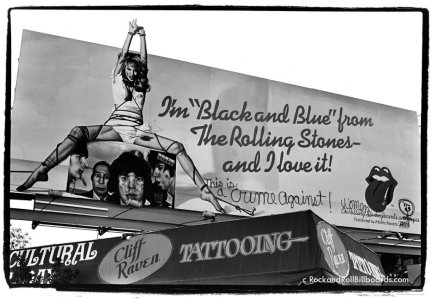
Have you met the Rolling Stones?


stones-bilb-1024x712.jpg


About that last one:

"Some Girls" is the title track of the English rock and roll band the Rolling Stones' 1978 album Some Girls. It marked the third time a song on one of the band's albums also served as the album's title. Like "Under My Thumb", "Brown Sugar", and "Star Star", the lyrics to "Some Girls" created controversy because of the way it depicted women.

The line "black girls just want to get f**ked all night" enraged civil rights activists. In its review of the album, Rolling Stone writer Paul Nelson called it "...a sexist and racist horror..." but added "...it's also terrifically funny and strangely desperate in a manner that gets under your skin and makes you care."

Civil rights leader Jesse Jackson met with Ahmet Ertegun, chair of the board of Atlantic Records (the record's distributor). The record company refused to edit the song for future releases and the band issued a statement saying the lyrics actually mocked stereotypical feelings towards women. |

Humorously, Saturday Night Live cast member Garrett Morris commented on the controversy with a mock-editorial on the show's Weekend Update segment: After giving the impression that he was going to openly criticize the Stones, he quoted a sanitized version of the "Black girls just..." line, then stated, "Now, Mr. Jagger, there is only one question I want to ask you – Jaggs. And you better have the answer, man, you better have the answer, since you have besmirched the character of black women. Therefore, here is my question, Jaggs. Where are all of these black broads, man? Hey, like, where ARE they, baby? You got any phone numbers for me, baby? Please send 'em to me. Thank you."


First, people weren't as sensitized to such things back then. Second, Led Zep came out of the British blues scene which in turn was a reinterpretation of the blues of the American South, one of whose frequent tropes was "my woman done me wrong". Nowadays, on your favorite cancellation bingo card, Led Zep would get numbers both for attitudes toward women and for cultural appropriation. The challenge there is that so much of rock music, once you peel off the layers, is basically the music of poor Southerners, especially Black Southerners, reinterpreted by Brits and then redigested for broader American consumption.

Speaking of a re-interpretation of the Black Southern experience:


None of this detracts from the brilliance of the opening drum solo of "When the Levee Breaks". And that song, at least, was credited to the original artists (Kansas Joe and Memphis Minnie).

Fair.

Only six?

It was a quote. I probably could manage ten.
 
I don't know if anyone mentioned I've Never Been to Me.

We were hoping no one would, but here we are.


I was among the PDs who fended off the independent promotion folks Motown hired to work this. And it wasn't because of lines like:

Took the hand of a preacher man
And we made love in the sun


Or...

I've been undressed by kings
And I've seen some things
That a woman ain't supposed to se
e

Or even the allusion to (multiple?) abortions:

Sometimes I've been to crying
For unborn children
That might have made me complete


Which actually sparked conversations and controversy among feminists who said it was a veiled anti-abortion message (you can only be complete if you're a mother).

And this one, I'll throw in just to get it out of the way:

But I, I took the sweet life
I never knew I'd be bitter from the sweet
I've spent my life exploring
The subtle whoring
That costs too much to be free


The word "whore" or variations were uncommon in pop music, but Paul Simon did get it out there with "The Boxer" in 1969, so that wasn't a big deal. The conversation over this use was the question of whether she was actually a prostitute ("undressed by kings") or whether she's talking about the transactional nature and the compromises a woman on her own makes to navigate the modern (by 1977 standards) world.

We (programmers) didn't talk about all that too terribly much (apart from conversations with the independent promoters Motown hired to try to get it on the air and who called us weekly to push us to add it to our playlists), though, because the record just flat was dreadful to listen to.

Melodramatic hackwork, and the promo folk who said "It's the authentic story of what it's like to be a woman" weren't really thrilled when I pointed out it was written by two men (Ron Miller and Ken Hirsch).

Motown spent months trying to break the thing...and finally nudged it to #97 in 1977.

That should have been the end of it, but five years later, that paragon of good taste Scott Shannon started playing it at WRBQ in Tampa, got big phone response and the record caught fire nationally---making it to #3.


By that point, I was in TV news, so I could at least punch the button when it played.
 
Nope. "Whole Lotta Love" was late 1969, peaking at #4 in Billboard the last week of January 1970, from the album Led Zeppelin II.

"Immigrant Song" was exactly a year later, peaking at #16 in Billboard the last week of January 1971, from the album Led Zeppelin III.

(The first single was "Good Times Bad Times" from Led Zeppelin I, and it stiffed at #80).
Hokay.
Have you met the Rolling Stones?
One of many examples, no doubt.

"Some Girls" (the tune, not the album) was too much even for my college station.

It is weird how songs of yearning for women coexisted with songs with abusive language toward women.
 
We were hoping no one would, but here we are.


I was among the PDs who fended off the independent promotion folks Motown hired to work this. And it wasn't because of lines like:

Took the hand of a preacher man
And we made love in the sun


Or...

I've been undressed by kings
And I've seen some things
That a woman ain't supposed to se
e

Or even the allusion to (multiple?) abortions:

Sometimes I've been to crying
For unborn children
That might have made me complete


Which actually sparked conversations and controversy among feminists who said it was a veiled anti-abortion message (you can only be complete if you're a mother).

And this one, I'll throw in just to get it out of the way:

But I, I took the sweet life
I never knew I'd be bitter from the sweet
I've spent my life exploring
The subtle whoring
That costs too much to be free


The word "whore" or variations were uncommon in pop music, but Paul Simon did get it out there with "The Boxer" in 1969, so that wasn't a big deal. The conversation over this use was the question of whether she was actually a prostitute ("undressed by kings") or whether she's talking about the transactional nature and the compromises a woman on her own makes to navigate the modern (by 1977 standards) world.

We (programmers) didn't talk about all that too terribly much (apart from conversations with the independent promoters Motown hired to try to get it on the air and who called us weekly to push us to add it to our playlists), though, because the record just flat was dreadful to listen to.

Melodramatic hackwork, and the promo folk who said "It's the authentic story of what it's like to be a woman" weren't really thrilled when I pointed out it was written by two men (Ron Miller and Ken Hirsch).

Motown spent months trying to break the thing...and finally nudged it to #97 in 1977.

That should have been the end of it, but five years later, that paragon of good taste Scott Shannon started playing it at WRBQ in Tampa, got big phone response and the record caught fire nationally---making it to #3.


By that point, I was in TV news, so I could at least punch the button when it played.

In my own 45 collection, I do have the 1978 original of "I've Never Been to Me," without the monologue but in stereo. I think that the monologue, along with wide support from Jerry Fallwell and his friends, helped that song gain graction in 1982. She issued a followup duet with Stevie Wonder, "Used to Be,", but outside of Los Angeles, specifically on KFI and KIQQ, that one never went anywhere.

One more controversial record I'll mention here is the Charlie Daniels Band's 1973 hit, "Uneasy Rider." The full-length single ran over 5 minutes and made fun of hippies. One of the song's lines, however, was partially edited for radio:

"I had them out there steppin' and fetchin'
Like their heads were on fire and their asses was catchin,".

The word "asses" was edited out of the first radio-friendly version. The single was edited additionally when some radio stations (KHJ?) objected to the song's length. Despite all of that, the song reached the top 20 in Billboard during July of 1973.
 
One more controversial record I'll mention here is the Charlie Daniels Band's 1973 hit, "Uneasy Rider."

A classic:


The full-length single ran over 5 minutes and made fun of hippies.

Oh, no, no, no:

It made fun of rednecks.

I just ordered up a beer and sat down at the bar
When some guy walked in an' said who owns this car
With the peace sign the mag wheels and four on the floor

Well he looked at me and I damn near died
And I decided that I'd jus wait outside
So I laid a dollar on the bar and headed for the door

Jes' when I thought I'd get outta there with my skin
These five big dudes come strollin' in
With this one old drunk chick and some fella with green teeth

An' I was almost to the door when the biggest one
Said you tip your hat to this lady son
An' when I did all that hair fell out from underneath

Now the last thing I wanted was to get into a fight
In Jackson Mississippi on a Saturday night
'Specially when there was three of them and only one of me

Well they all started laughin' and I felt kinda sick
And I knew I'd better think of somethin' pretty quick
So I jes' reached out an' kicked ol' green-teeth right in the knee

He let out a yell that'd curl your hair
But before he could move I grabbed me a chair
And said watch him folks 'cause he's a thouroughly dangerous man

Well you may not know it but this man's a spy
He's an undercover agent for the FBI
And he's been sent down here to infiltrate the Ku Klux Klan

He was still bent over holdin' on to his knee
But everyone else was lookin' and listenin' to me
And I layed it on thicker and heavier as I went

I said would you beleive this man has gone as far
As tearin' Wallace stickers off the bumpers of cars
And he voted for George McGovern for president

Well he's a friend of them long-haired hippie type pinko fags
I betcha he's even got a Commie flag
Tacked up on the wall inside of his garage

He's a snake in the grass I tell ya guys
He may look dumb but that's jus a disguise
He's a mastermind in the ways of espionage

They all started lookin' real suspicious at him
And he jumped up an' said jes' wait a minute Jim
You know he's lyin' I've been livin' here all of my life

I'm a faithful follower of Brother John Birch
And I belong to the Antioch Baptist Church
And I ain't even got a garage you can call home and ask my wife


One of the song's lines, however, was partially edited for radio:

"I had them out there steppin' and fetchin'
Like their heads were on fire and their asses was catchin,".

The word "asses" was edited out of the first radio-friendly version.

Which was when I added it.

The single was edited additionally when some radio stations (KHJ?) objected to the song's length.

The second edit removed this part:

Well he's a friend of them long-haired hippie type pinko fags
I betcha he's even got a Commie flag
Tacked up on the wall inside of his garage

He's a snake in the grass I tell ya guys
He may look dumb but that's jus a disguise
He's a mastermind in the ways of espionage


Despite all of that, the song reached the top 20 in Billboard during July of 1973.

Tragically, Charlie eventually switched sides.


My next choice would have to be the Eagles' "Life in the Fast Lane," and its use of the word "goddam" in its lyrics. It was the first song I ever heard with that word in its lyrics (though it was followed on the charts almost immediately by Firefall's "Cinderella," which also uses the same word and which I thought (and still think) was a much better song.) What struck me was back in 1977 when I first heard the song, none of the Phoenix radio stations, top-40, album rock, or oldies (KOOL-FM briefly played that one as a current) tried to erase the word goddam from the song's lyrics. It was only during the 2000s and later that I heard an edited version of the song, mostly on IHeart stations online. I assume the growing prudishness announced by the arrival of Christian nationalism had a lot to do with that.
I liked (and still do like) both of those songs -- although I suspect that there are far more people who remember the Eagles song than remember the Firefall song. But I do recall hearing a single edit for both songs that deleted the offending "goddam" for stations that didn't want to have that on the air. In the case of "Fast Lane", I think that the entire sentence was deleted, and in the case of "Cinderella" they just dropped the "god" and left the "dam" in, changing the lyric to "I said dam girl, can't you see, I didn't want your company". The general rule at the time in the Puget Sound area is that the album rock stations played the uncut versions but Top 40 stations were a mixed lot...some played single versions, others played album cuts.
 
I liked (and still do like) both of those songs -- although I suspect that there are far more people who remember the Eagles song than remember the Firefall song. But I do recall hearing a single edit for both songs that deleted the offending "goddam" for stations that didn't want to have that on the air. In the case of "Fast Lane", I think that the entire sentence was deleted,

I remember this one really clearly because I was in Ukiah, and KFRC (which came in like a local) went on "Fast Lane" right out of the box---as most stations did. And Asylum Records, in what can only be described as arrogance, didn't ship a radio version...ever. My promo rep:

"It's the Eagles. The biggest band in the world. You either play it or you don't." (I didn't. We were an AC and I took a lot of liberties with that format description---we were really a Top 40 minus the three or four hardest records. I was debating whether, because the Eagles were "the biggest band in the world", I should play "Life in the Fast Lane", and decided against it. If it was any other band, I wouldn't have even considered it...just too hard, even without the language).

Some stations beeped or blanked "goddamn", some took out the entire first stanza of the verse, coming out of the guitar solo into "He said "Call the doctor, I think I'm gonna crash", which made no sense, some took out the whole verse and some---notably KTNQ in Los Angeles, just went with the whole ("goddamn") thing.

But KFRC, which was known for its own custom edits (production genius Ron Hummel, who is being inducted into the Bay Area Radio Hall of fame a week from today, made some masterpieces including a three-ish minute version of Stevie Wonder's "Isn't She Lovely" without a trace of baby noises, and later a beautiful duet of Rita Coolidge and Boz Scaggs on "We're All Alone"), did their own on "Fast Lane" and this is how:

Blowin' and burnin', blinded by thirst
They didn't see the stop sign, took a turn for the worst
She said, "Listen, baby, you can hear the engine ring
We've been up and down this highway, haven't seen a goddamn thing"

He said, "Call the doctor, I think I'm gonna crash"
"The doctor say he's comin', but you gotta pay in cash"
They went rushin' down that freeway, messed around and got lost
They didn't care, they were just dyin' to get off and it was

The story still makes sense---he thinks he's gonna crash after not seeing the stop sign and taking a turn for the worst (and yes, I know this song isn't really about driving a car), and it was smooth.

and in the case of "Cinderella" they just dropped the "god" and left the "dam" in, changing the lyric to "I said dam girl, can't you see

And Atlantic Records, knowing Firefall wasn't the Eagles (I think I may have referred to this song on the air as "Crosby Stills Nash and Young just had a baby with Loggins and Messina"), shipped the promo copies with the edit:


I played it, but not for long---it wasn't a hit (stiffed at #34 in Billboard), the protagonist was an a**hole, and even at 21, I was just enlightened enough to understand that blaming a girl for getting pregnant---with your child---and telling her to go away was pretty much at the top of the list of terrible male behavior:

Last December I met a girl
She took a likin' to me
Said she loved me
But she didn't know the meanin' of the word

She imagined love to be grand
Me holding her hand and
Whisperin' sweet things and
Cooin' softly like a songbird

Then one mornin' she came to me
With a tear in her eye
And a sigh on her breath and Lord
She said, "Hon, I'm heavy with child"

And I said, "God damn, girl, can't you see
That I'm breakin' my back
Just tryin' to keep my head above water
And it's turnin' me wild?"

Cinderella, can't you see?
Don't want your company
You better leave this mornin', leave today
Take your love and your child away

 
I remember stations in Cincinnati getting away with playing the Eagles song unedited. Maybe there were some that edited it, but I don't remember it.

These days, they always edit it.
 
I also thought Helen's career took a weird turn. Her four biggest hits were a feminist anthem about power ("I Am Woman") and three songs about psychologically damaged women "Delta Dawn", "Leave Me Alone (Ruby Red Dress)" and "Angie Baby".

1970s Top 40 was a weird place.
"You and Me Against the World" was (probably still is) played on America's Best Music.
 
The label pictured in the YouTube video says:

Time 5:19
DUAL "45"

Any idea what a "dual '45'" would have been?

This is only a guess on my part, but perhaps a promo single with the edited version on the "A" side and the unedited album version on the "B"?
 
This is only a guess on my part, but perhaps a promo single with the edited version on the "A" side and the unedited album version on the "B"?

That's probably a very good guess. Another guess has to do with stereo singles. In the late 1950s and early 1960s when stereo 45s were introduced, one of the knocks against them was that you had to have a specially-designed needle to play them. If you tried playing them with your standard record needle at the time, it would actually ruin the single.

When Elektra (yes, it was Elektra) reintroduced stereo singles in 1968, it sometimes put the dual play notage on its 45s to indicate that bote mono and stereo needles could play them, something that wasn't an easy task to accomplish even in 1968 when the new stereo singles were introduced.

So I consider that a possibility. Now I'll use my search engine to find the correct answer...
 
Last edited:
Sinatra, recorded live in 1959, unedited. At least that's what I think I heard.

Serenade Radio online.

I was referring to "Life in the Fast Lane" by the Eagles:

Some stations beeped or blanked "goddamn", some took out the entire first stanza of the verse, coming out of the guitar solo into "He said "Call the doctor, I think I'm gonna crash", which made no sense, some took out the whole verse and some---notably KTNQ in Los Angeles, just went with the whole ("goddamn") thing.

Although I'm likely to regret it, I can't wait to hear what the hell you're talking about.
 
This is only a guess on my part, but perhaps a promo single with the edited version on the "A" side and the unedited album version on the "B"?

Nope. The Dual 45 had both sides. I've never heard "Funky Junky" and I must make a note to continue that.


Ted was close. "Dual 45" was Buddah/Kama Sutra's trademark for a compatible mono/stereo 45:

 
Although I'm likely to regret it, I can't wait to hear what the hell you're talking about.

I, for one, am glad I won't need to have the same regrets, as I have that user blocked (and everyone except him knows the reason why).


Back
Top Bottom