
-
Get involved.
We want your input!
Apply for Membership and join the conversations about everything related to broadcasting.
After we receive your registration, a moderator will review it. After your registration is approved, you will be permitted to post.
If you use a disposable or false email address, your registration will be rejected.
After your membership is approved, please take a minute to tell us a little bit about yourself.
https://www.radiodiscussions.com/forums/introduce-yourself.1088/
Thanks in advance and have fun!
RadioDiscussions Administrators
You are using an out of date browser. It may not display this or other websites correctly.
You should upgrade or use an alternative browser.
You should upgrade or use an alternative browser.
TV Guide editions and online resources
- Thread starter IM42A
- Start date
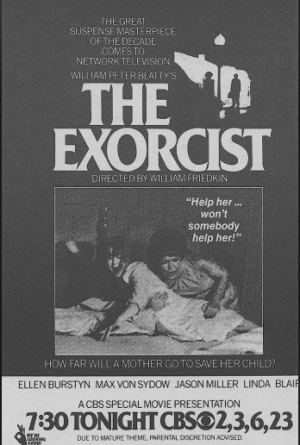
Illinois/Wisconsin Edition
2: WBBM Chicago
3: WISC Madison
6: WITI Milwaukee
23: WIFR Rockford
I thought of that, but I was assuming that WIFR-LD was not on the air at that time, and that perhaps Rockford lacked a CBS affiliate. I see now (on Wikipedia) that WIFR was once a full-power station. The 7:30 pm start time was also an indication that the edition was from either the Central or Mountain time zone, which narrowed things down.
Does anybody know how I might obtain a TV Guide channel font online? Many years ago, Jim Damm created such a font, but it doesn't come up in a Google search anymore, and if I still have the font files somewhere, they're hidden somewhere deep in external hard drive storage, and might not be compatible with present systems even if I were able to find them.
I've been looking for this, too. Taking it one step further - people have figured out how to emulate old Weather Channel local forecasts, and the Prevue Guide...I would love to see a TV Guide listings emulator.

Here's a page of television listings from a 1969 issue of TeVe Guía in Puerto Rico (via user J. Enri at Recordar Es Vivir Las Telenovelas):
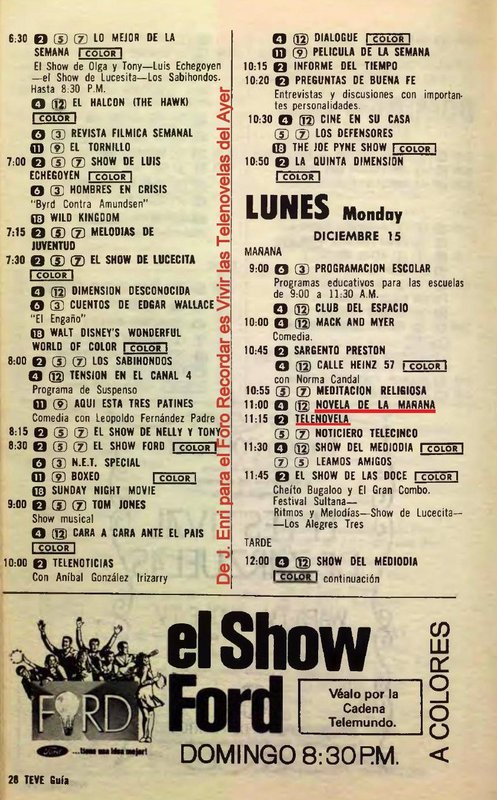
Aside from the language, you would almost have to be told that this is not a regular US TV Guide.Here's a page of television listings from a 1969 issue of TeVe Guía in Puerto Rico (via user J. Enri at Foro de Telenovelas en Puerto Rico):
I'm assuming that channel 18 was WSJU, San Juan's NBC affiliate and obviously an English-language channel.

K.M. Richards
Program Director, The Eighties Channel™
I'm assuming that channel 18 was WSJU, San Juan's NBC affiliate and obviously an English-language channel.
Not in 1969. WTSJ was on channel 18 first, from 1964 to 1973, before going dark. WSJU signed on in 1984.
Never assume anything without fact checking.
Got it. I did fact-check, though obviously not deeply enough. The whole WTSJ/WTCV/WSJU thing is confusing (to me anyway) and I wasn't clear on when WSJU started up.Not in 1969. WTSJ was on channel 18 first, from 1964 to 1973, before going dark. WSJU signed on in 1984.
Never assume anything without fact checking.
I'm wondering exactly how much of a market there is for English-language television in Puerto Rico, though there is SAP to provide Spanish audio, and some things such as sporting events and music concerts don't make knowledge of any one language absolutely vital. And, of course, many Puerto Ricans would understand English well enough to enjoy the programming, even if English isn't their first language. The same would hold true for viewers in Quebec who receive English-language programming both from within Canada and the US (the Burlington/Plattsburgh market stations OTA and others on cable or satellite).
K.M. Richards
Program Director, The Eighties Channel™
The whole WTSJ/WTCV/WSJU thing is confusing (to me anyway) and I wasn't clear on when WSJU started up.
WSJU changed calls to WTCV in 1997.
So, to "de-confuse" you ... channel 18 was WTSJ for about nine years, then relinquished its license in 1974. Ten years later, WSJU signed on under an entirely different license and then changed to the present WTCV calls after being on the air for 13 years.
They also held the calls WAVB for about a year in 2001-02, as a new bit of confusion.
Quite the game of musical chairs. It kind of reminds me of the WCIV/WMMP/WGWG situation in Charleston SC a few years ago, mutatis mutandis.WSJU changed calls to WTCV in 1997.
So, to "de-confuse" you ... channel 18 was WTSJ for about nine years, then relinquished its license in 1974. Ten years later, WSJU signed on under an entirely different license and then changed to the present WTCV calls after being on the air for 13 years.
They also held the calls WAVB for about a year in 2001-02, as a new bit of confusion.
A look at the East German edition of West Germany's listings magazine 𝘏ö𝘳𝘻𝘶 from the period after the fall of the Berlin Wall but before German reunification; the edition carried detailed listings of both the East German and the West German networks:
I've never been there (would like to some day), but Luxembourg is this kind of liminal space between France and Germany, having characteristics of both, but its own thing entirely. The national language, Luxembourgish, sounds like garbled German. I was watching it tonight on RTL online, just out of curiosity.
Here's a fairly recent (2020) compilation of news opens from European microstates:
These aren't printed listings, but it's a whole-day 1983 lineup for the English-language Channel 3 in Saudi Arabia. Operated by Aramco (Arabian-American Oil Company), Channel 3's intended audience was foreigners living in the kingdom:
And here's a missile attack warning in Arabic and English as seen on Channel 3 during the 1991 Gulf War:
And here's a missile attack warning in Arabic and English as seen on Channel 3 during the 1991 Gulf War:
These aren't printed listings, but it's a whole-day 1983 lineup for the English-language Channel 3 in Saudi Arabia. Operated by Aramco (Arabian-American Oil Company), Channel 3's intended audience was foreigners living in the kingdom:
And here's a missile attack warning in Arabic and English as seen on Channel 3 during the 1991 Gulf War:
Was this a free-to-air broadcast station, or closed-circuit for Aramco employees?
Have to wonder what the Saudis thought of Three's Company. How did Aramco get by with that? The halftime show with the Auburn cheerleaders could also have been a problem. (Hazel probably wouldn't have raised any eyebrows.)
Was this a free-to-air broadcast station, or closed-circuit for Aramco employees?
Have to wonder what the Saudis thought of Three's Company. How did Aramco get by with that? The halftime show with the Auburn cheerleaders could also have been a problem. (Hazel probably wouldn't have raised any eyebrows.)
It was free-to-air and was subject to religious censorship. For instance, here's the opening sequence of the British series Tales of the Unexpected as seen on Channel 3:
And here's the original opening sequence; note the dancing women:
It was free-to-air and was subject to religious censorship. For instance, here's the opening sequence of the British series Tales of the Unexpected as seen on Channel 3:
And here's the original opening sequence; note the dancing women:
Not to beat it to death, but how could they have ever censored Three's Company to be acceptable to the Saudis? The whole premise of the show --- three unmarried people of opposite gender living together (with Jack feigning to be gay for the benefit of the Ropers on top of that) --- and the girls wearing their short-shorts, would seem to run against Saudi sensibilities.
Not to beat it to death, but how could they have ever censored Three's Company to be acceptable to the Saudis? The whole premise of the show --- three unmarried people of opposite gender living together (with Jack feigning to be gay for the benefit of the Ropers on top of that) --- and the girls wearing their short-shorts, would seem to run against Saudi sensibilities.
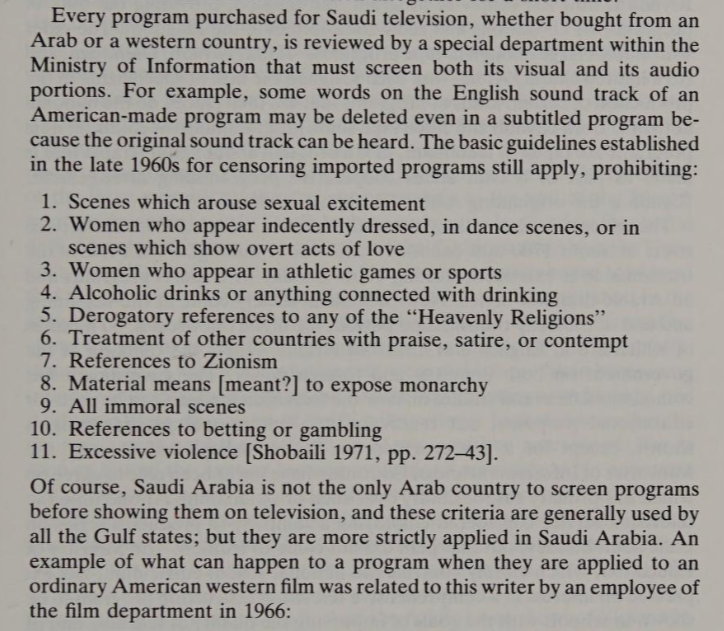
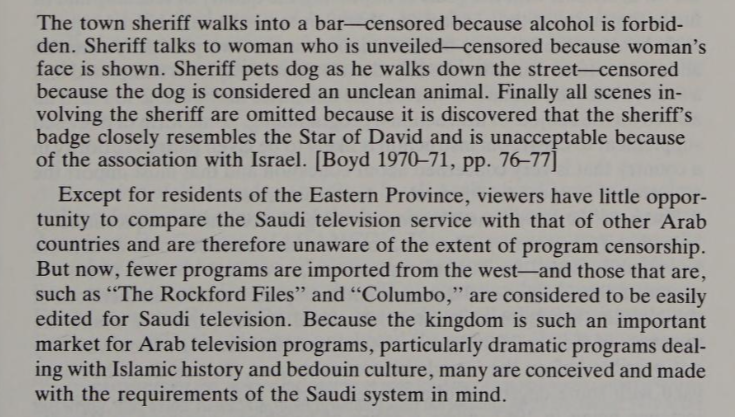
I'm not sure about Three's Company in particular, but this is what Douglas A. Boyd has to say about Saudi censorship in the 1982 edition of Broadcasting in the Arab World:
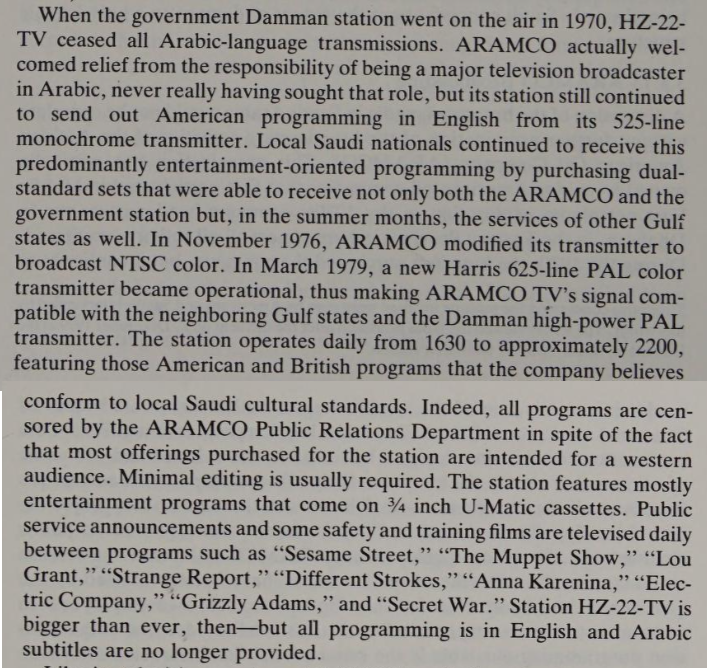
And here's a bit about Aramco's Channel 3 (callsign HZ-22-TV):
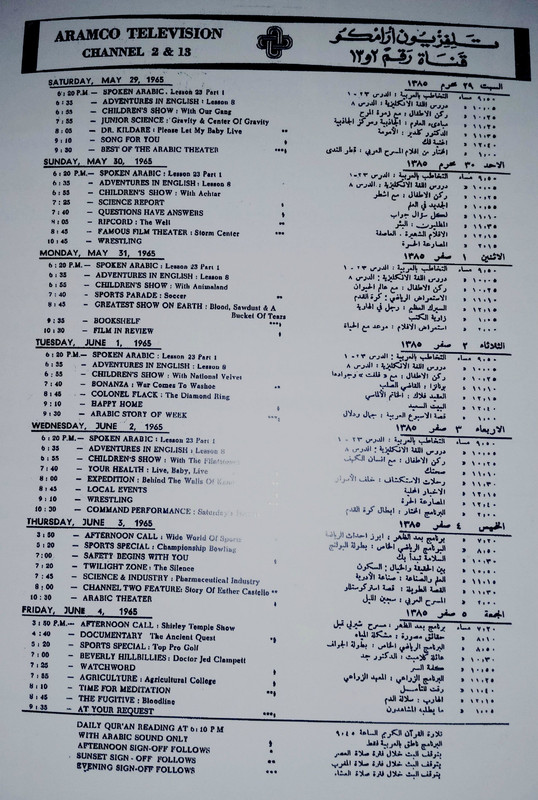
Via astrophylousa on Reddit, here are some TV listings for Aramco's station from 1965, back when it also broadcast some Arabic-language programming:
Staying in the Middle East...
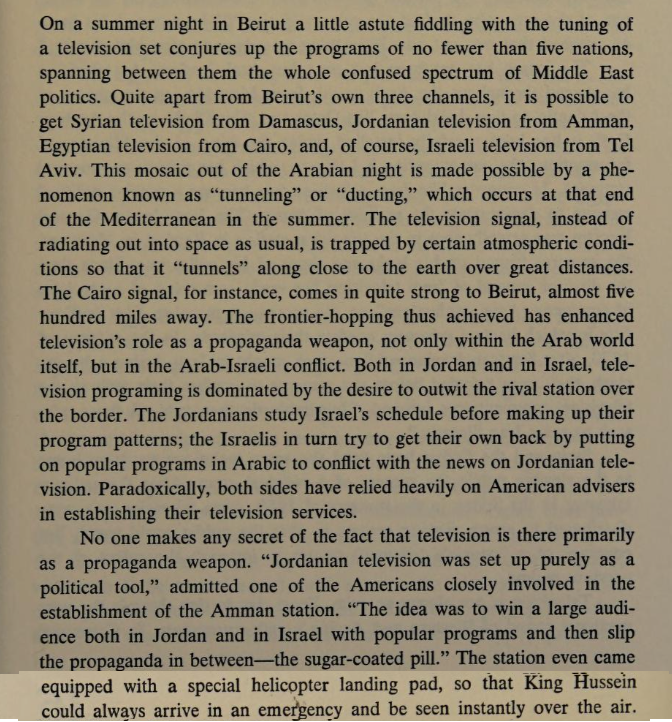
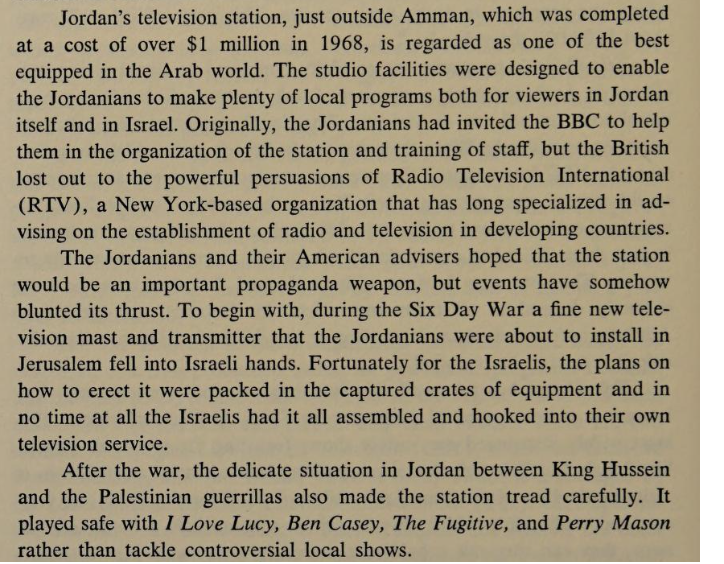
With no end in sight to the Israel-Palestine conflict, here's a look at the TV rivalry between Israel and its Arab neighbors from Timothy Green's 1972 book Universal Eye: The World of Television:
....
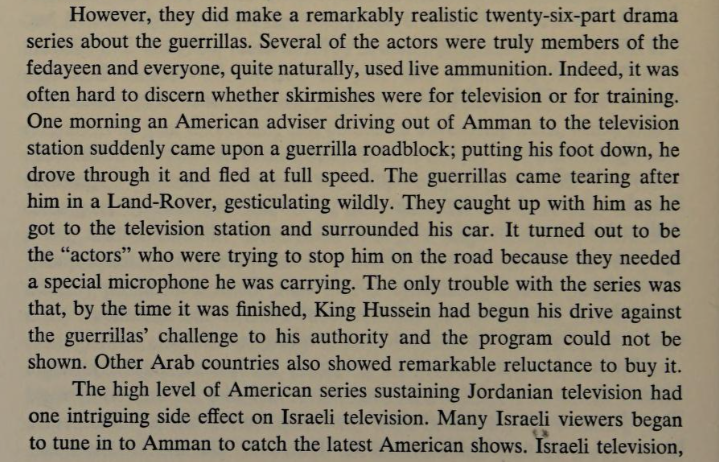
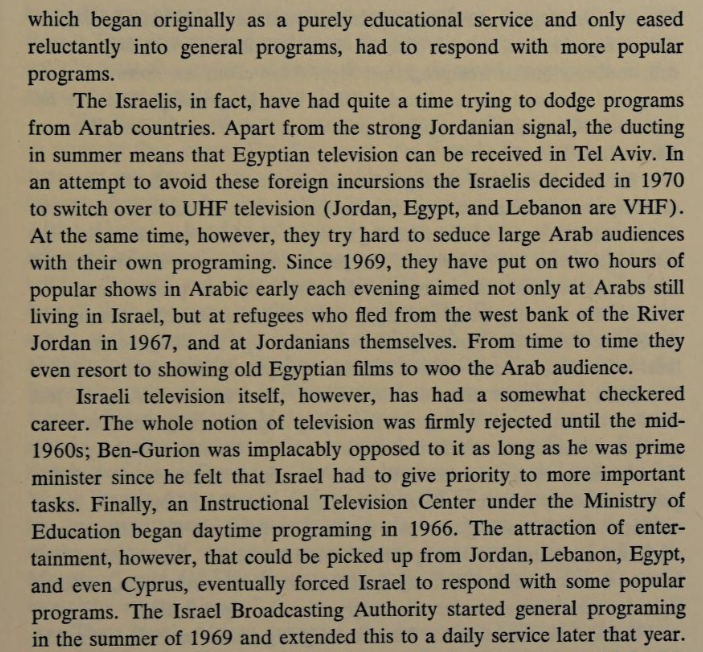
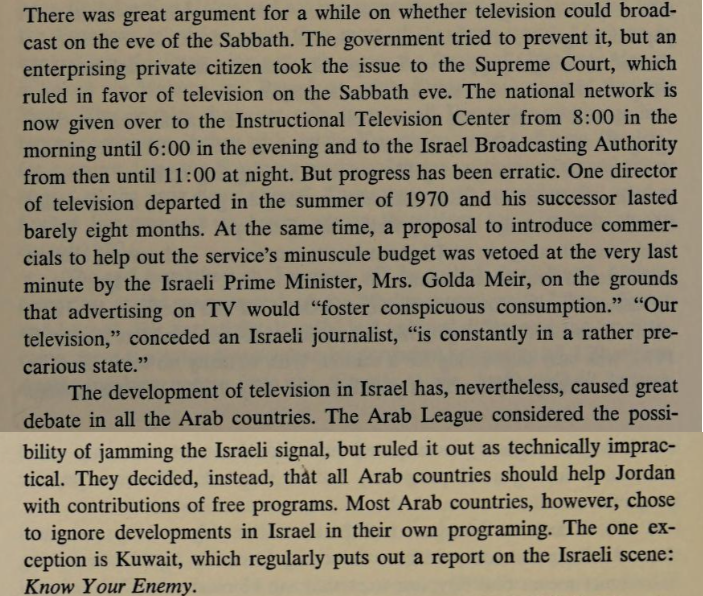
With no end in sight to the Israel-Palestine conflict, here's a look at the TV rivalry between Israel and its Arab neighbors from Timothy Green's 1972 book Universal Eye: The World of Television:
....