
or something like this:Do you still watch a black-and-white TV? That's what the future holds.

-
Get involved.
We want your input!
Apply for Membership and join the conversations about everything related to broadcasting.
After we receive your registration, a moderator will review it. After your registration is approved, you will be permitted to post.
If you use a disposable or false email address, your registration will be rejected.
After your membership is approved, please take a minute to tell us a little bit about yourself.
https://www.radiodiscussions.com/forums/introduce-yourself.1088/
Thanks in advance and have fun!
RadioDiscussions Administrators
You are using an out of date browser. It may not display this or other websites correctly.
You should upgrade or use an alternative browser.
You should upgrade or use an alternative browser.
A Change Coming to KGO
- Thread starter atthestars
- Start date

Right.Talk radio hadn't been made obsolete yet by cable talk shows and Twitter in the late 1990s. The audience was by no means younger-skewing but they weren't literally aging out of salability and those AM stations could still operate with a profit, even if they were totally off the bird.
The only thing is that said audience never changed. It just got older and older.
I've said this before---so anyone who's heard it, please forgive the repetition, but I'm 66. I started listening to FM in 1968. If I hadn't gotten a job in radio in 1971, I probably would never have listened to AM after '72 or so. I listened because I felt I needed to keep up with what all the stations were doing.
Hey, someone who did it worse than KGO!or something like this:
It is arguably the most inartful sign-off of a radio station ever, especially for a station that traced back to CFCF.Hey, someone who did it worse than KGO!

Lets use an Internet platform analogy. KGO-AM would be like Geocities, AOL, MySpace and Yahoo whose peaks as Big Tech Companies would have been in the late 1990's-mid 2000's until these three companies got hit security issues and an older median audience GenX and parts of Old end Millenials. Then Facebook, Google, Youtube, Twitter stepped in and got the Mid/Young Millennial Audience and became the Big tech of the late 2000's to 2020's this is where KQED-FM steps in. In the 2020's we have TikTok, Instagram, Discord and Twitch Step in for the GenZ demos and its in Progress this is where Podcast talk steps in as being relevant for their median demos.
If one is wondering why Twitchcon is more important now its because its all about addressing the needs of the median demos here.
I don't know in this case how KGO-AM would attract a GenZ Demo exactly but Westwood one on the national level would have to address the trends of GenZ in this decade. The broadcasting landscape is like gentrification in cities.
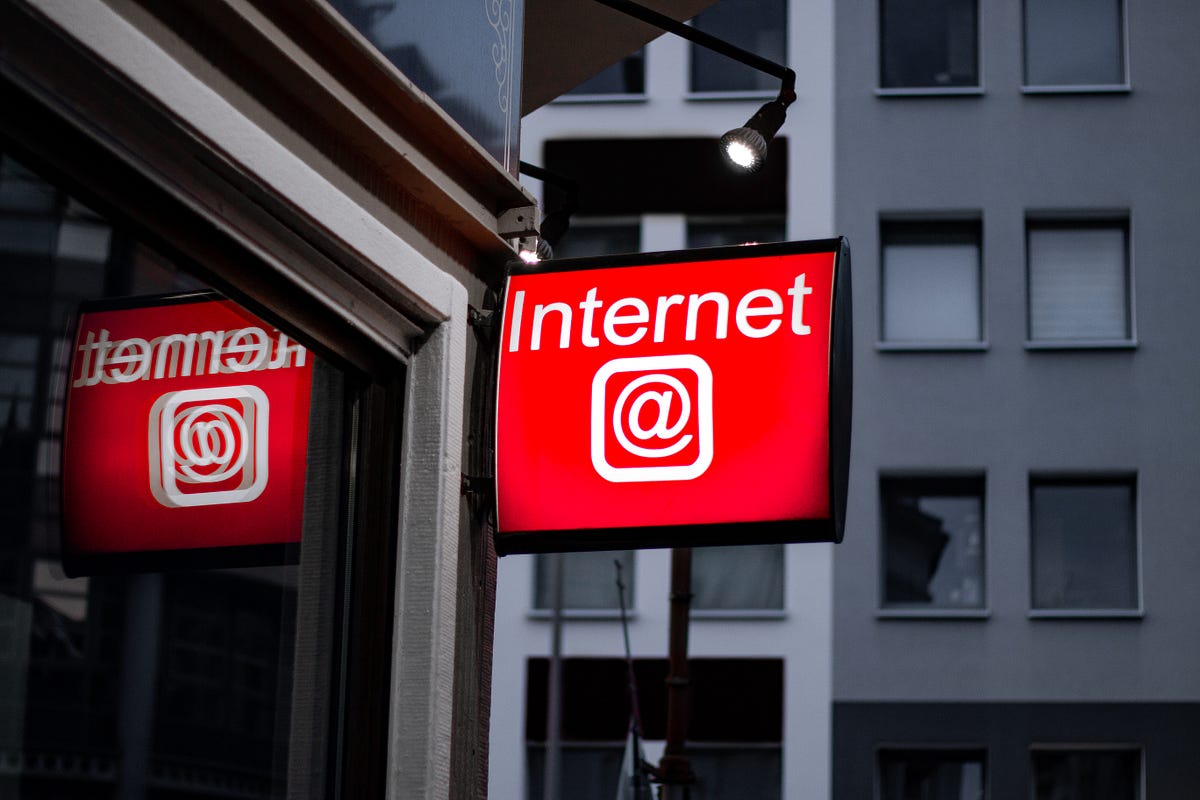
 medium.com
If one is wondering why Twitchcon is more important now its because its all about addressing the needs of the median demos here.
I don't know in this case how KGO-AM would attract a GenZ Demo exactly but Westwood one on the national level would have to address the trends of GenZ in this decade. The broadcasting landscape is like gentrification in cities.
The Internet: Gentrified and Gerrymandered
As the internet enters its next growth phase, early adopters will see cultural changes and struggle to maintain influence

Hey, someone who did it worse than KGO!
I dunno, shutting it off seems a lot classier than flipping it to sports betting.
Actually, I think AM 940 Montreal did a much better send off than KGO. The general manager actually came on the air and thanked all the listeners, clients and employees of the station. KGO didn’t do any of that. In fact, they gave a big middle finger to their listeners, clients and employees.Hey, someone who did it worse than KGO!
Not sure if anyone here listened to Mark Thompson’s Twitter Spaces broadcast on Monday morning with all the KGO personalities, but he relayed the story of what happened and how it happened. It is actually a really good two hour show and insight into what happened at the station the day of the abrupt end of KGO. To summarize, right before Mark Thompson’s show started, he got a call from the station managers. He was told that at 10:15 A.M., he would give a legal ID and he would be done with his show. He was told not to reminisce or act as if anything was about to happen. He was told to do his show as normal and at 10:15 A.M., give a legal ID. Mark tried to plea to the station managers to allow him to say thank you to the listeners, clients and staff, but they just kept telling him the same thing - do your show as normal, give a legal ID at 10:15 A.M., and you’ll be done. Now Mark said he didn’t blame these two station managers because he said that they were being told what to do by the big national corporate heads, but he said that they had national people at the board ready to pull the plug if he went off script or rogue. One of the other KGO co-hosts also said that after the station abruptly ceased their talk format and started stunting, corporate didn’t even have the decency to tell their clients about the format flip. One of KGO’s long-time clients was on hold ready to do a live read and the station had already begun stunting the new sports betting format. These are the station’s clients that helped sustain the station for as long as they did and Cumulus couldn’t even get on the phone to tell them the station had flipped or thank them? Classless. It’s one thing to flip formats, it’s another to do it the way Cumulus did. If you want to listen to the full Mark Thompson Twitter Space KGO Remembrance Show from Monday, you can find it here:
Did you transpose those last two numbers? I've always heard "1978"!Go back further. 1987 was the year when the compiled Arbitron national numbers showed FM tied with AM in listenership. See the Duncan reports that detail this at the link below.
Part of this change was due to the FCC limiting AM/FM duplication. Another part was the improvement in FM reception once the patents were freed up in the early 60's. And a bigger part was due to Arbitron taking over dominance in radio ratings in the early 70 and their creation of much larger survey areas than Pulse or Hooper had, giving the benefit to FM stations in most markets.
Yes, but they could have allowed the general manager to finish his explanation and goodbye instead of cutting him off mid-sentence…or did you not actually listen to the clip?I dunno, shutting it off seems a lot classier than flipping it to sports betting.
They turned off the transmitter while he was still talking! He was only a few seconds in. He was mid-sentence!Actually, I think AM 940 Montreal did a much better send off than KGO. The general manager actually came on the air and thanked all the listeners, clients and employees of the station.
That announcement from the GM was recorded and running on a loop. Listen to the beginning. Regular programming had ended at 10 a.m., followed by the repeating announcement and ominous-sounding music until 7:15 p.m. What happened at 10? A goodbye from the staff or music cut off in mid-song?
The clip above features the music, a complete announcement, the music again and then the announcement which went like this:That announcement from the GM was recorded and running on a loop. Listen to the beginning. Regular programming had ended at 10 a.m., followed by the repeating announcement and ominous-sounding music until 7:15 p.m. What happened at 10? A goodbye from the staff or music cut off in mid-song?
"Hi. I'm Mark Dickey, General Manager at AM 940, Montreal's Greatest Hits. On behalf of the management of Corus, I would like to inform you that we ceased programming of AM 940 as of ten o'clock this morning. We will no longer be broadcasting as of seven this evening. This is (transmitter shuts off and Mark's replaced by static)."
Why was it on a loop? Not so people could listen to it for hours, but so that anyone, who tuned in at any time, could hear what was happening. Anyone who tuned in just before seven would have heard maybe a bit of music and then the announcement as I've written it above---cut off 25 seconds before the end and before Mark explains why and thanks the staff.
A live human being somewhere in the mix could have waited 25 seconds to kill the carrier. Or, if that was on a timer, ended the loop on the previous pass, so that Mark finished the announcement, there was silence and then the carrier goes.
Last edited:
Management "of Corus," not "of course." And if the announcement had been running since 10:00, how many people would be tuned in nine hours later, during a day part when not many listen to radio at all? Again, if you're going to judge the appropriateness or elegance of the sign-off, go back to 9:55 a.m. and tell me what was happening on air then, not what was happening at 7:15, when the equivalent of a shortwave interval signal (Remember those?) was playing.
Thanks for the correction.Management "of Corus," not "of course." And if the announcement had been running since 10:00, how many people would be tuned in nine hours later, during a day part when not many listen to radio at all?
I don't know what to tell you, CT. I can't quantify who might be listening and who might not. It's reasonable to assume it was on a frequently repeating loop because Corus thought people might be tuning in and out literally at any time. Ultimately, it would have been so simple to end gracefully rather than with static 12 seconds into the announcement.
It was apparently Canada's first radio station. If that was how the plug got pulled on KCBS, this board would lose its mind.
Personally, I realize the "glory days" of KGO are long past. I.e., pre-PPM long past. So waxing nostalgic is useless. As a frequent listener to KGO over the years, and a DXer, and an AM enthusiast, to me having them try sports betting is preferable to all infomercials, or pulling the plug. At least Cumulus are trying something. And the inclusion of a few CBS Sports Radio network programs is undoubtedly a plus.
Interesting article. Obviously, the viewpoint of a journalist in the Bay Area. Some of the stuff they discuss have been talked about by the pros here.
That said, KGO had around 201K listeners before switching. 201K is more than the population of a lot of cities in the US. 201K is more people than a lot of metros have in certain demographics. Almost more than cities that have 15-20 stations, like Spokane, the Tri-Cities, Eugene and Boise. Yet KGO was still losing money, with a 201K cume. I guess that tells us all we need to know, not just about talk radio, but the economics of AM radio in general.
Right now I am listening to KGO. It's the early morning sports-betting show. The hosts aren't exactly compelling, when compared to any of the Sports Radio talk hosts, be they on CBS Sports Radio, ESPN, or Fox Sports. Maybe they don't need to be. They sound like sports radio amateur hour. Maybe that works for sports bet radio. I don't know.
Interesting article. Obviously, the viewpoint of a journalist in the Bay Area. Some of the stuff they discuss have been talked about by the pros here.
That said, KGO had around 201K listeners before switching. 201K is more than the population of a lot of cities in the US. 201K is more people than a lot of metros have in certain demographics. Almost more than cities that have 15-20 stations, like Spokane, the Tri-Cities, Eugene and Boise. Yet KGO was still losing money, with a 201K cume. I guess that tells us all we need to know, not just about talk radio, but the economics of AM radio in general.
Right now I am listening to KGO. It's the early morning sports-betting show. The hosts aren't exactly compelling, when compared to any of the Sports Radio talk hosts, be they on CBS Sports Radio, ESPN, or Fox Sports. Maybe they don't need to be. They sound like sports radio amateur hour. Maybe that works for sports bet radio. I don't know.
Ad agencies haven't bought based on cume in 50 years. It can't tell you how old the listener is or how long they listen.KGO had around 201K listeners before switching. 201K is more than the population of a lot of cities in the US. 201K is more people than a lot of metros have in certain demographics. Almost more than cities that have 15-20 stations, like Spokane, the Tri-Cities, Eugene and Boise. Yet KGO was still losing money, with a 201K cume. I guess that tells us all we need to know, not just about talk radio, but the economics of AM radio in general.
Right now I am listening to KGO. It's the early morning sports-betting show. The hosts aren't exactly compelling, when compared to any of the Sports Radio talk hosts, be they on CBS Sports Radio, ESPN, or Fox Sports. Maybe they don't need to be. They sound like sports radio amateur hour. Maybe that works for sports bet radio. I don't know.
They sound like horse racing analysts doping out the probable winner of the next race during the simulcast feed of a midweek card at Belmont Park. Which, IMO, is what they should sound like. They aren't talking about sport for the sake of sport, or as fans of a certain team; they're talking about sport as a generator of possible outcomes on which money can be wagered. Leave the long-winded discourses on rule changes or player personalities to the mainstream sports talk stations. This is the sort of talk that gamblers want to hear. Put aside your feelings about gambling or the "purity" of sports and think of it purely as programming that knows its target audience -- gamblers who happen to like sports -- and gives it what it wants with no filler.
Fair enough, but doesn't it need to be compelling radio? Scott Ferrall talked about betting a LOT during his last several months on CBS Sports Radio, but he made it interesting, even to a non betting person like me. So far, this morning crew just doesn't sound compelling.They sound like horse racing analysts doping out the probable winner of the next race during the simulcast feed of a midweek card at Belmont Park. Which, IMO, is what they should sound like. They aren't talking about sport for the sake of sport, or as fans of a certain team; they're talking about sport as a generator of possible outcomes on which money can be wagered. Leave the long-winded discourses on rule changes or player personalities to the mainstream sports talk stations. This is the sort of talk that gamblers want to hear. Put aside your feelings about gambling or the "purity" of sports and think of it purely as programming that knows its target audience -- gamblers who happen to like sports -- and gives it what it wants with no filler.
But like you said, maybe to hard core sports betters, it doesn't matter.

Good catch. Yes, 1978 was the 50-50 year.Did you transpose those last two numbers? I've always heard "1978"!
I haven't listened enough to form an opinion, but from all the advertising I see and hear for sports betting apps, they are trying to get new people to download the apps and place bets. There are live reads on the News/Talk station. I imagine they want the long-time gamblers but new ones getting (hopefully not too) hooked as well.Fair enough, but doesn't it need to be compelling radio? Scott Ferrall talked about betting a LOT during his last several months on CBS Sports Radio, but he made it interesting, even to a non betting person like me. So far, this morning crew just doesn't sound compelling.
But like you said, maybe to hard core sports betters, it doesn't matter.
- Status
- This thread has been closed due to inactivity. You can create a new thread to discuss this topic.